Attention to Detail Easy Worksheets for Ages 4-8
5 filtered results
-
From - To
Explore our "Attention to Detail Easy Worksheets for Ages 4-8" designed to enhance young learners' observational skills and concentration. These engaging, fun-filled worksheets feature colorful illustrations and age-appropriate activities that encourage children to pay close attention to details in various settings. From spotting differences to matching objects, each worksheet promotes critical thinking while building essential cognitive skills. Ideal for classroom use or at-home learning, our easy-to-follow worksheets cater to diverse learning styles. Nurture your child's attention span and precision with these printables today, ensuring they develop the necessary skills for future academic success while enjoying their learning journey!
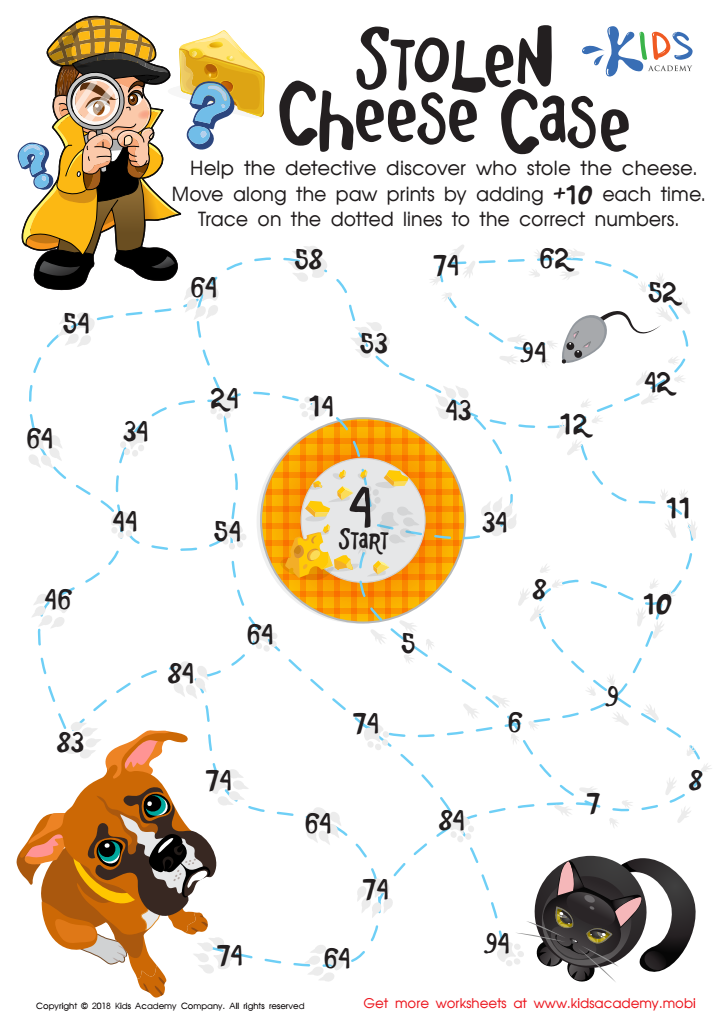
Stolen Cheese Case Maze Worksheet
 Assign to My Students
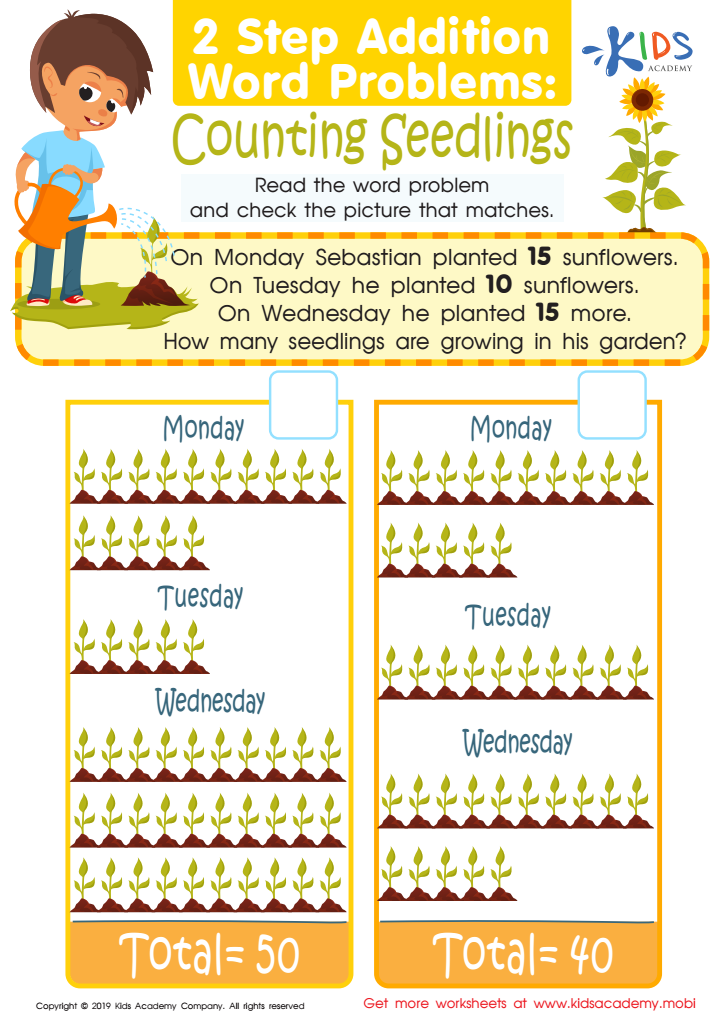
Counting Seedlings Worksheet
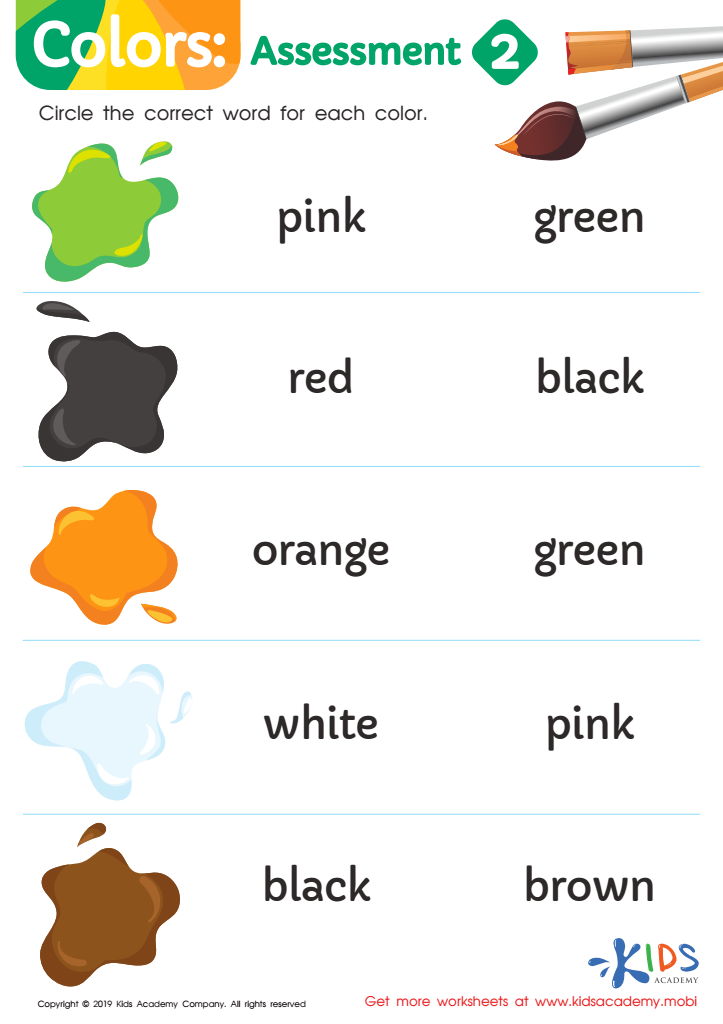
Colors: Assessment 2 Worksheet

Cities Worksheet
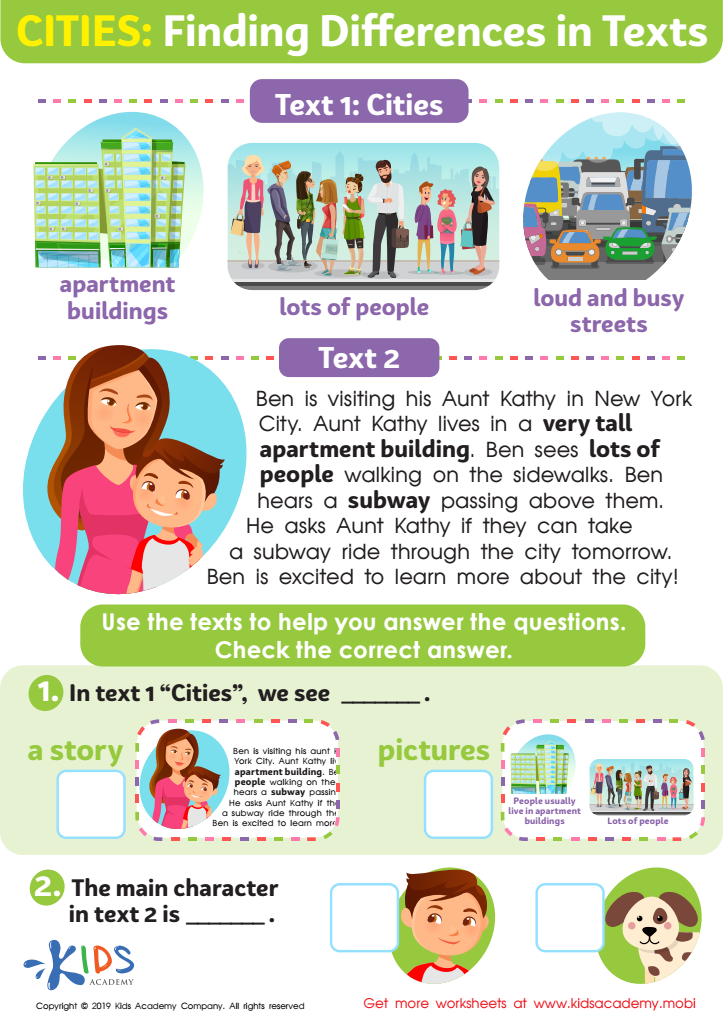
Cities: Finding Differences Worksheet








Attention to detail is a crucial skill for children aged 4-8, and parents and teachers should prioritize fostering this ability. At such a young age, children are developing foundational cognitive and social skills; enhancing their attention to detail can significantly benefit their overall learning. It helps improve memory, critical thinking, and problem-solving capabilities, making them more observant and mindful in their daily activities.
By focusing on the details, children learn to engage more deeply with their environment, promoting curiosity and exploration. This skill is vital for tasks as simple as following instructions, completing a puzzle, or identifying patterns in educational games. Moreover, attention to detail fosters clear communication, as children become more adept at expressing their thoughts and observations.
In addition, developing attention to detail nurtures a sense of accomplishment and boosts self-esteem. Children who learn to focus on specifics can take pride in their work, whether it’s an art project or a school assignment, acknowledging that every element matters.
When parents and teachers emphasize the importance of this skill, they equip children with valuable tools for academic success and personal growth, setting the stage for lifelong learning and adaptability in an increasingly complex world.








