Check out this FREE "Counting practice" Trial Lesson for age 4-8!

Write 3

Favorites
With answer key
Interactive
  • 4-8
  • Counting practice
  • Easy
Planting Seeds for 11 Worksheet

Planting Seeds for 11 Worksheet

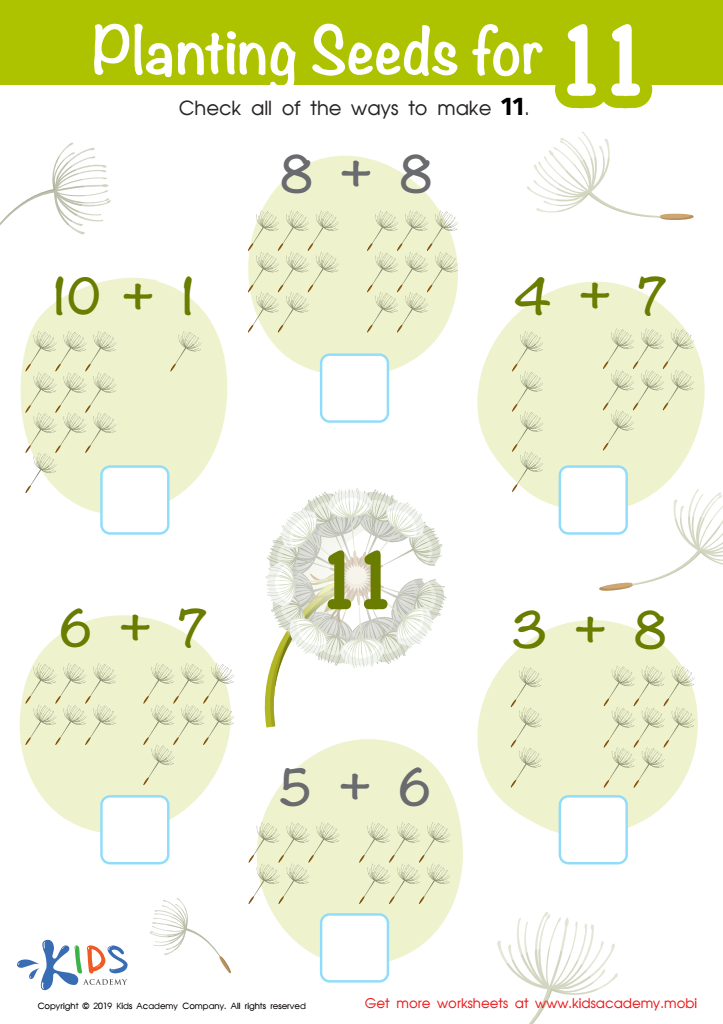
Before starting, ask your students to count as high as they can. Explain that different numbers can add up to the same total. Give examples like 2+2 =4 and 3+1 =4. Ask if they can think of other examples. Then have them work through the equations in the printout and circle all that add up to 11.
Planting Seeds for 11 Worksheet
Worksheet
Tractors Worksheet
Tractors Worksheet

Tractors Worksheet

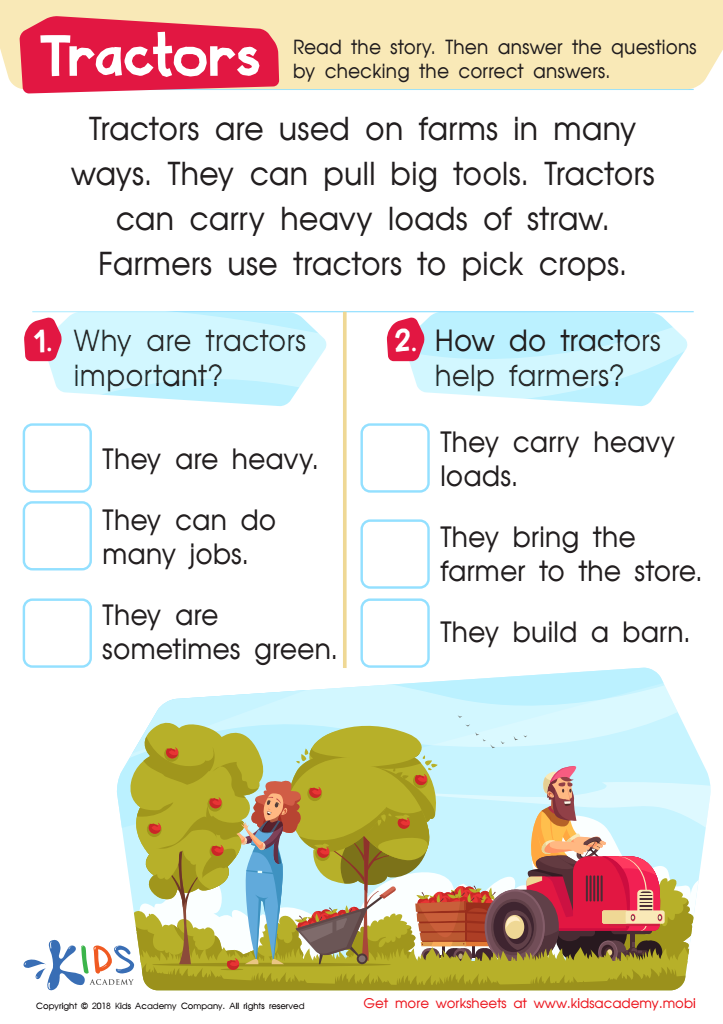
Kids love tractors! Let them read about what they do, what they use, and who uses them with this free worksheet. After reading, they can answer reading comprehension questions to test their knowledge; multiple choices make it easy! Little do they know, they're boosting their literacy skills along the way!
Tractors Worksheet
Worksheet
Make 6 Worksheet
Make 6 Worksheet

Make 6 Worksheet

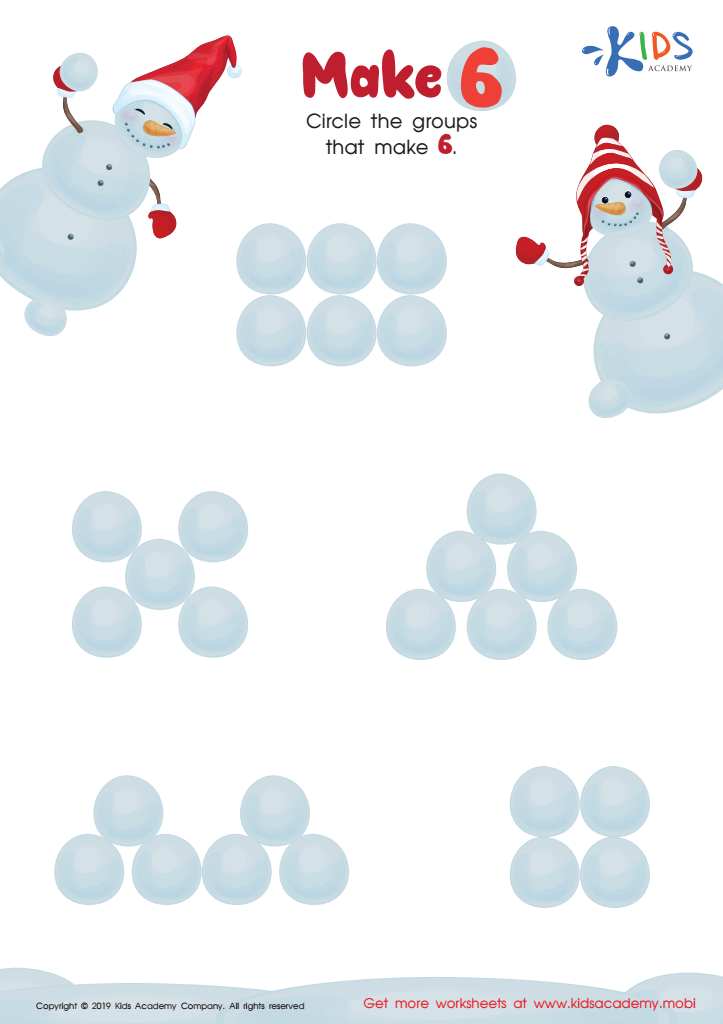
Fun snowball fights are great! With lots of ammo, kids can join their snowman friends and count out groups of six. Through number sense practice, and seeing one-to-one picture representation, your child can strengthen their skills while having a blast. Don't forget to bundle up as they may ask for more!
Make 6 Worksheet
Worksheet
Coloring Page: Number 3

Number 3 Worksheet

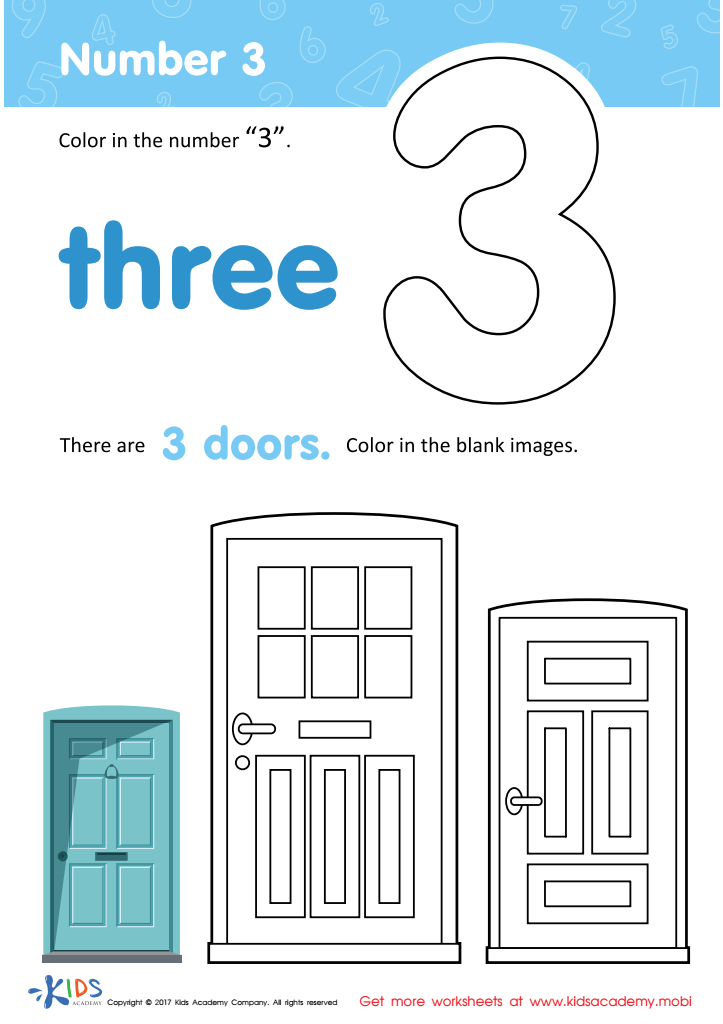
Open the door to learning numbers! This counting coloring page helps kids recognize and count to 3, while using imagination and creativity to design lovely doors. It's a fun way to learn numbers!
Download (PDF)
Assign to My Students
Number 3 Worksheet
Worksheet
Counting on the City Skyline: Dot-to-Dot Worksheet


Counting on the City Skyline: Dot-to-Dot Worksheet

Kids will love connecting the dots to make a superhero skyline! They'll reinforce their number line thinking and number sense while building fine-motor skills. Watch them beam with pride as the cityscape reveals itself, all thanks to some math practice.
Counting on the City Skyline: Dot-to-Dot Worksheet

Worksheet


Counting practice from an early age serves as a crucial foundation for future mathematical proficiency. For children aged 4-8, engaging in easy counting activities offers more than just a head start in math. This practice helps develop number sense—the ability to understand the relationships between numbers and their quantities. This foundational skill is vital for more complex concepts like addition, subtraction, and even problem-solving later in life.

When parents or teachers incorporate counting exercises into a child’s routine, they are also promoting cognitive development. Skills like memory, attention to detail, and logical thinking get honed through counting exercises. Additionally, activities that require counting can enhance fine motor skills when children use manipulatives like beads or blocks.

Counting practice also fosters a sense of confidence and achievement. As children grasp numeric concepts, their self-esteem receives a boost, encouraging a positive attitude toward learning. Socially, group counting activities can improve teamwork and communication skills.

Importantly, early counting sets the stage for lifelong learning. Research shows that early numeracy skills are strong predictors of later academic success. By prioritizing counting activities, parents and teachers are paving the way for a child’s educational journey, ensuring readiness not just for advanced math, but for a host of learning opportunities ahead.