Understanding measurements Easy Worksheets for Ages 4-8
10 filtered results
-
From - To
Our "Understanding Measurements Easy Worksheets for Ages 4-8" are designed to spark curiosity and foundational math skills in young learners. Each colorful and engaging worksheet helps children grasp basic measurement concepts through fun exercises involving length, height, weight, and volume. Tailored to suit ages 4-8, these worksheets encourage kids to compare, sort, and measure everyday objects, fostering both critical thinking and practical understanding. With our easy-to-follow activities, your child will develop confidence in using measurement vocabulary and tools. Perfect for classroom or home use, this collection makes learning measurements accessible and enjoyable for early learners.
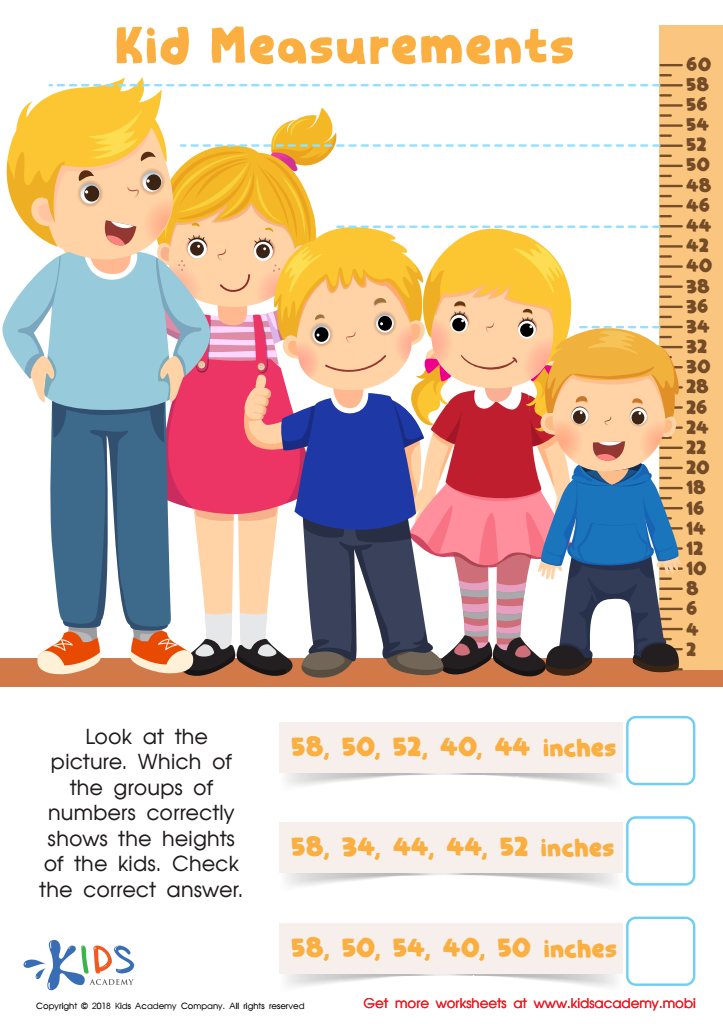
Kids Measurements Worksheet
 Assign to My Students
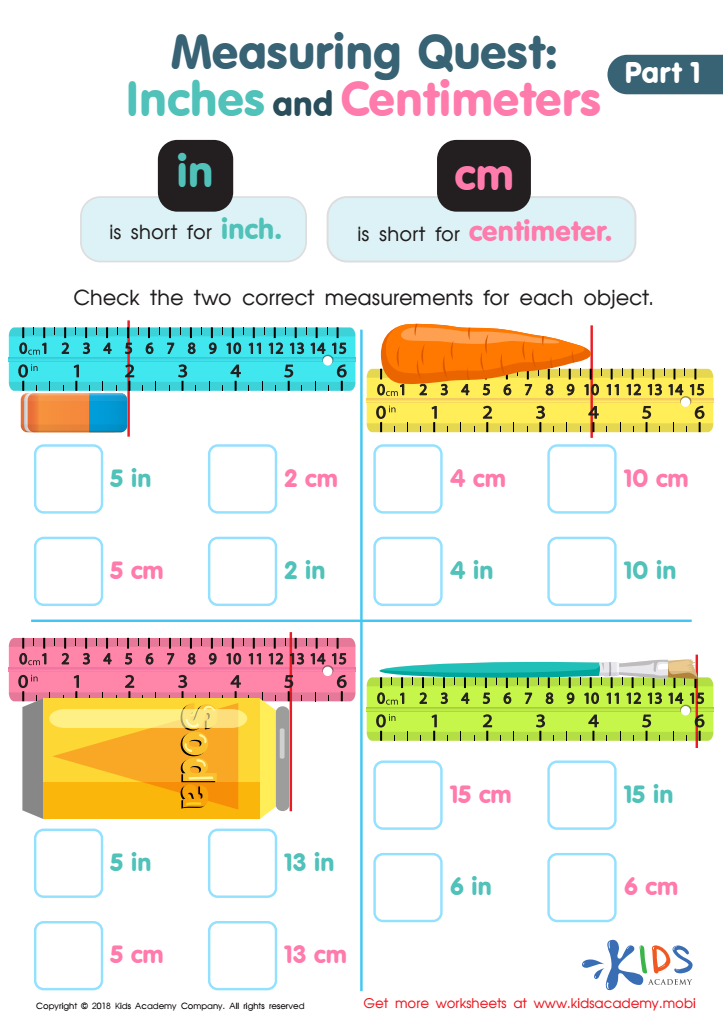
Measuring Quest: Inches and Centimeters Worksheet
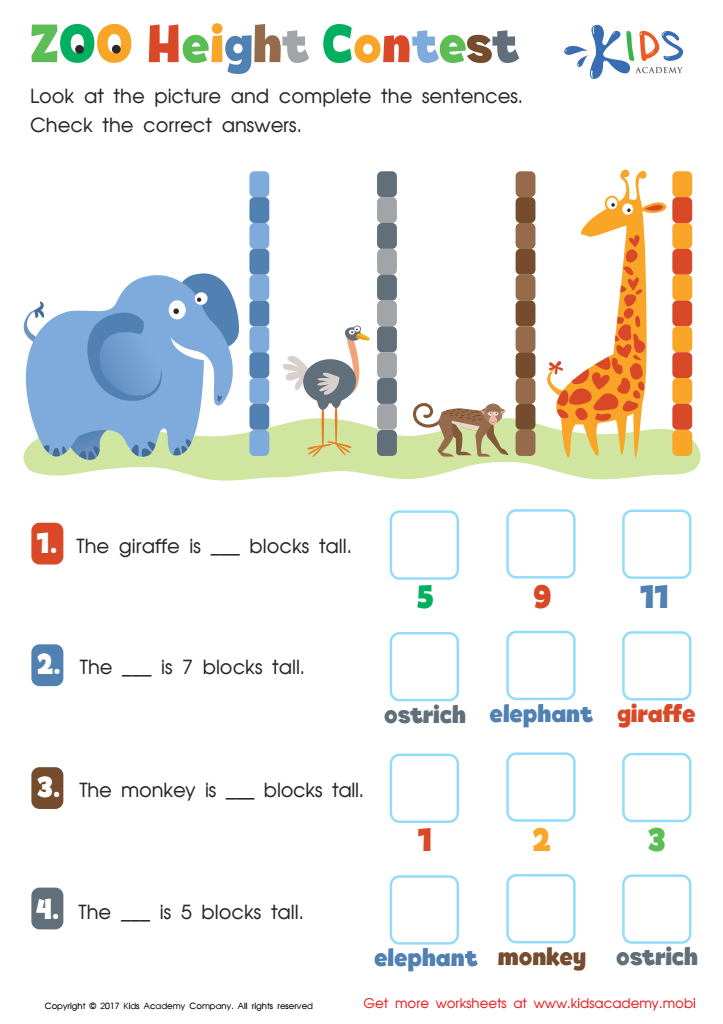
Zoo Height Contest Worksheet
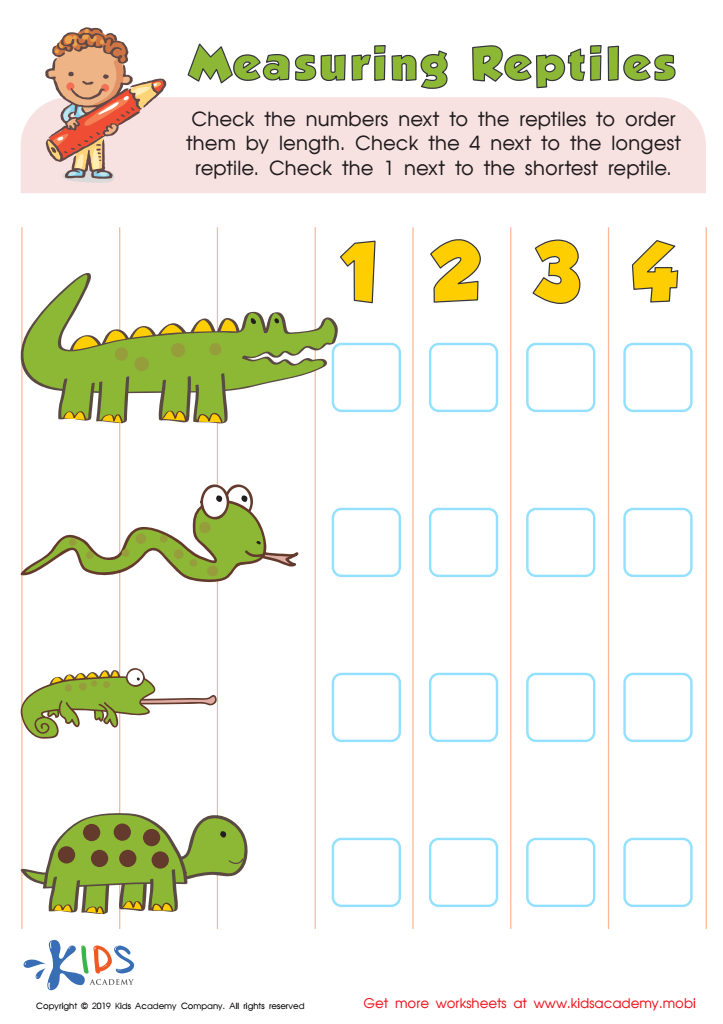
Measuring Reptiles Worksheet
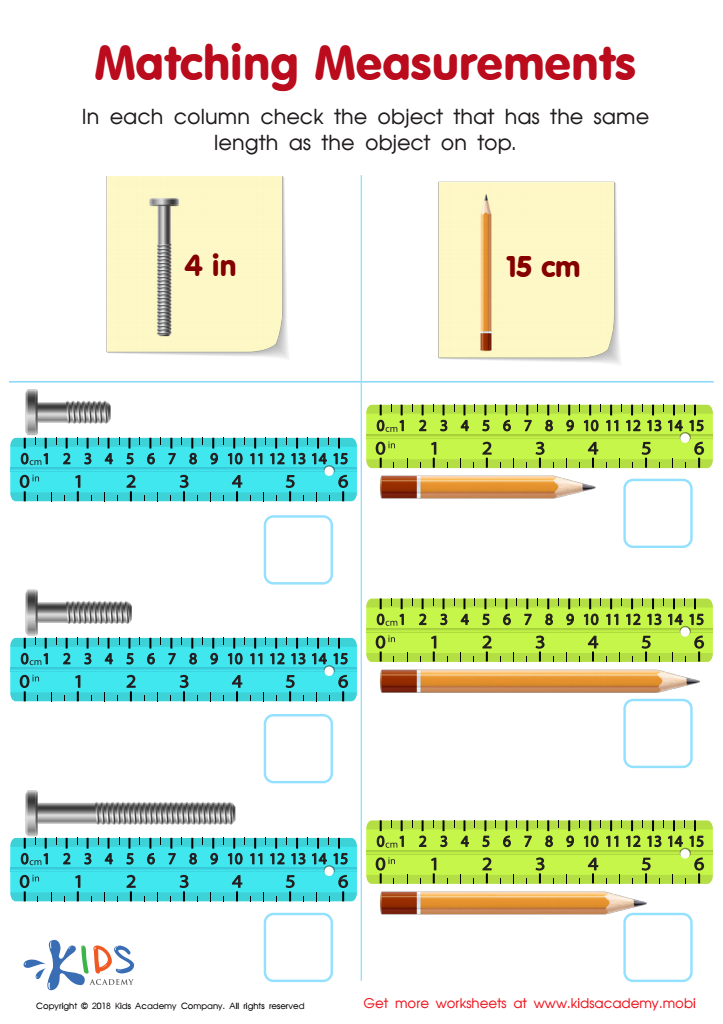
Matching Measurements Worksheet
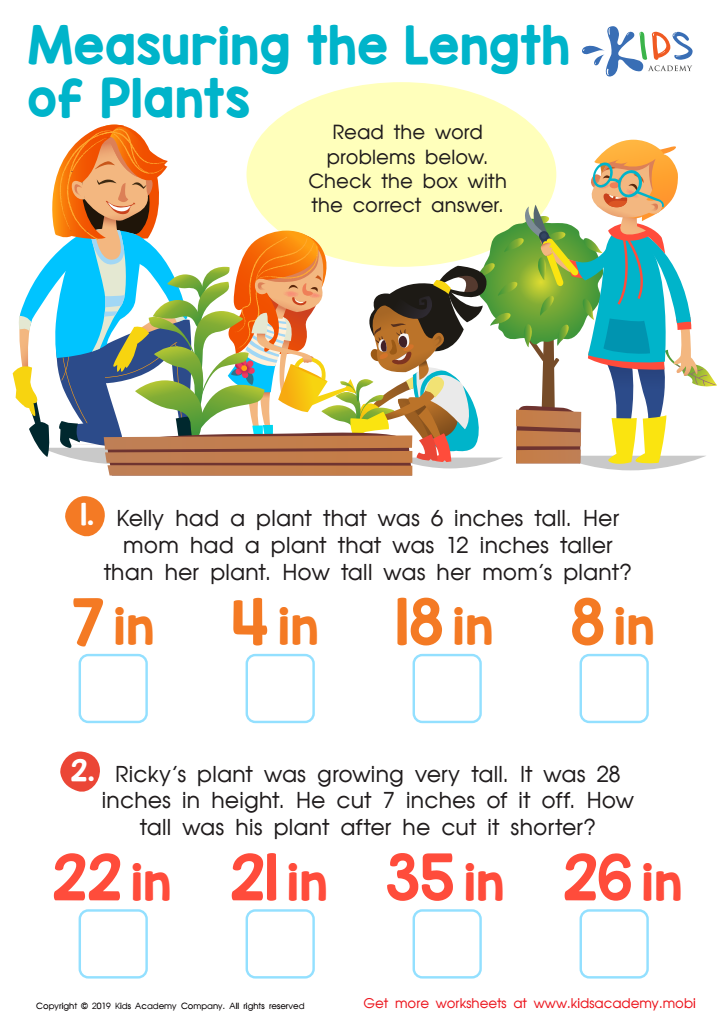
Measuring the Length of Plants Worksheet
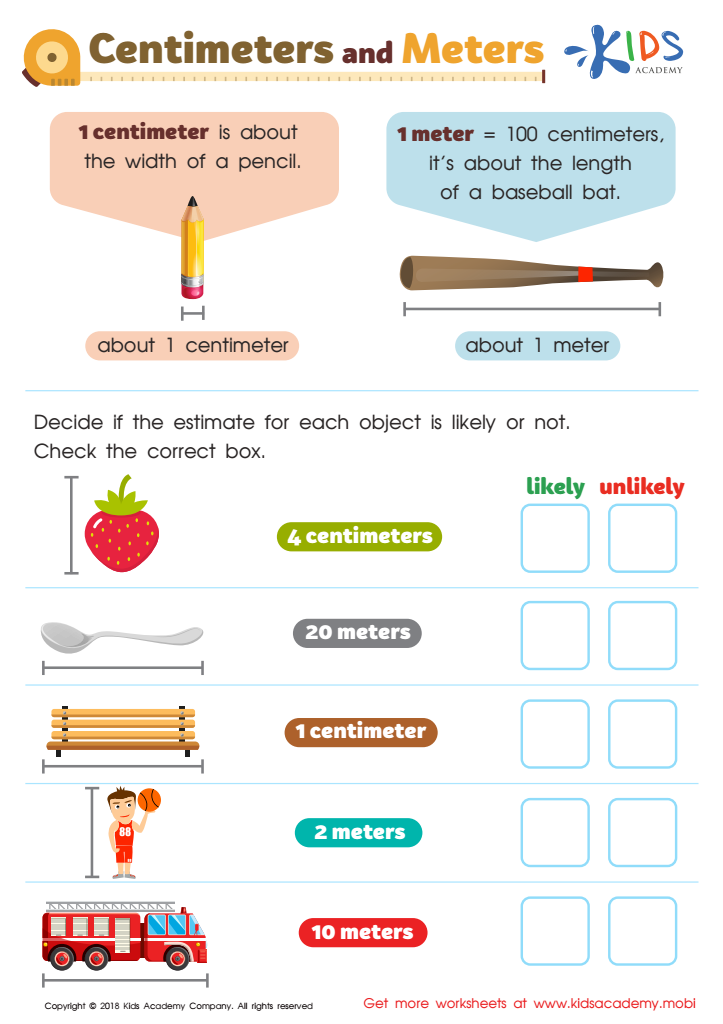
Centimeters and Meters Worksheet
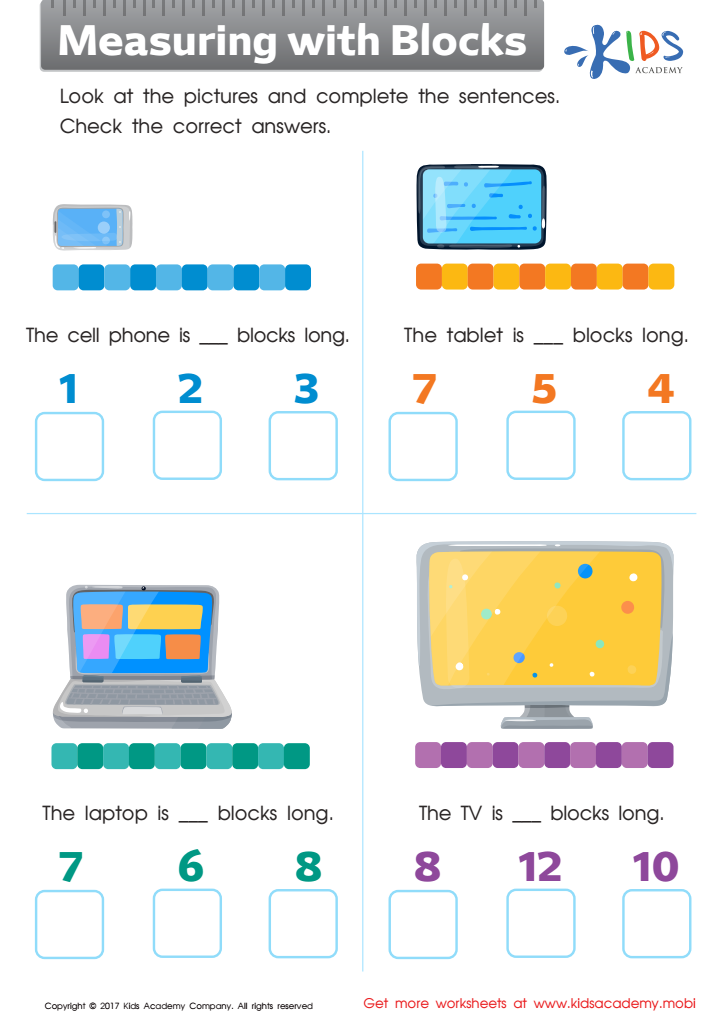
Measuring with Blocks Worksheet
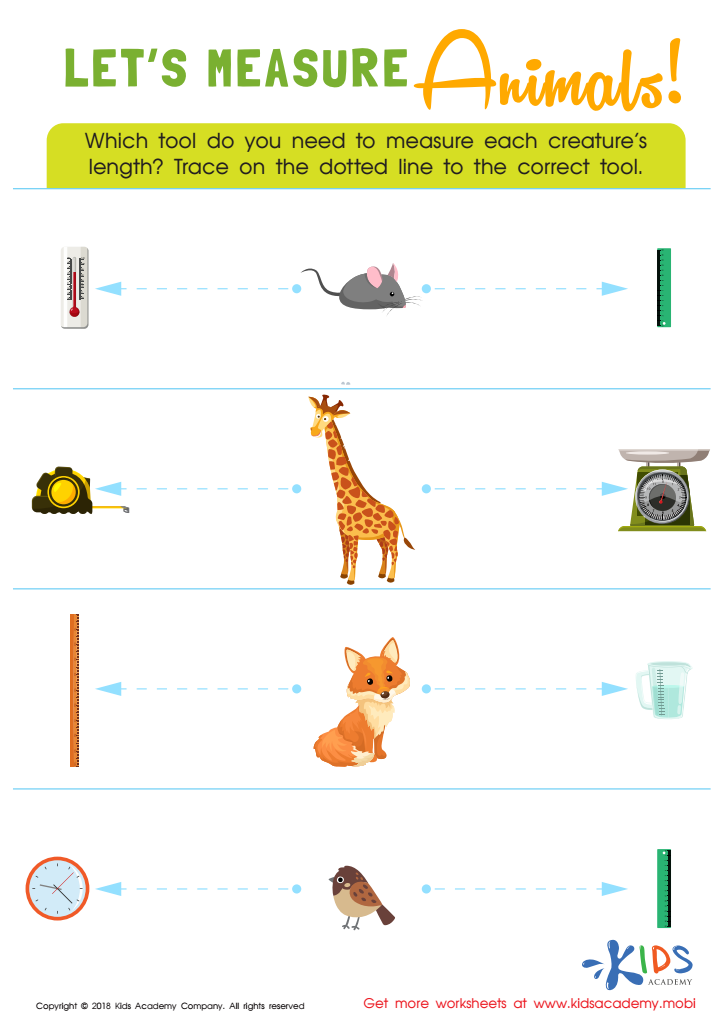
Let's Measure Animals! Worksheet
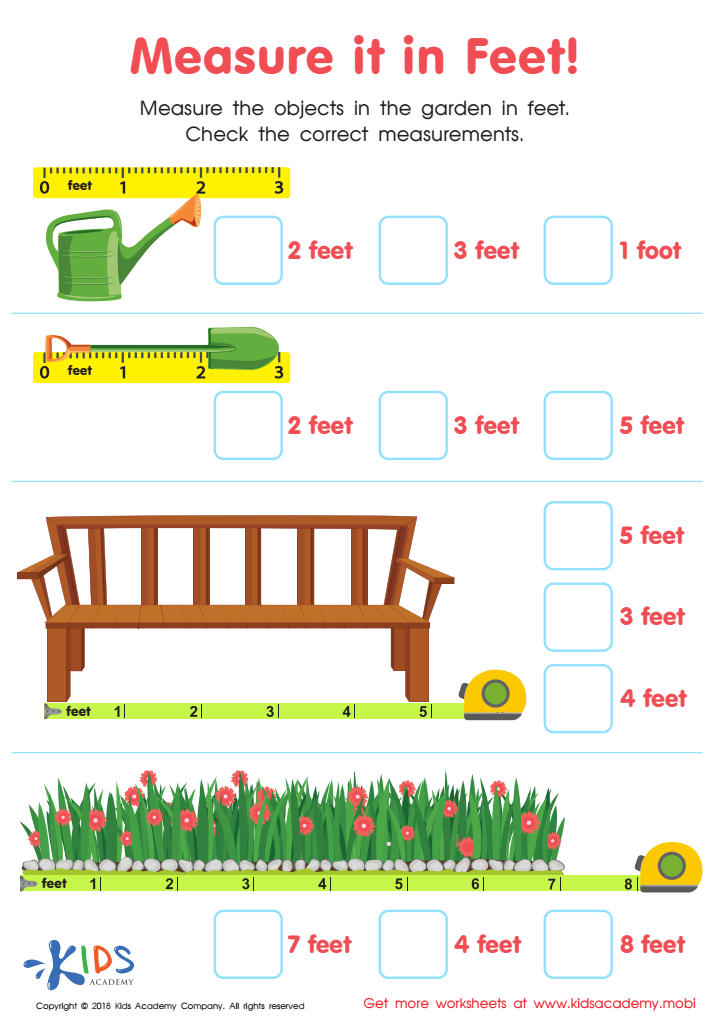
Measure it in Feet Worksheet





Understanding measurements is essential for young children aged 4-8 as it lays the foundation for everyday life skills and future learning in science, technology, engineering, and mathematics (STEM). For parents and teachers, making measurements easy and engaging for this age group fosters a child’s natural curiosity and supports cognitive development.
Firstly, learning measurements helps children understand the world around them. They begin to grasp concepts of size, height, weight, and volume, essential for daily activities like following a recipe, understanding time, and organizing space. This tangible understanding of abstract concepts builds strong problem-solving skills, enabling kids to make informed decisions.
Moreover, incorporating fun, hands-on activities, such as playing with blocks, using rulers, and cooking, can transform everyday moments into powerful learning experiences. These activities bolster fine motor skills and enhance focus and concentration. Encouraging conversations about measurements also improves vocabulary and language skills, as children learn terms like "taller," "shorter," "heavier," and "lighter."
Additionally, early familiarity with measurement concepts establishes a positive attitude towards math. When children find joy in understanding and exploring measures, they develop confidence in their mathematical abilities, paving the way for academic success.
Therefore, prioritizing easy comprehension of measurements helps children develop critical life skills, fosters a love for learning, and supports their overall intellectual and emotional growth.








