Improve counting skills Easy Math Worksheets for Ages 4-8
6 filtered results
-
From - To
Boost your child's counting skills with our Easy Math Worksheets designed for ages 4-8! These fun and engaging worksheets from Kids Academy provide a variety of exercises to help young learners grasp essential counting concepts. Each printable worksheet combines playful illustrations with age-appropriate challenges, encouraging kids to count objects, recognize numbers, and understand sequences. Perfect for both classroom use and at-home practice, our worksheets support lifelong numeracy skills and build a solid mathematical foundation. Keep your child ahead of the curve and make counting fun with Kids Academy's expertly crafted and easy-to-use resources!
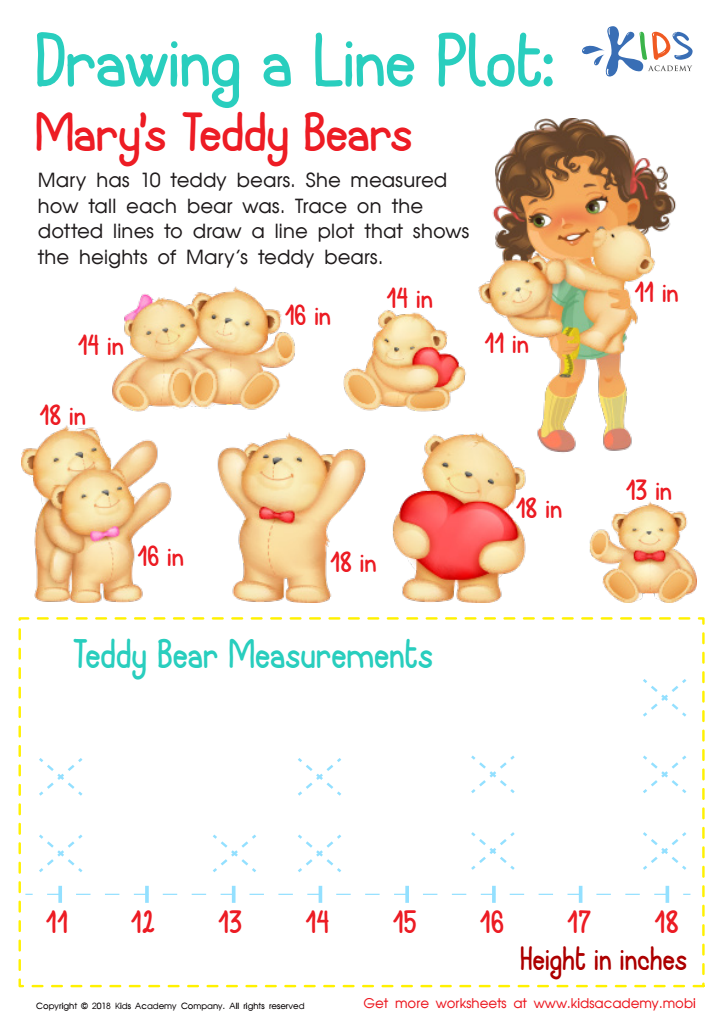
Drawing and Line Plot: Mary's Teddy Bears Worksheet
 Assign to My Students
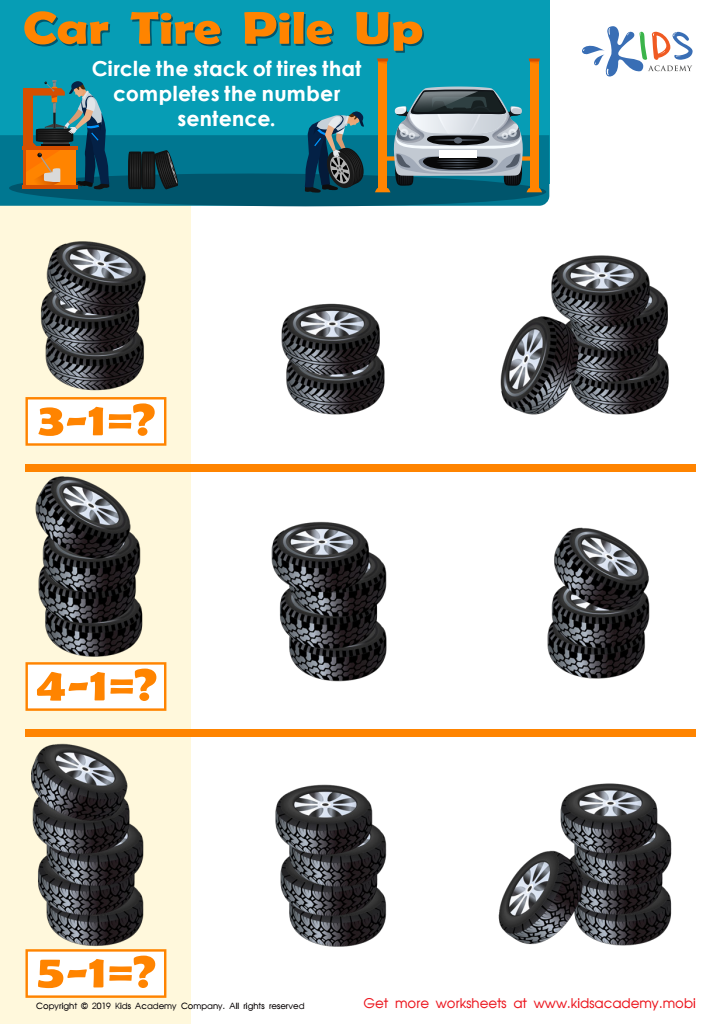
Car Tire Pile Up Worksheet
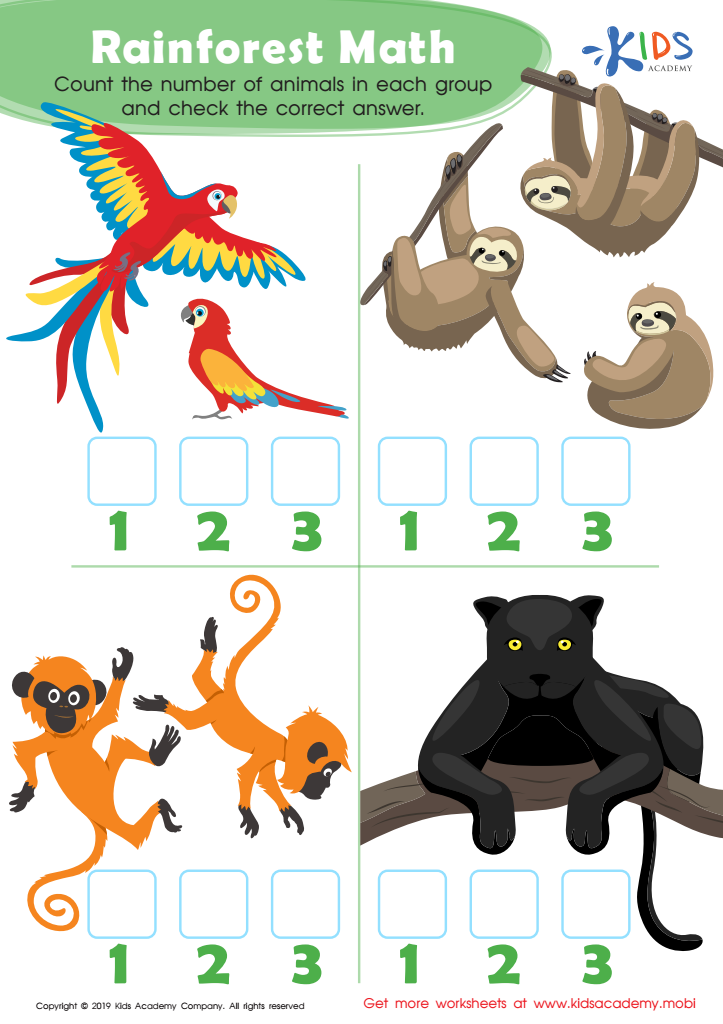
Rainforest Math Worksheet
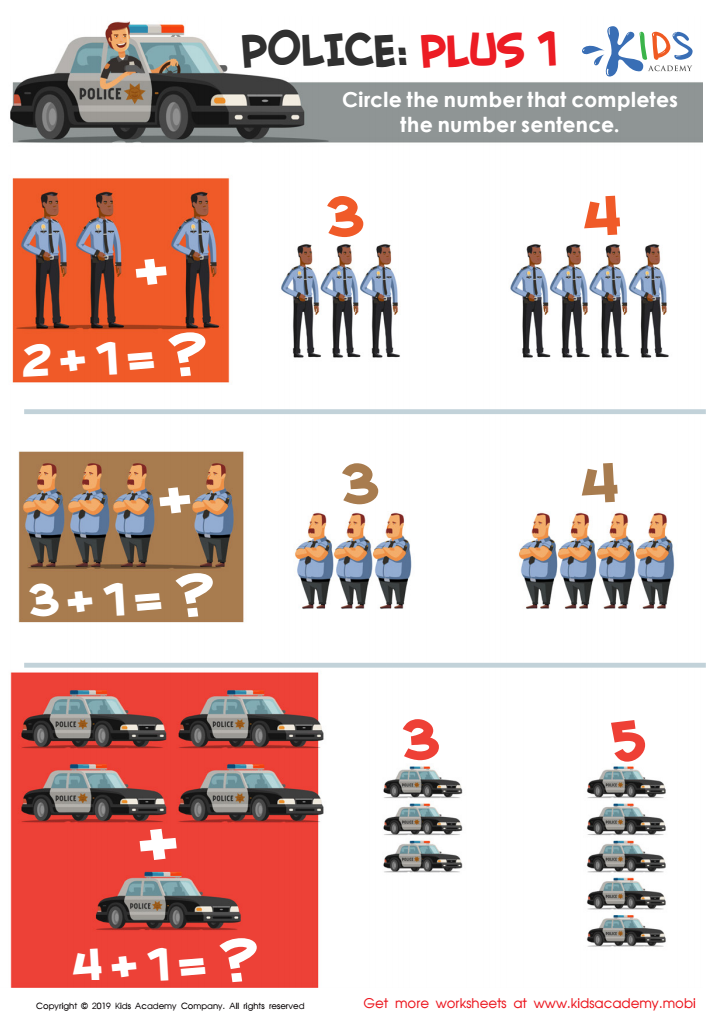
Police: Plus 1 Worksheet
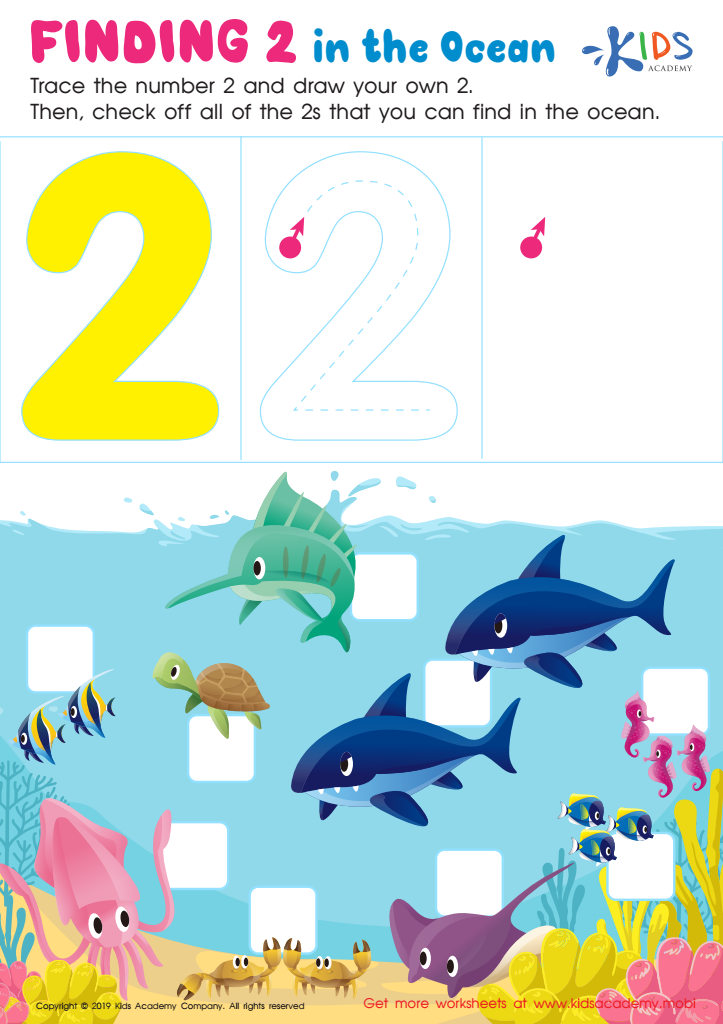
Finding 2: In the Ocean Worksheet
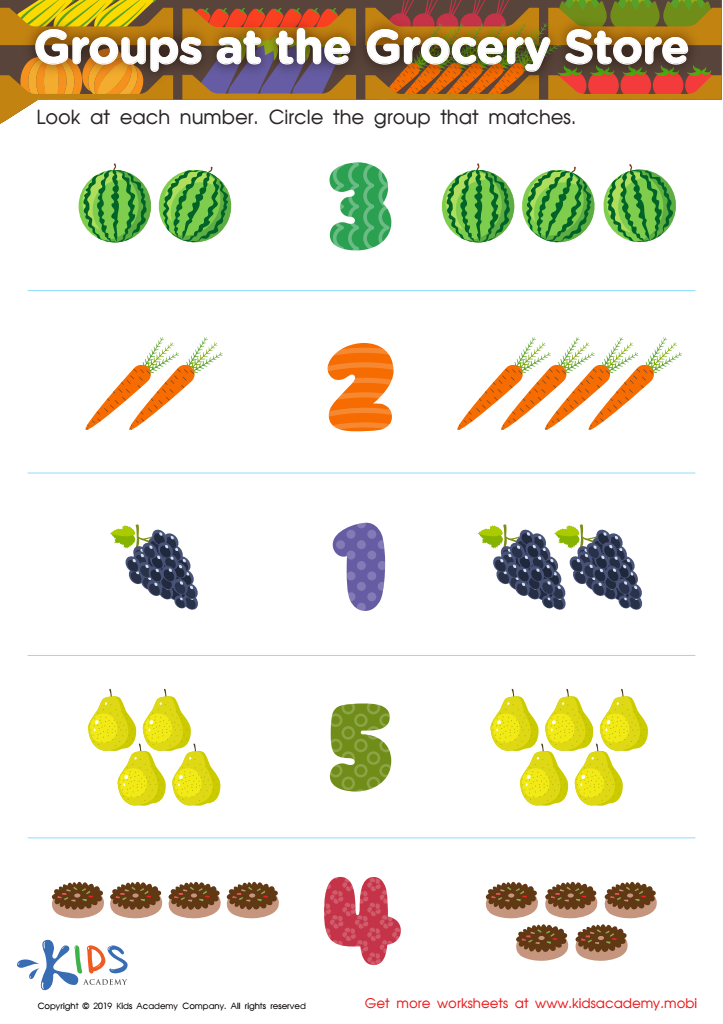
Groups at the Grocery Store Worksheet






Improving counting skills in children aged 4-8 is crucial, as it lays the foundation for all future mathematical understanding and academic success. During these formative years, children's brains are highly adaptable, making it an optimal time to develop numeracy skills. When parents and teachers focus on easy math activities and counting exercises, they help kids grasp basic concepts such as number recognition, sequencing, and simple addition and subtraction. These early skills are stepping stones to more complex math topics they will encounter in later grades.
Counting ability is not just about numbers; it enhances cognitive abilities like memory, attention to detail, and problem-solving. These skills are transferable to other areas, such as reading and science, thus contributing to a well-rounded education. Furthermore, confidence in counting and basic math can significantly boost a child's self-esteem and willingness to tackle challenges, fostering a positive attitude toward learning.
Additionally, good counting skills develop practical, everyday skills like telling time, handling money, and understanding quantities, which are essential for real-world problem-solving. By integrating fun and interactive counting activities at home and in the classroom, parents and teachers can ensure children build a solid mathematical foundation, setting them up for long-term academic and personal success.








