Number Sequencing Easy Worksheets for Ages 4-9
6 filtered results
-
From - To
Discover the perfect way to boost your child’s numerical skills with our "Number Sequencing Easy Worksheets for Ages 4-9." Designed specifically for young learners, these engaging worksheets make learning number order fun and interactive. Our carefully crafted exercises enhance children's understanding of numerical patterns, while supporting their overall math confidence. Colorful and captivating, these worksheets cater to various skill levels, ensuring every child finds a suitable challenge. Ideal for parents and educators alike, they provide a solid foundation in early math skills. Make number sequencing easy and enjoyable with our comprehensive resources today!
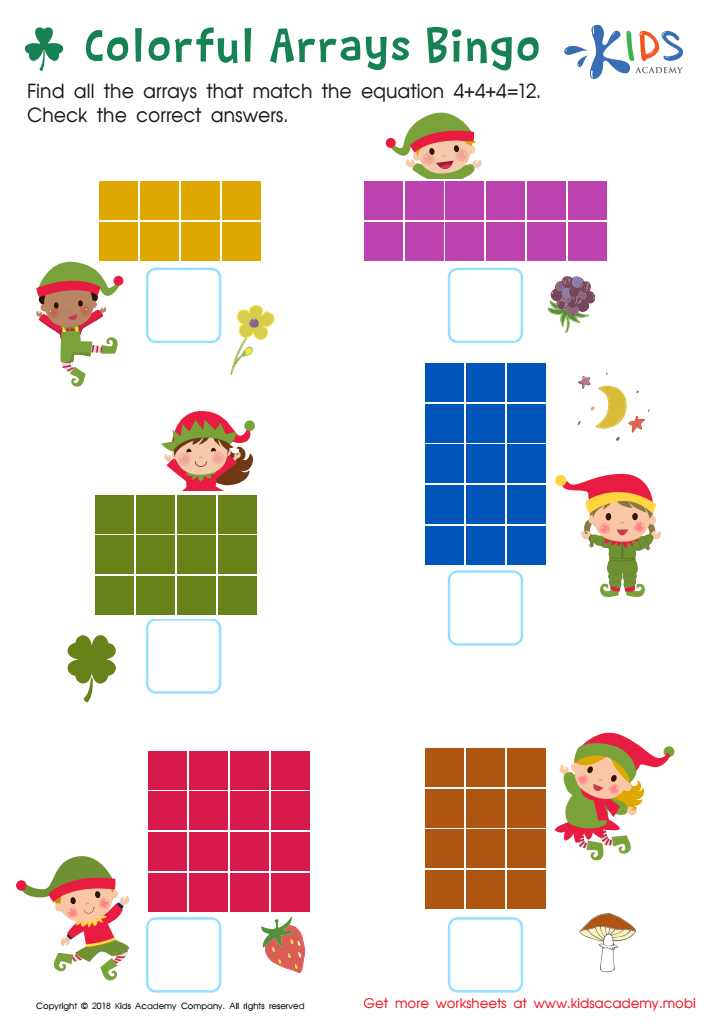
Colorful Arrays Bingo Worksheet
 Assign to My Students
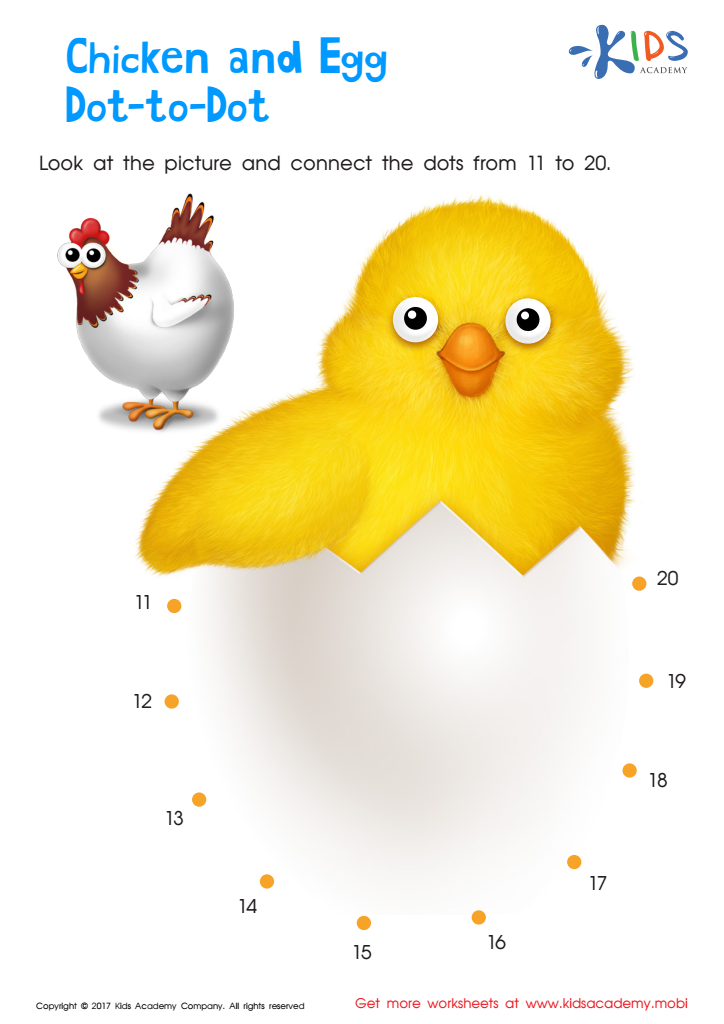
Ordering 11–20: Chicken & Egg Dot–to–dot Worksheet
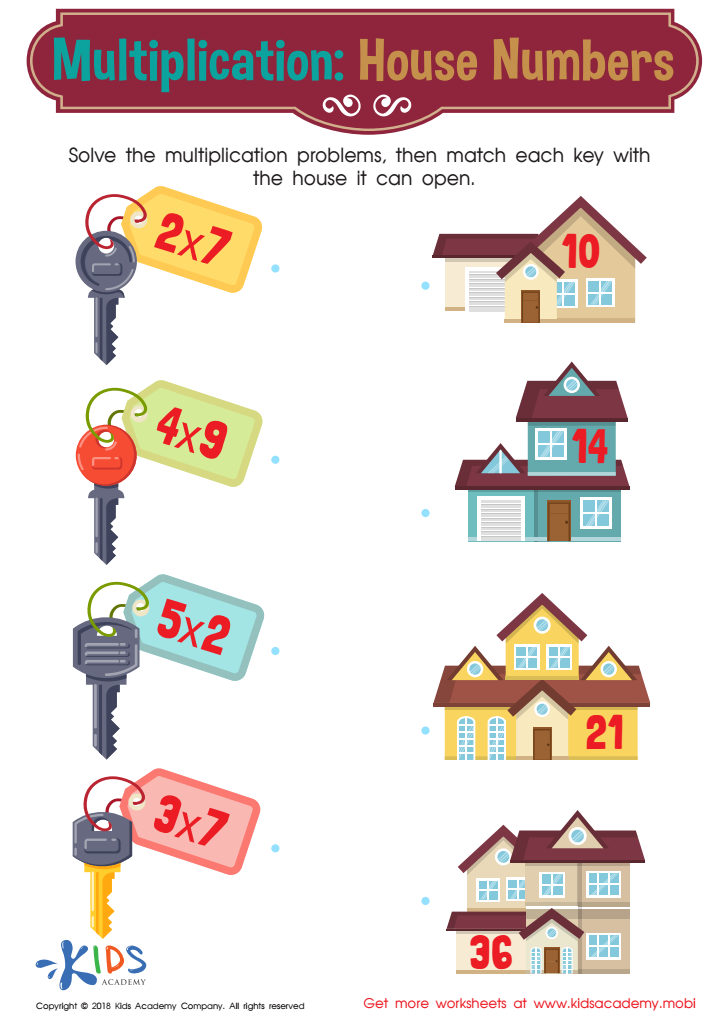
House Numbers Worksheet

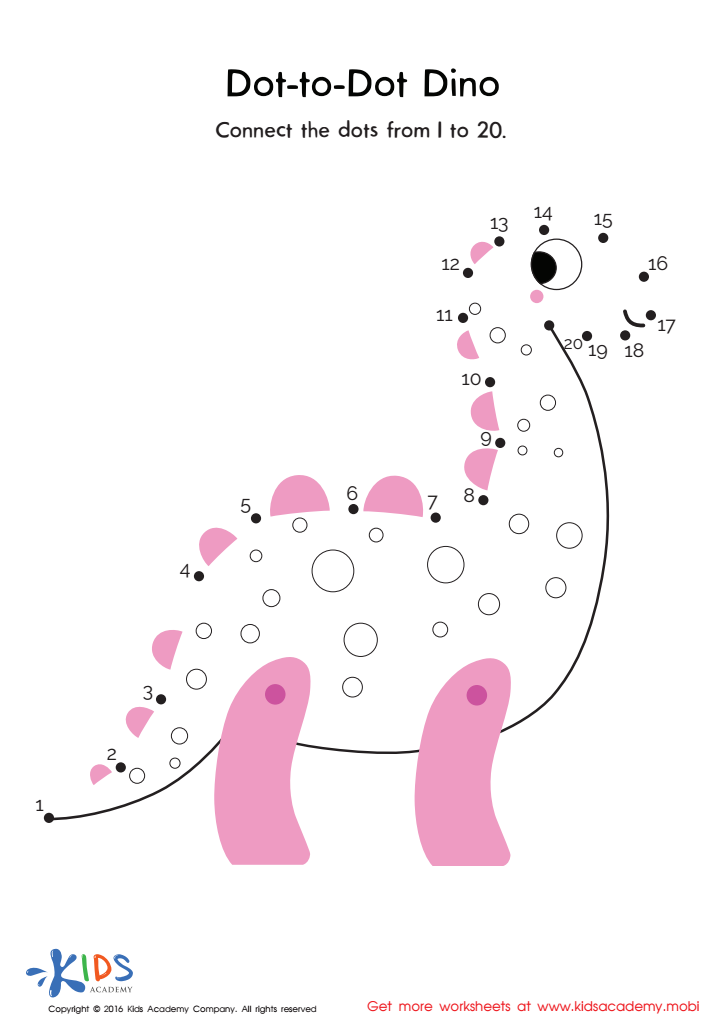
Dot to Dot Worksheet for 3rd Grade
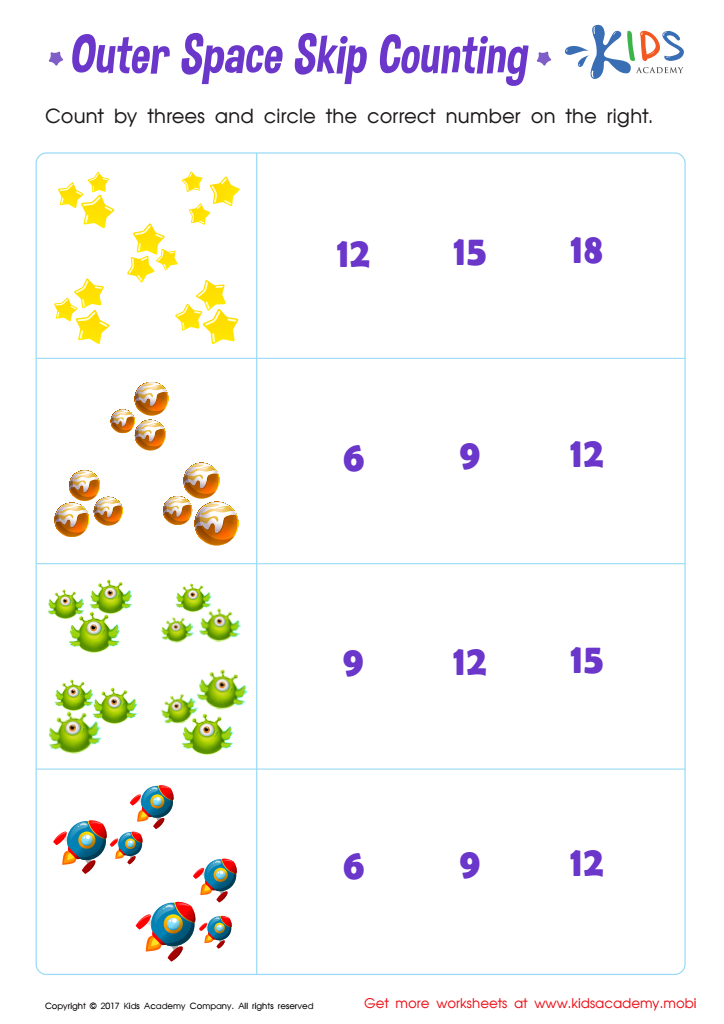
Skip Counting by 3s: Outer Space Skip Counting Printable







Number sequencing is foundational for early childhood education, particularly for children between the ages of 4 and 9. These formative years are critical in shaping a child's mathematical skills, cognitive development, and logical reasoning abilities. Parents and teachers should prioritize number sequencing for several reasons.
Firstly, understanding number sequences helps children grasp basic numerical concepts such as order, value, and pattern recognition. This builds a strong foundation for more complex mathematical operations like addition, subtraction, multiplication, and division. Sequencing nurtures a child's ability to organize information logically, enhancing their problem-solving skills.
Secondly, number sequencing aids in developing fine motor skills and hand-eye coordination. Activities such as arranging number cards or counting objects require children to manipulate small items, which fosters their physical dexterity.
Additionally, number sequencing promotes cognitive skills such as memory and attention to detail. Remembering and predicting subsequent numbers trains the brain to store and process information efficiently.
Moreover, mastering this skill boosts a child's confidence and motivation. Consistent practice and success in number sequencing can lead to a positive attitude towards math and learning in general, reducing math anxiety in later years.
In summary, focusing on number sequencing in early education equips children with essential mathematical skills, cognitive strength, and confidence, laying a solid groundwork for their future academic success.








