
Sentence construction Easy Worksheets for Ages 4-9
6 filtered results
Difficulty Level
Grade
Age
-
From - To
Subject
Activity
Standards
Discover our Sentence Construction Easy Worksheets for ages 4-9, designed to enhance your child’s language and grammar skills effortlessly! Our expertly crafted worksheets focus on improving vocabulary, sentence formation, and punctuation through engaging and age-appropriate activities. Perfect for young learners, these printables are fun, colorful, and simple to follow, making learning enjoyable and effective. Help your child build strong reading and writing foundations with our easy-to-use resources that cater to beginners and advance as your child grows. Unlock their potential with Kids Academy and watch them excel in sentence construction!
Favorites
With answer key
Interactive
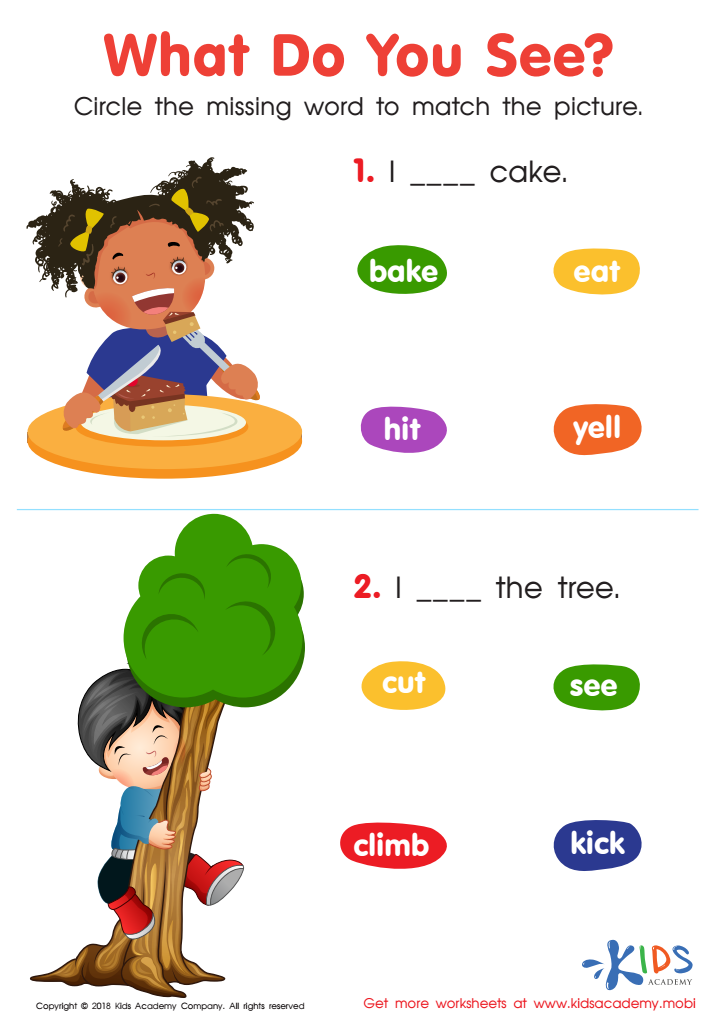
What Do You See? Reading Worksheet
New readers can use the attractive pictures and high-frequency words on this worksheet to practice expressive language skills and decode as they fill in the blanks. As they circle the correct words, they'll feel like reading superstars!
 Assign to My Students
What Do You See? Reading Worksheet
Worksheet
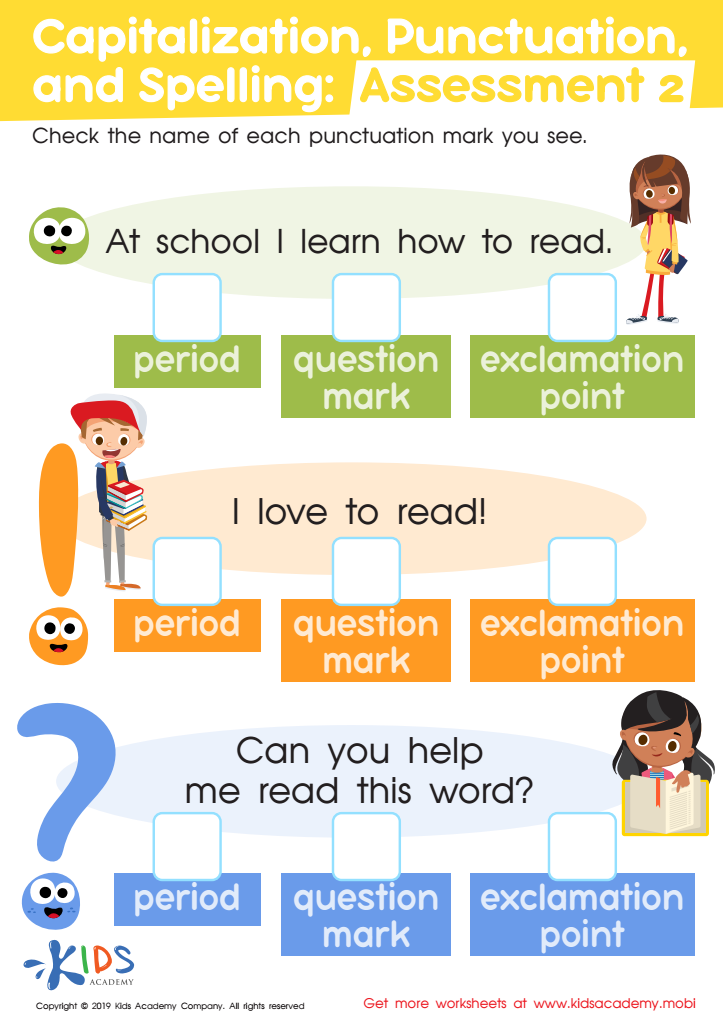
Capitalization. Punctuation. Spelling: Assessment 2 Worksheet
Teach your kids the basics of punctuation. Ask them to name the punctuation marks they know and review a worksheet together. Start with the full stop, question mark and exclamation mark. Show them examples and explain the differences between a comma and semi colon. Teaching proper use of punctuation marks is key to their development.
Capitalization. Punctuation. Spelling: Assessment 2 Worksheet
Worksheet
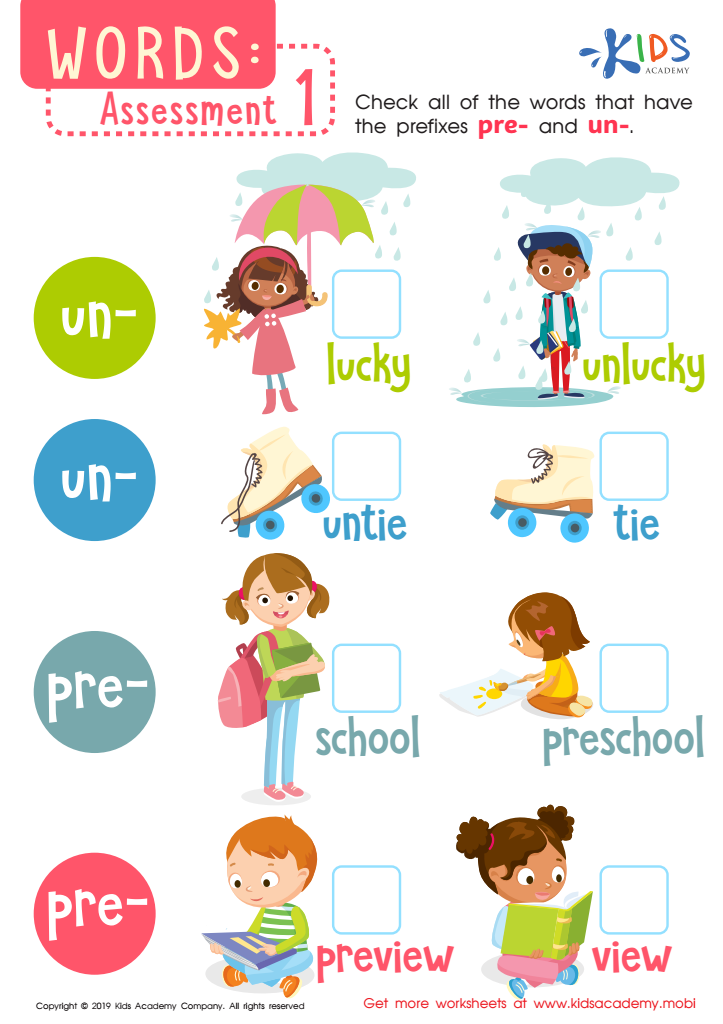
Words: Assessment 1 Worksheet
Help your child develop their knowledge of prefixes and suffixes with Kids Academy! This worksheet can test their understanding of pre- and un-. Have them view the illustrations and read the words to find the targeted prefix in each row. This is a great way to enhance their words and clarify meanings!
Words: Assessment 1 Worksheet
Worksheet
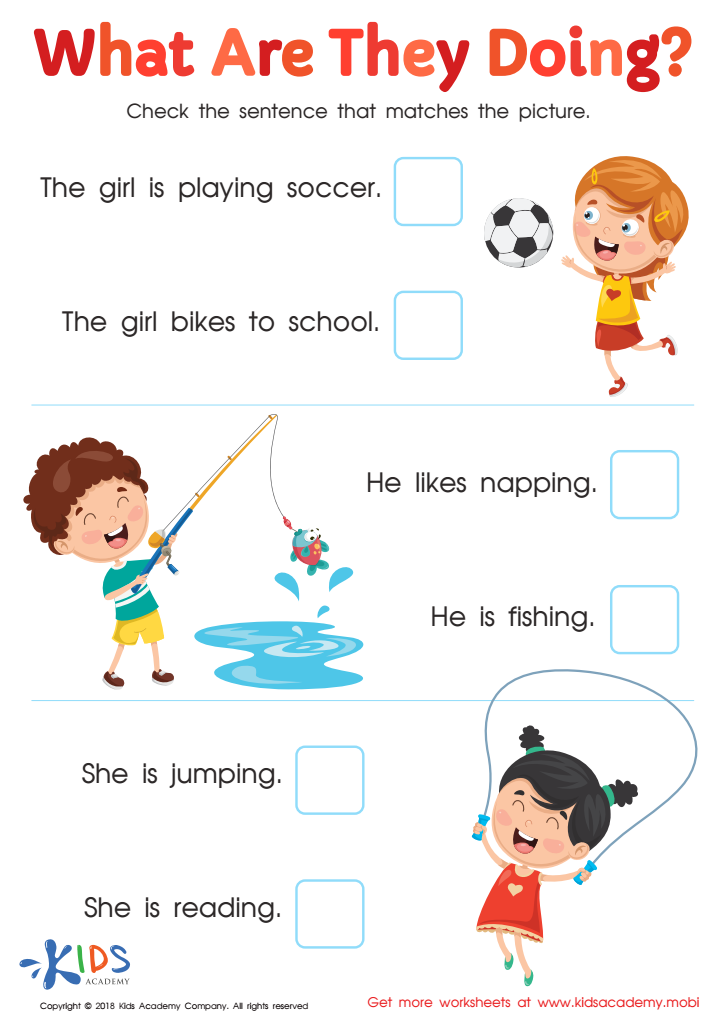
What Are They Doing? Worksheet
Look at the pdf with your child and ask which activities they like. Ask them to match the pictures with the sentences. Read the sentences aloud and help them check the right answers. Encourage them to talk about what they see in the pictures. It's a great way to help them learn.
What Are They Doing? Worksheet
Worksheet
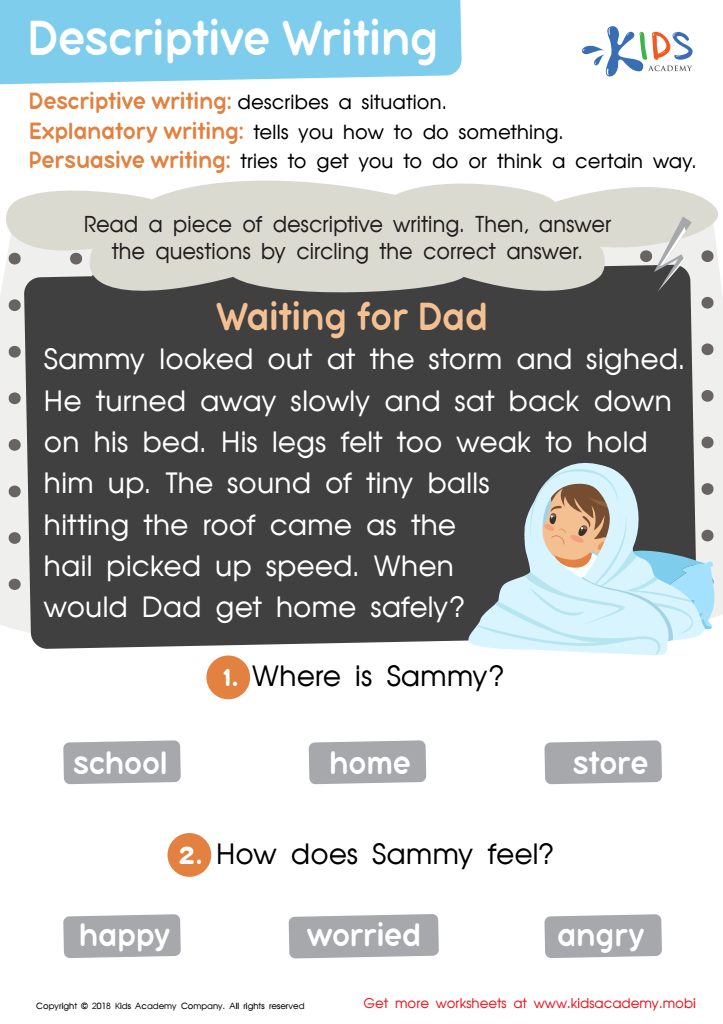
Descriptive Writing Worksheet: Part 2
In this worksheet, your kids will explore writing styles like descriptive, explanatory and persuasive. Read them the descriptive text, then have them answer the questions. Writing is an art – it's a way to express emotions, tell stories and share information.
Descriptive Writing Worksheet: Part 2
Worksheet
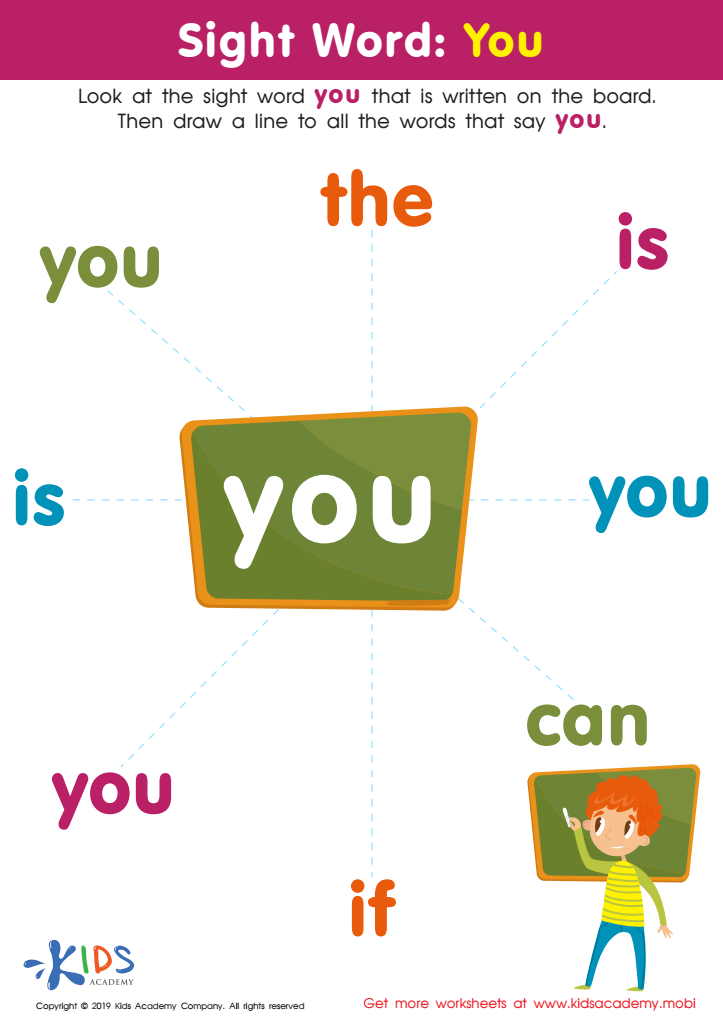
Sight Word You Worksheet
This free worksheet features the word 'you' and helps beginning readers practice visual-discriminatory skills. Using traceable lines and different colored words, it's an easy way to reinforce their identification of the word and build fluency.
Sight Word You Worksheet
Worksheet
Join Kids Academy for Free
Who is primarily going to use this learning content?






Parents and teachers should recognize the significance of developing sentence construction skills in children aged 4-9, as it forms the bedrock of their literacy and communication abilities. At this crucial developmental stage, young learners are transitioning from using simple words to expressing thoughts in complete sentences. Mastery of sentence construction enables them to effectively communicate their ideas, feelings, and needs, which is vital for both academic and social interactions.
An emphasis on clear and coherent sentence formation also bolsters reading comprehension. When children understand how sentences are structured, they better grasp the meaning of texts they encounter, which enhances their overall learning experience. Furthermore, early proficiency in writing helps avoid future educational hurdles; struggling with sentence construction can impede their progress across various subjects.
In addition, learning proper sentence construction nurtures cognitive skills, such as critical thinking and logical sequencing. Children learn to organize their thoughts coherently, fostering problem-solving abilities and creativity.
From an emotional standpoint, being able to express oneself clearly can boost a child's self-esteem and confidence. When children feel understood, they are more likely to participate actively in classroom activities and social groups. Thus, prioritizing sentence construction for ages 4-9 lays a solid foundation for lifelong communication and learning success.








