Fine Motor Skills Easy 2D Shapes Worksheets for Ages 4-9
4 filtered results
-
From - To
Enhance your child's fine motor skills with our engaging 2D Shapes worksheets designed for ages 4-9. Tailored to simplify learning, these fun activities help young learners grasp fundamental concepts of shapes like circles, squares, and triangles while promoting precise hand movements. Excellent for building the foundation of math skills, these printable worksheets make learning enjoyable and achievable. Perfect for classroom settings or at-home practice, they support children's developmental milestones and educational creativity. Download now to help your child excel in early shape recognition and fine motor control, blending education with endless fun!
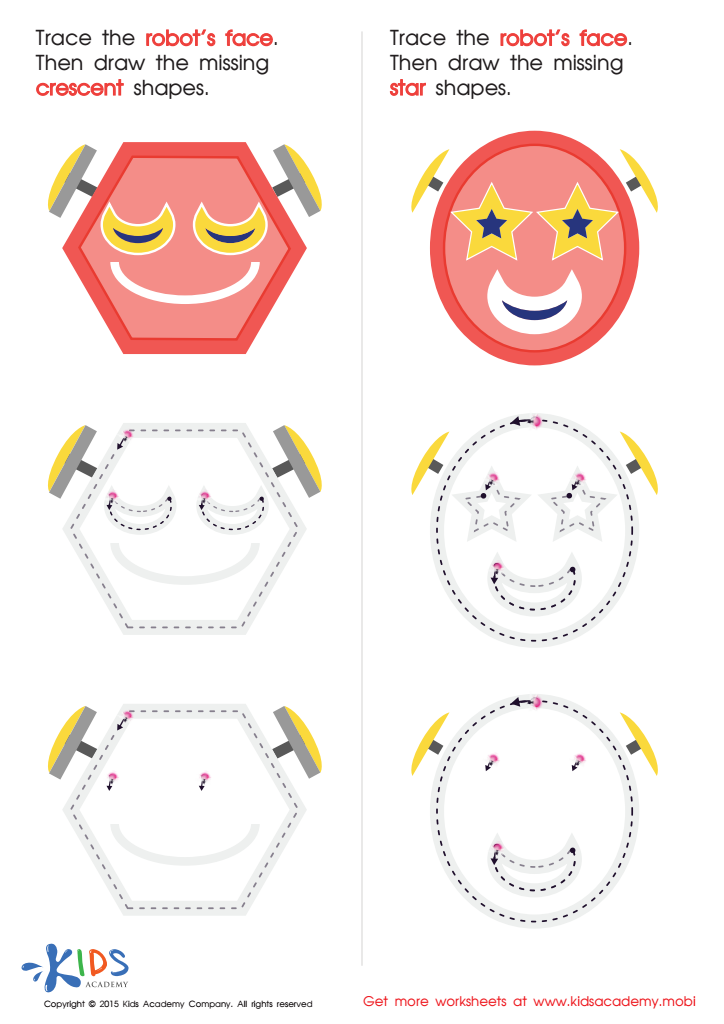
Composing a Robot's Face of Crescents And Stars Worksheet
 Assign to My Students

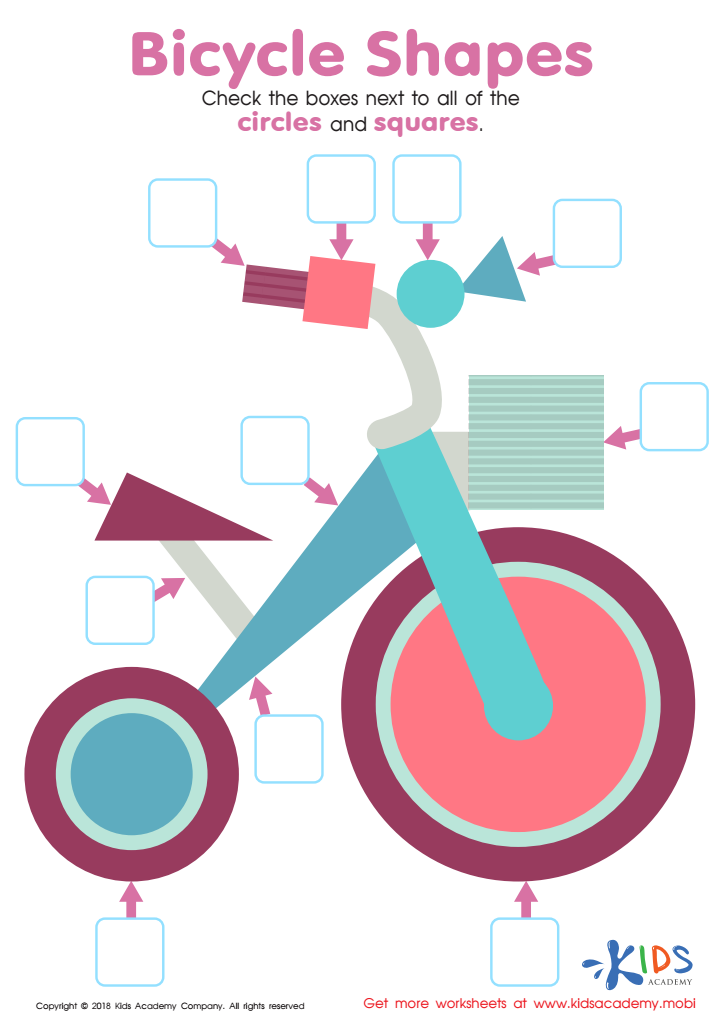
Bicycle Shapes Worksheet
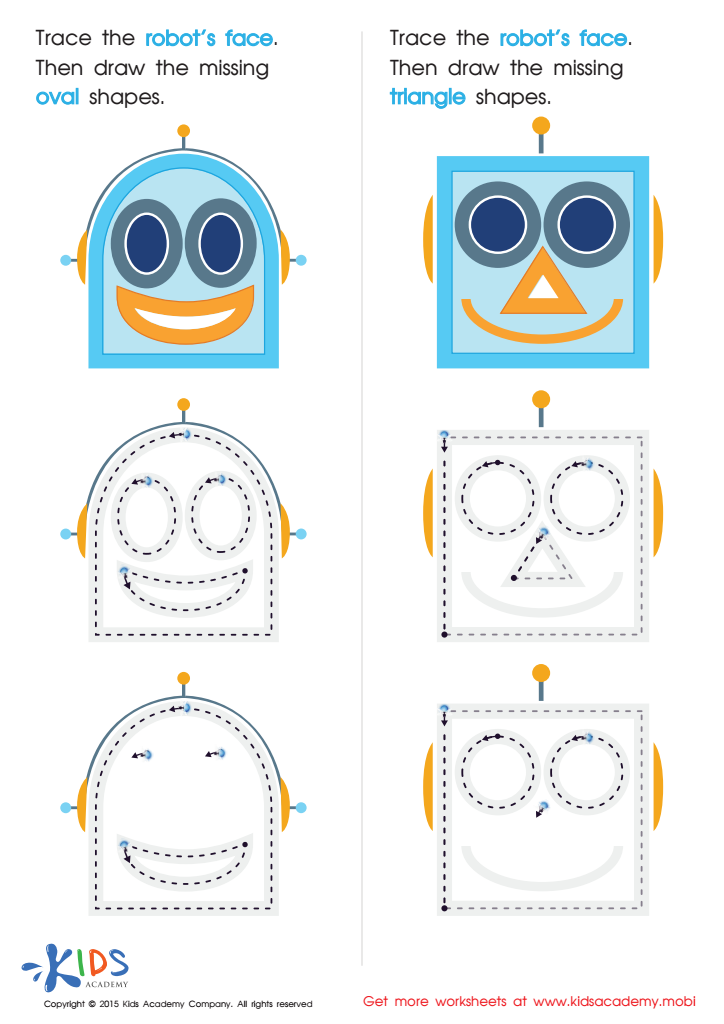
Drawing Ovals And Triangles with Fun Printable
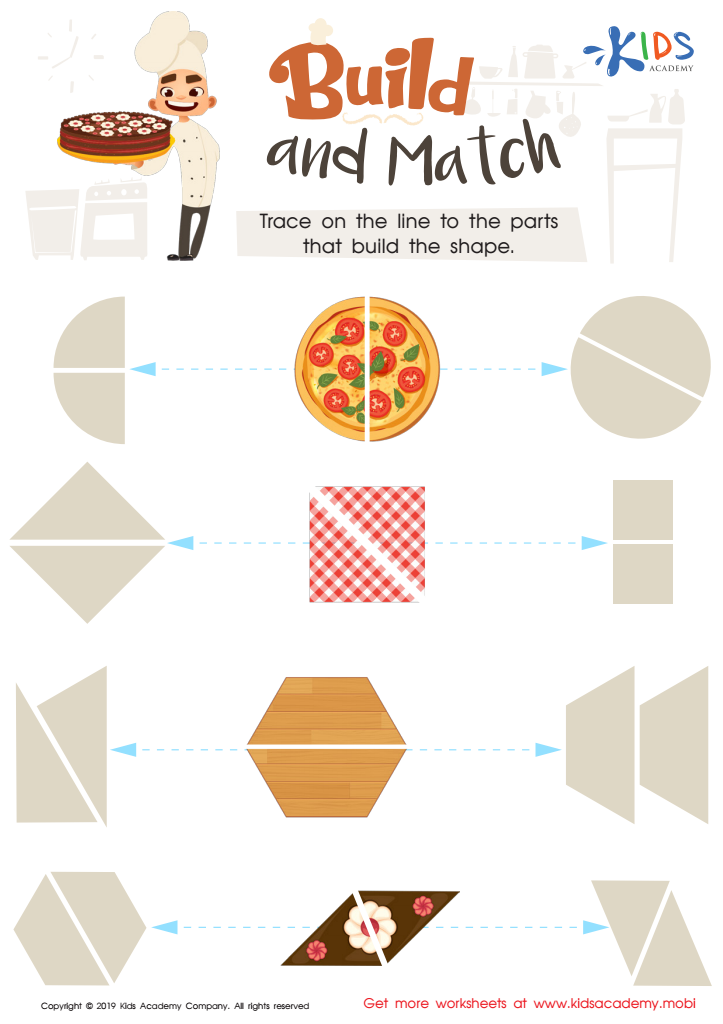
Build and Match Worksheet








Fine motor skills are essential for young children aged 4-9 as they significantly impact their ability to perform daily tasks and succeed academically. These skills involve the coordination of small muscles, particularly in the hands and fingers, which allows children to write, draw, and manipulate small objects accurately. Introducing Easy 2D Shapes as part of their learning activities can be highly beneficial.
When children engage in activities that involve easy 2D shapes, such as drawing, cutting, or tracing, they naturally refine their fine motor skills. These activities require children to use precision and control, enhancing hand-eye coordination, bilateral coordination (using both hands together), and finger dexterity. For example, holding a pencil correctly to draw a circle, or using scissors to cut along a shape's boundary, demands careful muscle movements and spatial awareness.
Additionally, familiarity with basic 2D shapes contributes to cognitive development, including spatial intelligence and problem-solving abilities. When children learn to recognize and recreate shapes like circles, squares, and triangles, they also grasp fundamental concepts in math and geometry. This dual focus on motor and cognitive skills creates a rich, integrative educational experience.
Thus, parents and teachers should pay attention to fine motor skills and incorporate easy 2D shapes in learning activities to support both academic growth and practical life skills.