Fine Motor Skills Easy Geometry Worksheets for Ages 4-9
9 filtered results
-
From - To
Discover engaging Fine Motor Skills Easy Geometry Worksheets designed for kids aged 4-9! Our printable worksheets are perfect for young learners to practice shapes, patterns, and basic geometric concepts while enhancing their fine motor skills. Fun activities like tracing, cutting, and drawing help children develop hand-eye coordination, grip strength, and precision. Tailored to various skill levels, these worksheets make learning geometry enjoyable and productive. Ideal for parents and teachers looking to provide hands-on, educational experiences, our worksheets foster a love for math and creativity in every young mind. Download today and make learning a joyful adventure!
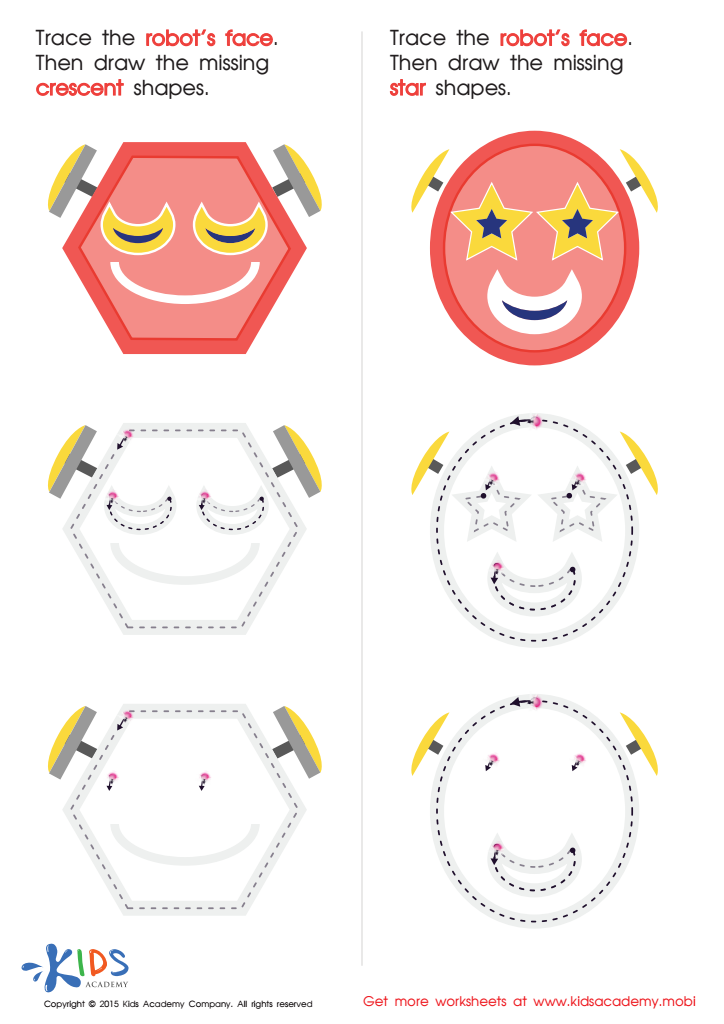
Composing a Robot's Face of Crescents And Stars Worksheet
 Assign to My Students











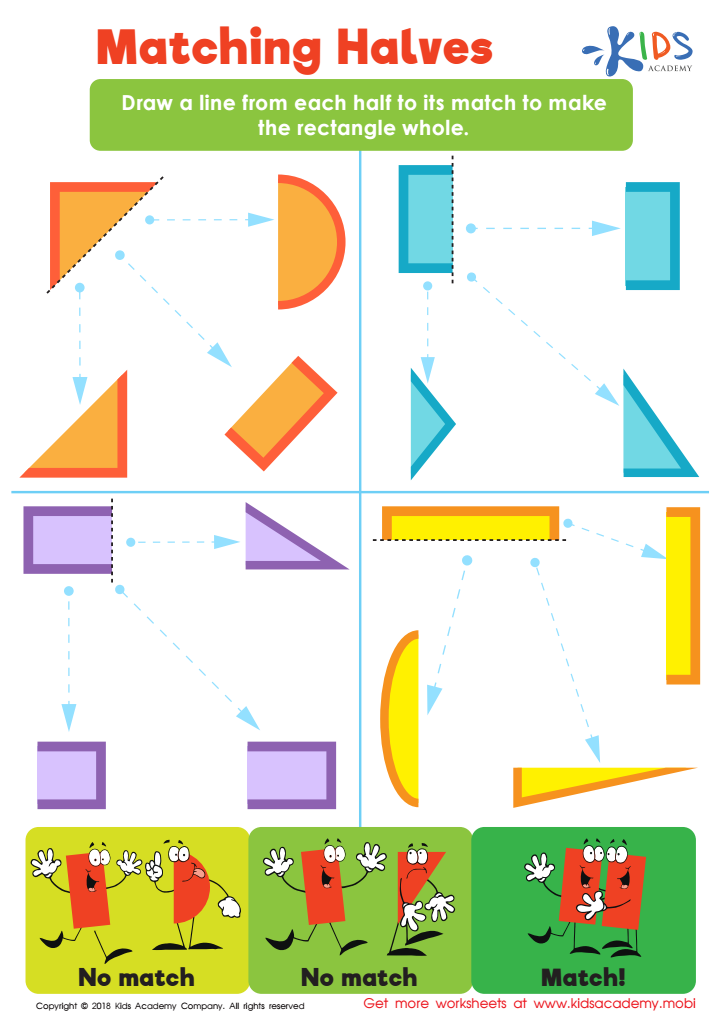
Matching Halves Worksheet
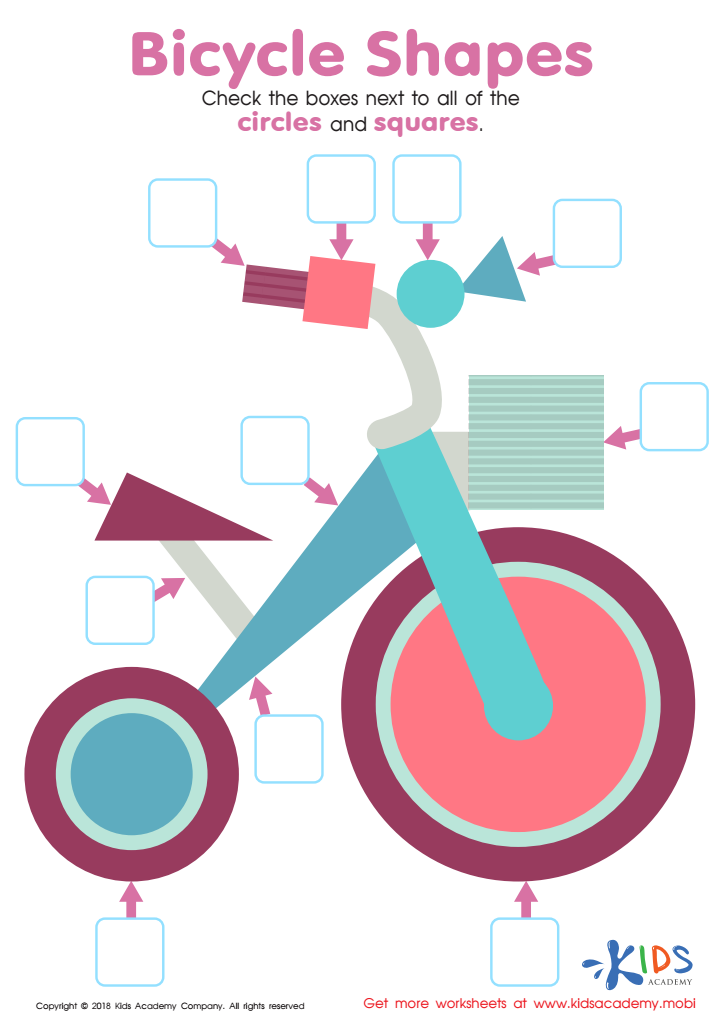
Bicycle Shapes Worksheet
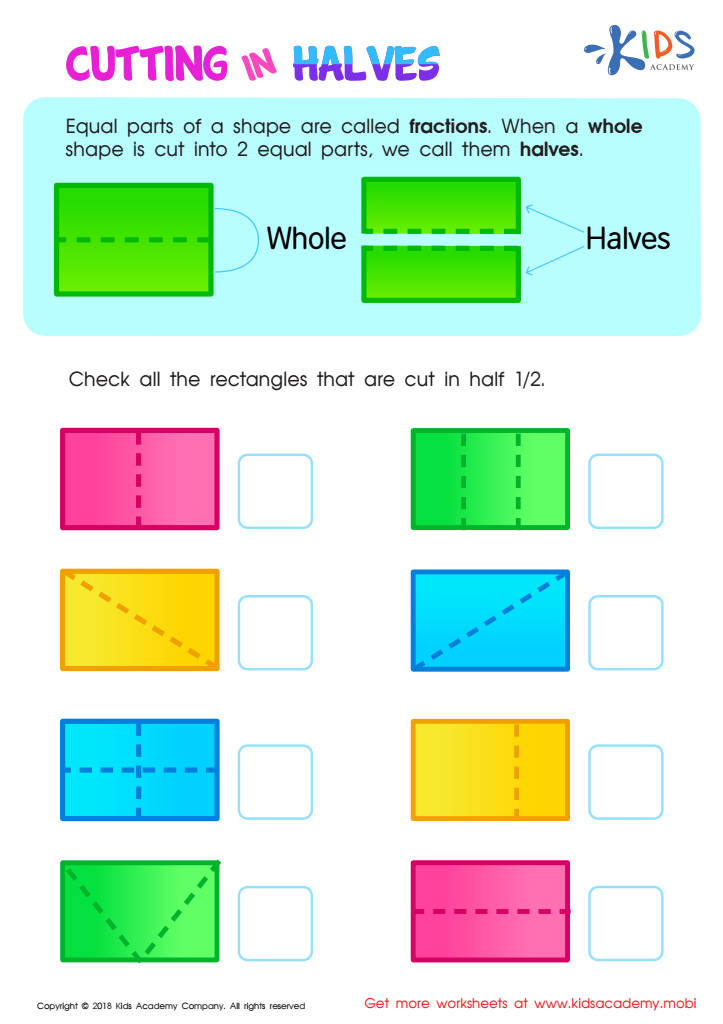
Cutting in Halves Worksheet
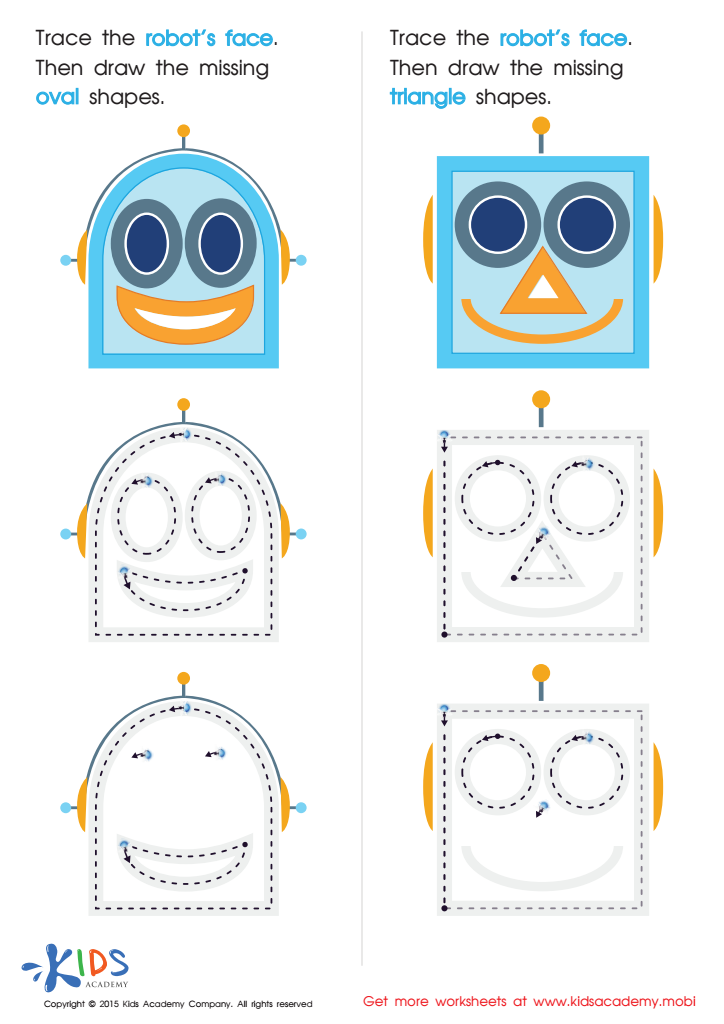
Drawing Ovals And Triangles with Fun Printable
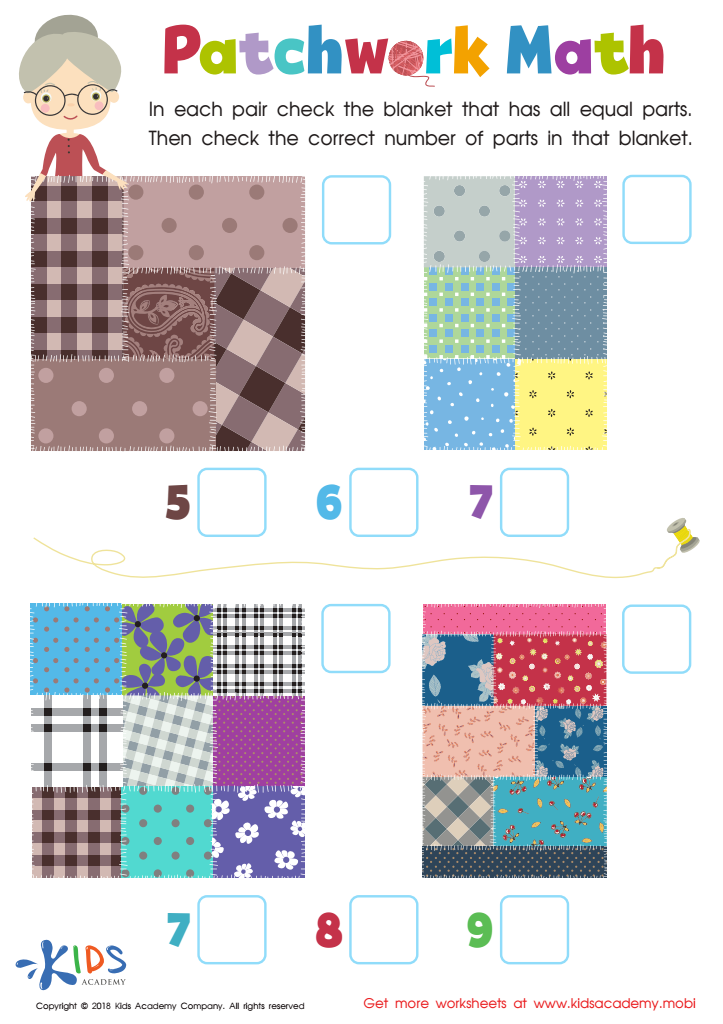
Patchwork Math Worksheet
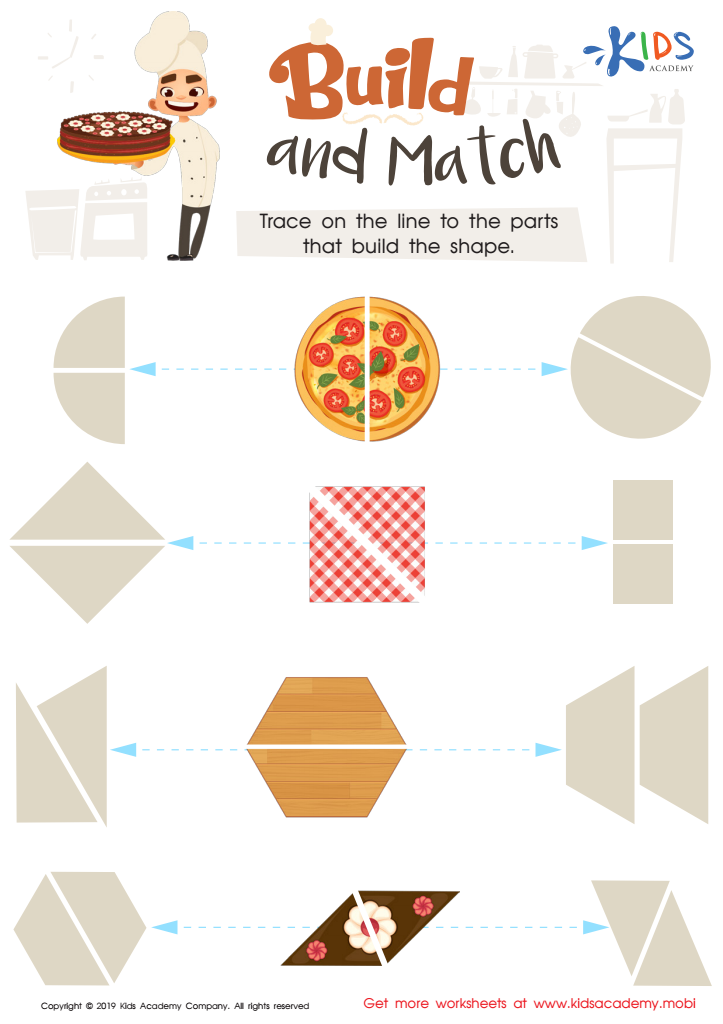
Build and Match Worksheet
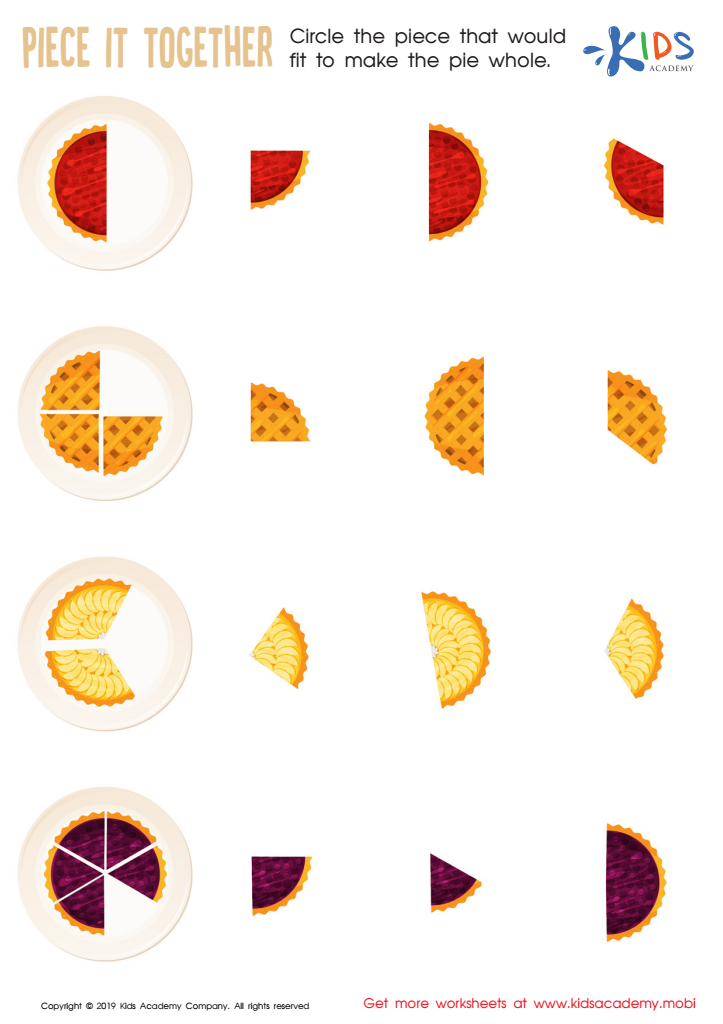
Piece it together Worksheet
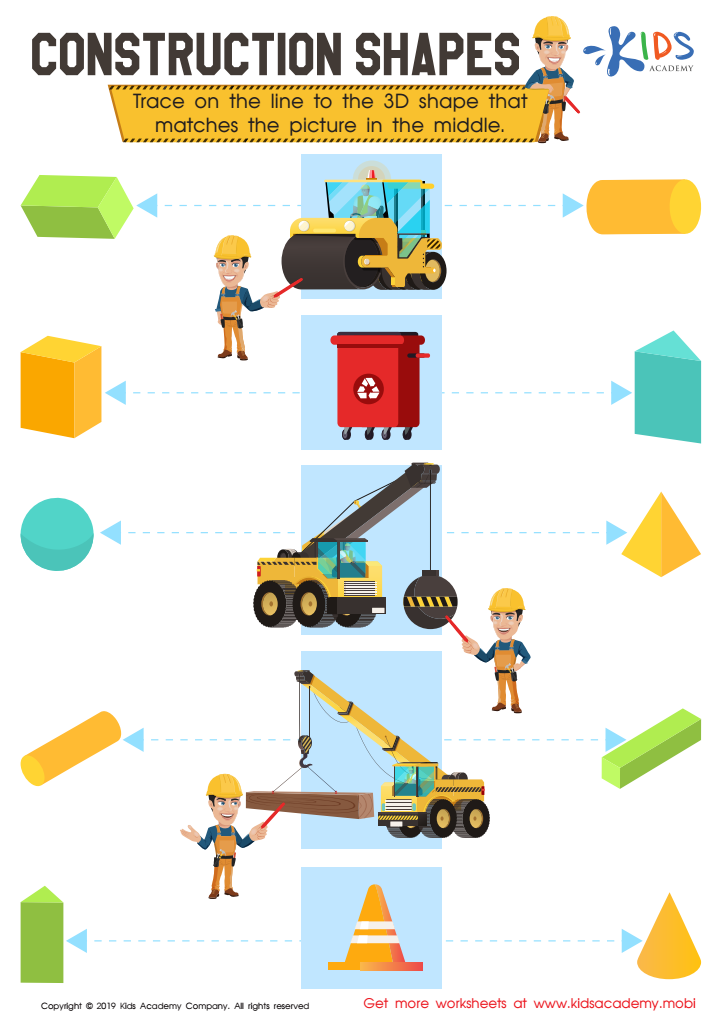
Construction Shapes Worksheet








Fine motor skills and early geometry knowledge are fundamental components in the development of young children aged 4-9 and hold great significance for both parents and teachers.
Fine motor skills involve the coordination of small muscles, particularly in the hands and fingers, and are essential for everyday tasks such as writing, cutting, and buttoning clothes. Developing these skills early enhances a child's independence and self-confidence in performing tasks. Activities that promote fine motor skills, such as drawing shapes, constructing shapes with blocks, or using geo boards, simultaneously bolster hand-eye coordination, dexterity, and precision.
Incorporating basic geometry concepts, such as recognizing and manipulating shapes and spatial awareness, provides a foundation for future mathematical learning. Early geometry introduces children to problem-solving and critical thinking in a tangible and accessible way. These skills are not only underpin fundamental math abilities but also support learning in subjects like science and engineering.
Thus, focusing on fine motor skills and early geometry education for young children holistically nurtures cognitive and physical development. Promoting these skills equips children to perform everyday tasks more efficiently and lays a strong early foundation for academic success and lifelong learning. Parents and teachers who prioritize these areas empower children to explore, understand, and manipulate the world around them with confidence.








