
Basic Arithmetic Easy Worksheets for 4-Year-Olds
5 filtered results
Difficulty Level
Grade
Age
-
From - To
Subject
Activity
Standards
Discover a delightful collection of Basic Arithmetic Easy Worksheets designed specifically for 4-year-olds! These engaging resources introduce young learners to foundational math concepts through fun and interactive activities tailored to their developmental stage. With colorful illustrations and simple exercises, children will practice essential skills such as counting, addition, and subtraction in a playful and encouraging environment. Our worksheets aim to spark curiosity and build confidence in early mathematics, making learning an enjoyable experience. Whether at home or in the classroom, these printable worksheets are perfect for nurturing a love for numbers and laying the groundwork for future math success!
Favorites
With answer key
Interactive
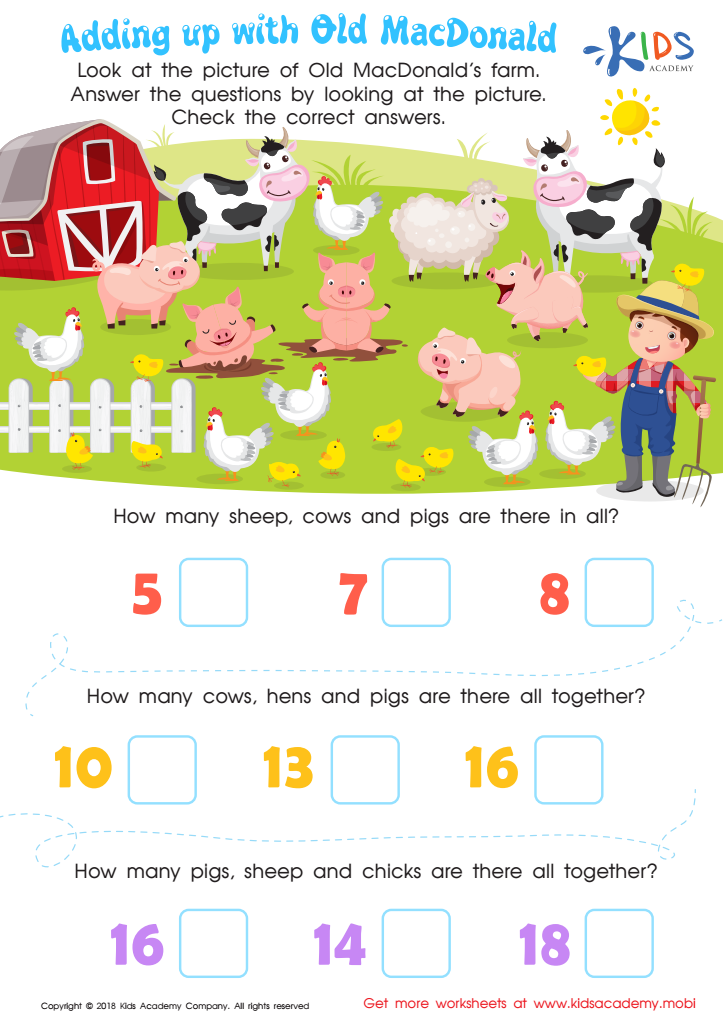
Adding Up with Old MacDonald Worksheet
Old MacDonald needs help counting his animals! Give your little math whiz a fun challenge with a free PDF worksheet. They'll love counting the animals and doing basic addition with two or three addends. Who knew math could be so much fun on the farm?
 Assign to My Students
Adding Up with Old MacDonald Worksheet
Worksheet
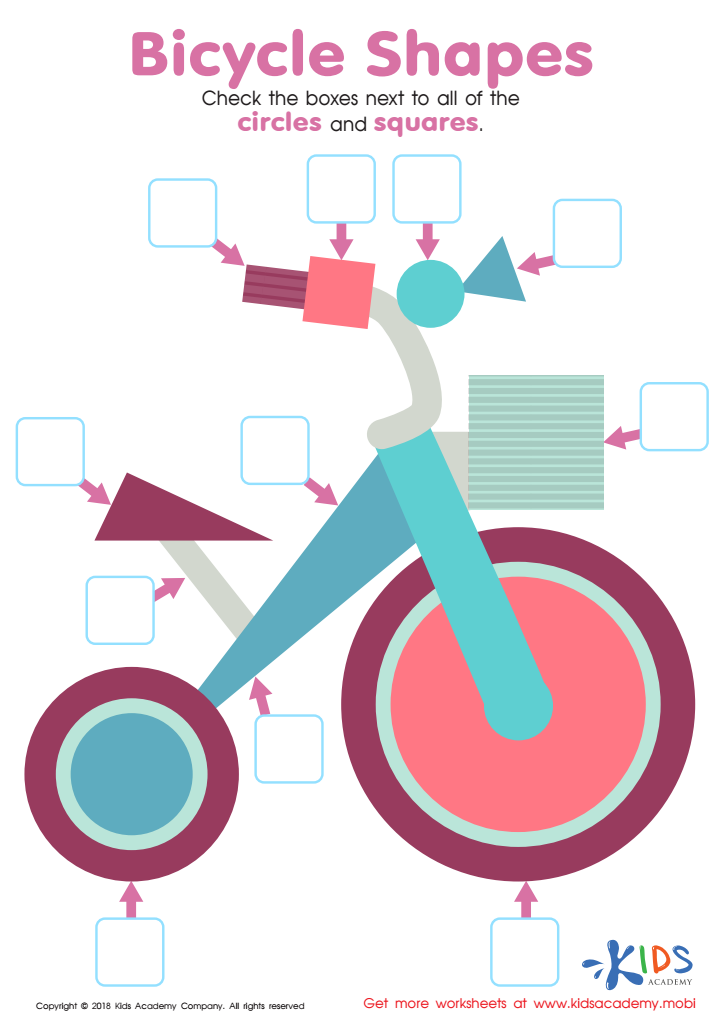
Bicycle Shapes Worksheet
This fun geometry worksheet for preschoolers asks the child to spot hidden shapes (circles, squares) in a colorful bicycle. Each shape varies in size and the child checks the box when it's found. It's a visual way to teach shapes.
Bicycle Shapes Worksheet
Worksheet
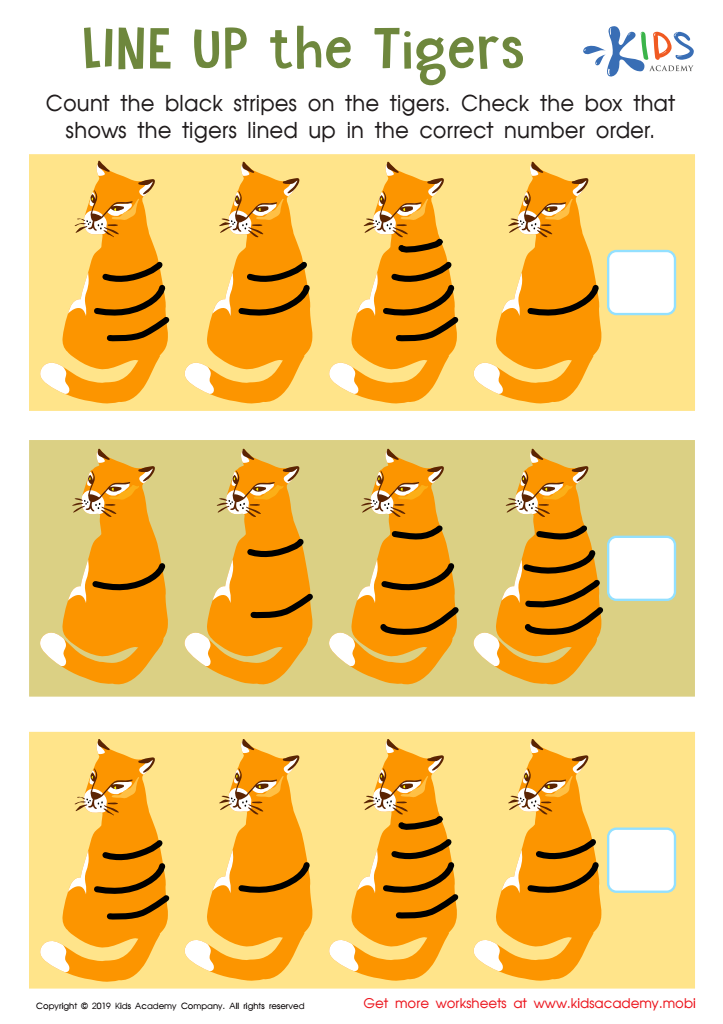
Line up the Tigers Worksheet
Give your preschoolers the right tools to succeed in math. Show them pictures of animals, then have them count the stripes and check the box that shows the tigers lined up in the right order. This will help them understand and make their journey easier.
Line up the Tigers Worksheet
Worksheet
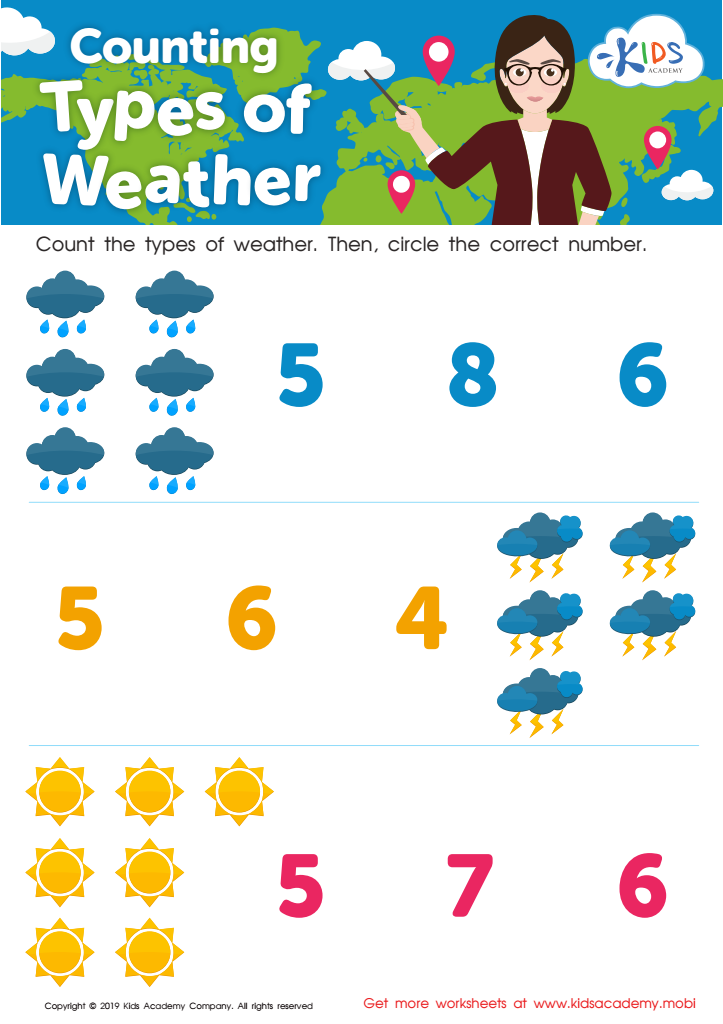
Counting Types of Weather Worksheet
Have your students look outside and tell you the weather today. Get kindergartners thinking by asking them to name different types of weather. Point to each one in the picture and get them to tell you what it is. Then, have them count the types and circle the number.
Counting Types of Weather Worksheet
Worksheet
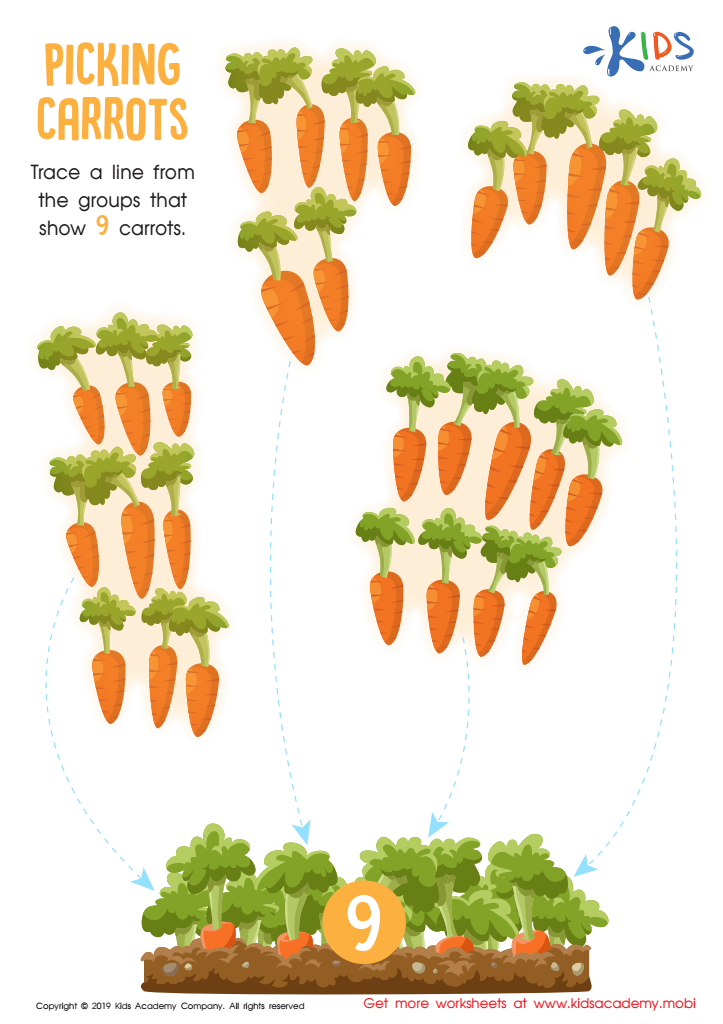
Picking Carrots Worksheet
Do your kids know what carrots are? They're nutritious veggies we should eat. Look at the worksheet with them; can they spot the carrots? It's an exercise to practice counting. Show them how to count all the carrots in the groups and trace the line to the groups with 9 carrots.
Picking Carrots Worksheet
Worksheet
Join Kids Academy for Free
Who is primarily going to use this learning content?







Parents and teachers should care about basic arithmetic for 4-year-olds because foundational math skills are crucial for a child’s future academic success. During the early years, children's brains are exceptionally receptive to learning, making it an ideal time to introduce mathematical concepts. Basic arithmetic helps develop problem-solving skills, enhances cognitive development, and encourages logical thinking.
Furthermore, early mastery of counting, addition, and subtraction fosters confidence and a positive attitude towards math. Engaging in arithmetic activities can alleviate math anxiety that may develop later in life. Moreover, these skills contribute to everyday practical situations, such as understanding time, measurements, and money.
Integrating basic arithmetic into fun games and activities can also strengthen parent-child or teacher-child relationships, as they work together in a positive learning environment. This collaborative approach encourages communication skills, social interaction, and motivation.
Lastly, a solid arithmetic foundation equips children with the tools they need to navigate more complex subjects as they progress in their education, particularly in STEM fields. By prioritizing basic arithmetic for this age group, parents and teachers set the stage for lifelong learning and success in school and beyond.








