Hand-eye Coordination Easy Worksheets for 4-Year-Olds - Page 2
25 filtered results
-
From - To
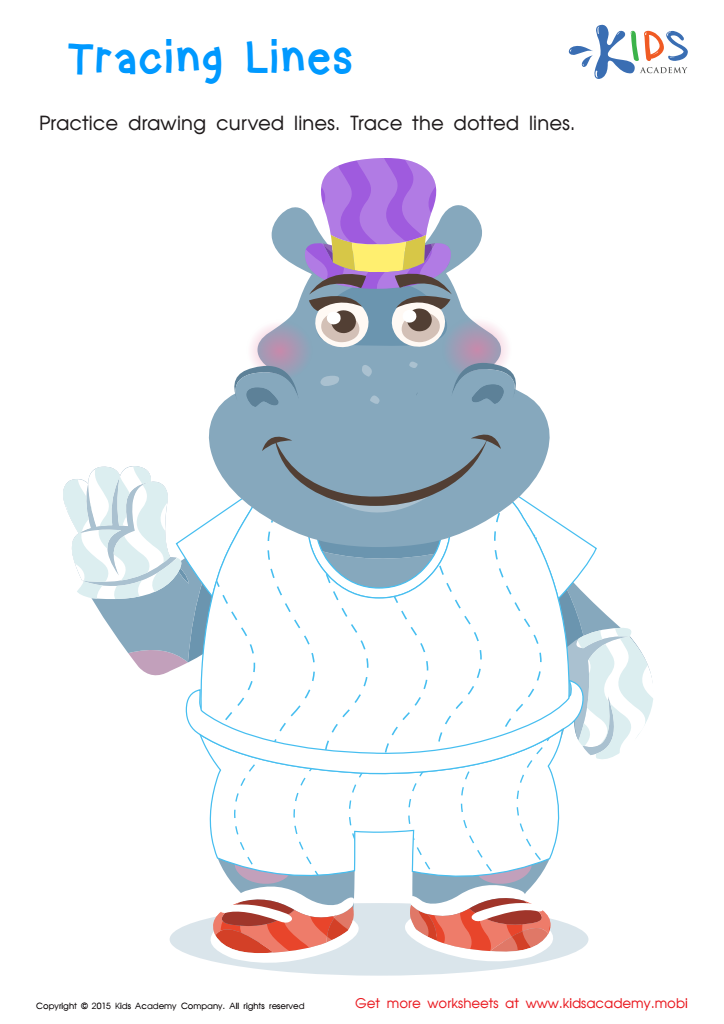
Tracing Lines Worksheet
 Assign to My Students





.jpg)


Hand-eye coordination is crucial for the development of 4-year-olds, as it forms the foundation for many everyday activities and academic skills. This coordination, the ability to use our eyes to direct attention and our hands to execute a task, is essential for tasks ranging from simple play to the complexities of writing and self-care.
At this age, children are naturally curious and exploring their environments, and activities that foster hand-eye coordination help refine their motor skills. These skills are often required for classroom activities like cutting with scissors, drawing, stacking blocks, and writing, all of which are foundational for academic success. Moreover, physical activities that enhance hand-eye coordination, such as catching a ball or threading beads, promote physical health, gross and fine motor skill development, and overall confidence.
From a developmental perspective, nurturing these skills early on helps set the stage for successfully learning more complex tasks. Enhanced hand-eye coordination contributes to better spatial awareness, attention, and cognitive skills, which are all necessary for school readiness.
Parents and teachers can support this development through engaging, age-appropriate activities and play. Simple games like puzzle assembly, playing with building blocks, or even supervised screen time with interactive games can significantly impact a child’s growth. Prioritizing hand-eye coordination is an investment in a child's future capabilities and self-esteem.








