
Improve counting skills Easy Worksheets for 4-Year-Olds
5 filtered results
Difficulty Level
Grade
Age
-
From - To
Subject
Activity
Standards
Boost your child's counting abilities with our engaging Easy Worksheets designed specifically for 4-year-olds! These fun and interactive activities provide a playful way to introduce foundational math skills through colorful illustrations and relatable themes. Your little learners will enjoy counting objects, connecting numbers, and enhancing their understanding of one-to-one correspondence. Each worksheet is thoughtfully crafted to maintain their interest while encouraging independent learning. Ideal for home or classroom use, these worksheets will help young children gain confidence in their counting skills, setting a strong base for future mathematical concepts. Perfect for nurturing early numeracy in a stress-free, enjoyable environment!
Favorites
With answer key
Interactive
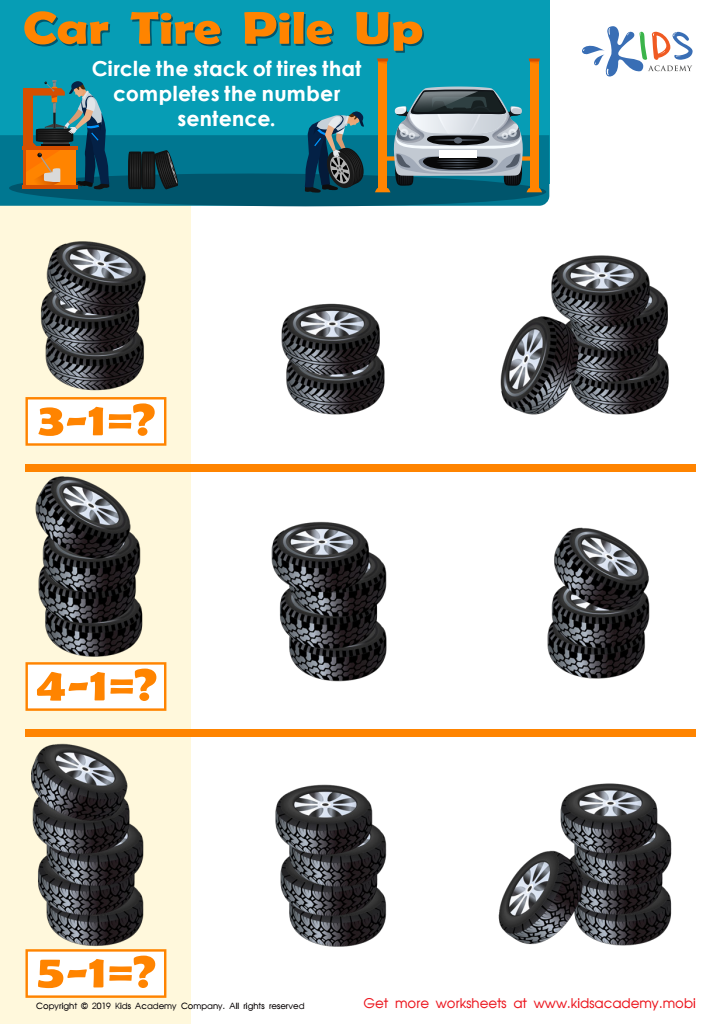
Car Tire Pile Up Worksheet
Examine the pic with your kids. Can they recognize the items piled up? The tires are organized in different quantities. Equations are on the left. Have your children work out the equations, counting the tire stacks to identify the correct answer.
 Assign to My Students
Car Tire Pile Up Worksheet
Worksheet
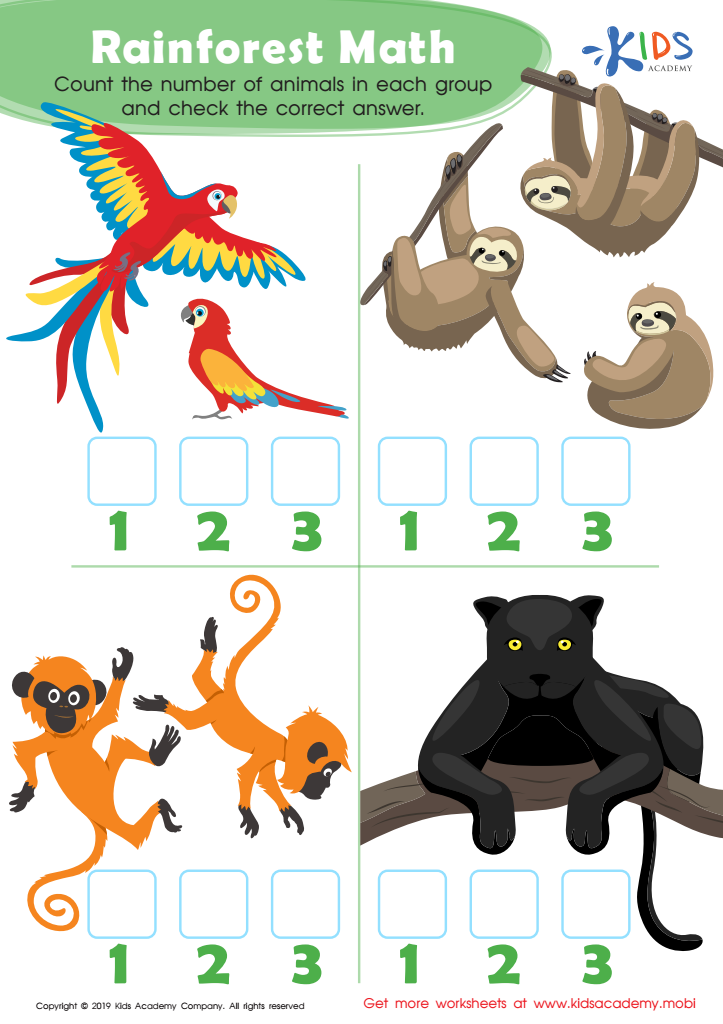
Rainforest Math Worksheet
Kids love learning about rainforest animals! This worksheet helps them with counting and number sense. It features recognizable rainforest animals and asks children to choose the correct number from the answer choices. It's a fun way for children to build their skills - without even knowing it!
Rainforest Math Worksheet
Worksheet
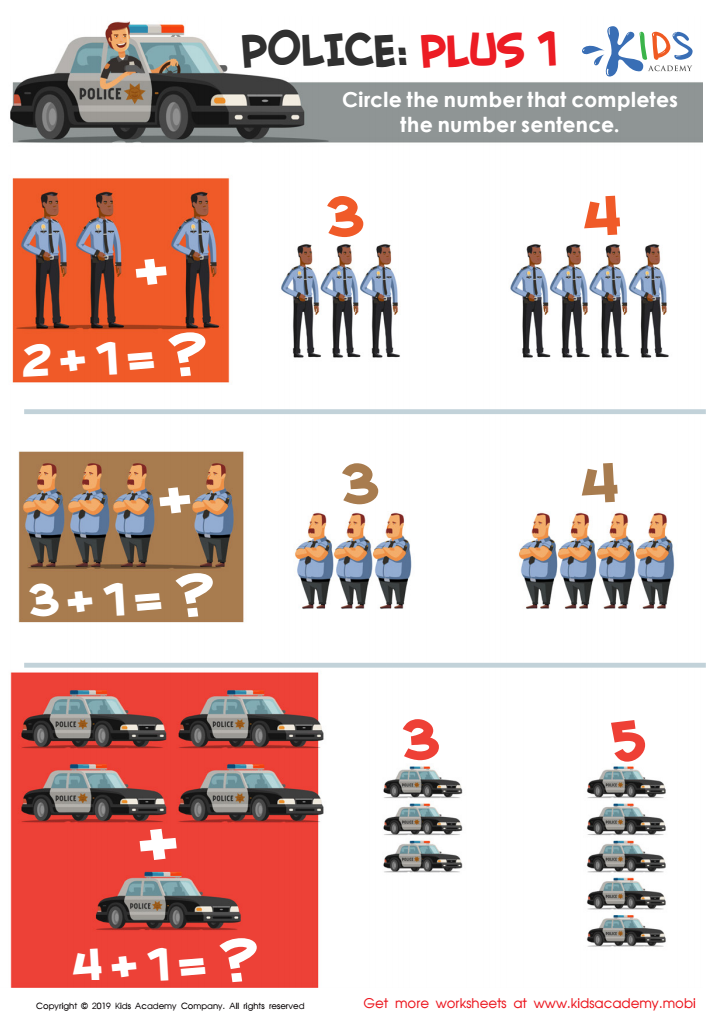
Police: Plus 1 Worksheet
Help your kids count the policemen in the worksheet and circle the number that completes the number sentence. It's a great way to improve their counting and addition skills. Discuss with your kids how policemen contribute to the community too.
Police: Plus 1 Worksheet
Worksheet
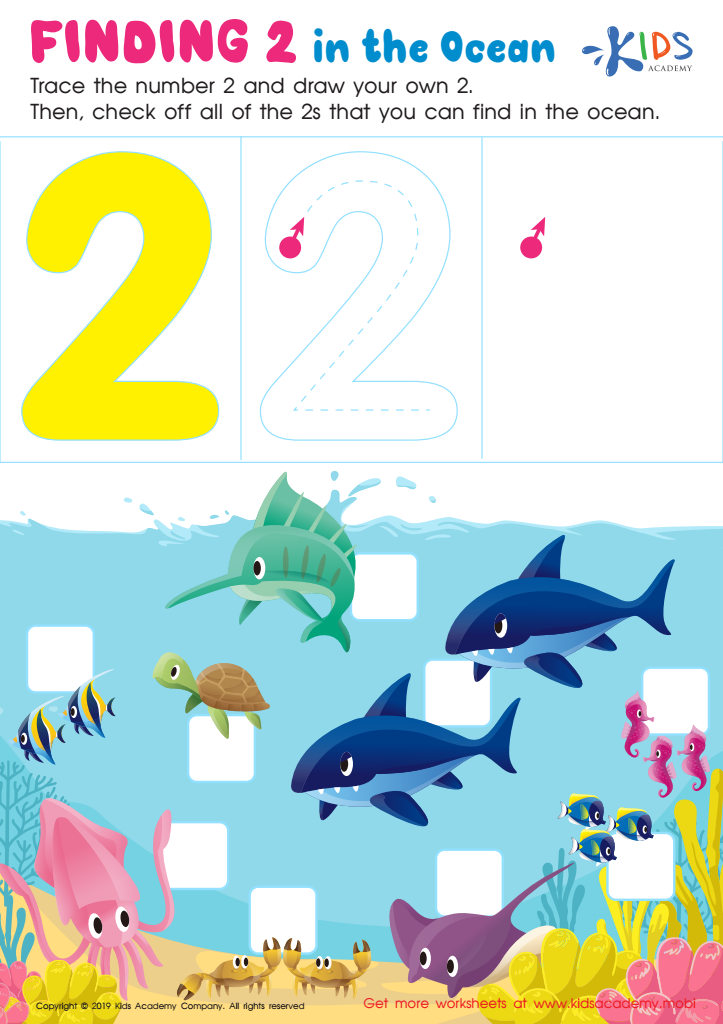
Finding 2: In the Ocean Worksheet
Kids start their math journey with basic numbers. Finger counting, number representation with pictures and this worksheet help build number sense. Kids trace lines and dots to write the number two and identify groups of two sea creatures for easy success and to feel proud of their math skills.
Finding 2: In the Ocean Worksheet
Worksheet
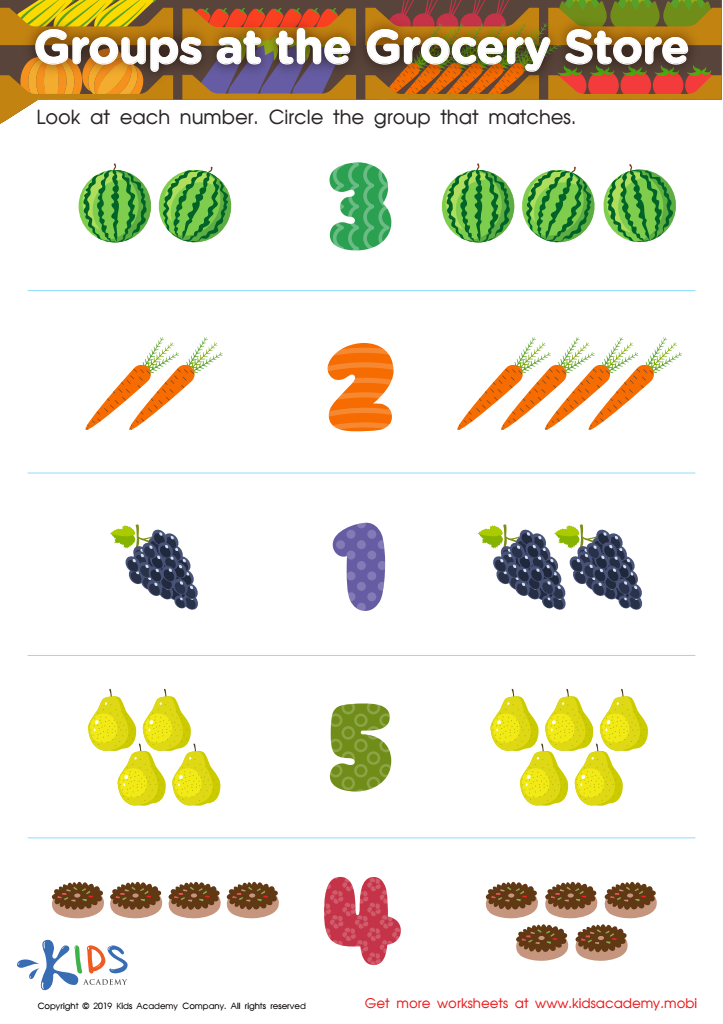
Groups at the Grocery Store Worksheet
Help your kids learn about counting with this worksheet! Look at each group of objects and circle the one that matches. It's a fun way to support what they're learning at school and give them a boost in counting.
Groups at the Grocery Store Worksheet
Worksheet
Join Kids Academy for Free
Who is primarily going to use this learning content?





.jpg)
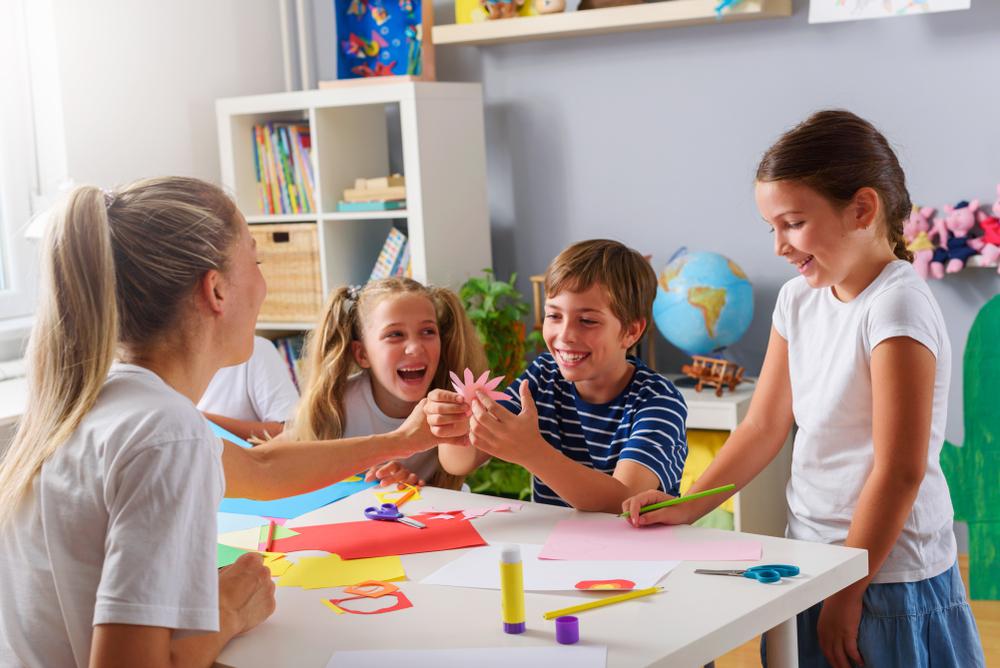
Parents and teachers should prioritize improving counting skills for 4-year-olds because these foundational skills are crucial for a child's overall development and future academic success. At this age, children experience significant cognitive growth, making it an ideal time to introduce them to numbers and counting. Mastering counting not only helps them understand basic math concepts but also enhances their problem-solving and logical thinking abilities.
Counting skills contribute to everyday activities, from sorting and classifying objects to understanding routines, which fosters organizational skills. Furthermore, building a solid foundation in counting can boost a child's confidence and motivation in learning, making them more eager to engage with challenging tasks as they progress through school.
Incorporating counting into playful activities, such as songs, games, and hands-on experiences, creates a fun learning environment. Engaging with numbers in meaningful ways helps solidify these skills and encourages early literacy connections. Additionally, interactive counting fosters parent-child or teacher-student bonding, enriching social and emotional development.
By emphasizing counting skills in early childhood education, parents and teachers set the stage for successful learning experiences and cultivate a lifelong love for mathematics. Ultimately, this investment in development helps prepare children for more complex concepts in the future.








