Fine Motor Skills Easy Geometry Worksheets for 4-Year-Olds
3 filtered results
-
From - To
Introducing our "Fine Motor Skills Easy Geometry Worksheets for 4-Year-Olds" designed to help young learners develop essential pre-writing and geometry skills. These engaging, age-appropriate activities foster hand-eye coordination and fine motor control through fun geometric shapes and patterns. Kids will enjoy tracing, coloring, and sorting exercises, making learning playful and interactive. Perfect for at-home practice or classroom settings, these worksheets enhance early cognitive abilities while keeping little hands busy. Our printables are a delightful way to encourage precision and creativity in your child's early mathematical journey. Get started now and watch your child's skills flourish!
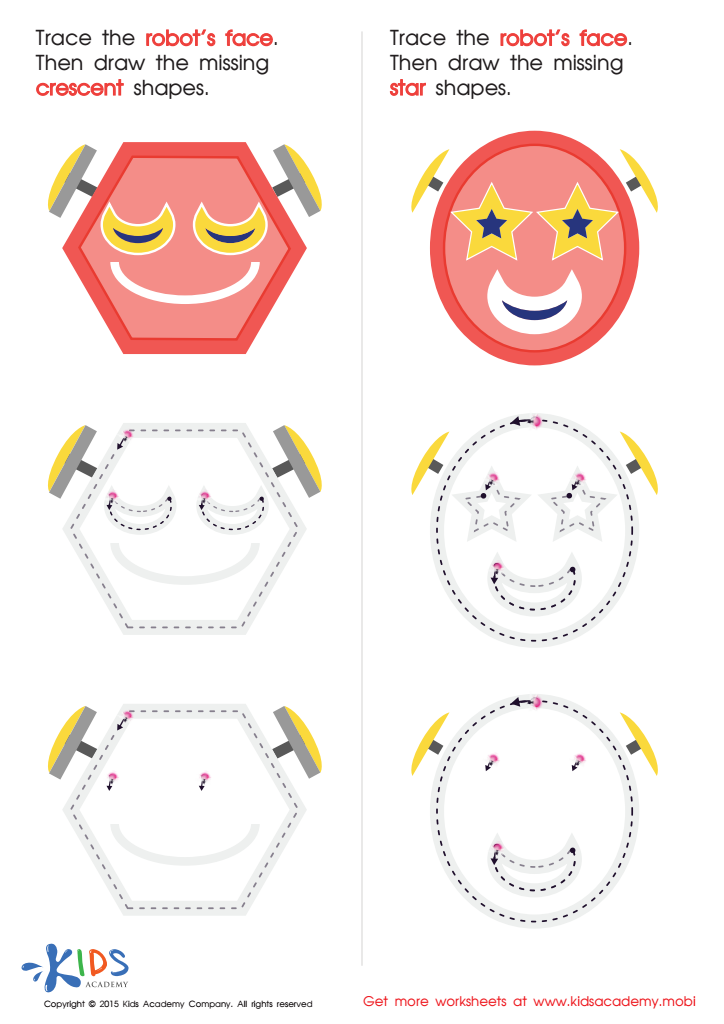
Composing a Robot's Face of Crescents And Stars Worksheet
 Assign to My Students











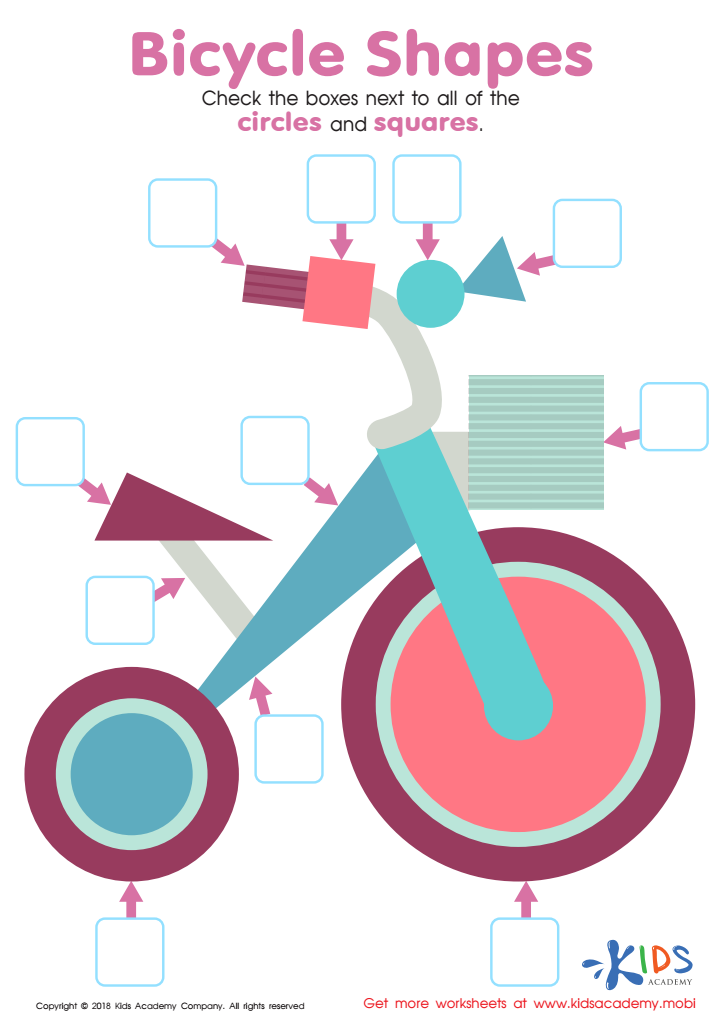
Bicycle Shapes Worksheet
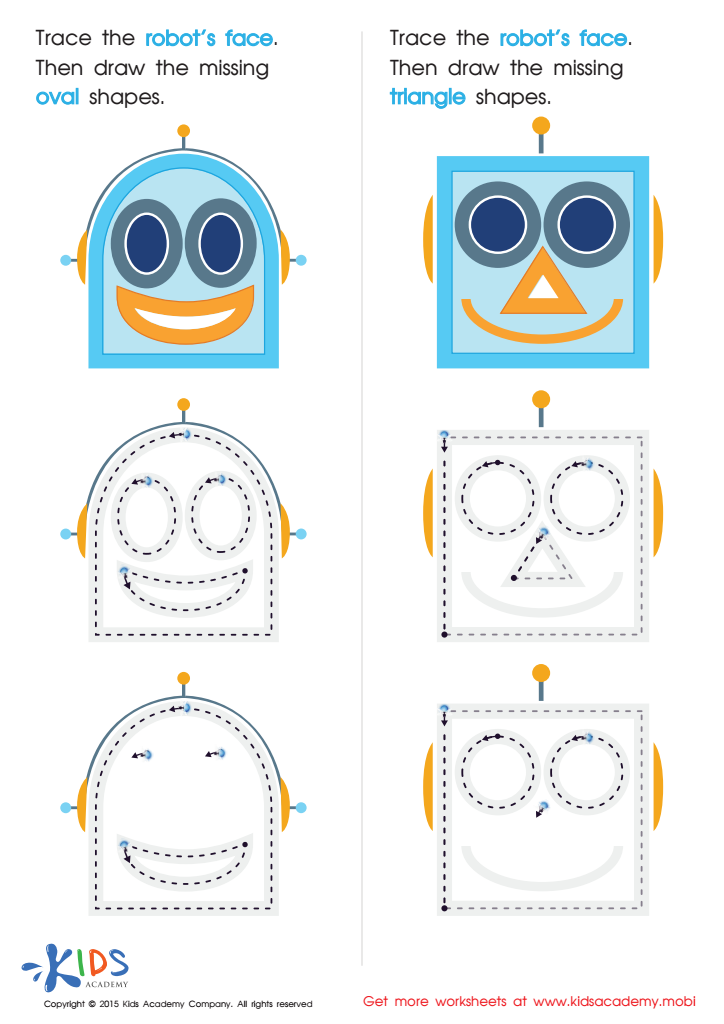
Drawing Ovals And Triangles with Fun Printable








Fine motor skills and early geometric concepts play a crucial role in the development of 4-year-olds. Parents and teachers should pay significant attention to these areas for several reasons:
Fine motor skills involve the coordination of small muscles, particularly in the hands and fingers, and are fundamental for tasks such as writing, cutting, buttoning clothes, and tying shoelaces. Helping children build these skills at an early age enhances their ability to perform daily activities independently. Additionally, strengthened fine motor skills are directly connected to cognitive development, aiding in future academic success by making learning more accessible and enjoyable.
Easy geometry for 4-year-olds introduces children to basic shapes, spatial awareness, and patterns, laying a foundation for mathematical thinking. Understanding shapes and spatial relationships helps children recognize and organize their world, which is critical for problem-solving and logical thinking. Early geometry also encourages language development as children learn geometric vocabulary, supports visual literacy, and helps distinguish between different visual stimuli.
Incorporating fine motor skill activities with simple geometry exercises offers a holistic approach to learning. Engaging children with fun, hands-on activities sparks their curiosity and creativity, fostering a love for learning that lasts a lifetime. Thus, attending to these developmental areas ensures children gain the necessary tools and confidence for future challenges.








