Filters

6 filtered results

Clear all filters
Favorites
With answer key
Interactive

6 filtered results

Difficulty Level

Grade


Welcome to our Easy Chess Worksheets for Ages 5-6! Dive into the exciting world of chess with engaging and printable activities designed specifically for young learners. Our worksheets help children develop critical thinking, problem-solving skills, and enhance hand-eye coordination while playing the classic game. From learning the basics of piece movements to simple puzzles, each worksheet is tailored to make learning fun and accessible. Suitable for home or classroom use, these resources will keep your little ones entertained while cultivating essential cognitive abilities. Start your chess adventure today and watch your child's confidence grow on the chessboard!

Check out this FREE Trial Lesson on Chess for age 5-6!

Attacking the King: Discovered Check

Favorites
With answer key
Interactive
  • 5-6
  • Chess
  • Easy
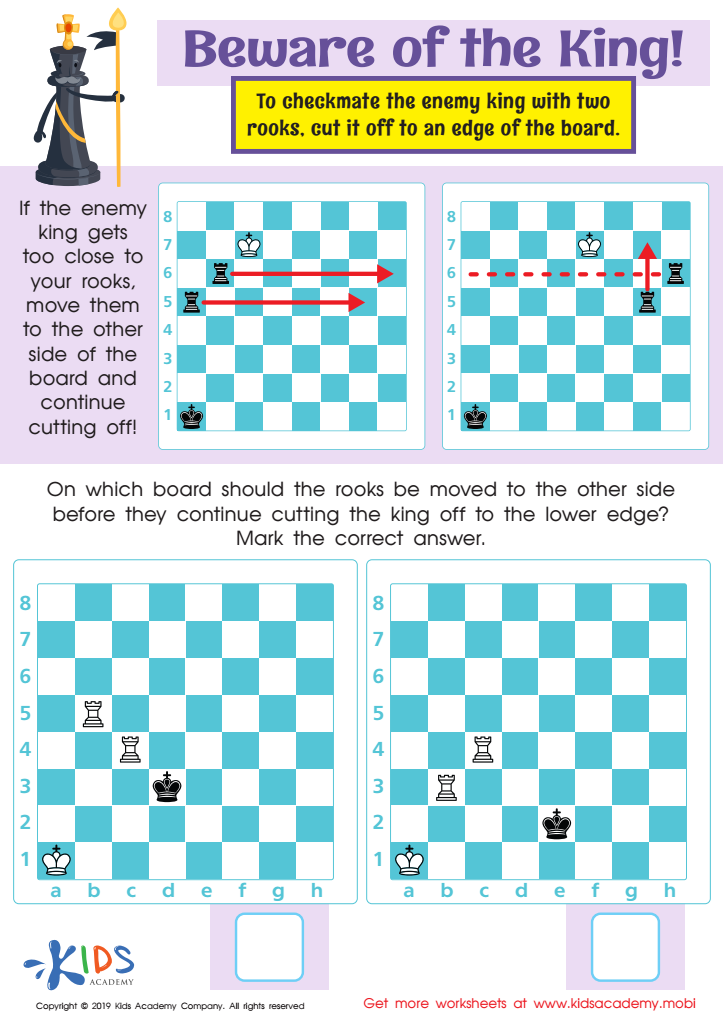
Beware of the King! Worksheet

Beware of the King! Worksheet

Teach your child to play chess and gift them valuable skills like critical thinking, logic, and reasoning! This free PDF worksheet will teach them the Two Rook Mate strategy to checkmate an enemy king with two rooks. They'll learn how to keep the king away and move the rooks for checkmate. Have screen-free fun together!
Beware of the King! Worksheet
Worksheet
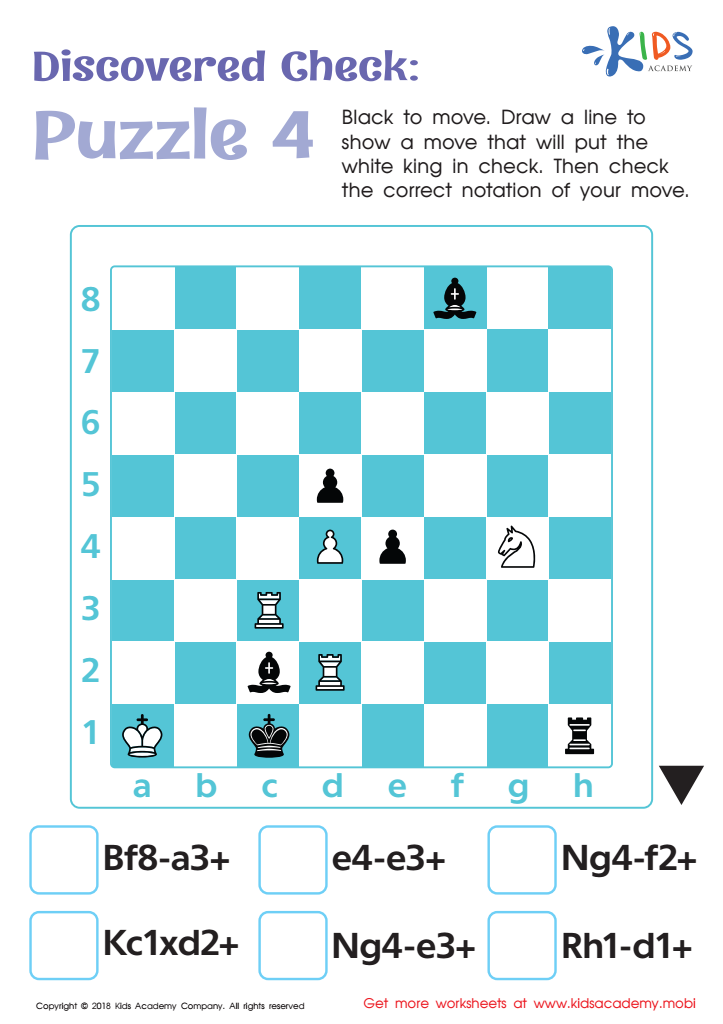
Discovered Check: Puzzle 4 Worksheet

Discovered Check: Puzzle 4 Worksheet

Let your child test their chess skills with this easy worksheet. Have them take control of the black pieces and try to put the white king in checkmate. Ask them to draw a line from their chess piece to the white king, showing the move they'll make, then check the correct answer.
Discovered Check: Puzzle 4 Worksheet
Worksheet
Discovered Check: Puzzle 2 Worksheet

Discovered Check: Puzzle 2 Worksheet

This worksheet exercise will stimulate your child's thinking and let them show off their chess skills. Ask them to use the white pieces and draw a line, pointing to the move that will put the black king in checkmate. Then they should check the correct option. Challenge your child and help them learn more about chess with this fun and educative activity.
Discovered Check: Puzzle 2 Worksheet
Worksheet
Discovered Check: Puzzle 3 Worksheet

Discovered Check: Puzzle 3 Worksheet

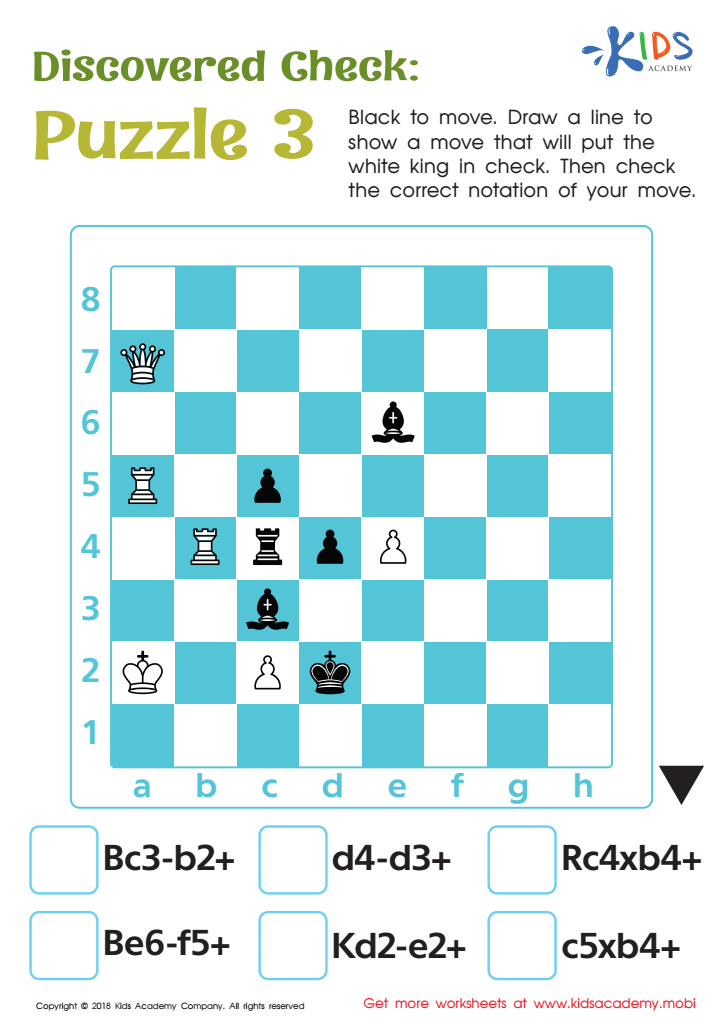
Parents often encourage their children to play chess to sharpen their thinking skills. Using the black pieces, your child must strategically move the piece to place the white king in check. Draw the line, examine the options and check the correct move.
Discovered Check: Puzzle 3 Worksheet
Worksheet
Discovered Check: Puzzle 1 Worksheet

Discovered Check: Puzzle 1 Worksheet

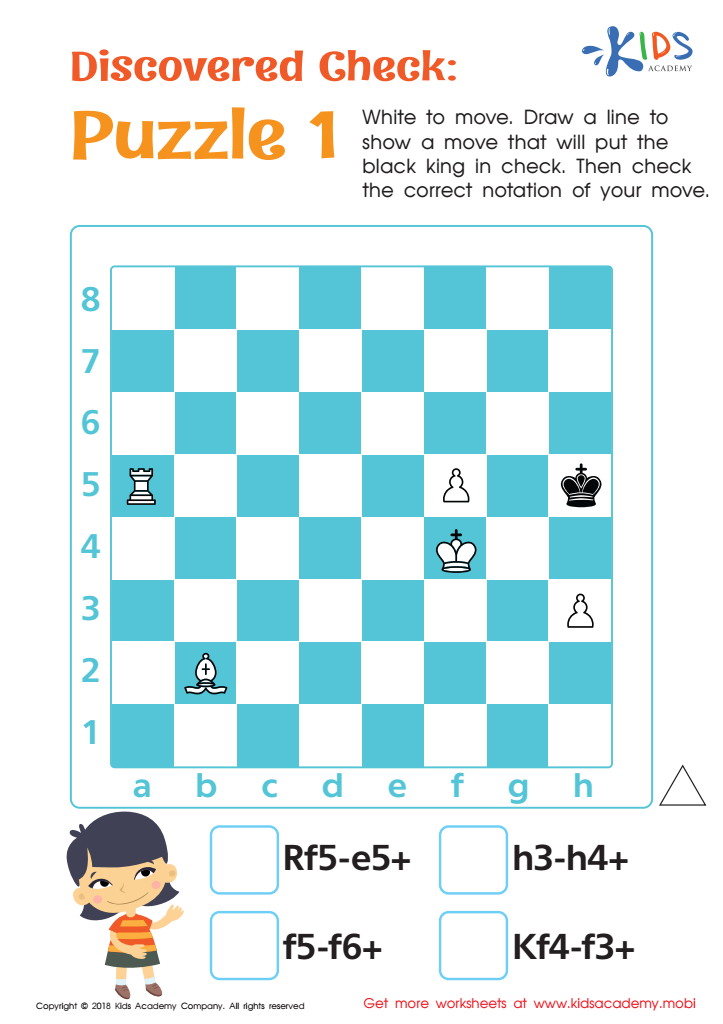
Chess is an excellent way to engage your kids' brains and strengthen thinking skills. This worksheet is ideal for inspiring and growing their interest in the game. Have your child take the white pieces and move them to checkmate the black king. Compare their move against the provided notations to check accuracy.
Discovered Check: Puzzle 1 Worksheet
Worksheet
What Is a Stalemate? Worksheet


What Is a Stalemate? Worksheet

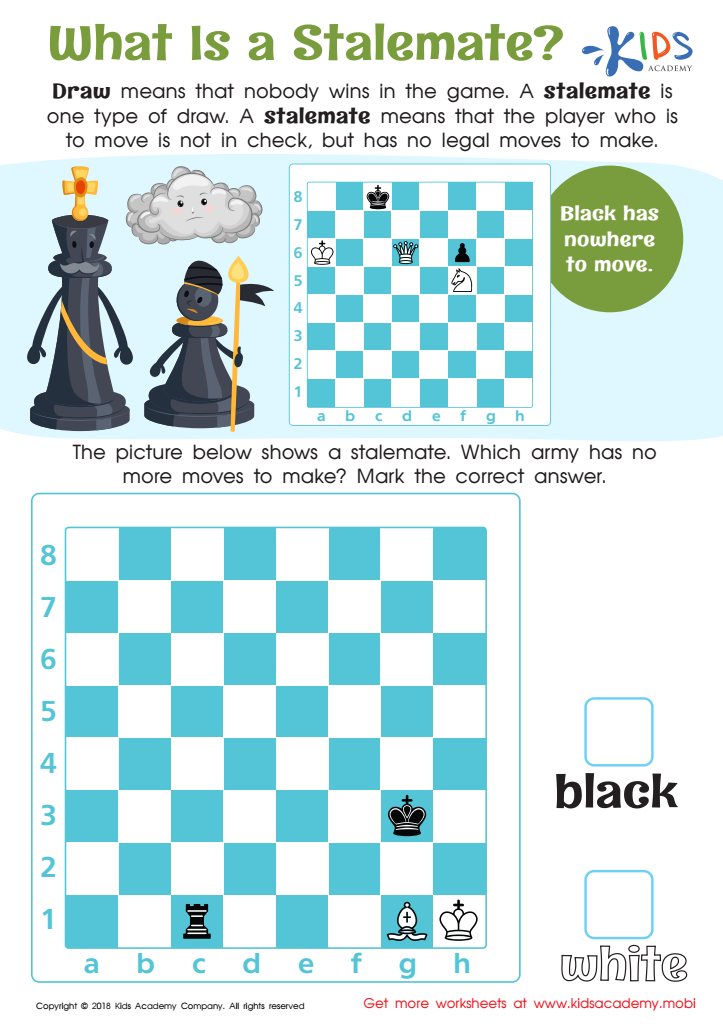
Chess is an ideal way to develop logic, strategizing, problem-solving and more! Even kids can learn it. With this worksheet, children can learn about draws and stalemates. Sample boards will help them decide which team, black or white, is at a stalemate.
What Is a Stalemate? Worksheet

Worksheet


Teaching young children, particularly ages 5-6, how to play Easy Chess offers numerous developmental benefits that parents and teachers should consider. First and foremost, chess enhances critical thinking and problem-solving skills. As children learn to strategize and plan their moves, they engage in cognitive processes that improve their ability to analyze situations and foresee consequences.

Moreover, Easy Chess promotes patience and focus, as young players must learn to concentrate on the board and think several steps ahead. This helps cultivate a longer attention span—an essential skill for academic and personal success.

The social aspect of Easy Chess shouldn't be overlooked, either. Through playing with others, children develop important social skills like sportsmanship, communication, and cooperation. Learning to handle wins and losses can also build emotional resilience, which is crucial at this developmental stage.

Additionally, Easy Chess introduces basic math and logic concepts in a fun and engaging way, reinforcing their early academic skills. Overall, Easy Chess is not just a game; it's an educational tool that fosters holistic development in early learners, making it a valuable addition to their growth journey. Parents and teachers who encourage this activity are providing children with skills that extend far beyond the game itself.