
Comparing numbers Easy Worksheets for Ages 5-6
3 filtered results
Difficulty Level
Grade
Age
-
From - To
Subject
Activity
Standards
Welcome to our "Comparing Numbers Easy Worksheets" designed for children aged 5-6! Our engaging and colorful worksheets provide a fun and interactive way for young learners to develop their number comparison skills. Through a variety of exercises, kids will practice identifying larger and smaller numbers, using visual aids and simple activities that promote understanding. These worksheets are perfect for reinforcing classroom learning or acting as a supplementary resource at home. Foster your child's early math skills with our easy-to-follow worksheets that make comparing numbers enjoyable and effective! Start exploring today and watch their confidence in math grow!
Favorites
With answer key
Interactive
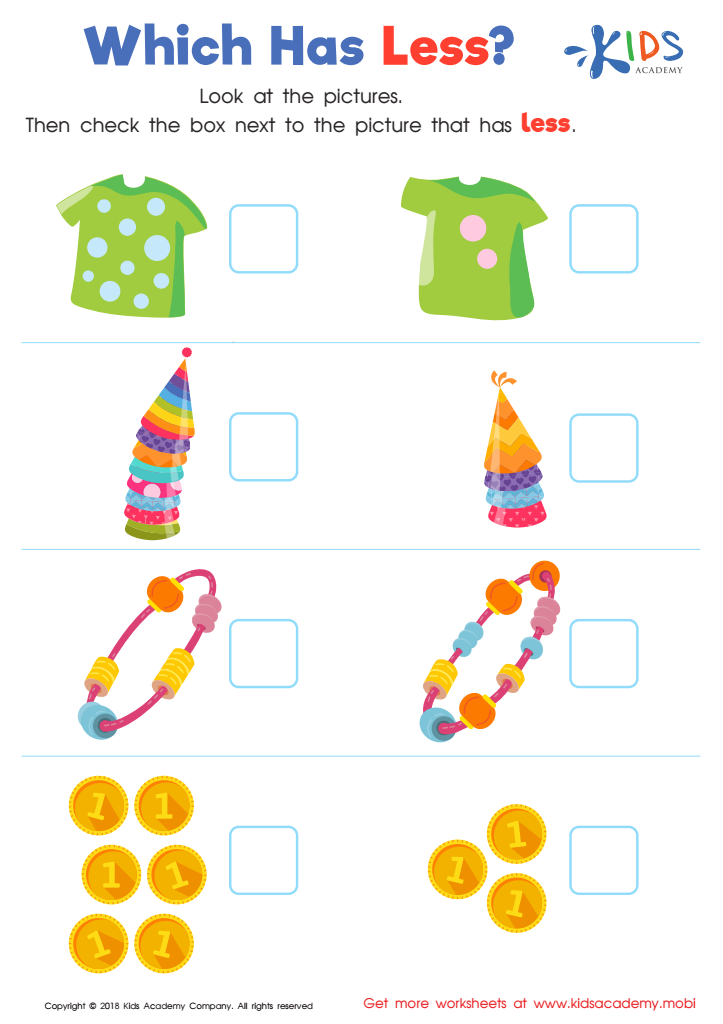
Which Has Less? Worksheet
Kids can develop their number sense by comparing and contrasting objects to identify which has less. This worksheet helps them practice: it's bright and colorful, featuring familiar objects and pictures to count, strengthening basic counting skills. It's the perfect warm-up for comparing and contrasting larger numbers.
 Assign to My Students
Which Has Less? Worksheet
Worksheet
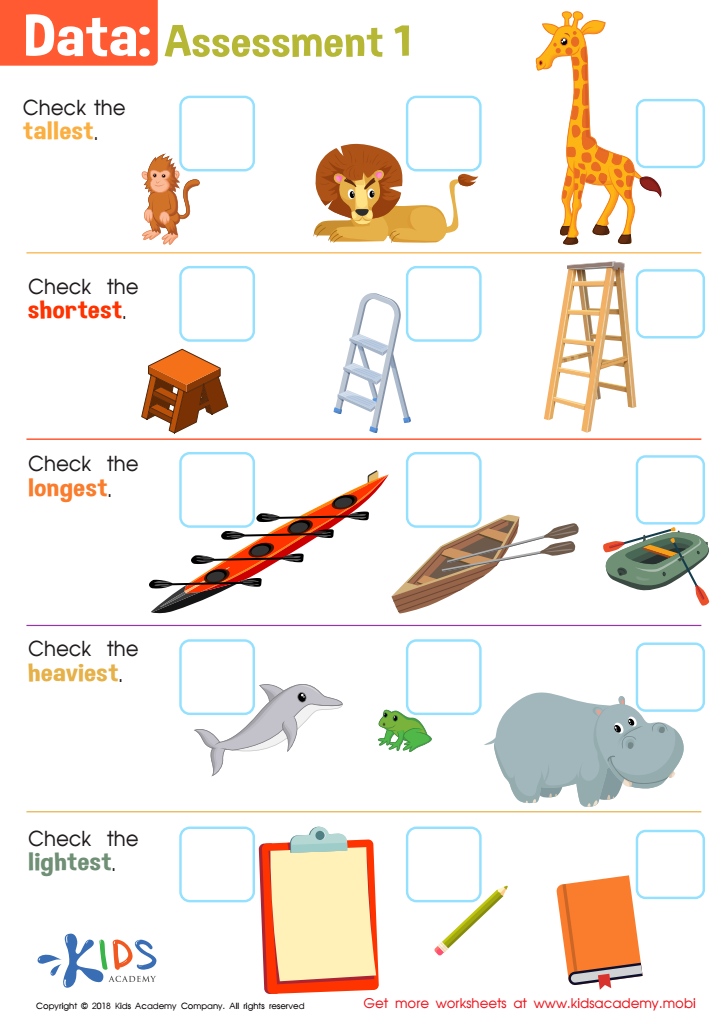
Data: Assessment 1 Worksheet
This free worksheet helps you assess where your young students are with measurement superlatives like tallest, shortest, heaviest, longest and lightest. It features cute, colorful pics of familiar objects so your kids have a reference, and helps you identify areas to work on.
Data: Assessment 1 Worksheet
Worksheet
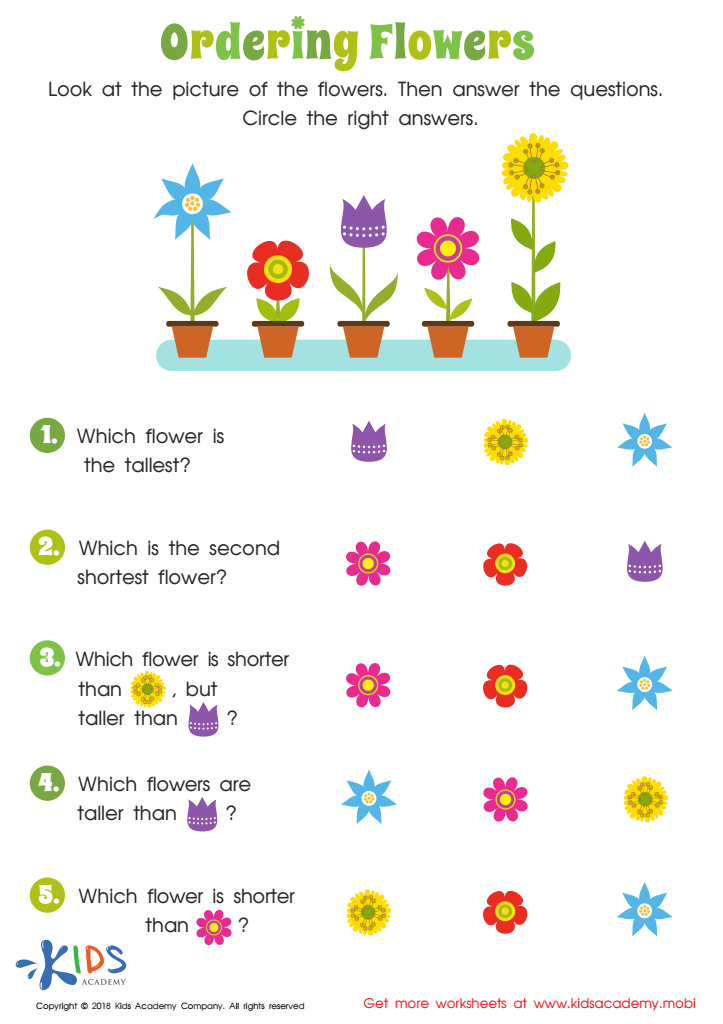
Ordering Flowers Worksheet
Preschoolers can start learning measurement with visuals! This worksheet uses colorful flowers of different heights. Ask your learner to observe the flowers, then help them compare/answer which is taller/shorter. It's an easy way for them to begin learning about measurement.
Ordering Flowers Worksheet
Worksheet
Join Kids Academy for Free
Who is primarily going to use this learning content?







Understanding how to compare numbers is a fundamental skill for children ages 5-6, and both parents and teachers should prioritize this aspect of early mathematics education. Comparing numbers lays the groundwork for various mathematical concepts, enabling children to develop critical thinking and problem-solving abilities. When kids grasp concepts like "greater than," "less than," and "equal to," they become more adept at recognizing patterns and relationships between numbers, fostering a deeper understanding of math as a whole.
By teaching children to compare numbers, we also enhance their confidence. Children feel empowered when they can confidently assess numbers and quantities. This confidence spills over into other areas of learning.
Moreover, number comparison is relevant in everyday life. From sharing snacks evenly among friends to evaluating the number of toys in a collection, children need to apply these skills in practical situations. Encouraging a strong foundational understanding prepares them for more complex concepts in later grades, ensuring a smoother transition in their education.
Finally, engaging parents in this learning process can create a supportive environment at home. Parents can reinforce what is being taught in school through interactive games and activities, making learning both fun and meaningful.








