Comprehension skills Easy Worksheets for Ages 5-6
4 filtered results
-
From - To
Boost your child's reading skills with our "Comprehension Skills Easy Worksheets" designed specifically for ages 5-6. These engaging worksheets provide a fun and interactive way for young learners to enhance their understanding of texts. Each activity focuses on key comprehension skills, ensuring children can identify main ideas, make connections, and answer questions effectively. With colorful illustrations and relatable themes, these worksheets captivate young imaginations and spark a love for reading. Ideal for home or classroom use, our resources are perfect for reinforcing learning and fostering confidence in young readers. Explore our collection today to support your child's literacy journey!
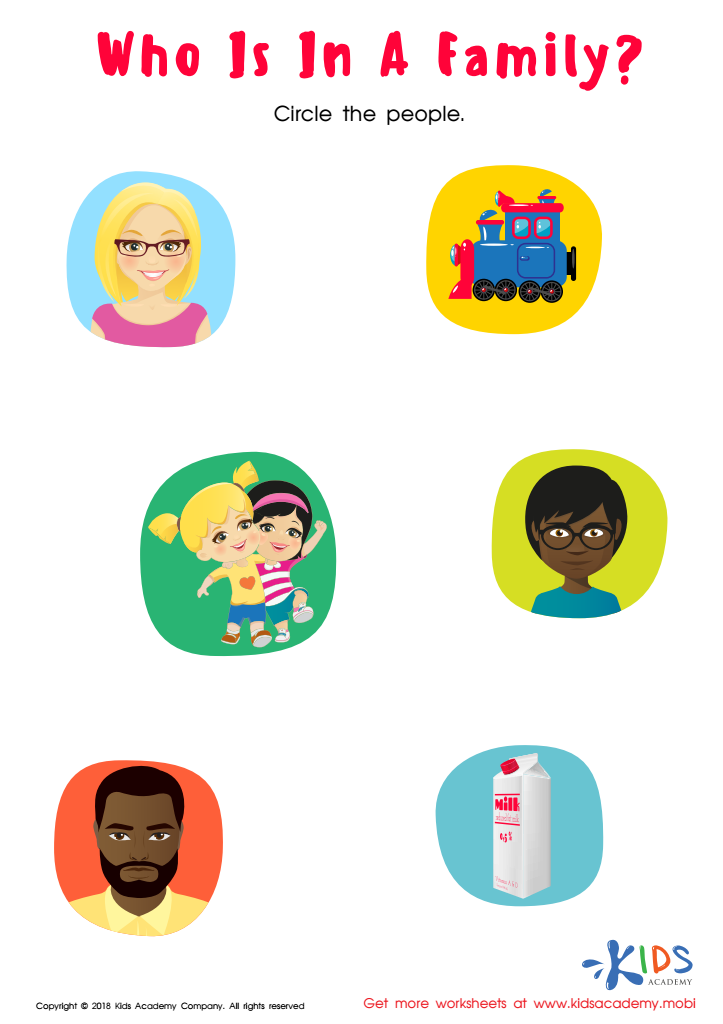
Who Is in a Family? Worksheet
 Assign to My Students
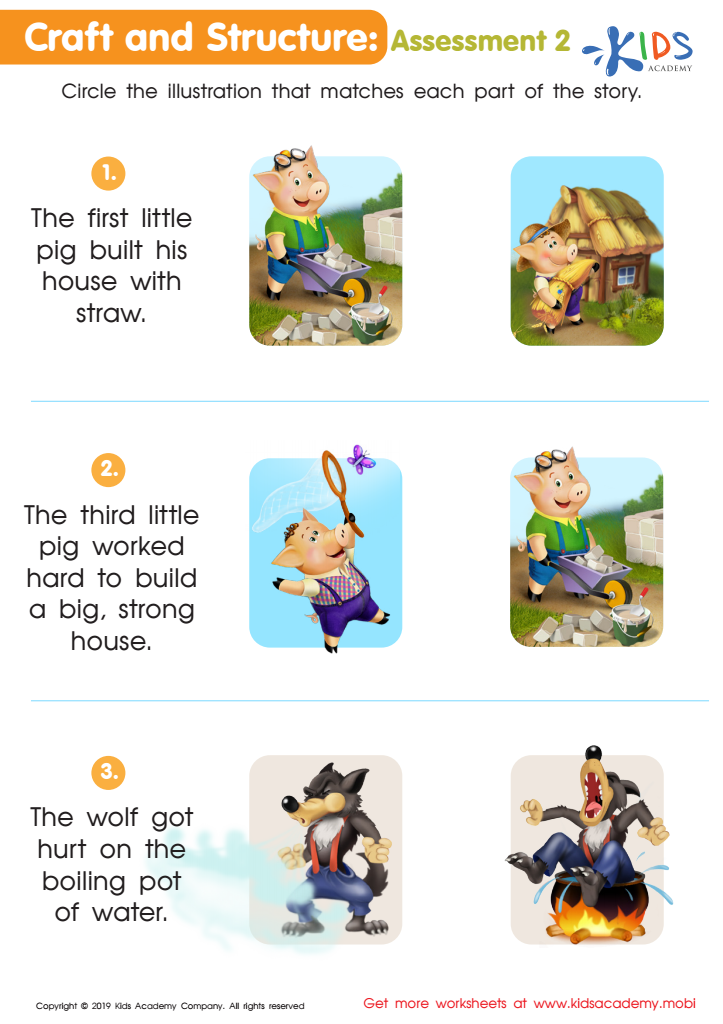
Craft and Structure: Assessment 2 Worksheet 2
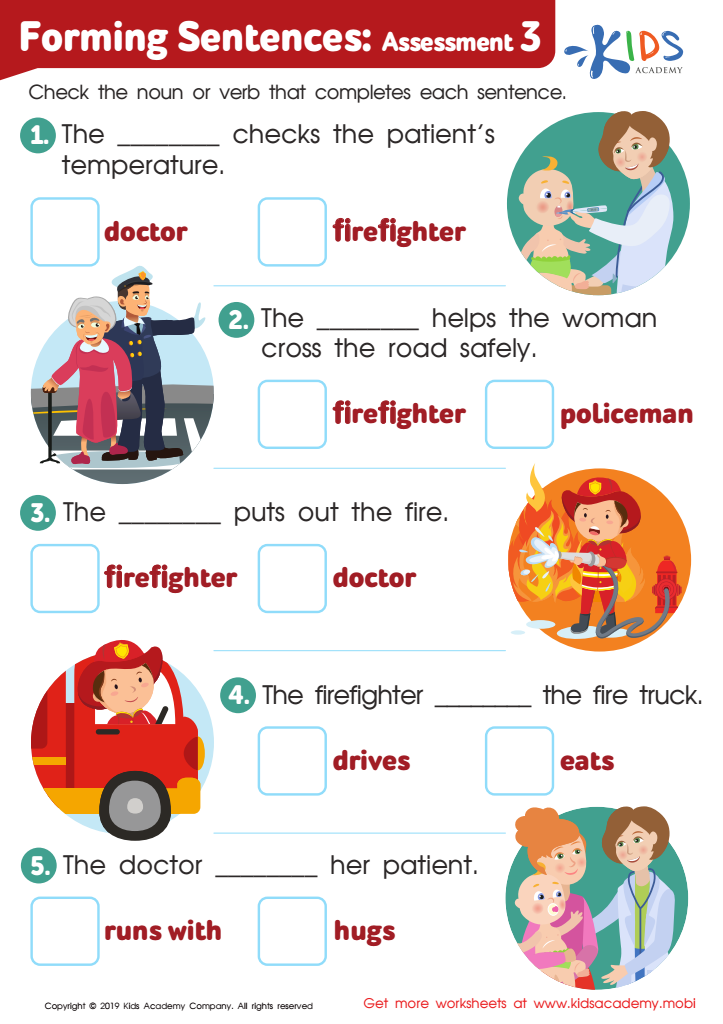
Forming Sentences: Assessment 3 Worksheet
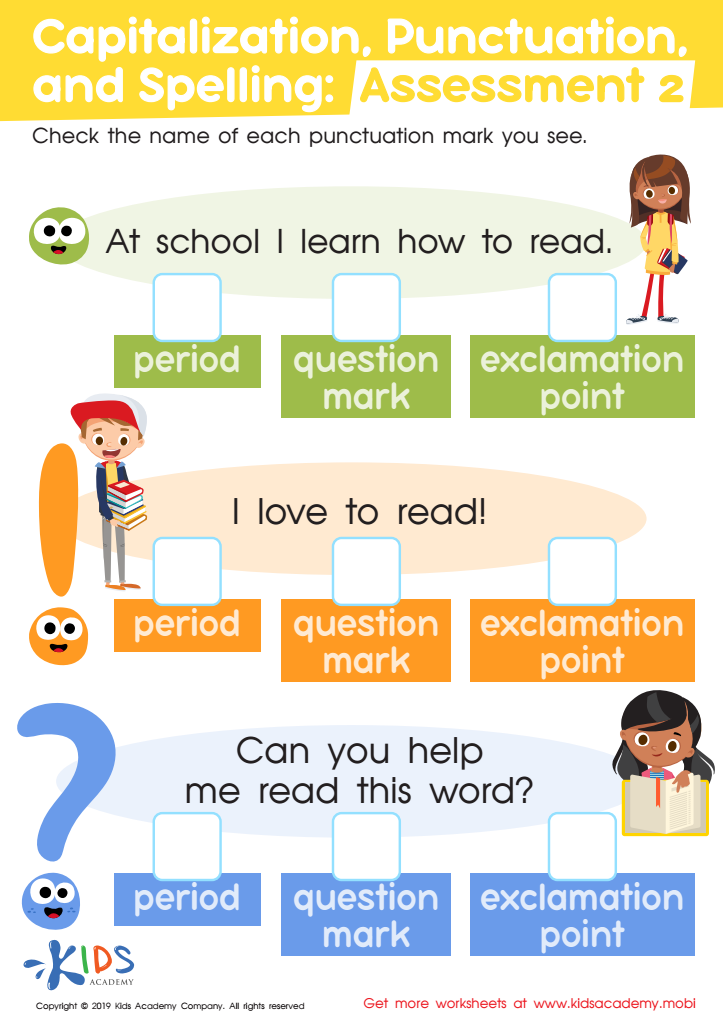
Capitalization. Punctuation. Spelling: Assessment 2 Worksheet







Comprehension skills are crucial for children aged 5-6 as they serve as the foundation for future learning. At this early age, children are typically transitioning from learning to read to reading to learn. Developing strong comprehension skills enables them to understand and interpret what they read, fostering a love for books and storytelling.
Parents and teachers play a vital role in nurturing these skills. When children comprehend what they read, they become more engaged, motivated learners who can connect stories to their own experiences and the world around them. This understanding builds their vocabulary, critical thinking abilities, and emotional intelligence, preparing them for more complex concepts as they progress in school.
Moreover, strong comprehension skills can boost children’s confidence and academic performance. Children who struggle with understanding reading might feel frustrated and disengaged, impacting their overall attitude toward learning. By focusing on comprehension skills through interactive reading sessions, discussions, and questions, parents and teachers can cultivate a supportive environment that encourages curiosity and exploration.
In summary, prioritizing comprehension skills for young learners lays the groundwork for lifelong learning, and parents and educators possess the tools to significantly influence this critical aspect of development.








