Enhancing observation skills Easy Worksheets for Ages 5-6
4 filtered results
-
From - To
Enhancing Observation Skills Easy Worksheets for Ages 5-6 are designed to sharpen your child’s attention to detail through fun and interactive activities. These worksheets engage children with colorful images and a variety of exercises that help them notice differences, patterns, and specific details in pictures. Ideal for developing critical observation skills, these worksheets include spot-the-difference, matching pairs, and sequencing activities. They provide a fun way to improve focus, memory, and cognitive abilities in young learners, making observation a key part of their educational journey. Perfect for parents and teachers seeking effective tools to enrich early learning experiences.
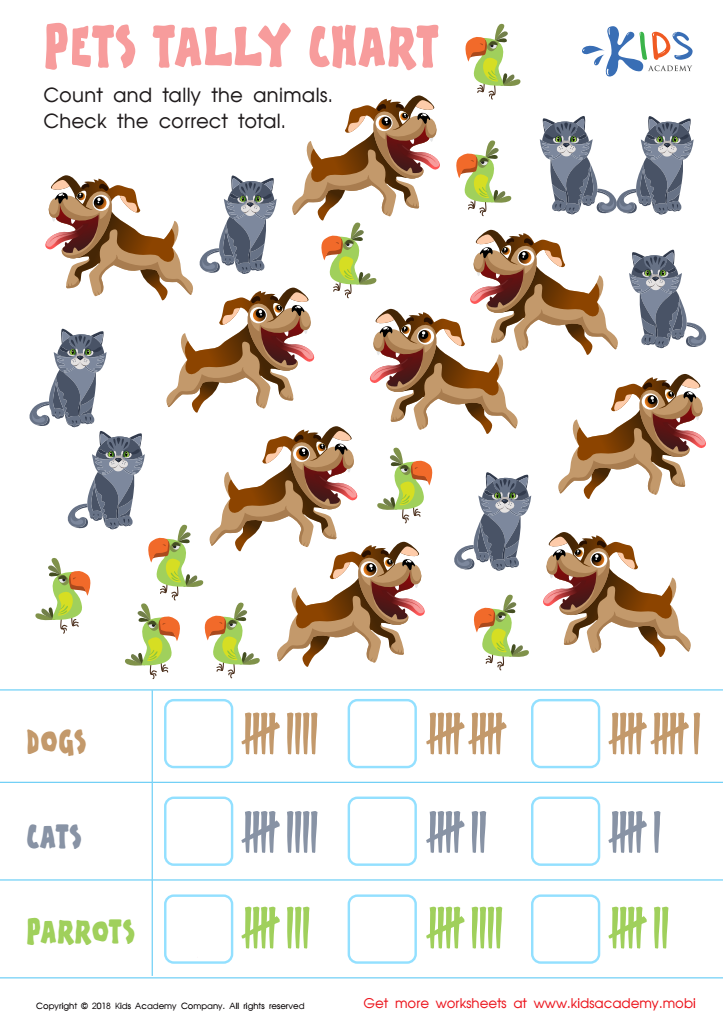
Pets Tally Chart Worksheet
 Assign to My Students
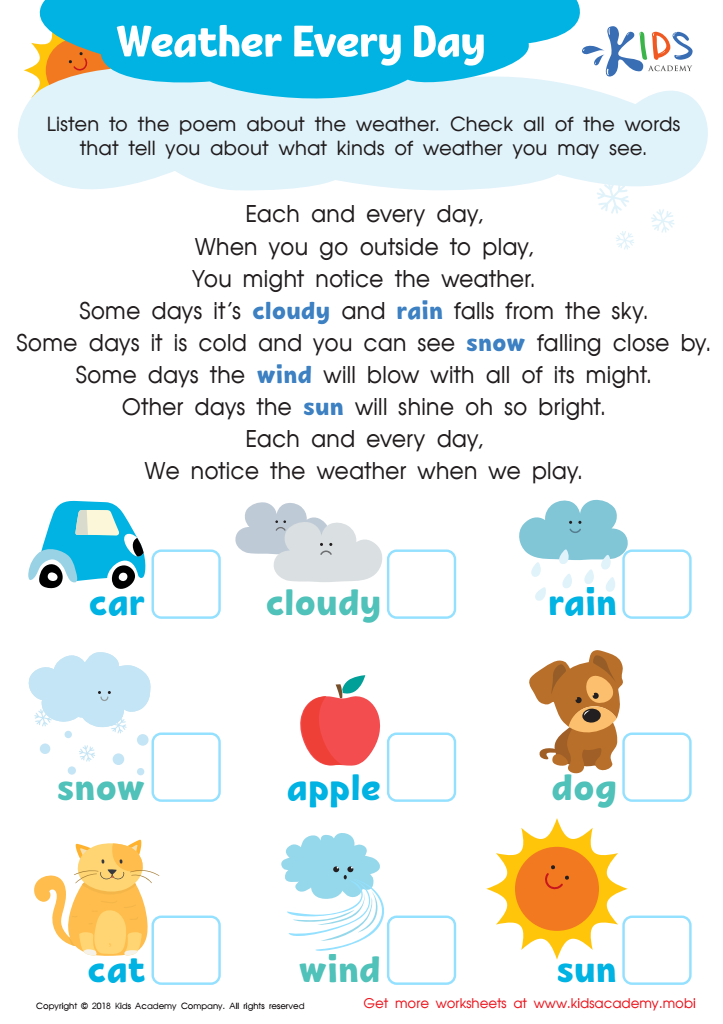
Weather Every Day Worksheet
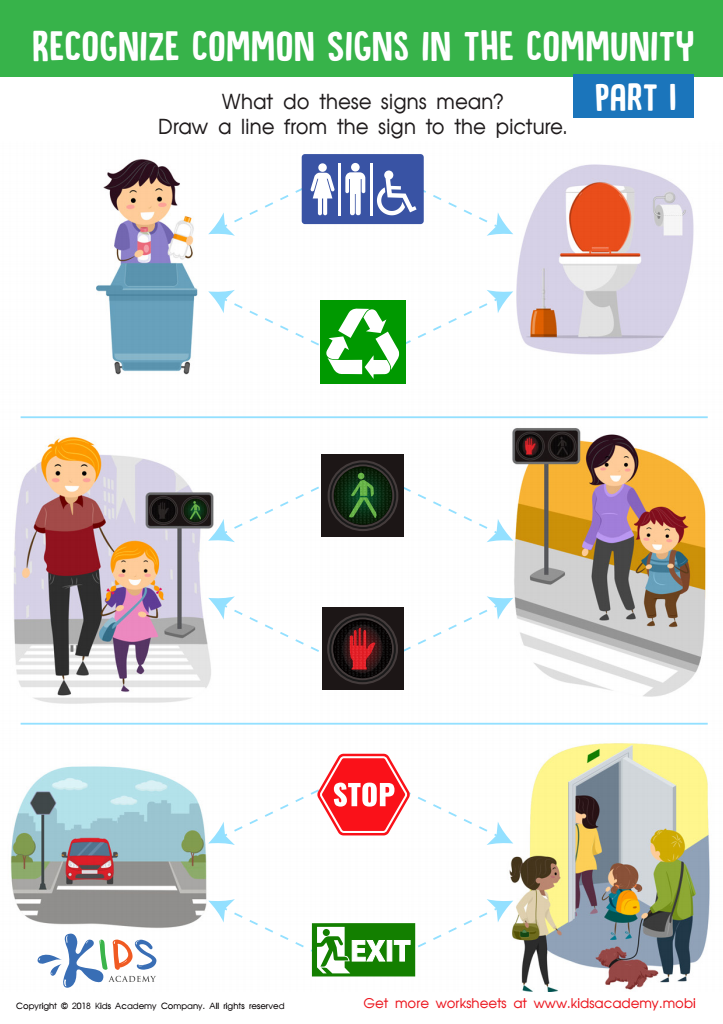
Recognize Common Signs: Part 1 Worksheet
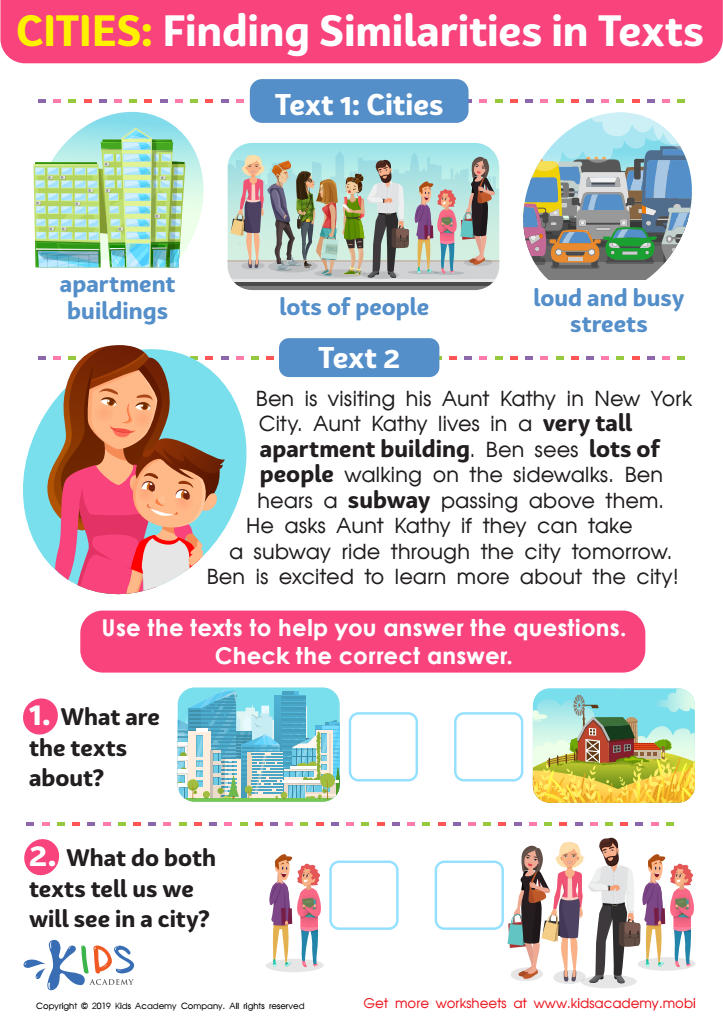
Cities: Finding Similarities Worksheet







Enhancing observation skills in children aged 5-6 is crucial for their overall development and learning. At this young age, children are naturally curious and eager to learn about the world around them. By fostering keen observation skills, parents and teachers can significantly boost a child’s cognitive, social, and emotional growth.
First, observation strengthens cognitive development. When children are encouraged to notice details, they improve their attention to detail, memory, and problem-solving skills. For example, observing changes in nature can help them understand basic scientific concepts and recognize patterns, which are foundational for later math and science learning.
Second, social skills improve through keen observation. By watching how others interact, children learn about social cues, empathy, and effective communication. This can lead to better friendships and smoother interactions in group settings.
Lastly, emotional development is enhanced when children use observation to understand their own and others’ emotions. Recognizing facial expressions and body language helps them navigate their own feelings and respond appropriately to those around them.
In summary, enhancing observation skills in young children is essential for laying a solid foundation in their cognitive, social, and emotional development. Parents and teachers can support this by encouraging curiosity, providing engaging activities, and consistently offering opportunities for children to explore and observe their surroundings.








