Fine motor development Easy Worksheets for Ages 5-6
3 filtered results
-
From - To
Enhance your child’s fine motor skills with our engaging worksheets designed specifically for ages 5-6. These easy-to-follow activities are perfect for young learners, promoting coordination and dexterity through fun exercises like tracing, cutting, and drawing. Our carefully crafted worksheets encourage creativity while strengthening the small muscles in the hands and fingers, essential for tasks like writing and self-care. With vibrant illustrations and exciting themes, children will love learning and practicing their fine motor skills. Discover a range of resources that make skill development enjoyable, setting the foundation for future academic success. Get started today and watch your child thrive!
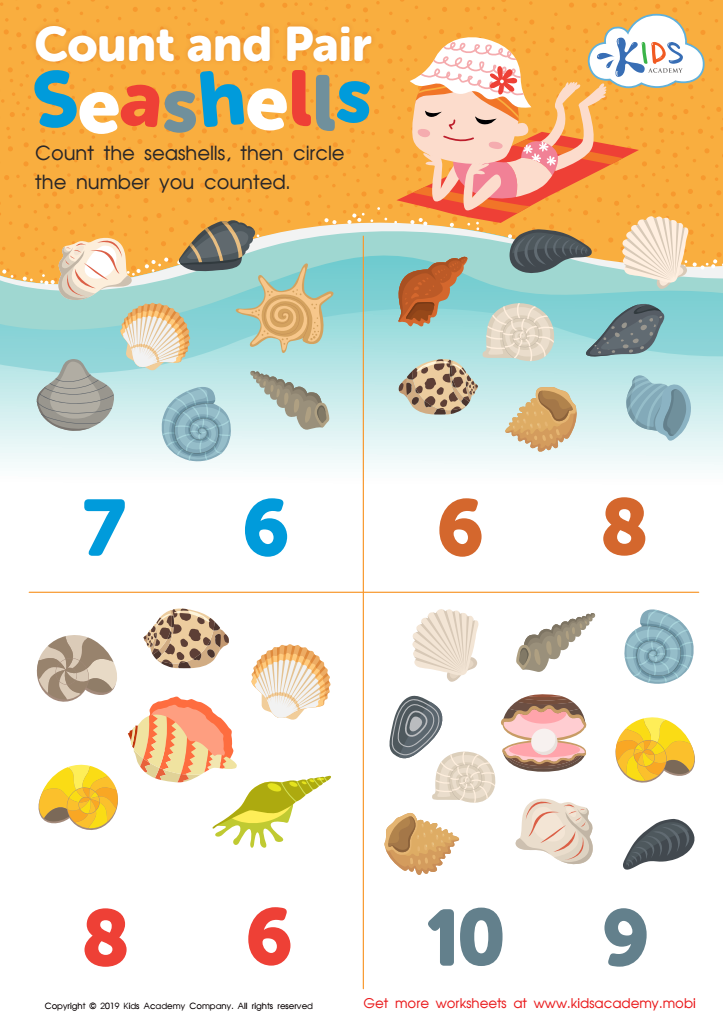
Count and Pair Seashells Worksheet
 Assign to My Students
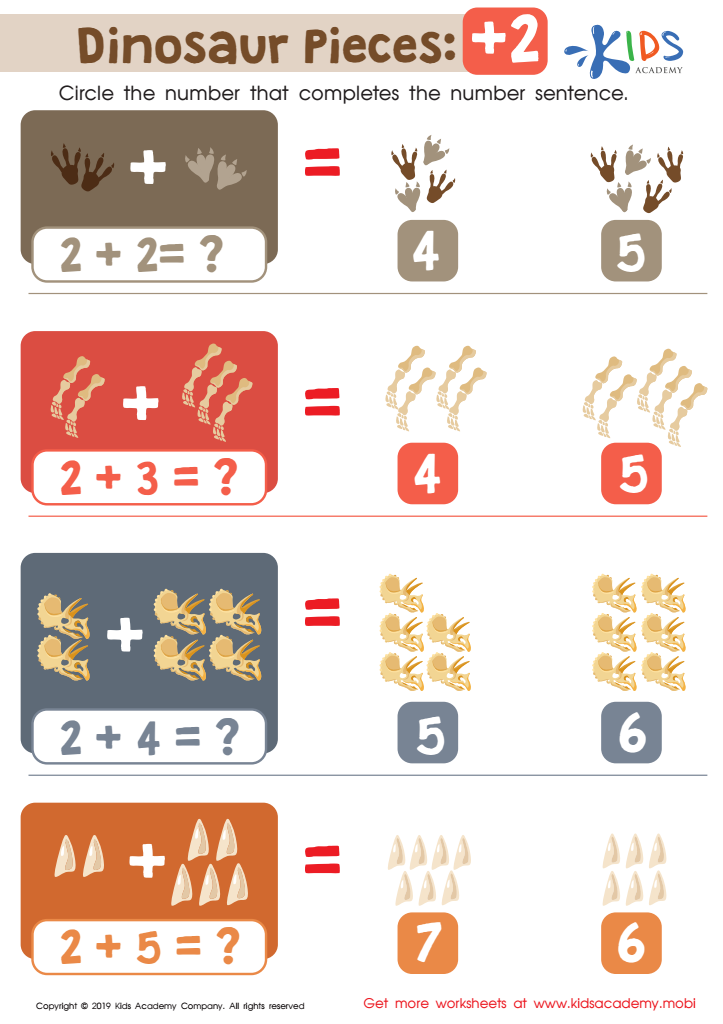
Dinosaur Pieces: +2 Worksheet








Fine motor development is crucial for children aged 5-6 as it significantly impacts their everyday skills and future learning. Parents and teachers should care about this area of development because it involves the small muscles in the hands, fingers, and wrists, which are essential for tasks such as writing, drawing, buttoning shirts, and using utensils.
When children develop strong fine motor skills, they gain confidence in their abilities to complete activities independently. This fosters self-esteem and encourages them to explore and learn more. Additionally, fine motor skills are closely linked to cognitive development; activities that enhance these skills—like cutting with scissors, threading beads, or playing with clay—often involve problem-solving and creativity.
Supporting fine motor development is vital for school readiness. Children who can manage tasks with their hands can focus better on learning other subjects like reading and math. Misaligned fine motor skills may lead to frustration and hinder a child’s academic progress. Therefore, engaging in activities that encourage fine motor skills—either at home or in the classroom—can make a significant difference in a child's overall development and readiness for the challenges ahead. In short, nurturing fine motor skills lays the foundation for a child's future success.








