
Understanding measurements Easy Worksheets for Ages 5-6
3 filtered results
Difficulty Level
Grade
Age
-
From - To
Subject
Activity
Standards
"Understanding Measurements Easy Worksheets for Ages 5-6" combines playful activities and engaging tasks to introduce young learners to the world of measurement. Tailored specifically for kids aged 5-6, these printable worksheets are designed to enhance critical learning skills by teaching concepts such as length, height, weight, and volume in a fun and accessible way. Perfect for both classroom settings and at-home practice, these worksheets help children grasp basic measurement principles while developing their observational and comparative skills. Empower your child's learning journey with resources that make understanding measurements enjoyable and straightforward.
Favorites
With answer key
Interactive
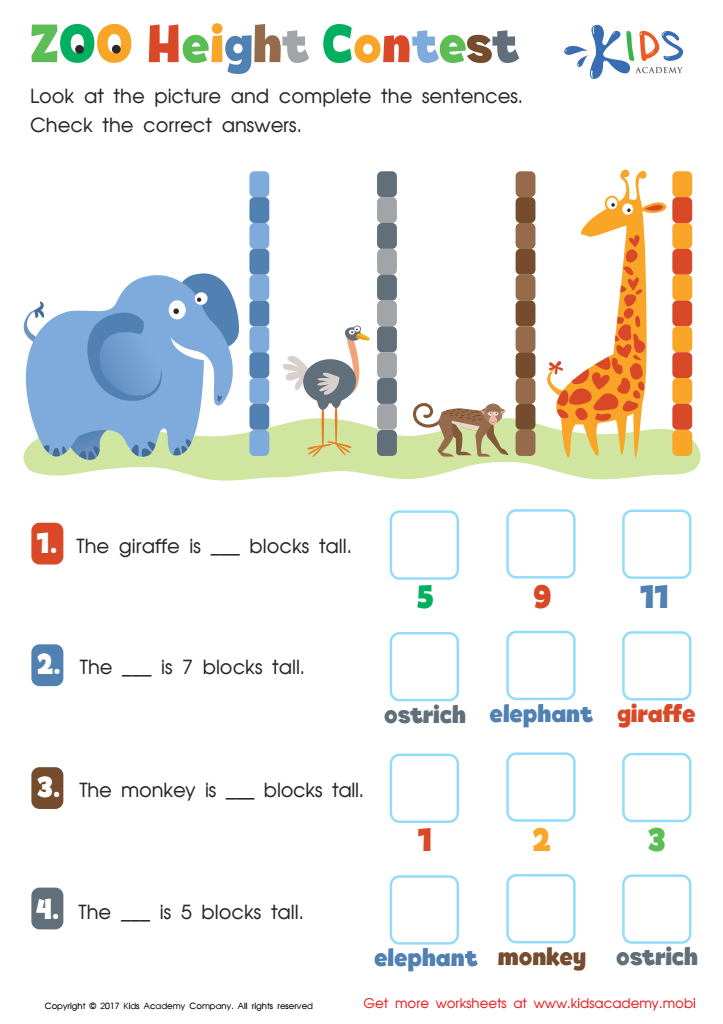
Zoo Height Contest Worksheet
Let's head to the zoo and use colorful blocks to measure your child's favorite animals! With this Kids Academy worksheet, help them practice and prepare for learning measurement. Guide them in looking at the zoo animals and counting blocks to find the height. Then, read the questions and check the box next to the correct answer.
 Assign to My Students
Zoo Height Contest Worksheet
Worksheet
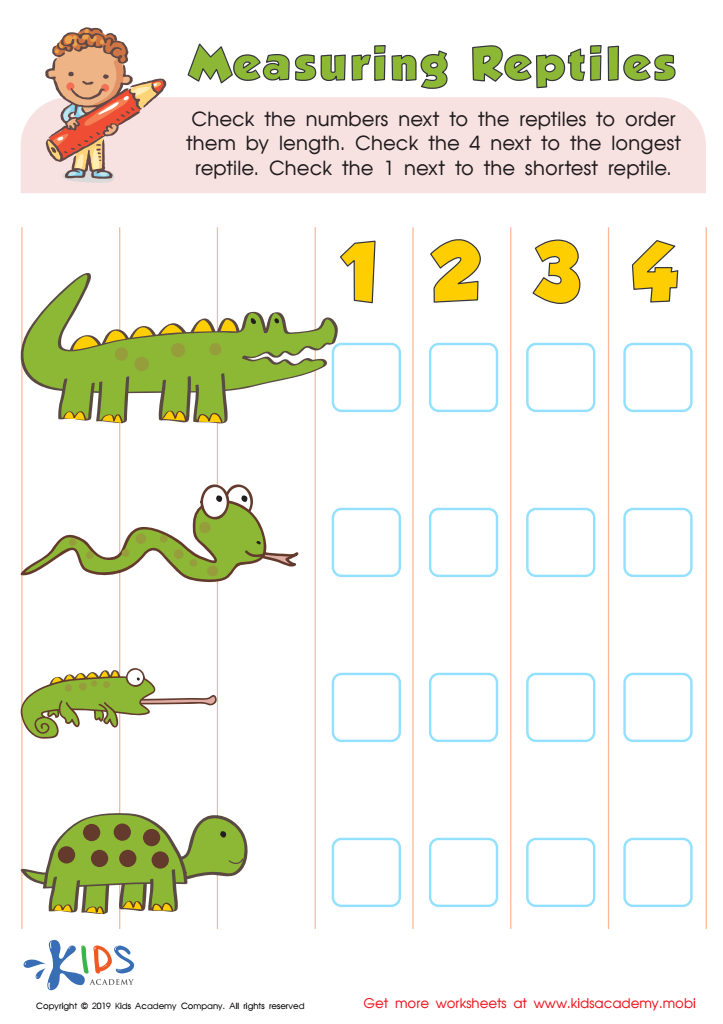
Measuring Reptiles Worksheet
Do your kids know what reptiles are? Ask them to name some and name features. In this activity, your kindergartners will measure with reptiles. Show them the picture and get them to order by length, starting with the one with 4 by the longest reptile, then the one with 1 by the shortest.
Measuring Reptiles Worksheet
Worksheet
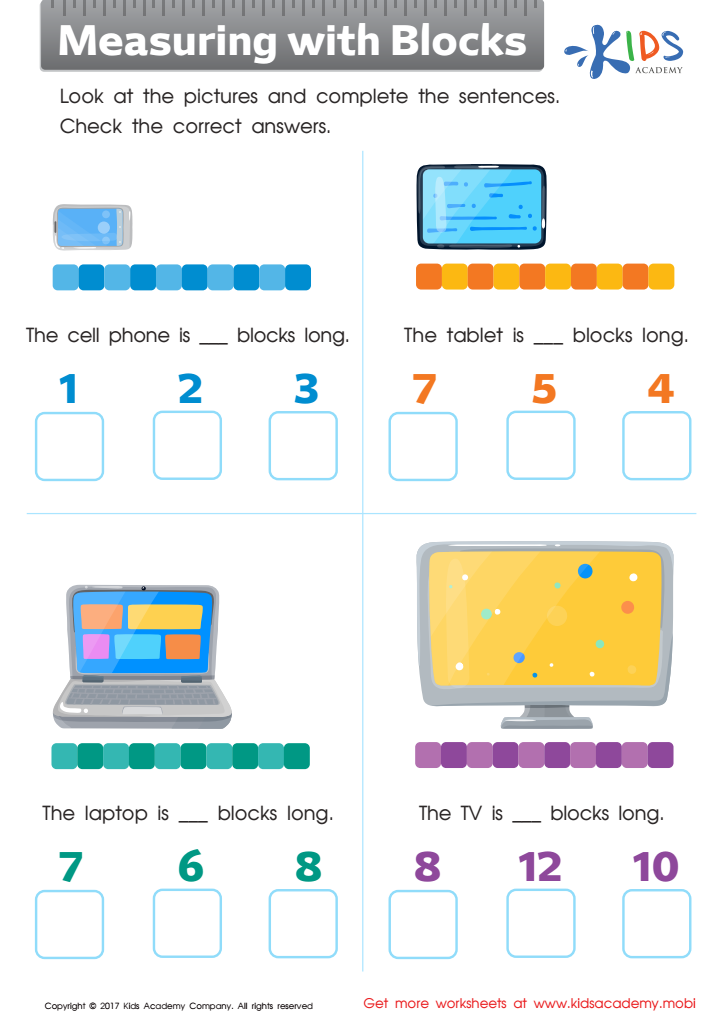
Measuring with Blocks Worksheet
Help your child get ready for math success with this Kids Academy worksheet. It provides colorful blocks to practice measuring objects. Coach them to count the boxes under each picture, then check the box with the right answer. It's a fun way to get acquainted with rulers!
Measuring with Blocks Worksheet
Worksheet
Join Kids Academy for Free
Who is primarily going to use this learning content?






Understanding measurements is crucial for young children because it lays the foundation for their future mathematical learning and everyday decision-making skills. For ages 5-6, learning about measurements can be simplified into engaging and hands-on activities, making the learning process enjoyable and impactful.
Parents and teachers should prioritize teaching measurements because it enhances a child’s ability to quantify and compare the world around them. This fundamental skill helps children understand concepts of length, weight, volume, and time, which are essential in everyday life. For example, knowing how to measure ingredients when cooking or understanding how much time is left before a favorite TV show starts builds practical life skills and self-sufficiency.
Introducing measurements in early childhood also supports cognitive development by improving problem-solving skills and logical thinking. Children are naturally curious and love to explore; providing them with simple measurement tools like rulers, measuring cups, or even timing devices helps foster their natural curiosity while simultaneously building their analytical abilities.
Moreover, early familiarity with measurement concepts is aligned with the school curriculum, preparing children for more complex math tasks in the future. By making measurements easy and enjoyable to learn, parents and teachers can ensure that children develop a strong mathematical foundation, boosting their confidence and academic success in later years.








