
Vocabulary Building Easy Worksheets for Ages 5-6
4 filtered results
Difficulty Level
Grade
Age
-
From - To
Subject
Activity
Standards
Boost your child's language skills with our "Vocabulary Building Easy Worksheets for Ages 5-6." Perfectly designed to engage and educate young learners, these printable worksheets introduce essential vocabulary in a fun and interactive way. Each worksheet focuses on common words, enhancing both recognition and usage through activities like matching, tracing, and picture-based exercises. Tailored for early graders, these resources help foster a solid foundation in reading and writing. Download now and watch your child's confidence grow as they embark on an exciting journey of language discovery! Great for both classroom learning and home practice.
Favorites
With answer key
Interactive
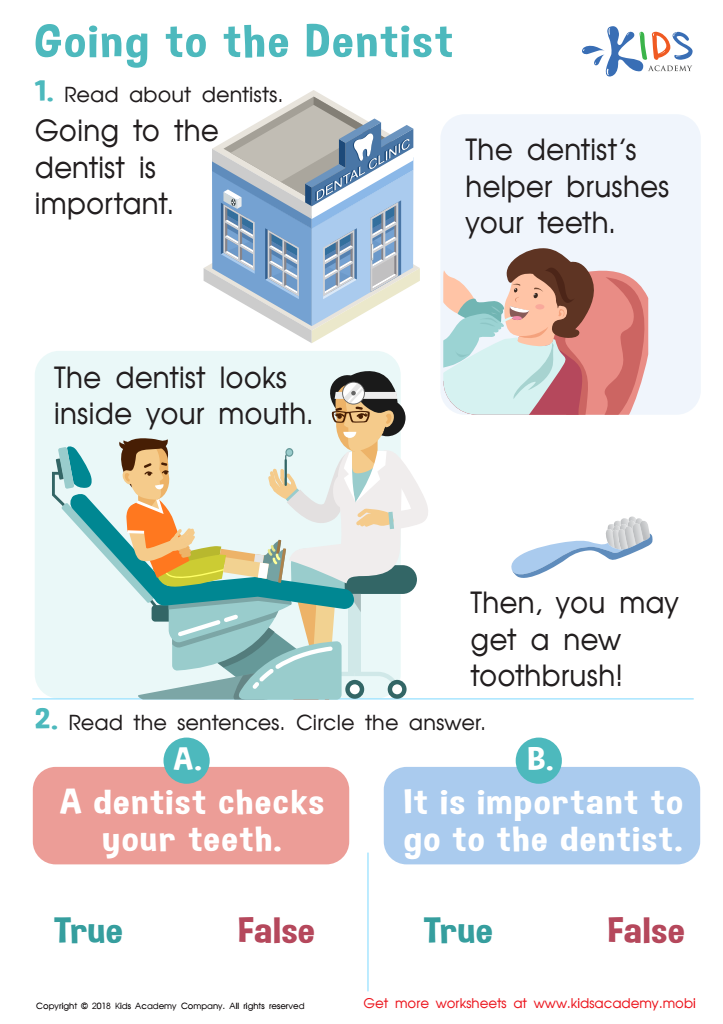
Going to the Dentist Part 2 Worksheet
Visiting the dentist can be nerve-wracking for children. This informative PDF will not only explain what the dentist does, but also use pictures to assure children. They'll learn why seeing the dentist is important and be able to verify their understanding through true/false questions.
Going to the Dentist Part 2 Worksheet
Worksheet
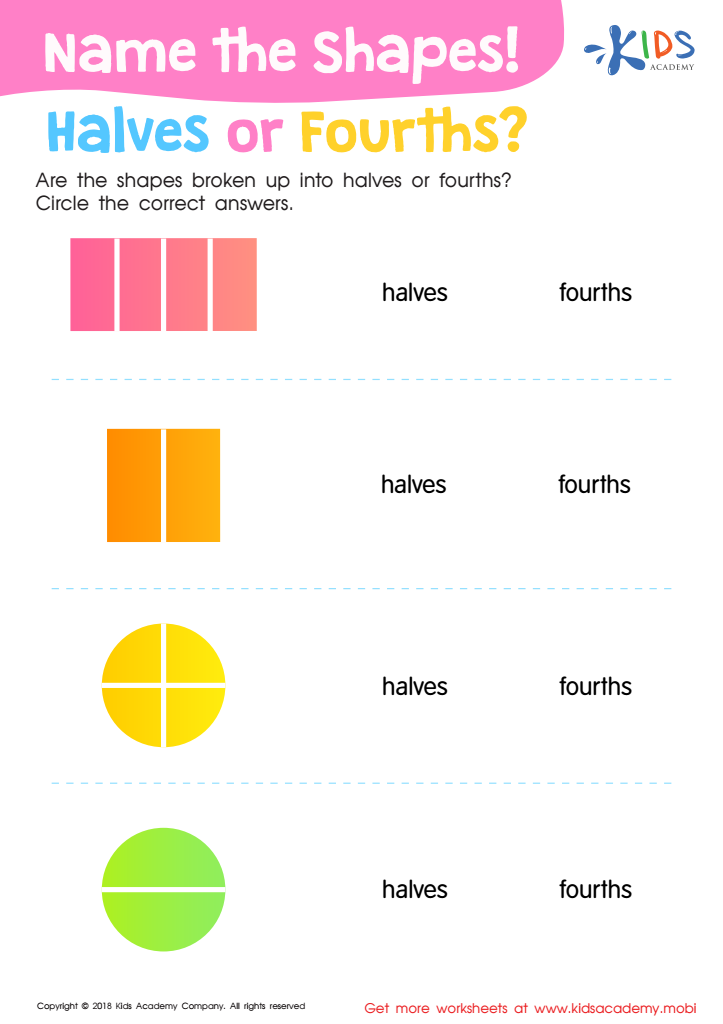
Name the Shapes Halves or Fourths? Worksheet
Before starting, ask your child if they understand what halves and fourths are. If they can answer correctly, move on with the worksheet. Help them circle the right option beside each shape, showing if it's split into halves or fourths.
Name the Shapes Halves or Fourths? Worksheet
Worksheet
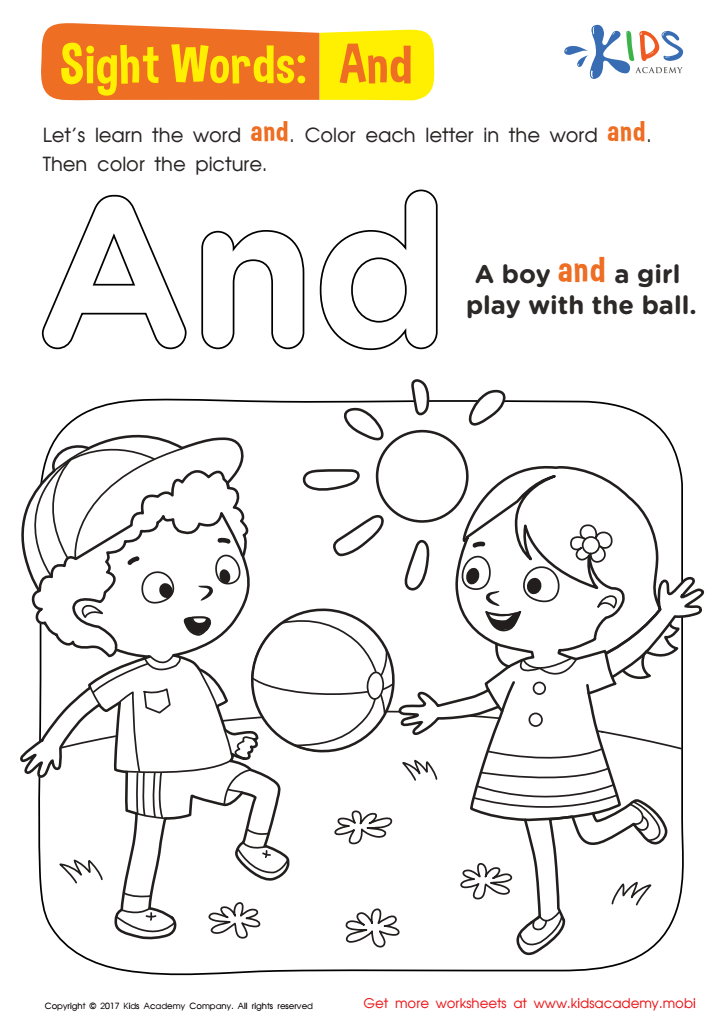
And Worksheet Sight Words Worksheet
Help your child get a jumpstart on reading with sight words! Print out this fun worksheet and get your child to read the sentence. Point out the word "and", then color the word and enjoy the rest of the scene! It's a great way to introduce sight words and get their early reading skills going!
Download (PDF)
 Assign to My Students
Assign to My Students
And Worksheet Sight Words Worksheet
Worksheet
Join Kids Academy for Free
Who is primarily going to use this learning content?






Parents and teachers should prioritize vocabulary building for children ages 5-6 because it lays a crucial foundation for academic and social success. At this developmental stage, children's brains are exceptionally receptive to learning new words, making it an optimal time to expand their vocabulary. A rich vocabulary enhances communication skills, enabling children to express themselves more clearly and understand others better. This early intervention can significantly impact reading comprehension, as studies show a strong correlation between vocabulary size and reading abilities.
In the classroom, a robust vocabulary fosters a more engaging and inclusive learning environment. Children with a more extensive vocabulary are more likely to participate in discussions, ask questions, and comprehend lesson content. Socially, a well-developed vocabulary helps children build relationships, resolve conflicts verbally, and understand social cues more effectively.
Moreover, early vocabulary building can help bridge educational gaps, providing a more equitable foundation for all children regardless of their background. Utilizing fun, interactive methods such as picture books, games, and storytelling can make this learning process enjoyable and more effective, catering specifically to the learning styles of young children. By investing in vocabulary building early on, parents and teachers are setting children on a path to better academic performance and enriched personal development.








