Shape Recognition Easy 2D Shapes Worksheets for Ages 5-6
5 filtered results
-
From - To
Shape Recognition Easy 2D Shapes Worksheets for Ages 5-6 are an excellent resource designed to help young learners master basic geometric shapes. These engaging and educational worksheets provide enjoyable activities that teach children to identify, trace, and color various 2D shapes including circles, squares, triangles, and rectangles. Through interactive exercises tailored for ages 5-6, kids develop essential shape recognition skills, enhancing their overall math readiness. Perfect for classroom or home use, these worksheets are a fun way to build a solid foundation in early geometry while boosting fine motor skills and cognitive development. Explore and download now for free!
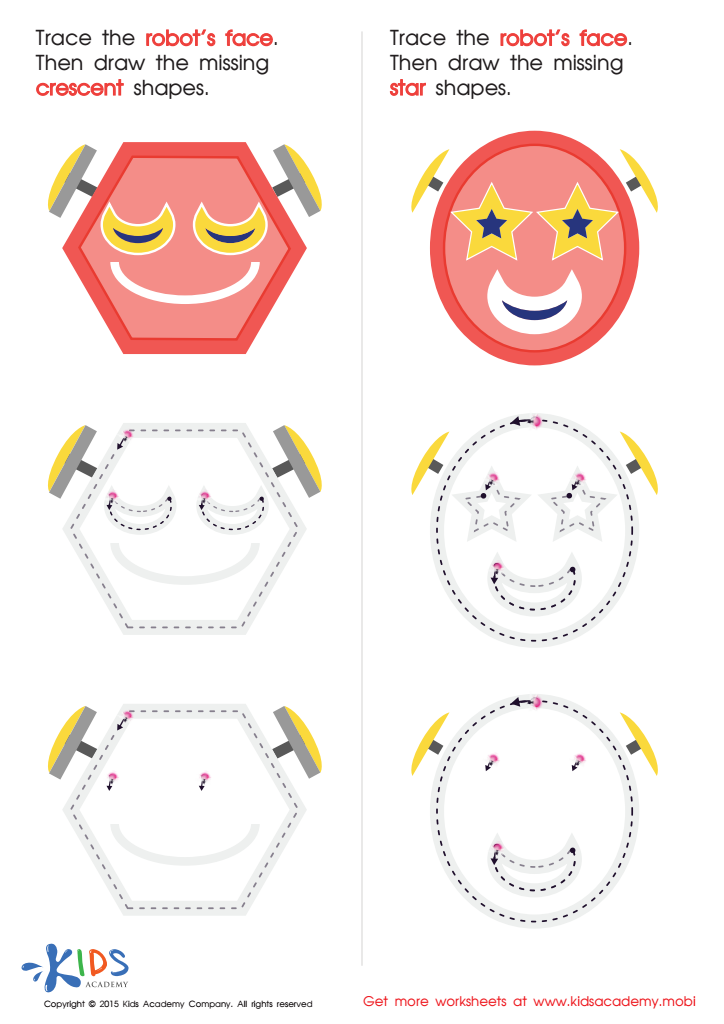
Composing a Robot's Face of Crescents And Stars Worksheet
 Assign to My Students











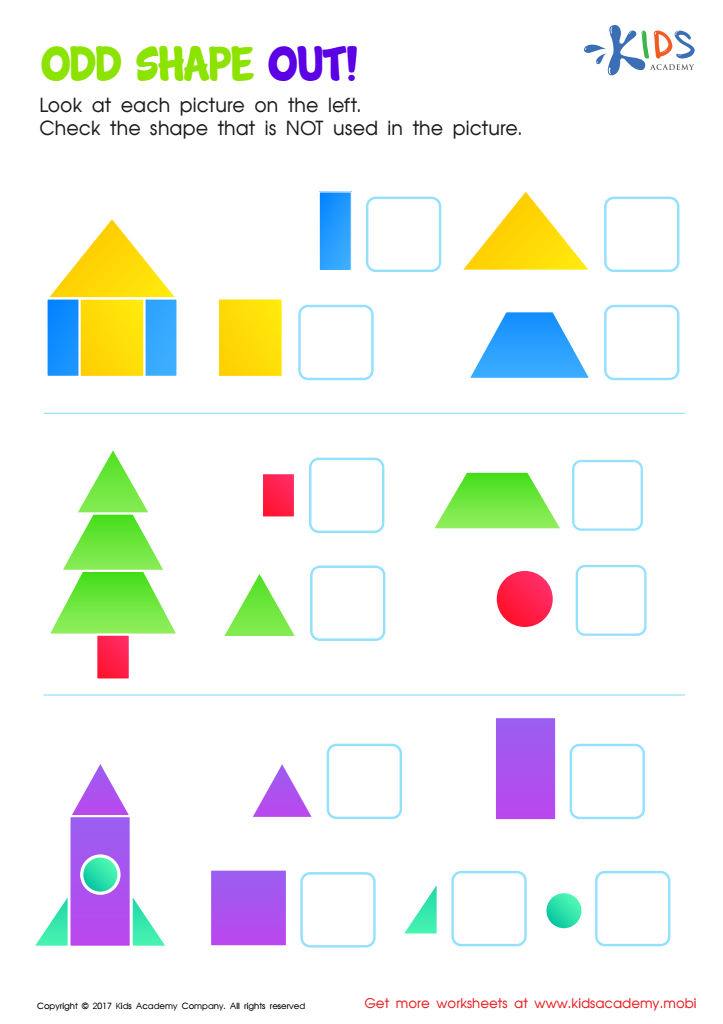
Odd Shape Out Worksheet for Grade 1
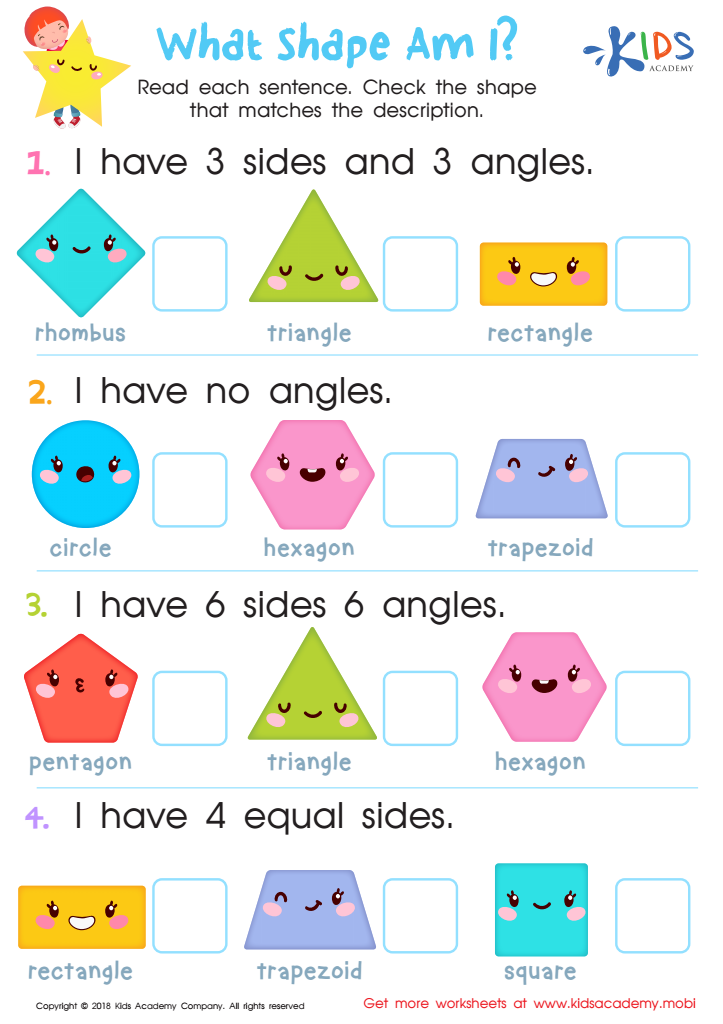
What Shape Am I? Worksheet
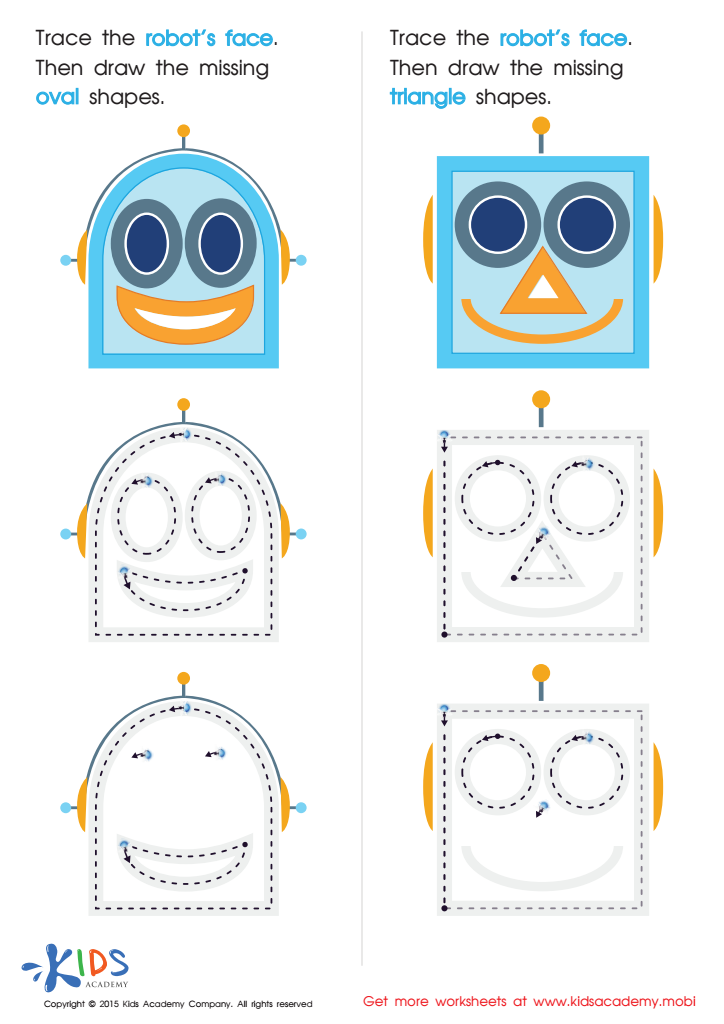
Drawing Ovals And Triangles with Fun Printable
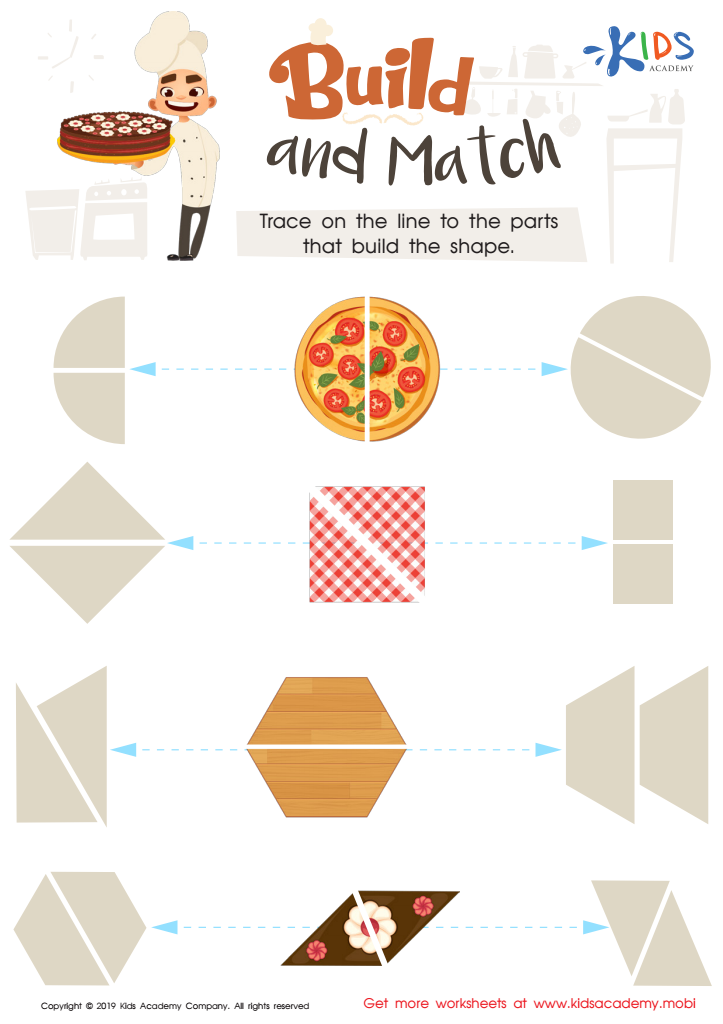
Build and Match Worksheet








Shape recognition is a fundamental skill that forms the cornerstone of early childhood education, particularly for children aged 5-6. Parents and teachers should prioritize this because recognizing and understanding basic 2D shapes contribute significantly to cognitive development. At this age, children are honing their spatial awareness and reasoning abilities, which are crucial for later success in more complex areas of mathematics and science.
Additionally, shape recognition aids in the development of visual discrimination, an essential skill for reading. Being able to distinguish between different shapes and patterns improves a child's ability to differentiate between letters and numbers, directly impacting their literacy skills. Moreover, shapes are all around us, and understanding them helps children better navigate the world, recognizing patterns in their environment, from traffic signs to everyday objects.
From a social and emotional development perspective, mastering shapes boosts self-confidence. As children successfully identify and sort shapes, they experience a sense of accomplishment and pride, promoting a positive attitude toward learning.
Moreover, collaborating with peers in shape recognition games or activities fosters teamwork and communication skills. It's an engaging way for young learners to practice problem-solving and critical thinking together under the guidance of their parents and teachers. Thus, integrating shape recognition activities into early education offers a holistic approach to enriching a child's formative years.