Understanding tally marks Easy Numbers Worksheets for Ages 5-6
4 filtered results
-
From - To
Discover the fun and engaging "Understanding Tally Marks Easy Numbers Worksheets" designed for children ages 5-6! These worksheets introduce young learners to tally marks, a simple visual tool for counting and organizing numbers. Through interactive exercises, kids will practice counting, recognizing patterns, and using tally marks to represent quantities. Ideal for early math education, our printable resources enhance number recognition skills while promoting creativity and critical thinking. Perfect for classroom or at-home learning, these worksheets make mastering tally marks an enjoyable experience. Explore our collection and help your child build a strong foundation in mathematics today!
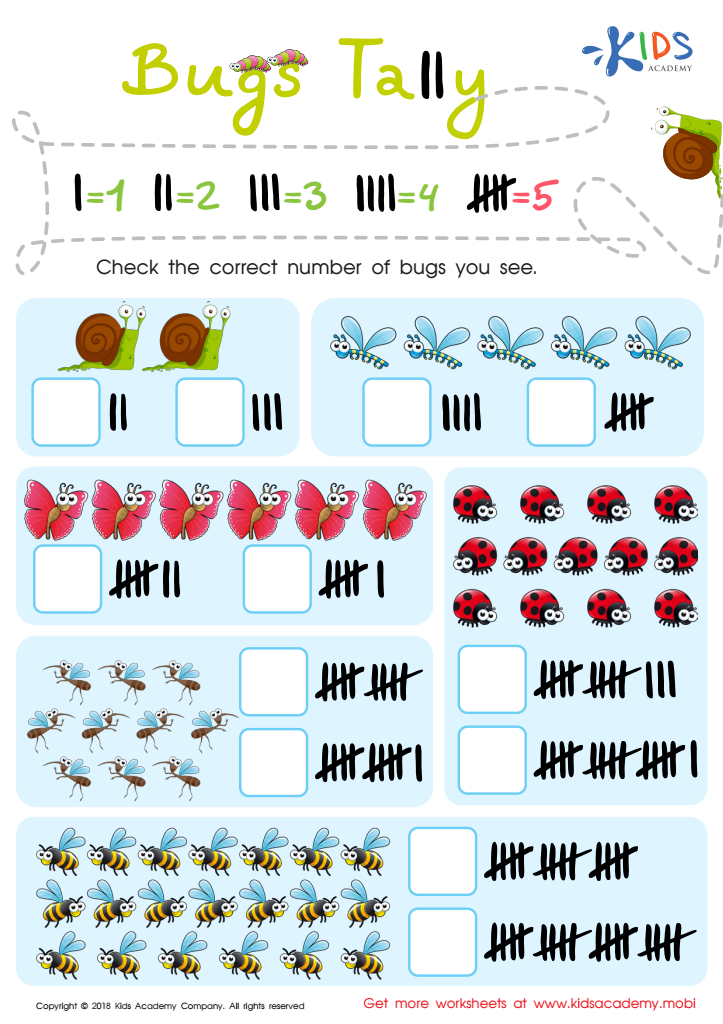
Bugs Tally Worksheet
 Assign to My Students
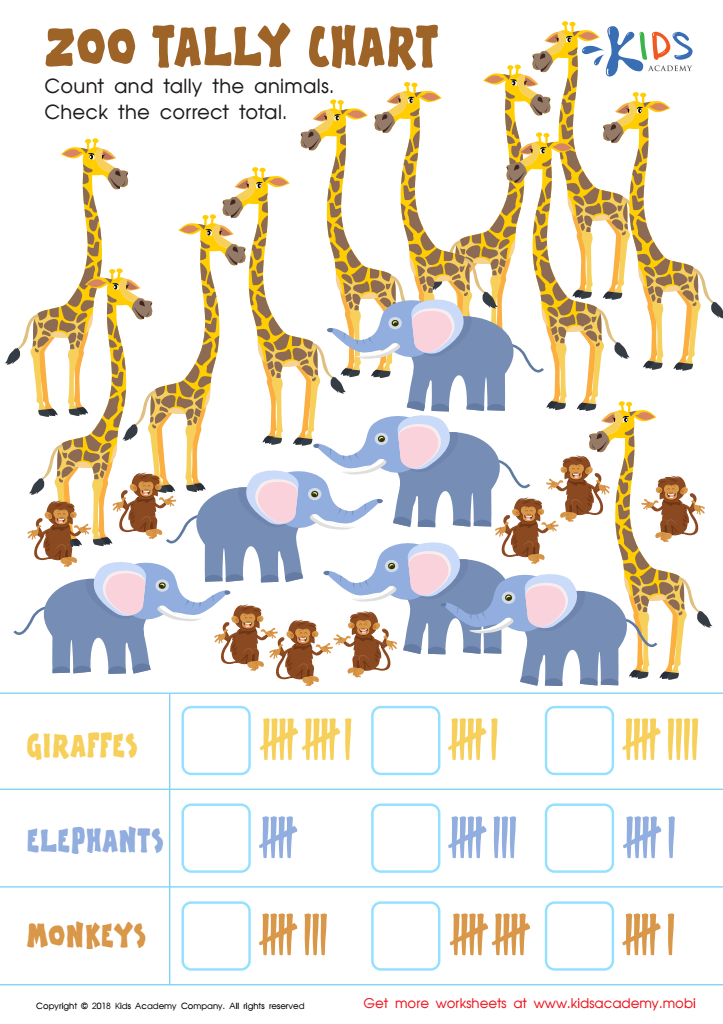
Zoo Tally Chart Worksheet
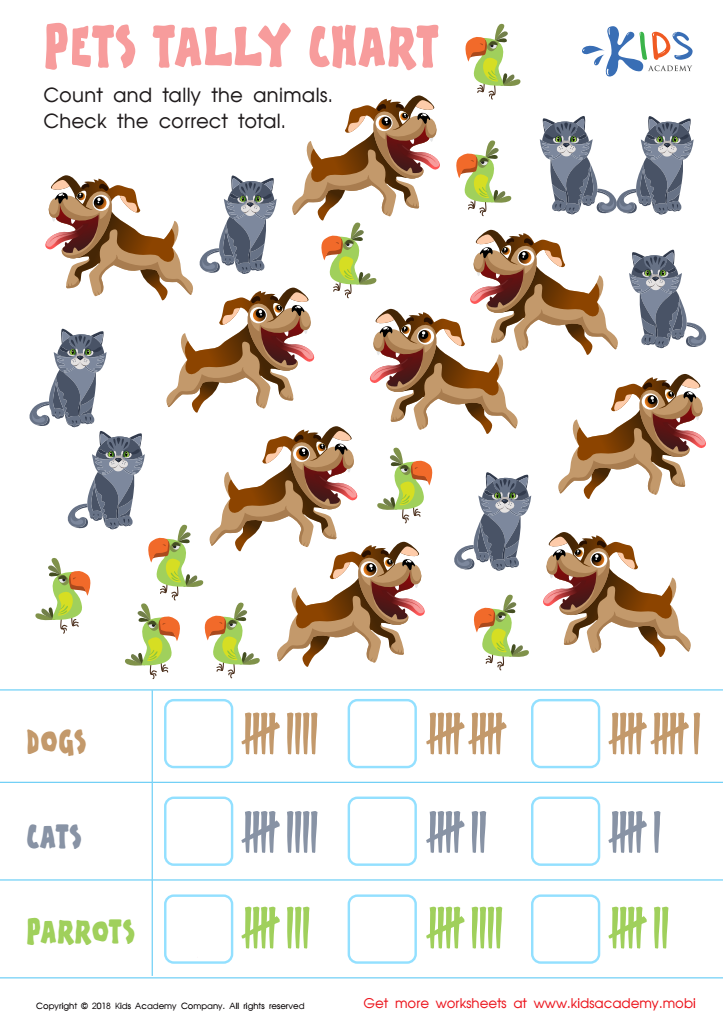
Pets Tally Chart Worksheet
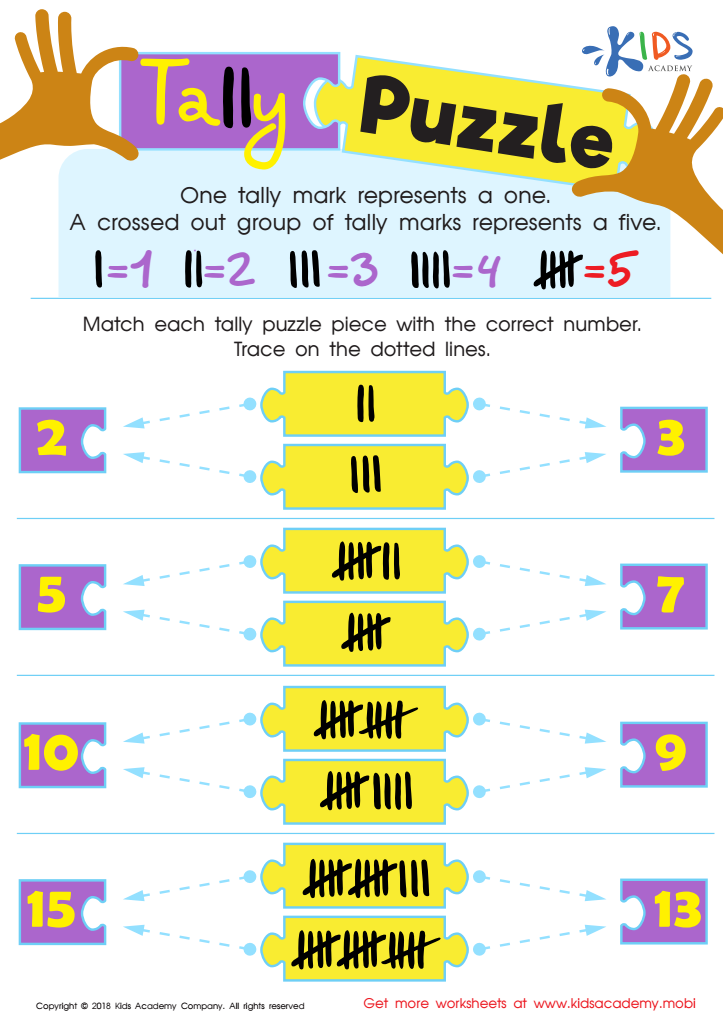
Tally Puzzle Worksheet







Understanding tally marks is an essential skill for young children, particularly those aged 5-6, as it supports their foundational numeracy and critical thinking. Tally marks are a simple way to represent quantities, providing an excellent introduction to counting, grouping, and the concept of quantities visually. This method enhances children’s ability to recognize patterns, which strengthens their overall mathematical understanding.
For parents and teachers, teaching tally marks fosters engagement in learning. This hands-on approach encourages discussions around numbers in everyday scenarios, making math feel relatable and fun. By incorporating tally marks into various activities—such as tracking score in games, counting items, or observing daily routines—children can develop essential observational skills and a sense of organization.
Moreover, familiarity with tally marks promotes teamwork and cooperation when collaborating in group activities, reinforcing social skills as they communicate their findings. Early mastery of this skill can pave the way for more complex topics, such as basic addition and subtraction. In essence, investing time and effort to teach young students about tally marks prepares them for future academic success while nurturing a positive attitude towards mathematics. Parents and teachers, therefore, should prioritize this foundational understanding for optimal cognitive development.








