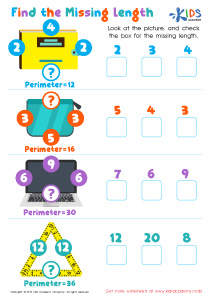
Problem-Solving Skills Easy Subtraction Worksheets for Ages 5-6
9 filtered results
-
From - To
Our "Problem-Solving Skills Easy Subtraction Worksheets for Ages 5-6" are carefully designed to make learning subtraction fun and engaging for young learners. Featuring colorful themes and simple, interactive exercises, these worksheets help kids build foundational math skills while boosting their confidence. Each worksheet encourages critical thinking by presenting real-life problem-solving scenarios, giving children hands-on practice with basic subtraction concepts. Perfect for classroom use or at-home practice, they offer a structured approach to learning that ensures both educational development and joy in discovering the world of numbers. Equip your child with essential problem-solving skills for their academic journey!
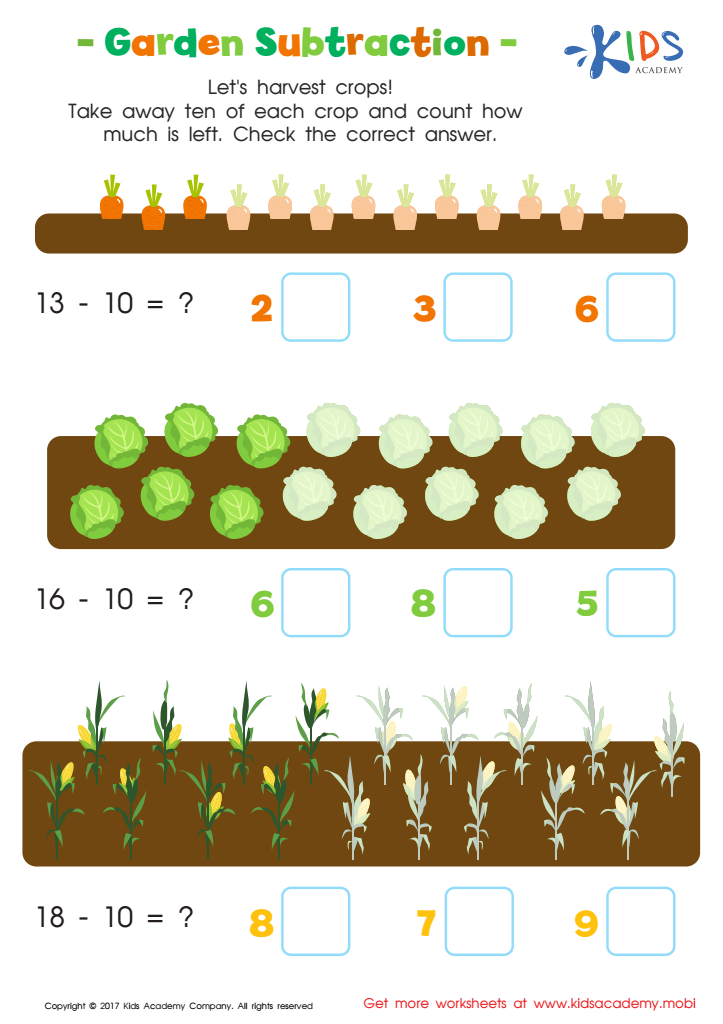
Garden Subtraction Worksheet
 Assign to My Students
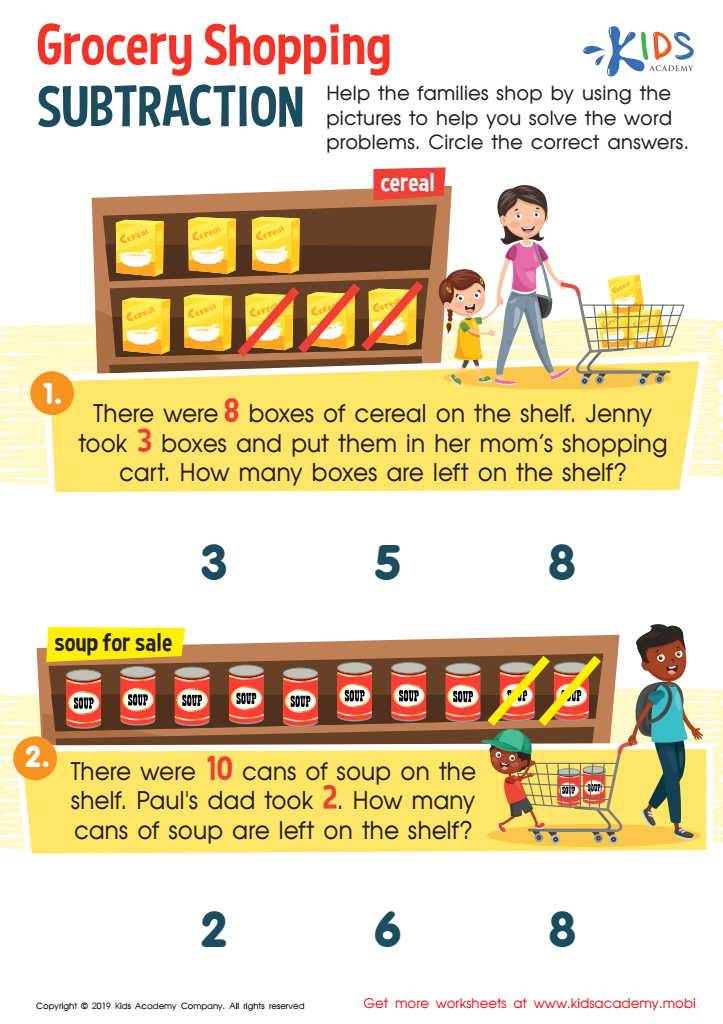
Grocery Shopping Subtraction Worksheet
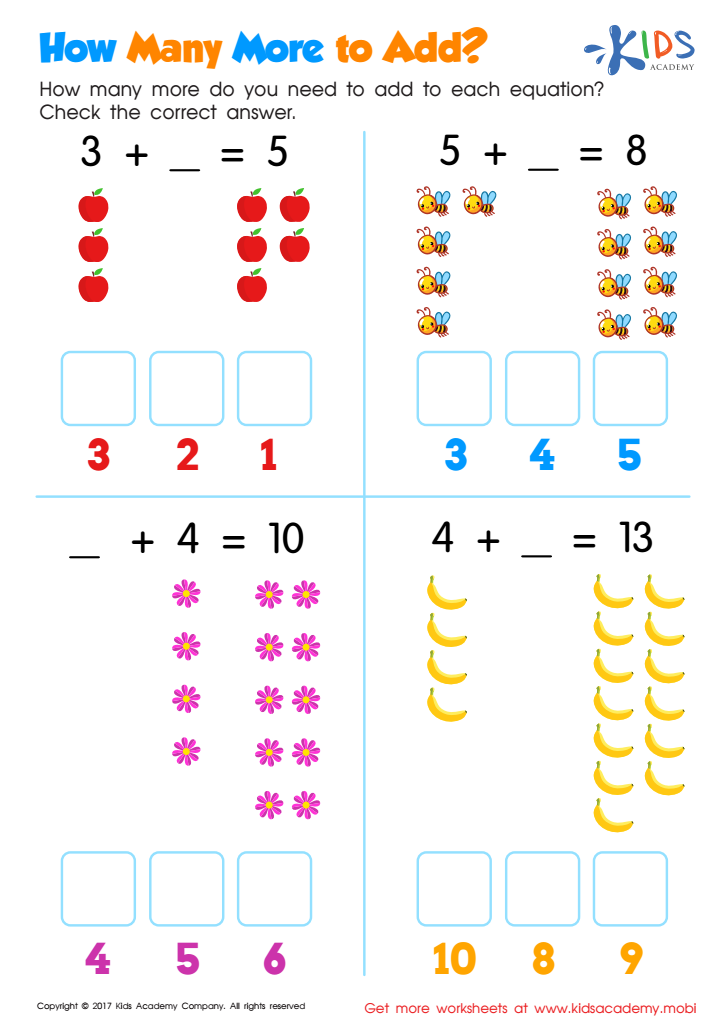
How Many More to Add Worksheet
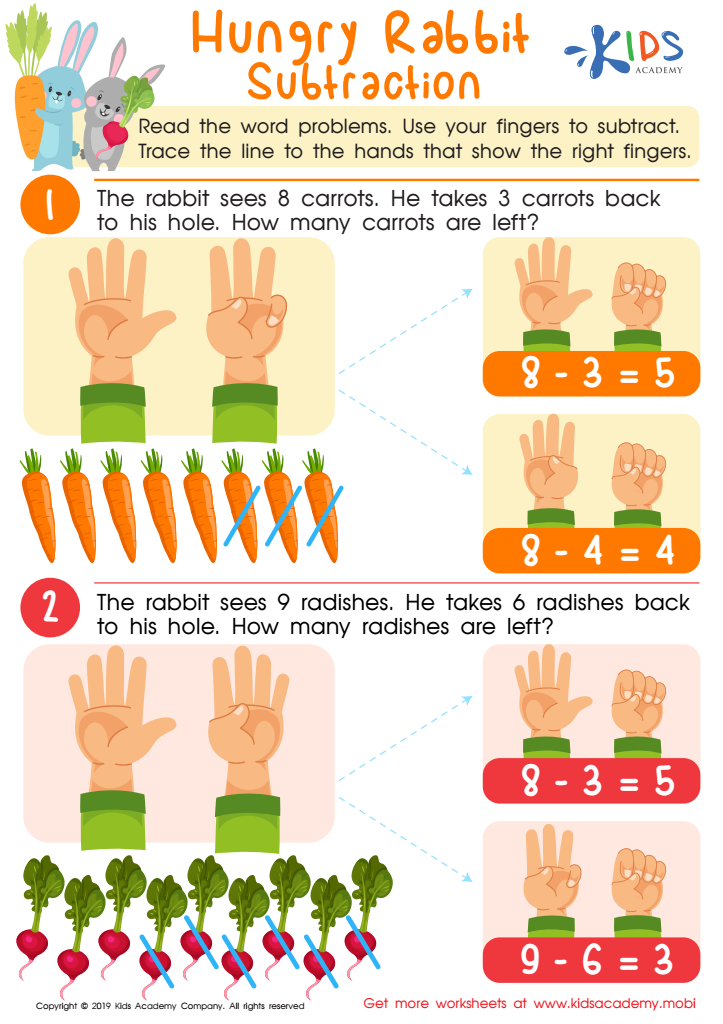
Hungry Rabbit Subtraction Worksheet
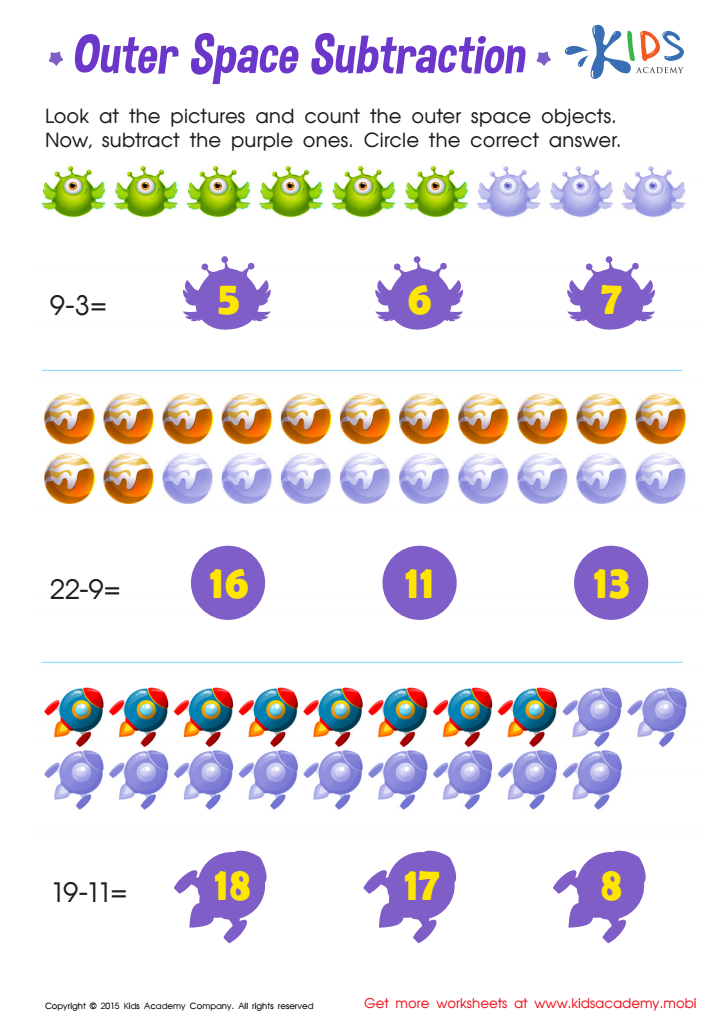
Outer Space Substraction Worksheet
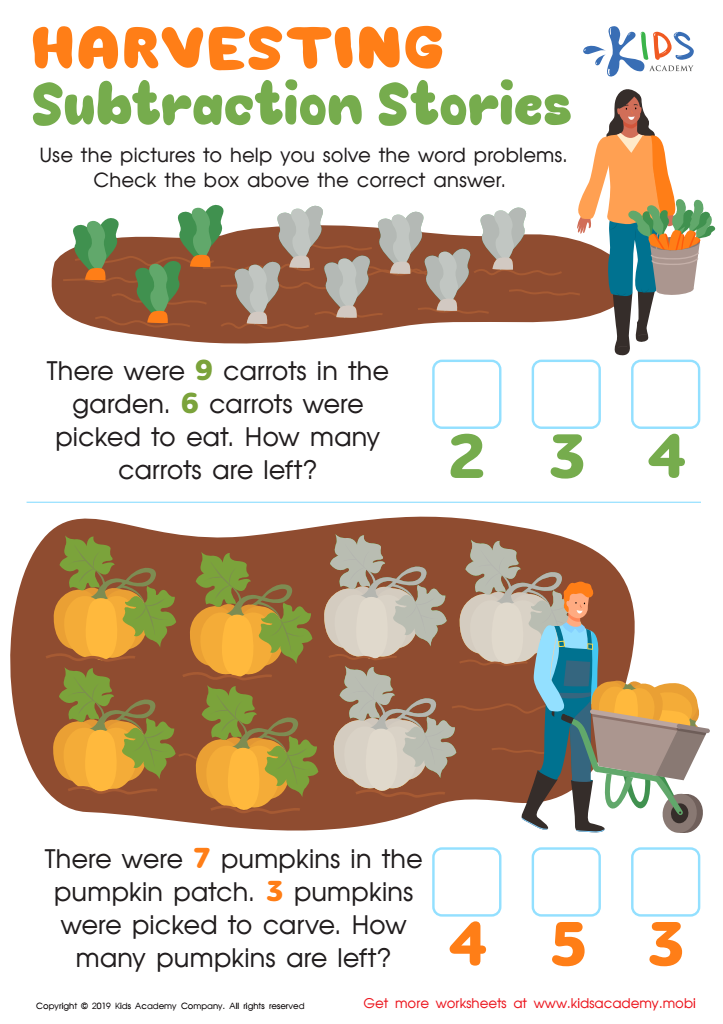
Harvesting Subtraction Stories Worksheet
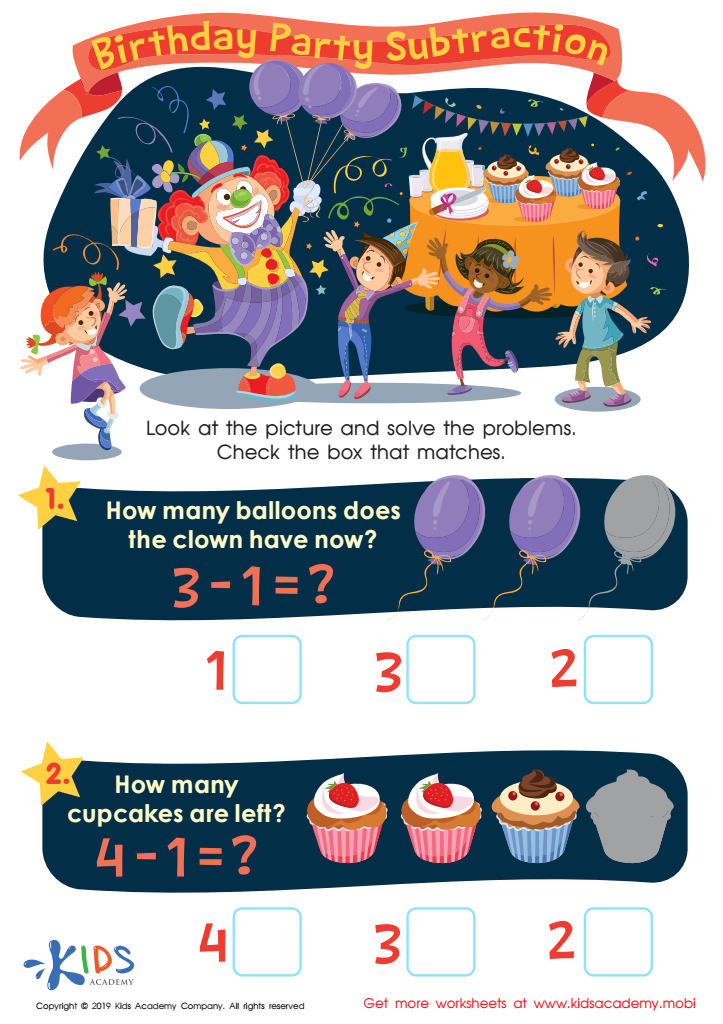
Birthday Party Subtraction Worksheet
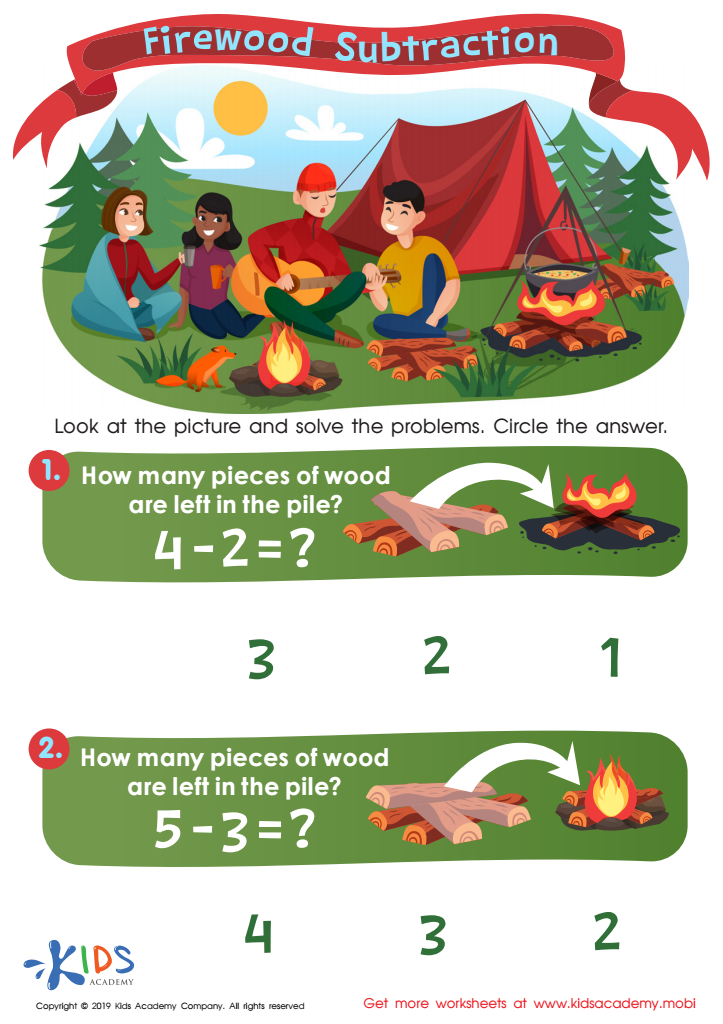
Firewood Subtraction Worksheet
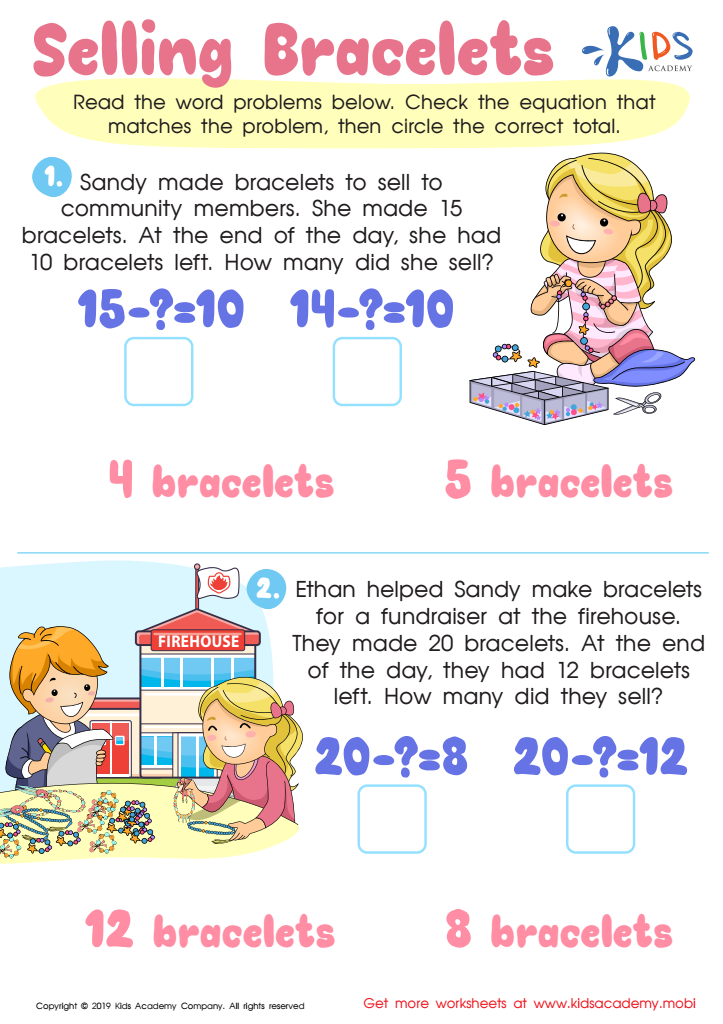
Selling the Bracelets Worksheet








Problem-solving skills in easy subtraction are vital for children aged 5-6 because they lay the foundation for future mathematical understanding and everyday reasoning. At this developmental stage, children are beginning to understand numbers and their relationships. Introducing them to subtraction through problem-solving activities helps them recognize that numbers can be broken down and manipulated, enhancing their numerical fluency.
Parents and teachers should care because these early skills are predictors of later success in math and other logical reasoning tasks. Hands-on activities and engaging subtraction problems encourage children to visualize and conceptualize numbers, promoting critical thinking. This early experience with problem-solving fosters a growth mindset, where kids learn that challenges can be approached methodically and overcome, a transferable skill to many areas of learning and life.
Moreover, easy subtraction problems appropriate for their age help improve basic arithmetic as well as cognitive skills such as memory, attention, and executive functioning. Socially and emotionally, children gain confidence as they successfully solve problems, bolstering their motivation and love for learning. Hence, nurturing these skills early can lead to well-rounded development, creating a strong scaffold for more advanced mathematical concepts and complex thinking in later years.