Story sequencing Easy Reading Comprehension Worksheets for Ages 5-6
3 filtered results
-
From - To
Welcome to our Story Sequencing Easy Reading Comprehension Worksheets for Ages 5-6! These engaging resources are designed to enhance young learners' understanding of story structure through fun and interactive activities. Students will practice identifying key events in stories and arranging them in the correct order, thereby strengthening their reading comprehension skills. Our worksheets feature colorful illustrations and relatable stories that capture children's imaginations while promoting critical thinking. Ideal for home or classroom use, these worksheets help foster a love for reading and improve cognitive development in early learners. Prepare your child for a successful reading journey with our thoughtfully crafted materials!
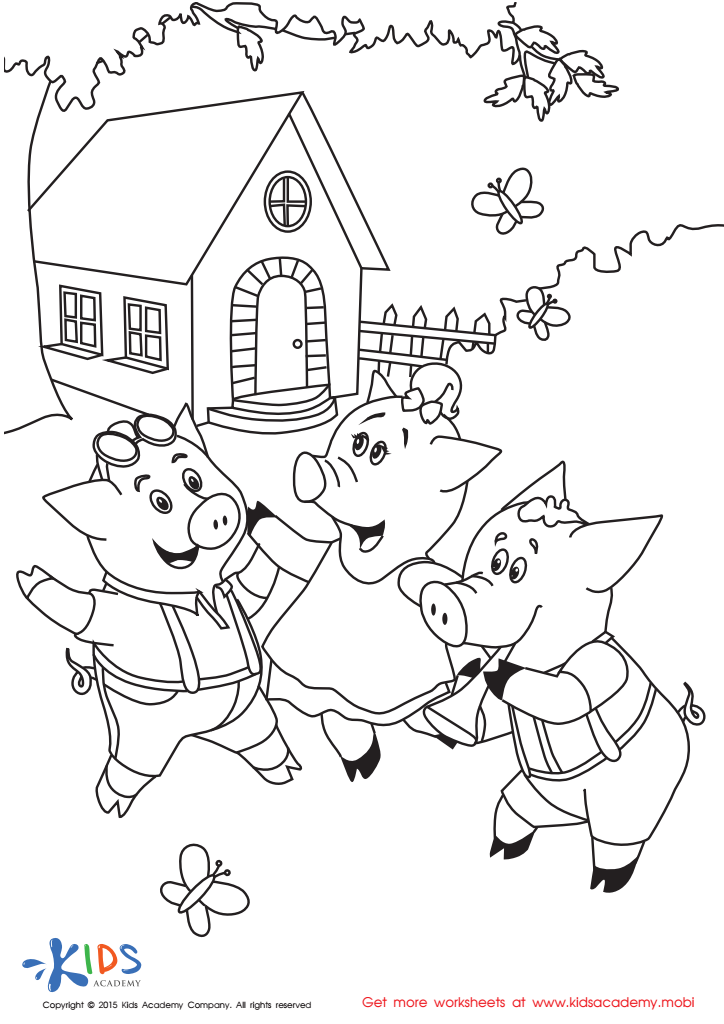
Folktales Printable PDF Worksheet: The 3 Little Pigs
 Assign to My Students
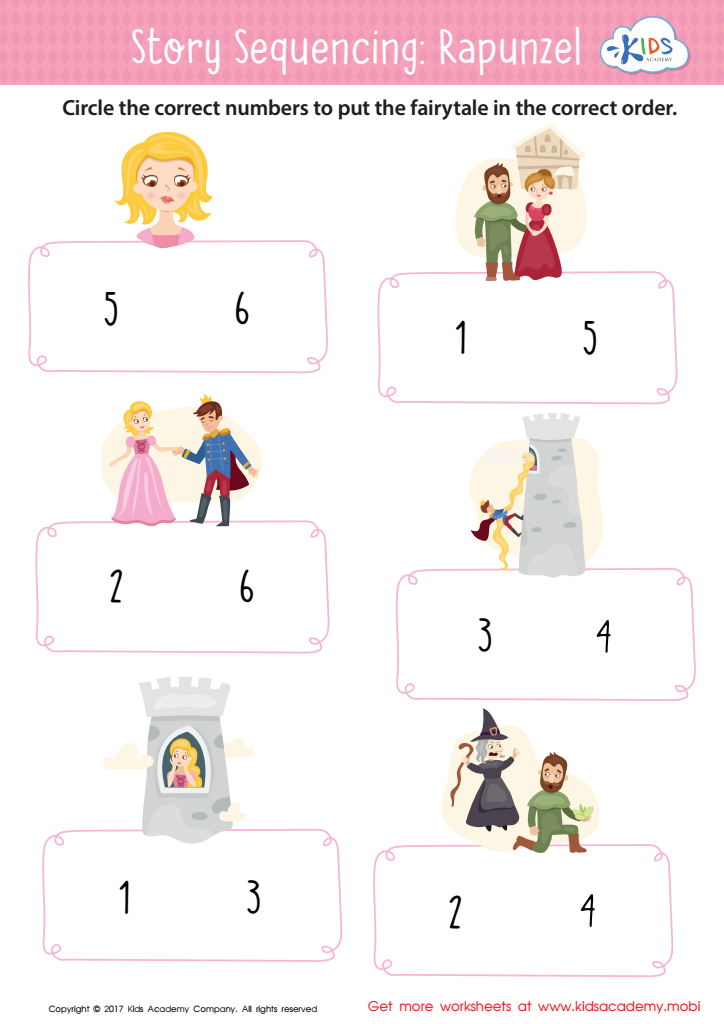
Rapunzel Story Sequencing Worksheet
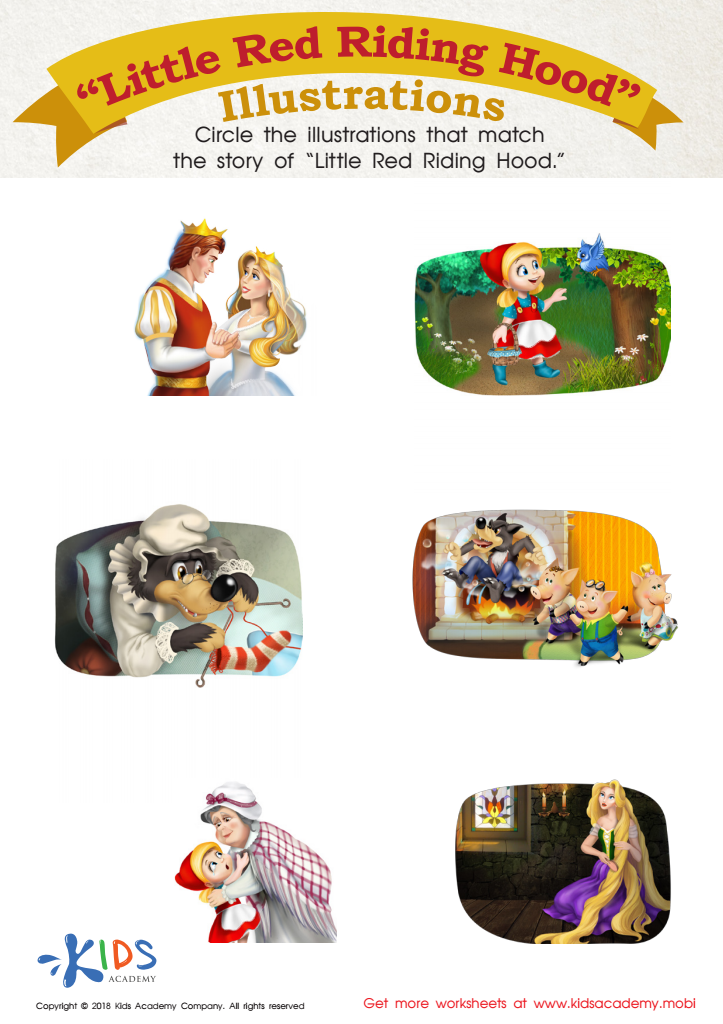
Little Red Riding Hood: Illustrations Worksheet







Story sequencing is an essential skill for early readers aged 5-6, as it lays the foundation for reading comprehension and critical thinking. Understanding the sequence of events helps young children grasp the flow of narratives, making it easier to recall stories and predict outcomes. This helps develop their analytical skills, as they learn to organize information logically.
When parents and teachers prioritize story sequencing, they engage children not just in reading but in actively interacting with texts. This engagement fosters motivation, enhances vocabulary, and boosts communication skills, since children will discuss plots, characters, and settings more fluently. Additionally, story sequencing encourages creativity, as children may rearrange events or create their own endings, stimulating their imagination.
Furthermore, mastering story sequencing can support children’s overall academic performance. As they become adept at following chronological order in stories, they can apply these skills to other subjects, like math and science, where sequencing plays an important role, such as in solving problems or understanding processes.
Ultimately, integrating story sequencing into reading activities enriches young learners' experiences, making reading enjoyable and fulfilling, while preparing them for future educational challenges. Therefore, teachers and parents should prioritize this critical component of early literacy.