Reading comprehension Easy Reading Non-Fiction Worksheets for Ages 5-6
4 filtered results
-
From - To
Discover our engaging "Easy Reading Non-Fiction Worksheets" designed specifically for children ages 5-6. These worksheets help young learners enhance their reading comprehension skills through age-appropriate, informative texts that spark curiosity and foster learning. Each worksheet includes fun questions and activities that encourage critical thinking and improve understanding of various topics. Perfect for home or classroom use, our resources support early literacy development while making learning enjoyable. Explore the world of non-fiction together with your child as they build confidence in their reading abilities. Unlock a treasure trove of exciting knowledge and activities today!
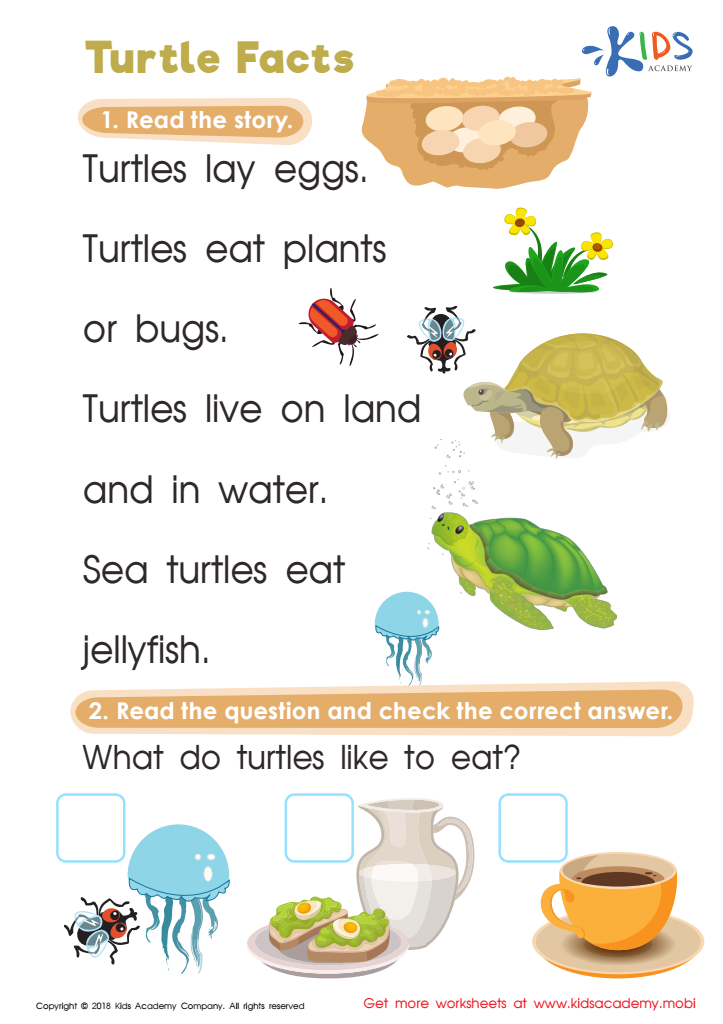
Turtle Facts Worksheet
 Assign to My Students
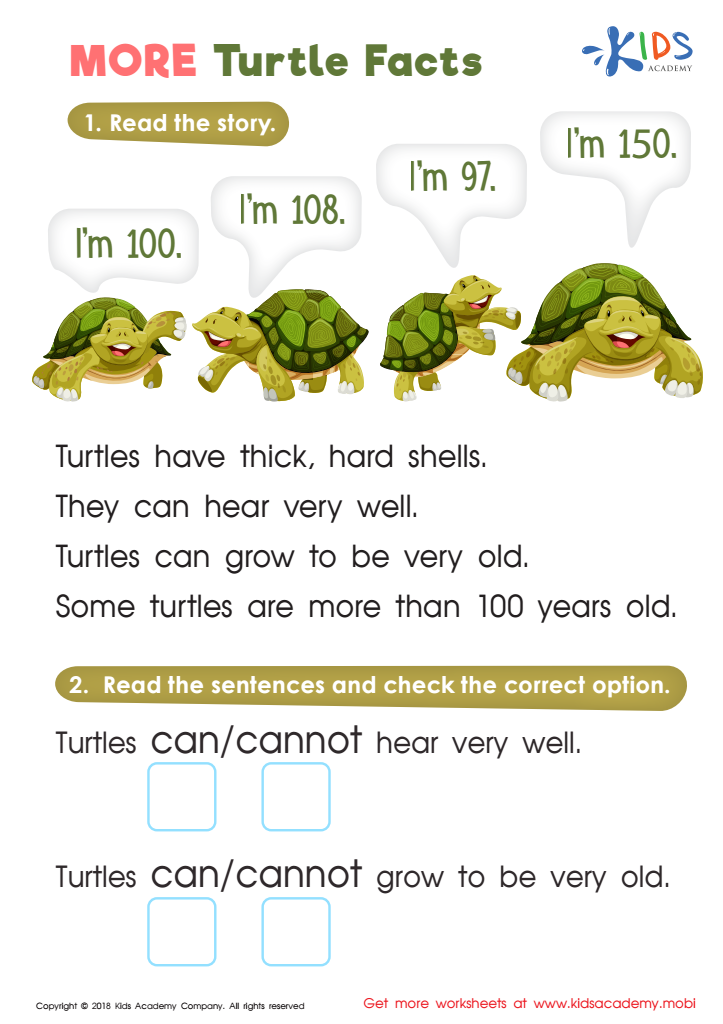
More Turtle Facts Worksheet
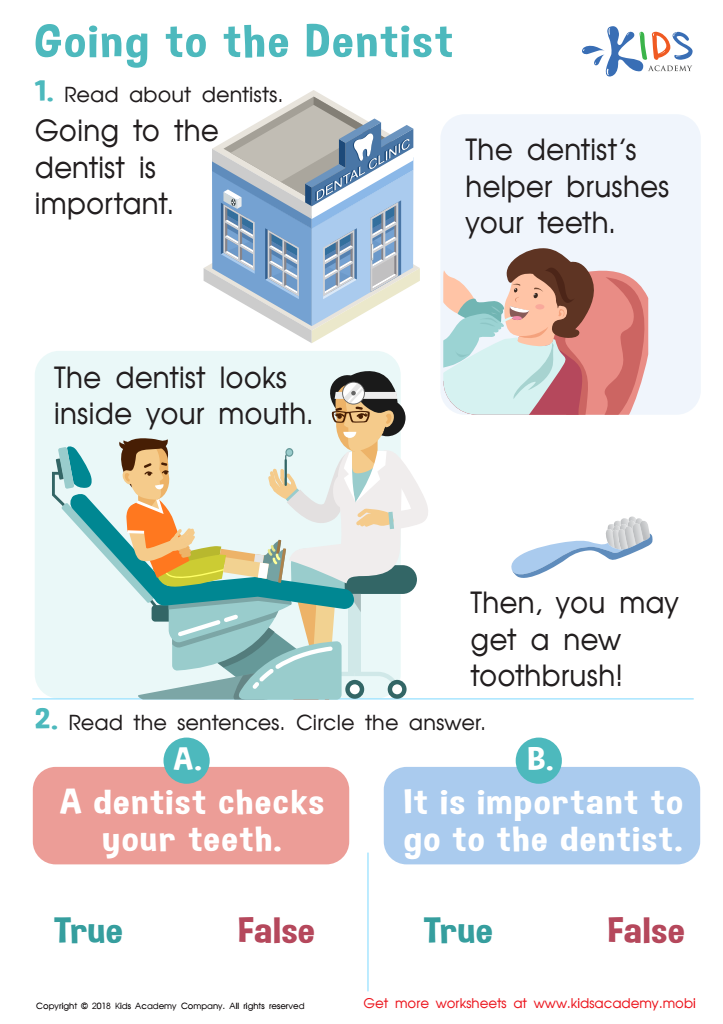
Going to the Dentist Part 2 Worksheet
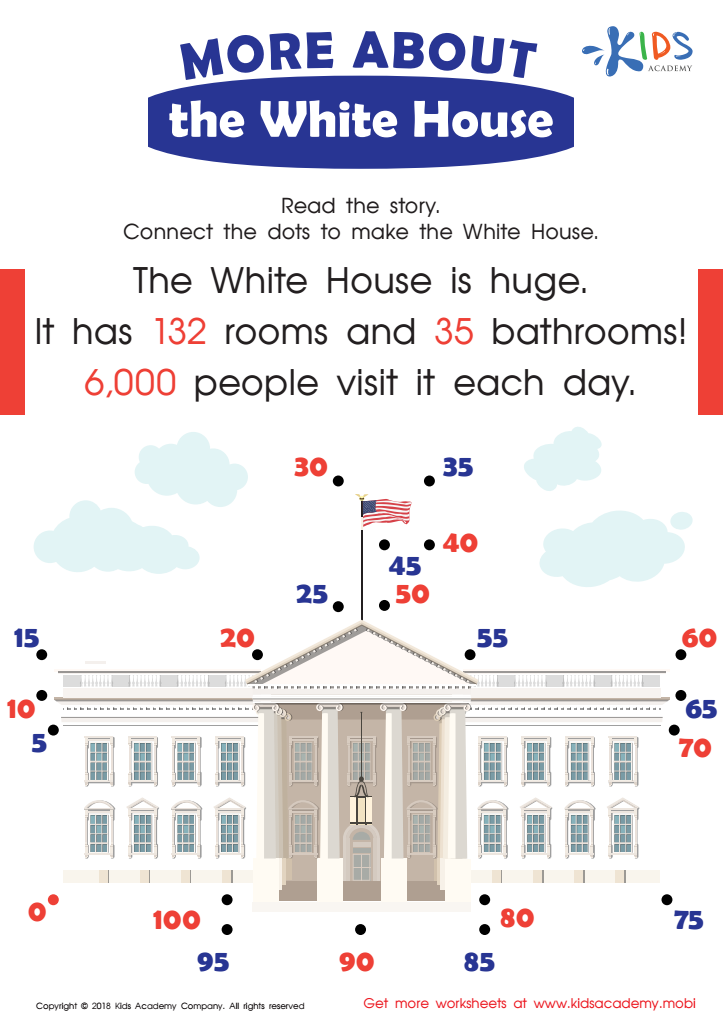
More About the White House Worksheet








Reading comprehension is a vital skill for young learners, particularly for children aged 5-6, who are at a crucial developmental stage. When parents and teachers emphasize reading comprehension in easy non-fiction texts, they lay the foundation for a variety of essential skills and cognitive abilities.
Firstly, non-fiction reading exposes children to real-world concepts and vocabulary. This helps them make connections between what they read and their environment, fostering curiosity and a love for learning. Furthermore, it enhances critical thinking by encouraging them to ask questions and seek factual answers, promoting a deeper understanding of the material.
Additionally, at this age, children are developing their listening, speaking, and writing skills. Engaging them with non-fiction enhances these skills, enabling them to better articulate their thoughts, which fosters effective communication.
Moreover, teaching comprehension strategies—like predicting, summarizing, and making inferences—results in more adept readers who can tackle complex texts in the future. This trunk of skills will support their academic journey, making success more attainable.
Ultimately, encouraging reading comprehension and engagement with easy non-fiction opens doors to lifelong learning and cognitive growth, benefiting children socially, academically, and emotionally. Parents and teachers have a significant role in nurturing these essential skills.







