
Shape Recognition Easy Worksheets for Ages 5-7
21 filtered results
Difficulty Level
Grade
Age
-
From - To
Subject
Activity
Standards
Introduce your young learners to the world of geometry with our "Shape Recognition Easy Worksheets for Ages 5-7"! These fun, engaging printable worksheets are designed to help children identify and learn various shapes through interactive exercises. Perfect for classroom or home use, each worksheet features bright, colorful illustrations to captivate early learners, making the learning process enjoyable. Suitable for ages 5 to 7, our activities promote critical thinking and early learning skills, preparing kids for more advanced math concepts. Download and print today to start your child's exciting journey into shape recognition and learning fun!
Favorites
With answer key
Interactive
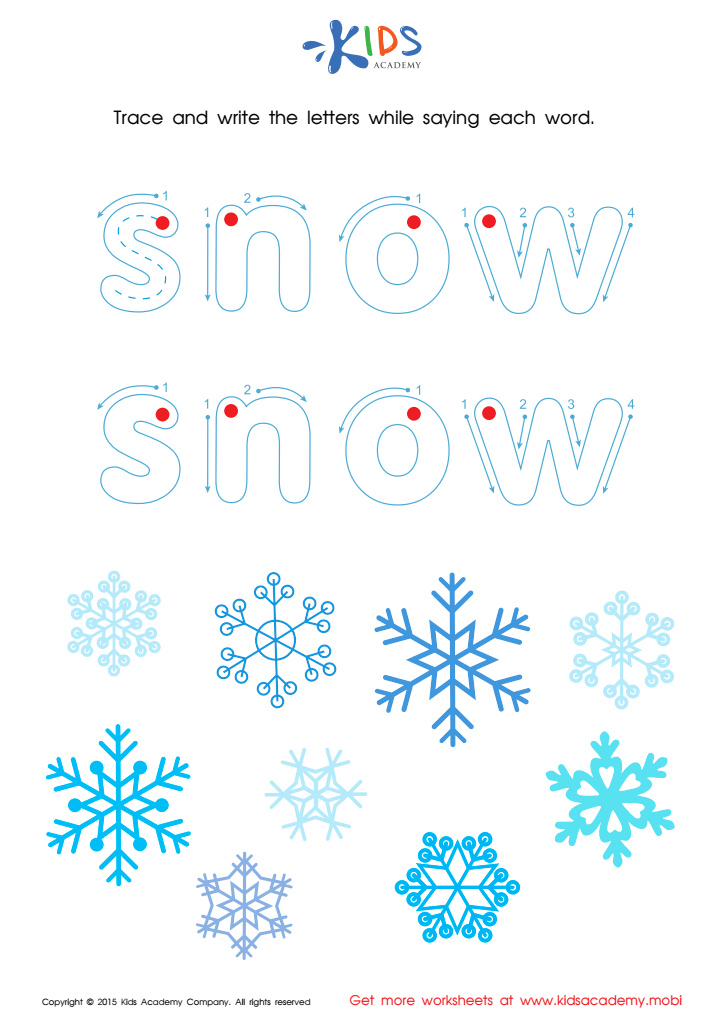
Snowflake Tracing Winter Words Worksheet
Get creative and have fun with our Snowflake handwriting worksheet! Trace the sight word, starting at the big red dots, and follow the arrows. It's a great way to help your little learner develop fine motor skills, work on spelling, and get ready for Christmas! More handwriting printables available on Kids Academy.
Snowflake Tracing Winter Words Worksheet
Worksheet
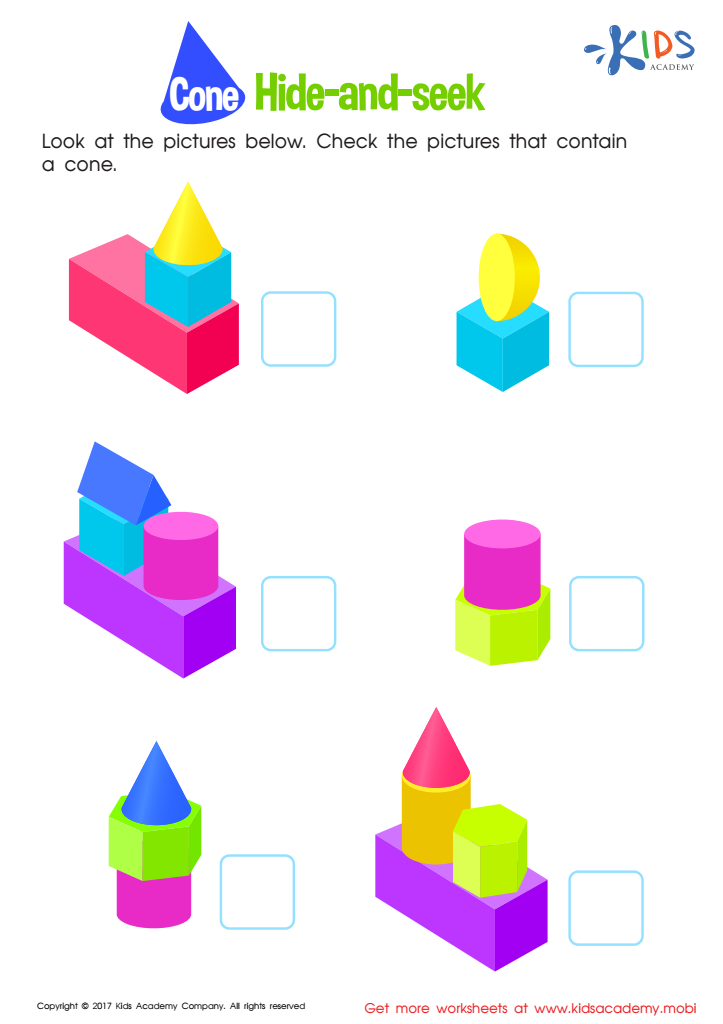
Cone Hide-and-Seek Worksheet
Prior to starting this worksheet, quiz your kid on shapes. If they gave quite a few, you've done well! This pdf will teach them more about cones; show them the pictures in the printout and have them identify which ones contain a cone.
Cone Hide-and-Seek Worksheet
Worksheet
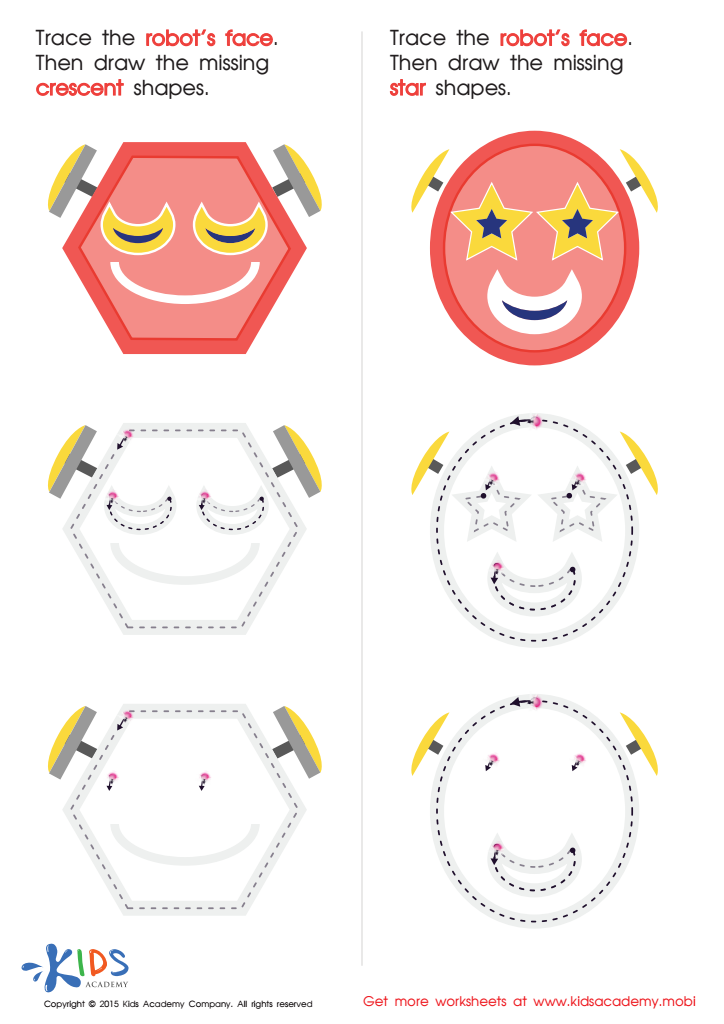
Composing a Robot's Face of Crescents And Stars Worksheet
Get free math geometry worksheets at Kids Academy! Help your child learn by practicing together - trace the robot's face and draw the missing crescent and star shapes. Be sure to remember their names! Have fun and learn with shapes for kids.
Composing a Robot's Face of Crescents And Stars Worksheet
Worksheet
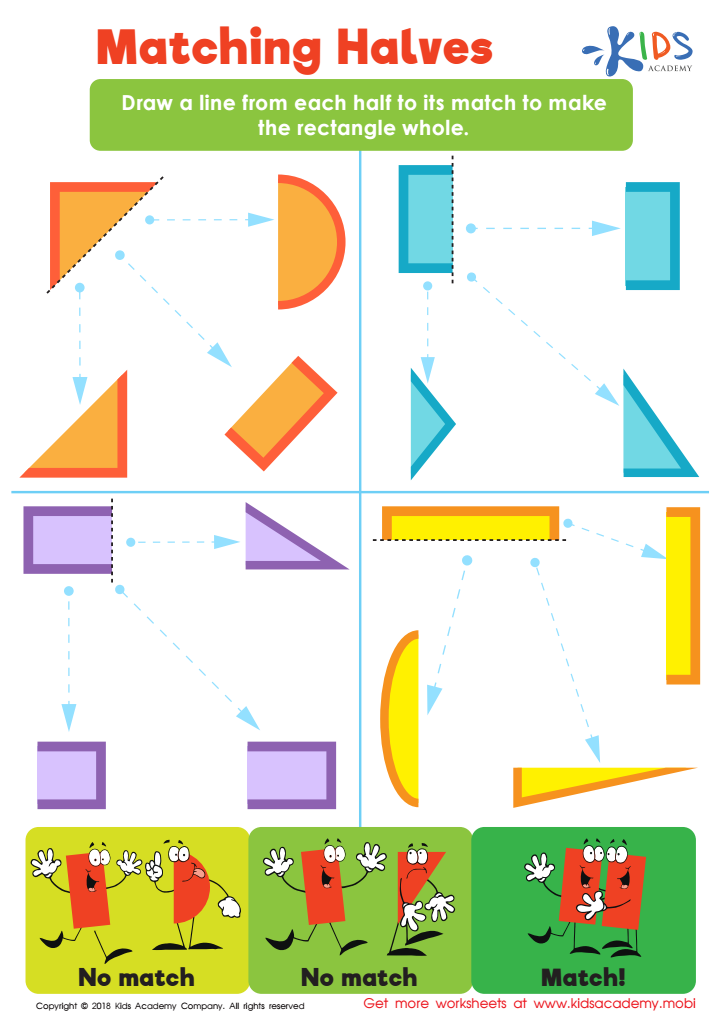
Matching Halves Worksheet
See how your child fares in matching two halves to form a complete rectangle. Provide them with four options, and ask them to draw a line connecting the two correct halves. Put their shape knowledge to the test with this simple worksheet!
Matching Halves Worksheet
Worksheet
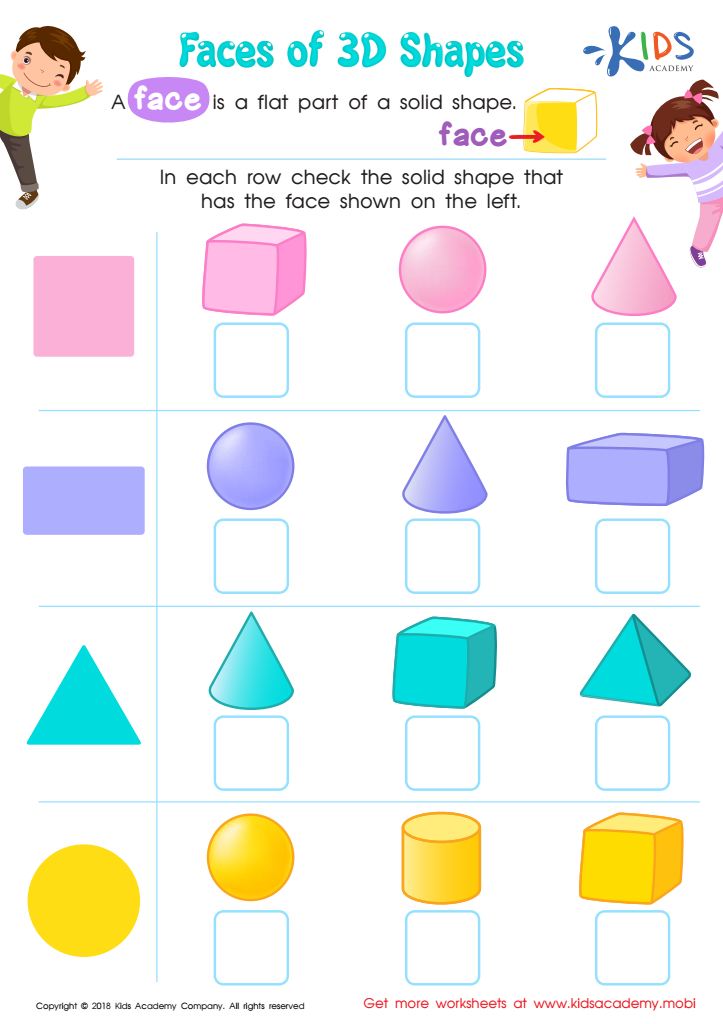
Faces of 3D Shapes Worksheet
Point at random body parts and ask your child to name them. Point to their face and ask them to identify it. Use this worksheet to show how "face" doesn't just refer to body parts - it can also mean the flat surface of a solid shape. Check the picture to find the matching solid shape for each face shown.
Faces of 3D Shapes Worksheet
Worksheet
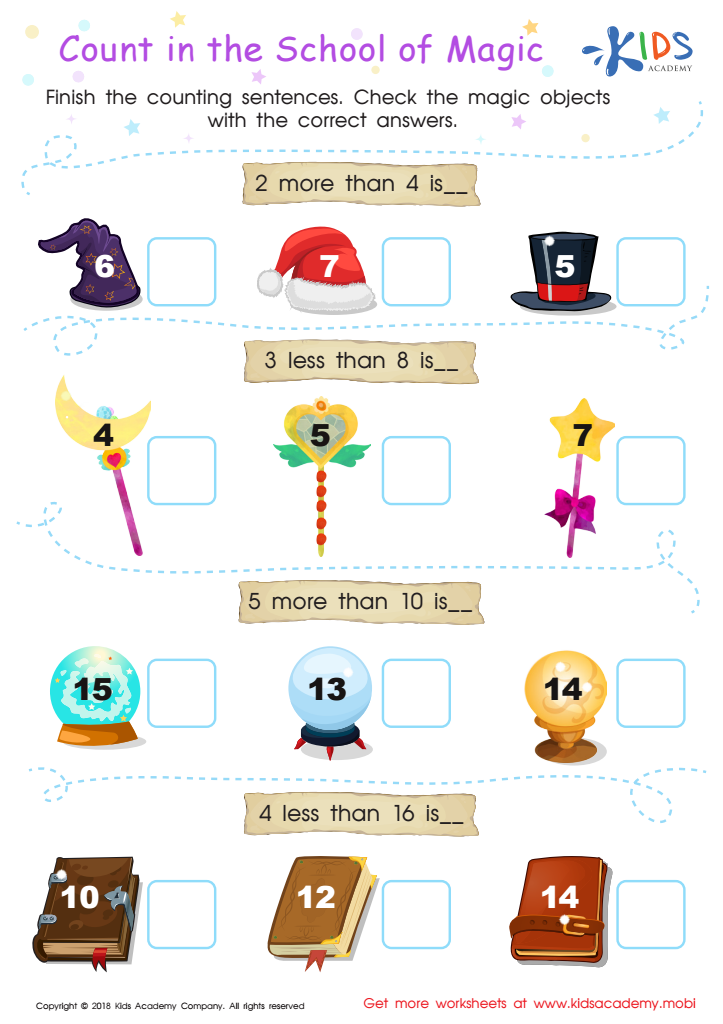
Count in the School of Magic Worksheet
Your math learners can explore the School of Magic with this worksheet. They'll read equations with addition and subtraction numbers under 20, count back and forth to find the answer, then complete the counting sentences. Fun pictures and easy accuracy make it an enjoyable and successful learning experience.
Count in the School of Magic Worksheet
Worksheet
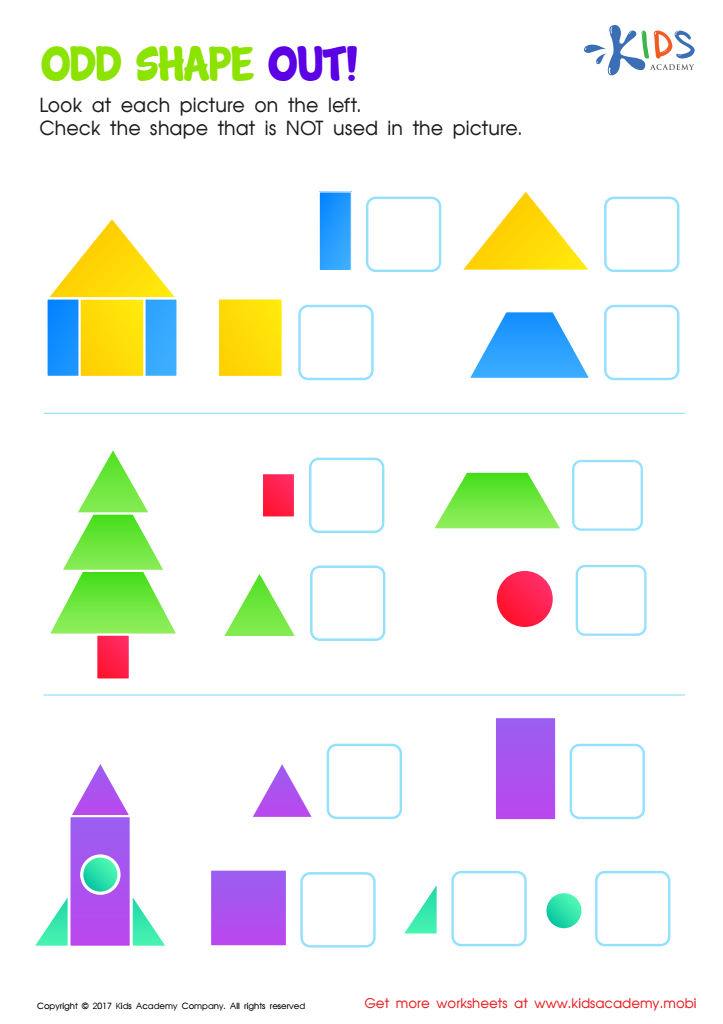
Odd Shape Out Worksheet for Grade 1
This worksheet can help your kids test their knowledge of shapes. They should have already been introduced to the most common shapes and be able to identify and draw them. Look at the picture and help your child identify each shape. Then, check which one isn't used to make the object.
Odd Shape Out Worksheet for Grade 1
Worksheet
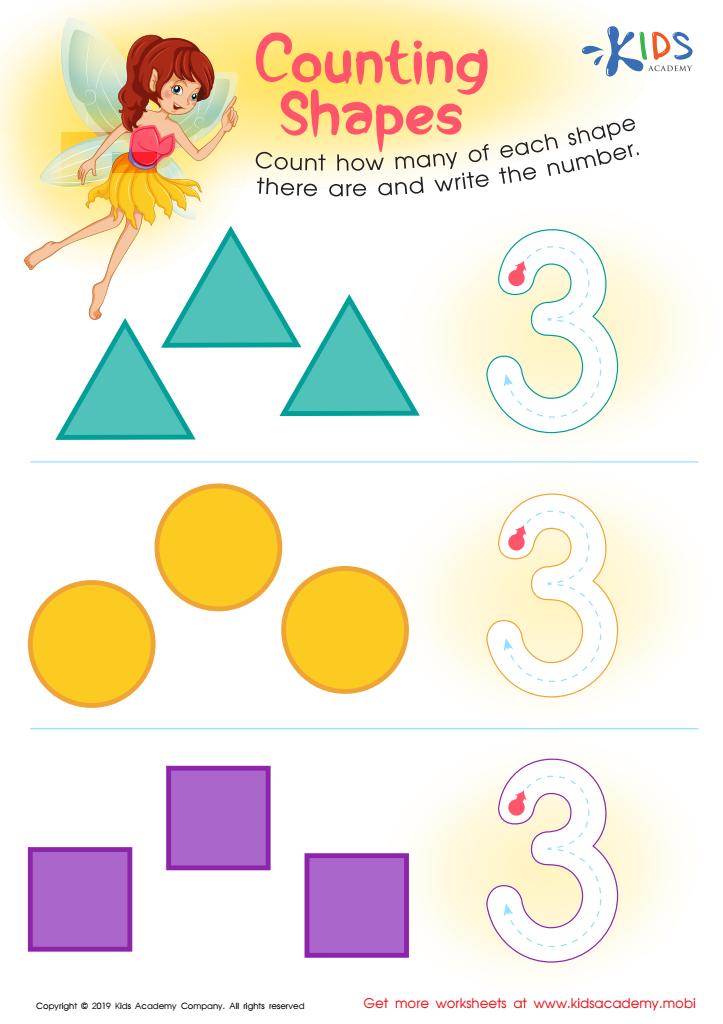
Counting Shapes Worksheet
Counting and number sense are essential skills. Picture representation helps kids understand and remember concepts. This free worksheet is perfect for introducing numbers and counting in groups of three. It also helps kids to practice writing numbers with traceable lines and guiding dots. It's an easy and fun way to give little mathematicians a successful start.
Counting Shapes Worksheet
Worksheet
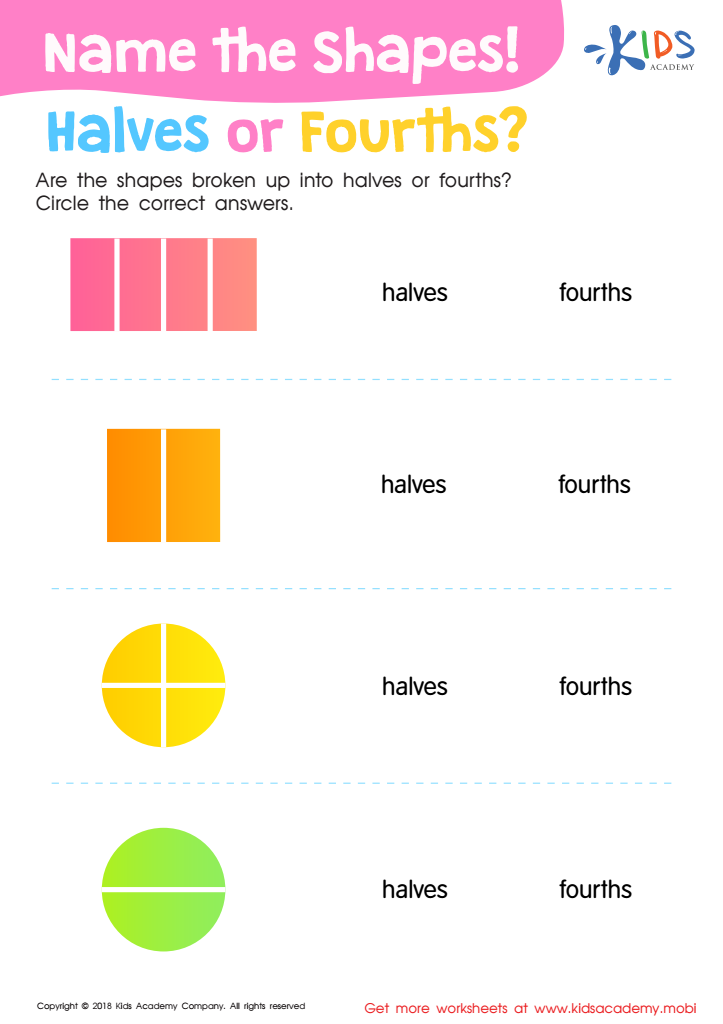
Name the Shapes Halves or Fourths? Worksheet
Before starting, ask your child if they understand what halves and fourths are. If they can answer correctly, move on with the worksheet. Help them circle the right option beside each shape, showing if it's split into halves or fourths.
Name the Shapes Halves or Fourths? Worksheet
Worksheet
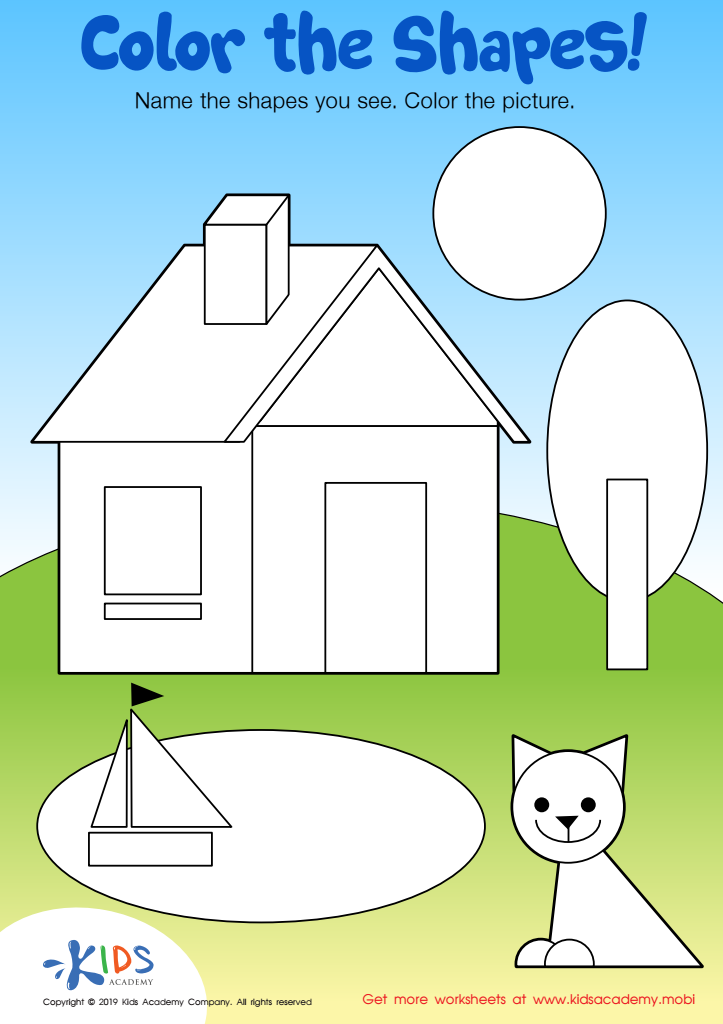
Color the Shapes Worksheet
Help your student master shape identification with this fun worksheet. Ask them to name the shapes in the picture, then color it! Ask questions like "How many squares do you see?" and "How many triangles?" to extend the learning. Identify squares, circles, triangles and rectangles with this enjoyable coloring page.
Download (PDF)
 Assign to My Students
Assign to My Students
Color the Shapes Worksheet
Worksheet
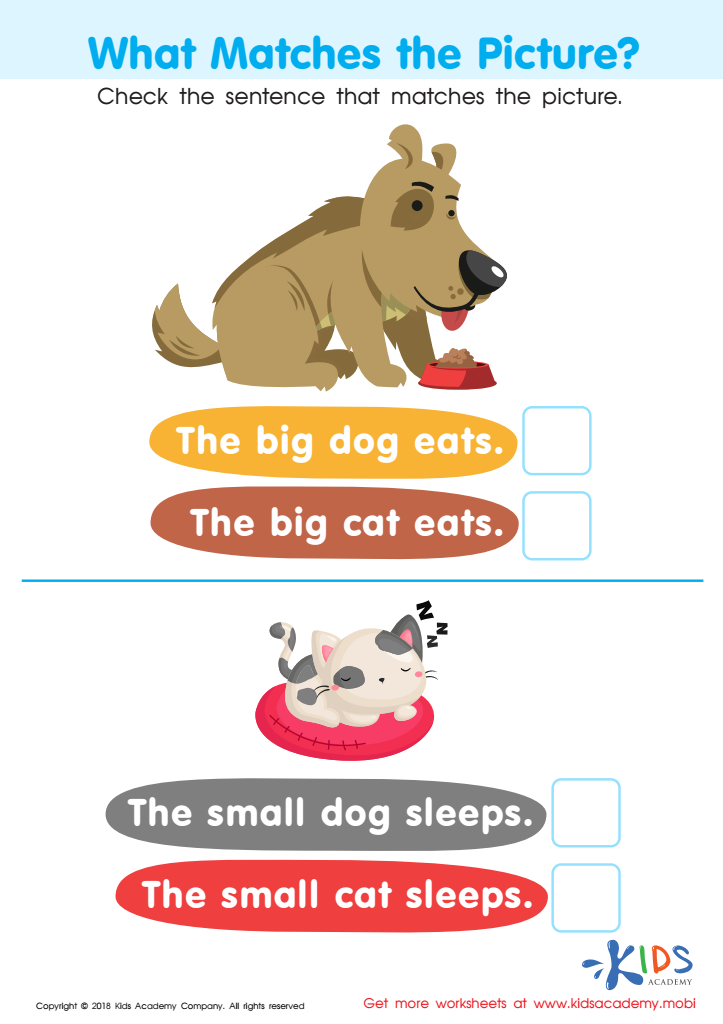
What Matches the Picture? Worksheet
Emerging readers can use pictures of cute pets and phrase repetition to match sentences to pics, building skills while having fun! It's a great way to bolster vocab and confidence, motivating them to keep reading.
What Matches the Picture? Worksheet
Worksheet
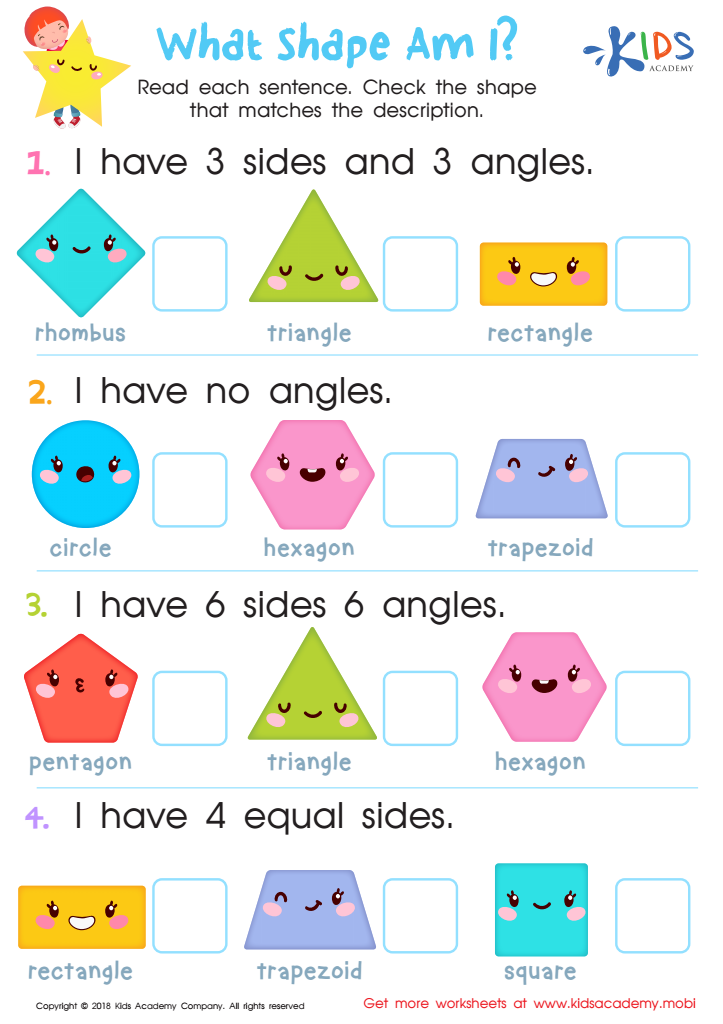
What Shape Am I? Worksheet
Help your child read each sentence in this colorful worksheet. Have them identify the shapes described and check the boxes. To prepare, ask simple questions like "How many sides does a triangle have?" and "Which shape has 4 equal sides?" Your child will become more skilled at shapes by the end of this activity.
What Shape Am I? Worksheet
Worksheet
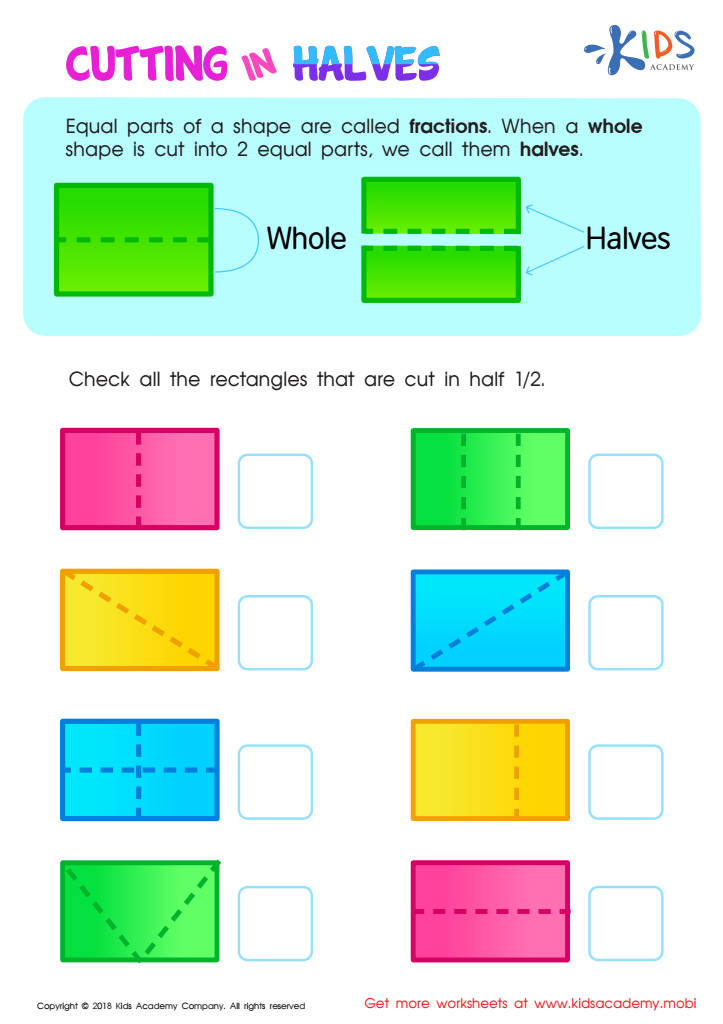
Cutting in Halves Worksheet
Show your child how to divide a whole shape, like a square, into smaller pieces to become fractions. Point out when a shape is divided into two equal parts, it's called a half. Look at the worksheet together, and identify all rectangles that are cut in half (½).
Cutting in Halves Worksheet
Worksheet
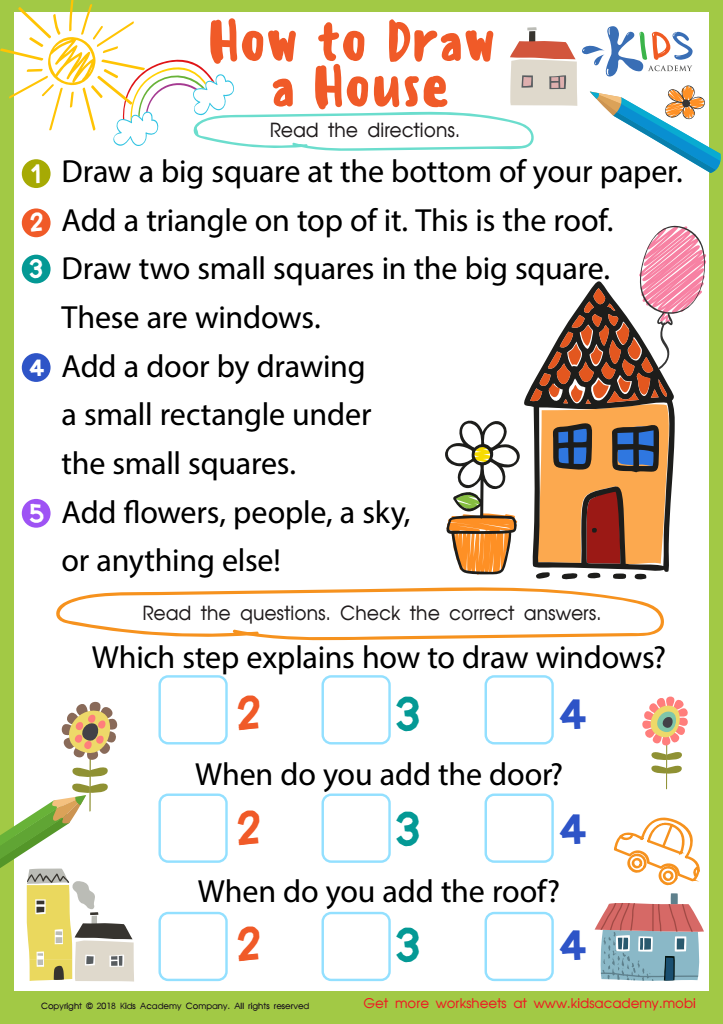
How to Draw House Worksheet
Does your child love to draw? Why not try teaching them some easy tricks? Get them to follow directions on this worksheet and learn how to draw a house. Read the questions at the end and ensure they get the answers right. Your kids will surely love it!
How to Draw House Worksheet
Worksheet
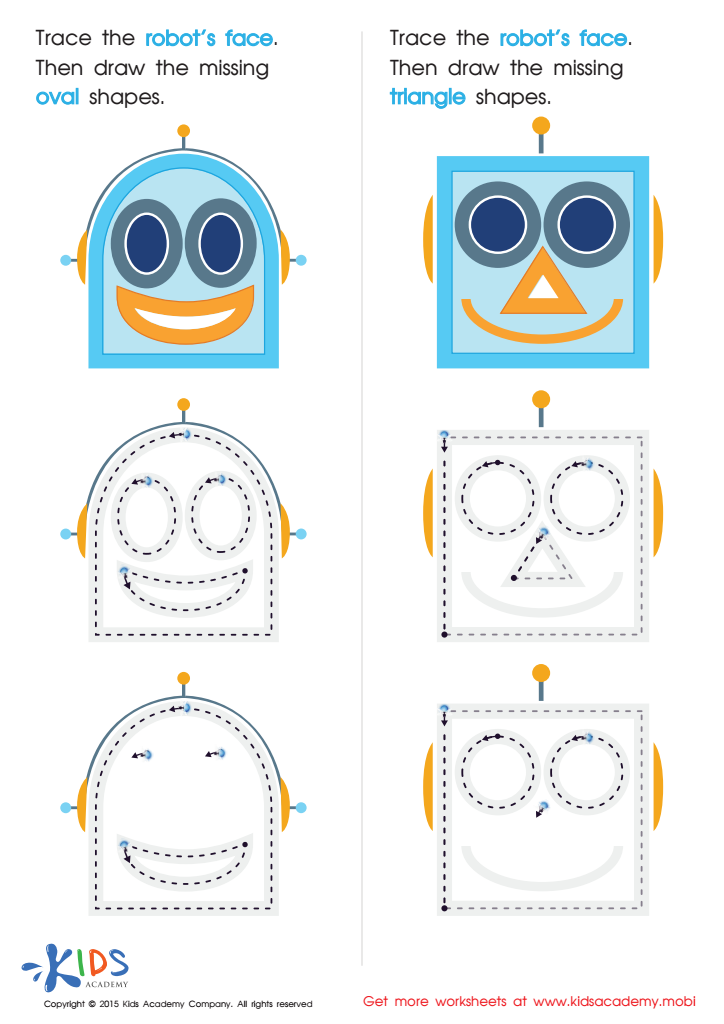
Drawing Ovals And Triangles with Fun Printable
Trace the face and draw missing ovals and triangles. Test your memory and recall shapes' names. Check if you remember how to draw them!
Drawing Ovals And Triangles with Fun Printable
Worksheet
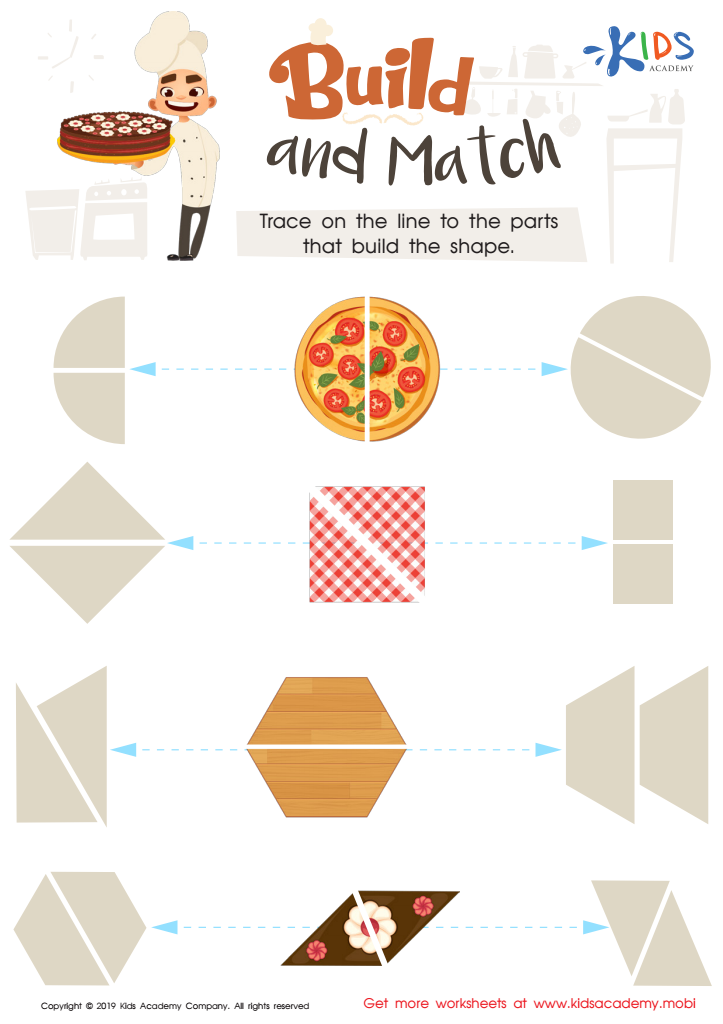
Build and Match Worksheet
This bright worksheet will get your kids excited to learn more! Use the colorful images and shapes to engage them and have them trace the parts to build the shape. This fun exercise will help them retain the lessons and make it an enjoyable experience.
Build and Match Worksheet
Worksheet
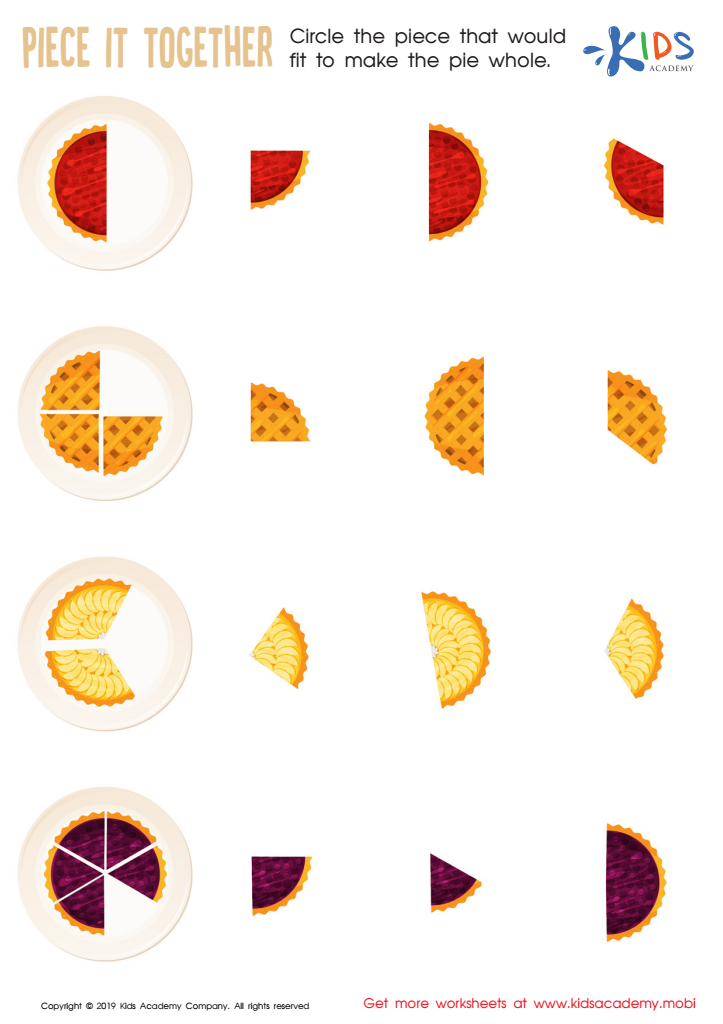
Piece it together Worksheet
Help your kids learn fractions! Even if they're not eager, teach them as they get older. Teachers will provide enough lessons and homework, but you can go a step further. Look at a worksheet with your kids and help them circle the piece that would make the pie whole.
Piece it together Worksheet
Worksheet
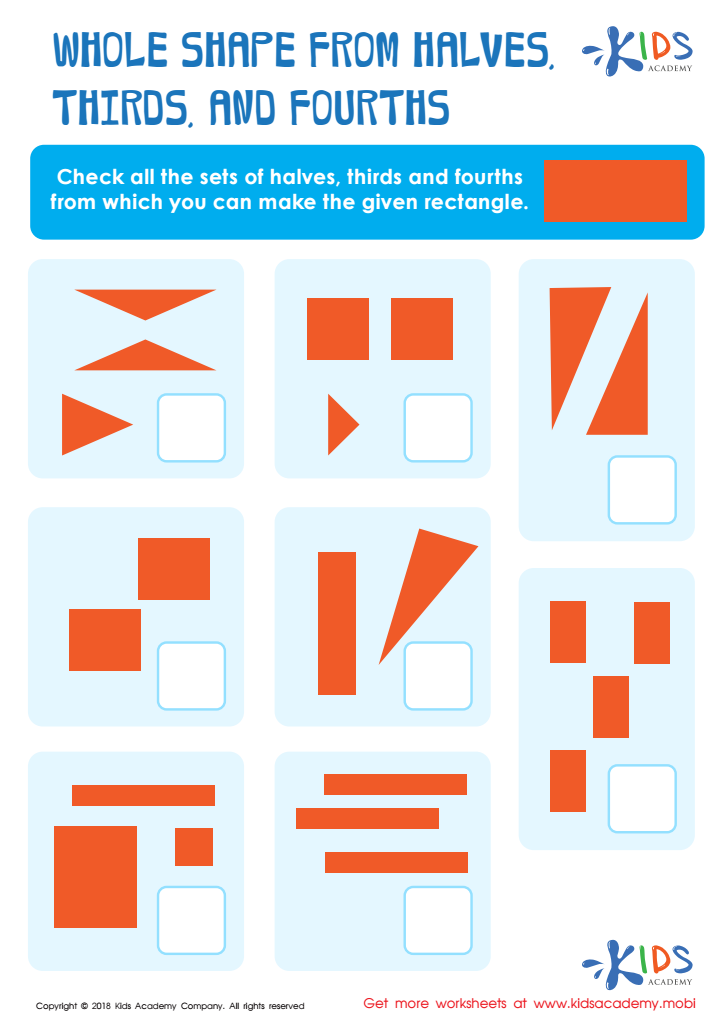
Whole Shape from Halves, Thirds and Fourths Worksheet
Explain to your students that they can make a new shape by combining halves, thirds, and fourths of a shape. Show them the worksheet with the rectangle at the top and ask them to find which sets of halves, thirds, and fourths make it. Have them check all the correct sets.
Whole Shape from Halves, Thirds and Fourths Worksheet
Worksheet
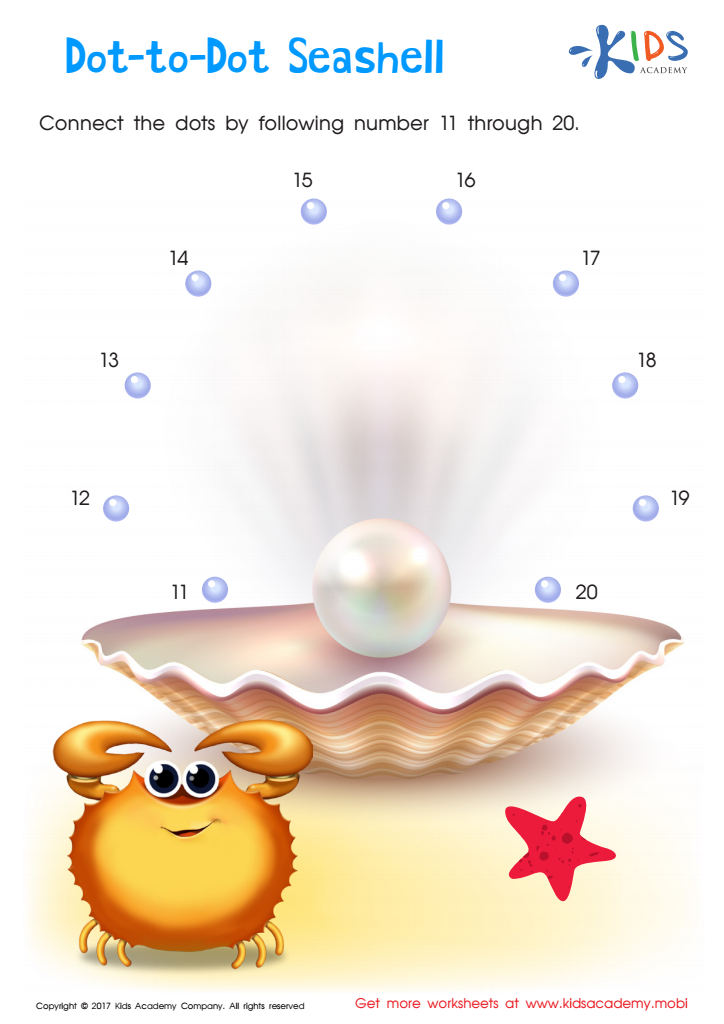
Ordering 11–20: Dot–to–dot Seashell Printable
Connecting the dots 11 to 20 is rewarding for kids, helping them practice counting, identifying numbers and gain cognitive and logical skills. Our worksheet features a vibrant image of a seashell, crab and sea star, and your child will feel rewarded creating it while honing their counting skills!
Ordering 11–20: Dot–to–dot Seashell Printable
Worksheet
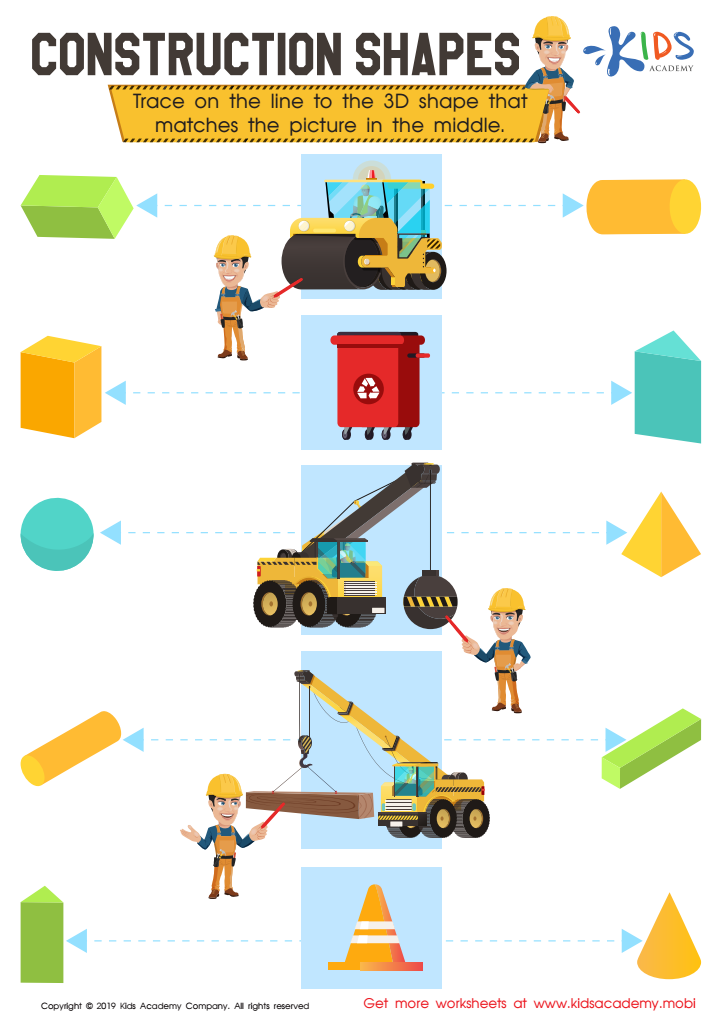
Construction Shapes Worksheet
Construction workers are professionals who build structures like buildings. In this worksheet, kids will learn about shapes with the help of workers and their equipment. Help them trace the lines to the 3D shape that matches the picture in the middle.
Construction Shapes Worksheet
Worksheet
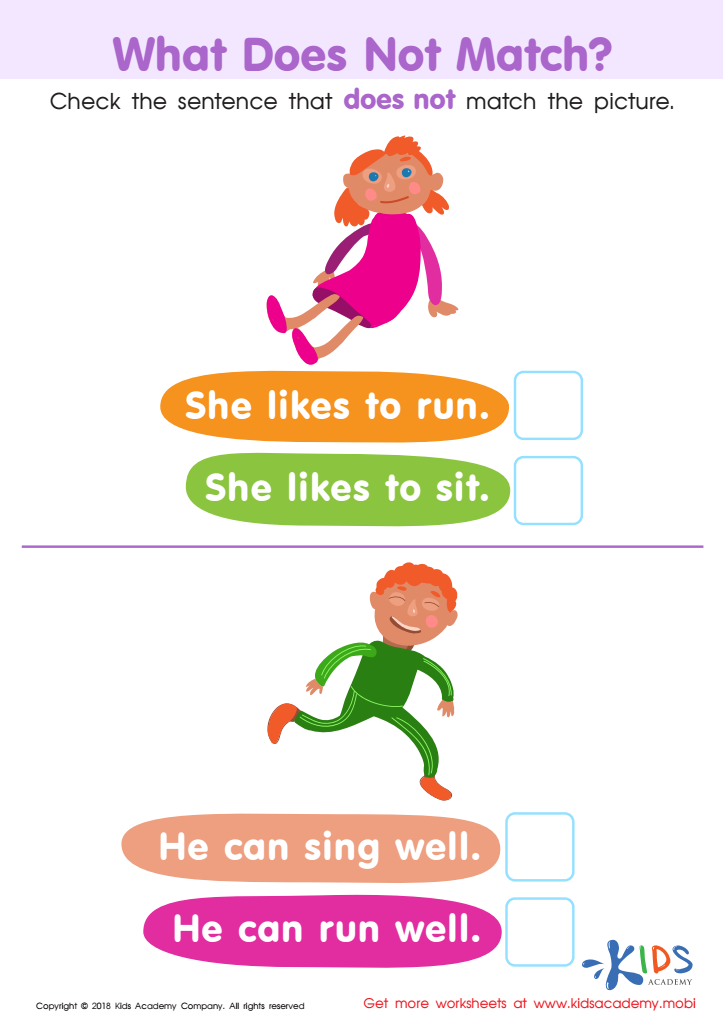
What Does Not Match? Worksheet
Emerging readers need to practice using visual cues and repetitive text. This colorful PDF provides them with an opportunity to look at pictures, use discrimination and discern which phrase does not match. It also enables them to gain familiarity with high-frequency words to aid decoding longer sentences.
What Does Not Match? Worksheet
Worksheet
Join Kids Academy for Free
Who is primarily going to use this learning content?






Shape recognition is a fundamental skill that forms the building block for more complex mathematical and cognitive development in children aged 5-7. Understanding shapes helps young learners categorize and organize the world around them, fostering both visual-spatial awareness and pre-reading skills.
One of the key reasons parents and teachers should focus on shape recognition is that it sets the stage for geometry. Recognizing and distinguishing between different shapes—such as squares, circles, and triangles—gigantically contributes to a child's ability to understand and solve problems involving spatial relationships. This understanding is later vital for higher-level math concepts like area, volume, and advanced geometric reasoning.
Moreover, shape recognition enhances fine motor skills and hand-eye coordination. Activities like drawing, cutting out shapes, and assembling puzzles help develop these crucial physical skills in a fun and engaging way. These activities can also build focus and concentration, beneficial for other academic tasks.
Shape recognition further supports language development. By learning the names and properties of various shapes, children expand their vocabulary and language comprehension. Describing shapes encourages the use of descriptive language, enhancing both expressive and receptive communication skills.
In conclusion, caring about shape recognition for ages 5-7 prepares children for future academic success, supports physical coordination, and encourages language development. It’s a simple but crucial aspect of early childhood education with broad and long-lasting benefits.








