Visual discrimination Easy Worksheets for Ages 5-7
5 filtered results
-
From - To
Discover engaging visual discrimination worksheets designed specifically for children ages 5-7. These easy-to-follow activities help young learners sharpen their ability to differentiate between similar shapes, colors, and patterns. Aimed at developing critical observation skills, our worksheets encourage interactive learning and boost cognitive development. Each printable provides a fun challenge that supports early childhood education while enhancing concentration and attention to detail. Perfect for teachers and parents alike, these resources can be seamlessly integrated into daily learning routines or used as supplementary materials at home. Explore our collection today to foster your child's visual perception skills with enjoyable exercises!
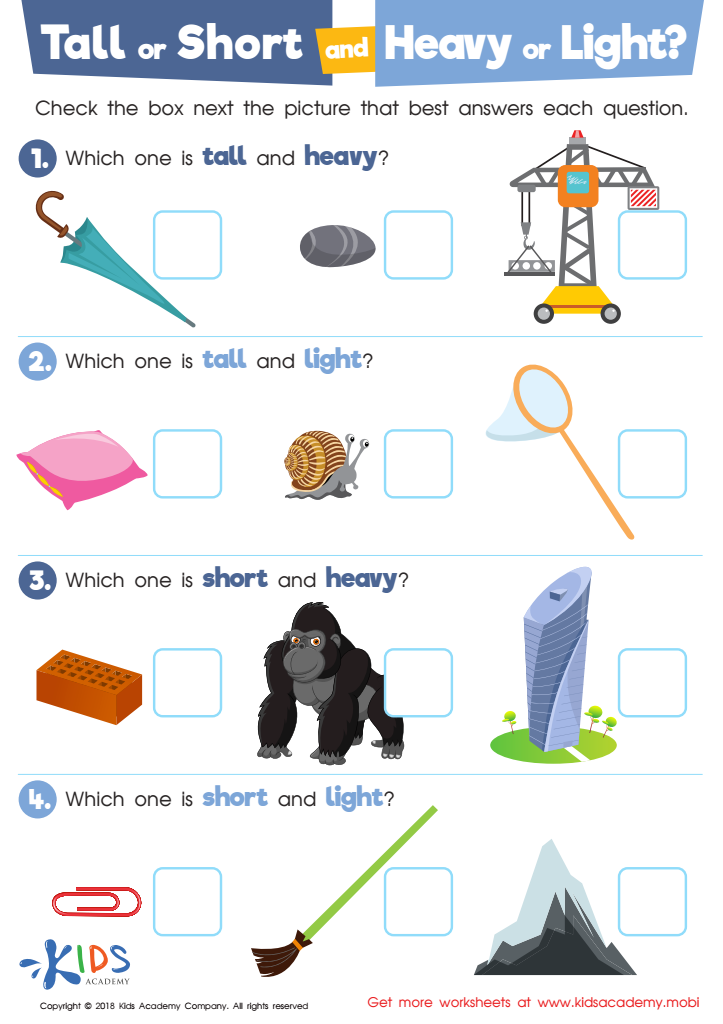
Tall or Short and Heavy or Light? Worksheet
 Assign to My Students
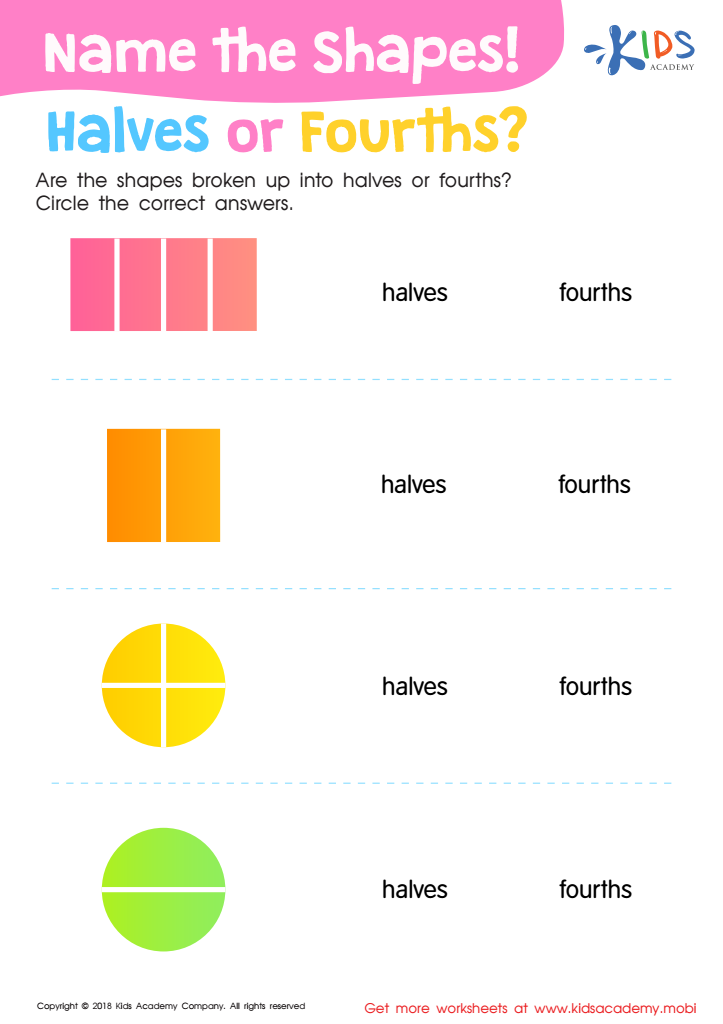
Name the Shapes Halves or Fourths? Worksheet
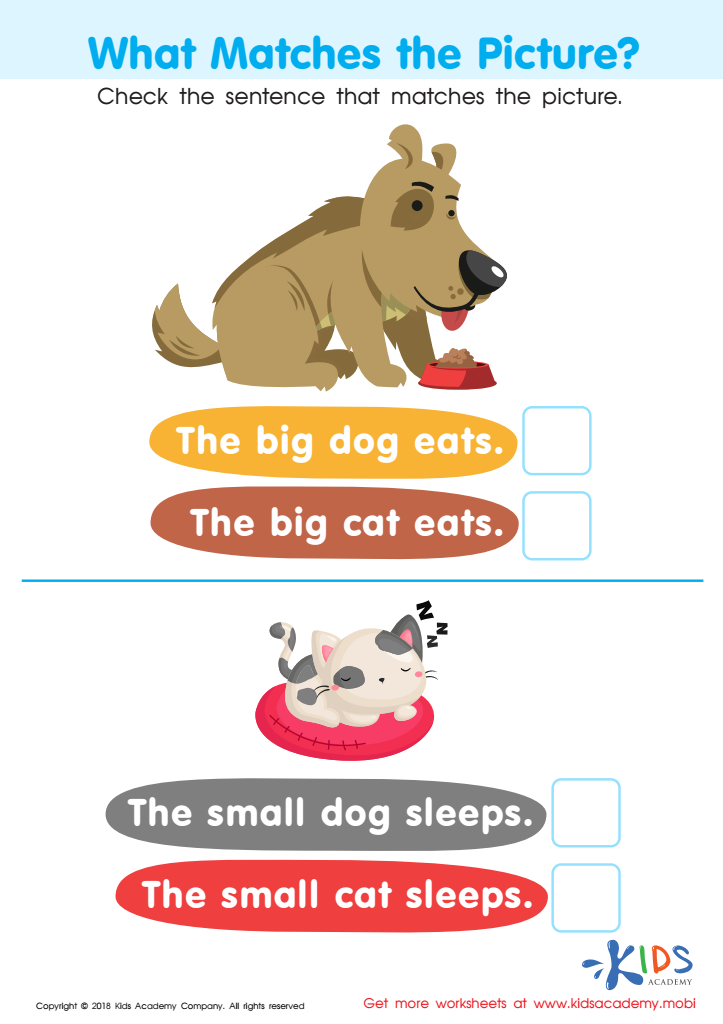
What Matches the Picture? Worksheet
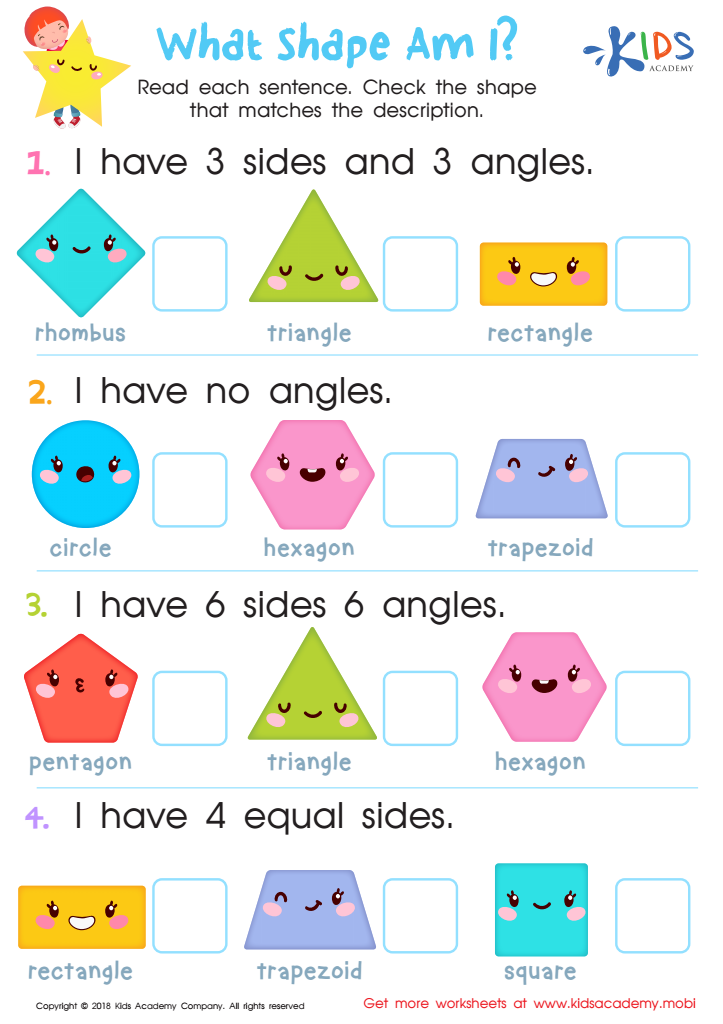
What Shape Am I? Worksheet
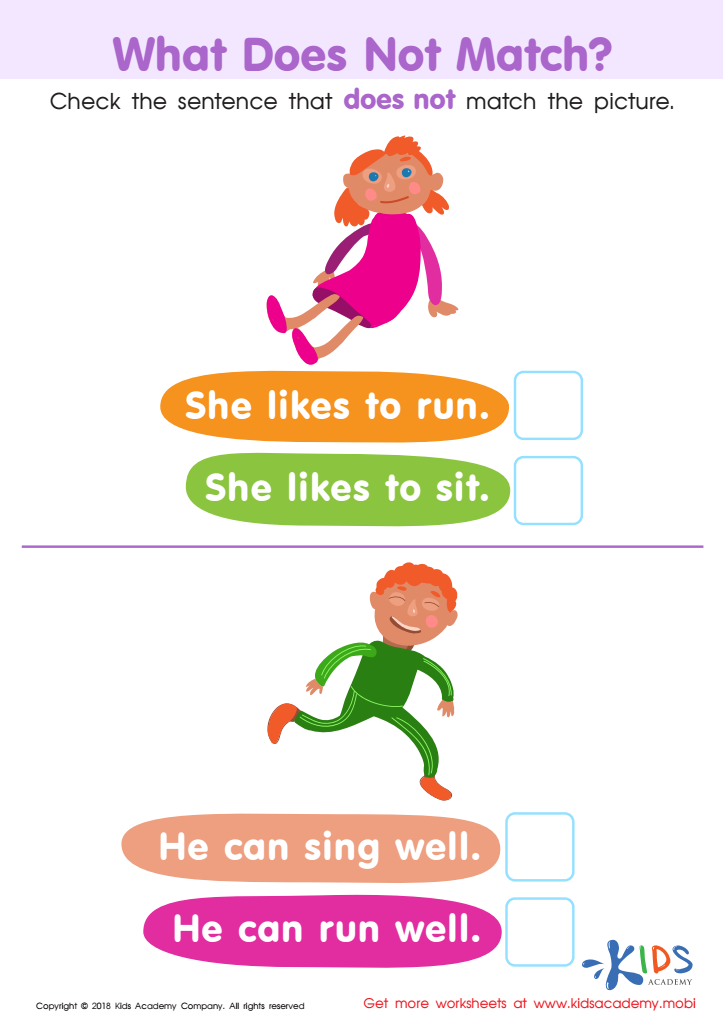
What Does Not Match? Worksheet







Visual discrimination is an essential skill for young learners aged 5-7, and it plays a vital role in their academic development. This ability helps children to notice the differences and similarities in shapes, colors, sizes, and amounts. For parents and teachers, supporting visual discrimination skills can significantly impact a child's learning and everyday life.
Firstly, visual discrimination contributes to reading readiness. Children need to differentiate between similar letters, such as 'b' and 'd,' which is crucial for effective reading and writing. Similarly, while learning math, they must recognize different numerals and understand patterns, which relies on visual discrimination.
Moreover, it encourages problem-solving and critical thinking. When children observe details and nuances, they better address challenges and make decisions. Activities like spotting differences in pictures or organizing objects by size promote these skills.
Lastly, developing visual discrimination can boost a child's confidence. As they master recognition skills, they become more engaged learners, eager to explore new concepts. Thus, when parents and teachers nurture visual discrimination, they lay the foundation for academic success and a lifelong love for learning. Supporting this skill early sets the stage for various learning experiences to come.








