Number Recognition Easy Numbers Worksheets for Ages 5-7 - Page 4
75 filtered results
-
From - To

Counting on the City Skyline: Dot-to-Dot Worksheet
 Assign to My Students
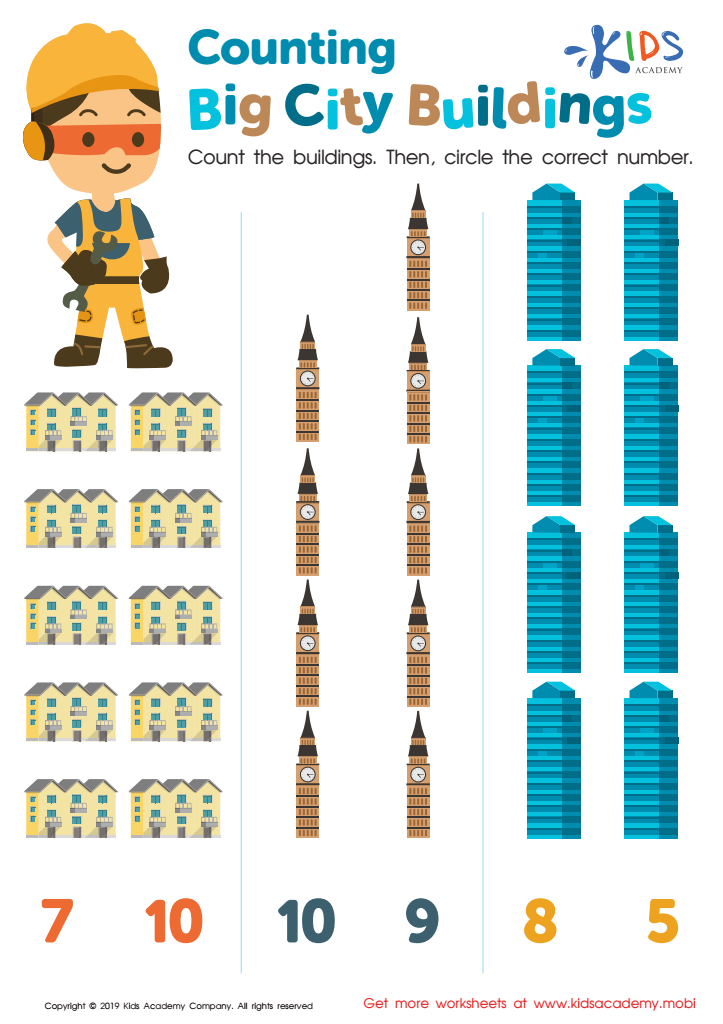
Counting Big City Buildings Worksheet

Night Sky Numbers Worksheet






%20(1).jpg)

Number recognition is a foundational skill for children ages 5-7, crucial for their academic development and everyday life. For parents and teachers, fostering number recognition goes beyond simply identifying numbers; it lays the groundwork for future math success. Children who can recognize numbers are better equipped to understand basic mathematical concepts such as counting, addition, and subtraction.
Understanding numbers helps in developing critical thinking and problem-solving skills, which are essential for later academic challenges. Additionally, it enhances a child's confidence, allowing them to approach math with a positive attitude, which can lead to improved performance in the classroom.
Furthermore, number recognition plays a significant role in real-world applications, from counting money to telling time—skills that are essential as children grow. By focusing on this early learning stage, parents and teachers can create interactive and fun learning experiences that keep children engaged. Incorporating games, music, and hands-on activities can make learning these essential skills enjoyable.
Ultimately, caring about number recognition for this age group is investing in a child's future success, forming a robust mathematical foundation, enhancing critical life skills, and boosting their overall academic confidence.








