Punctuation understanding Easy Worksheets for Ages 5-8
3 filtered results
-
From - To
Discover the joy of learning punctuation with our "Punctuation Understanding Easy Worksheets" designed specifically for children ages 5-8! These engaging worksheets make mastering punctuation fun and straightforward, helping young learners grasp essential concepts like periods, commas, question marks, and exclamation points. Each worksheet is crafted to match developmental milestones, featuring vibrant visuals and interactive exercises to keep kids motivated. Our resources encourage creativity while building foundational writing skills necessary for effective communication. Whether at home or in the classroom, these easy-to-use worksheets provide parents and educators with a valuable tool to support young learners on their journey to punctuation proficiency!
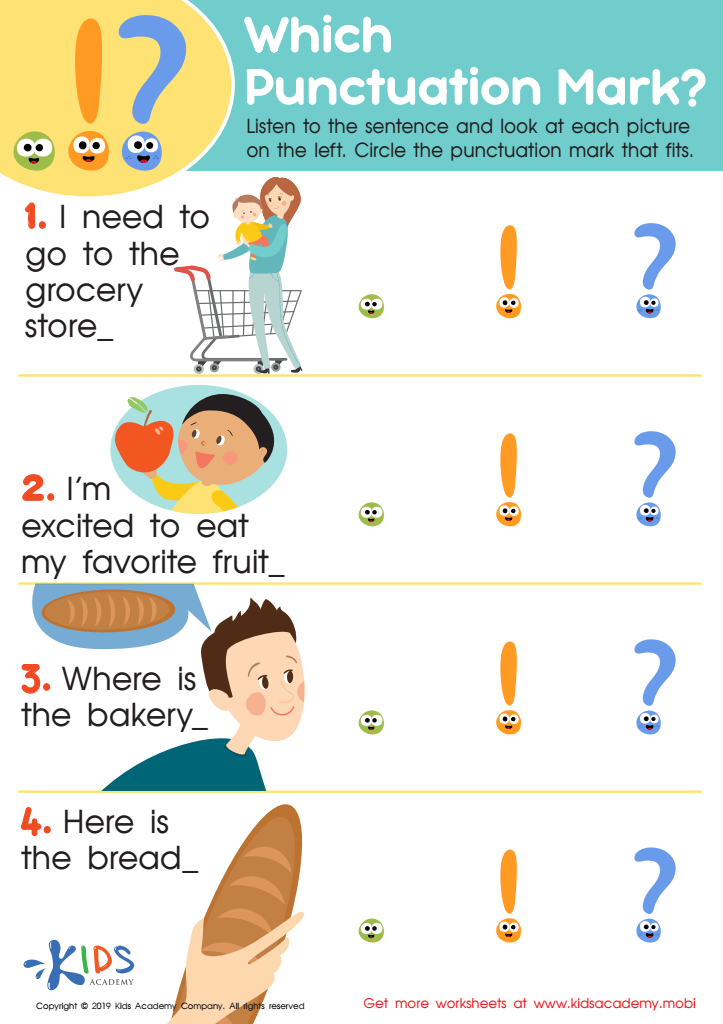
Which Punctuation Mark Worksheet
 Assign to My Students
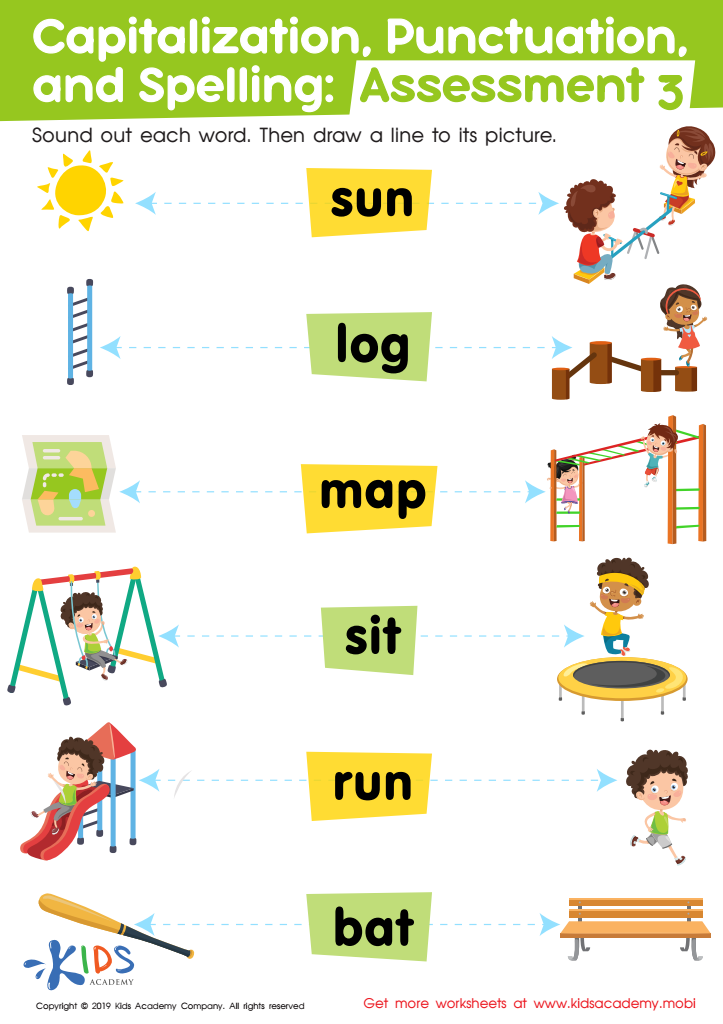
Capitalization. Punctuation. Spelling. Assessment 3 Worksheet
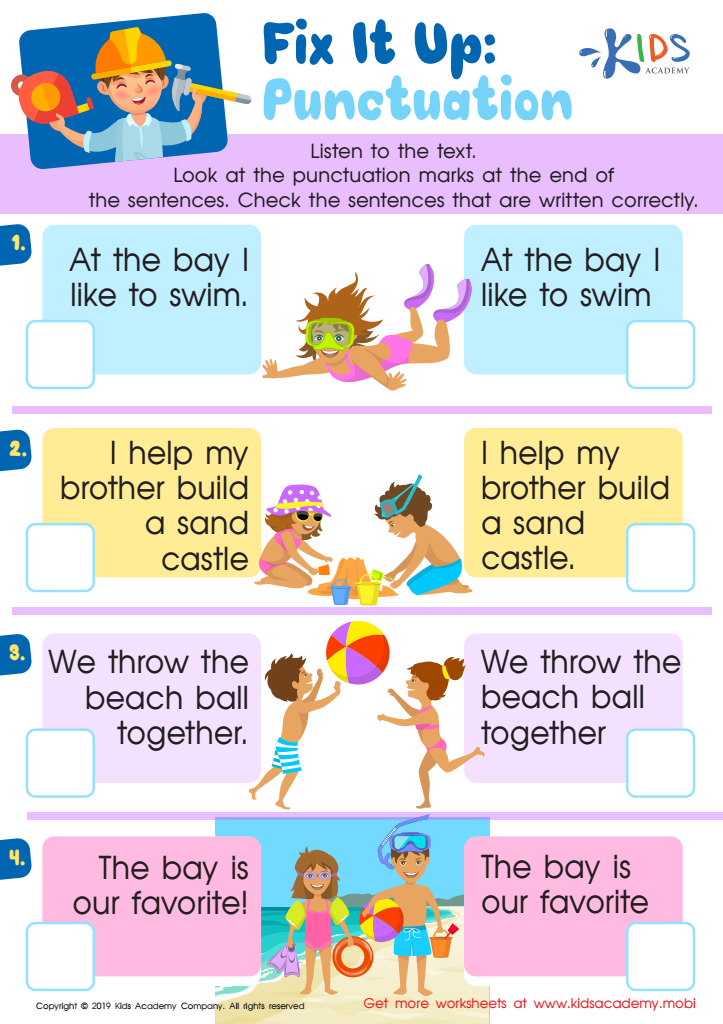
Fix Punctuation Worksheet



%20(1).jpg)



Punctuation is like the traffic signals of writing. Just as stop signs and green lights help drivers know when to stop or go, punctuation helps readers know how to understand sentences. For children aged 5-8, understanding punctuation is crucial because it shapes how they process and convey ideas.
When parents or teachers emphasize punctuation, they help children develop clear communication skills. Proper punctuation indicates pauses, questions, or excitement, making reading more enjoyable and engaging. For instance, an exclamation mark shows enthusiasm, while a question mark sparks curiosity. Without punctuation, sentences can become confusing, leading to misunderstandings.
Teaching punctuation also builds confidence in writing. As kids learn to use periods, commas, and question marks, they start to explore their creativity and express their thoughts clearly. It lays a strong foundation for literacy skills and helps children perform better in school.
Additionally, children who grasp punctuation will find it easier to read aloud with expression, which enhances their listening and comprehension skills. Encouraging punctuation understanding helps children grow as communicators, setting them up for success in their academic and social lives. Parents and teachers play a vital role in this process, ensuring young learners have the tools they need to thrive.








