Counting skills Easy Measurement Worksheets for Ages 5-8
5 filtered results
-
From - To
Unlock your child's potential with our Counting Skills Easy Measurement Worksheets tailored for kids ages 5-8! Designed to make learning fun and engaging, these worksheets help young learners master essential counting and measurement concepts. With colorful, interactive activities, children will develop vital math skills while discovering the world around them. From counting objects to comparing measurements, our carefully crafted resources build confidence and understanding in early math. Ideal for home or classroom use, these worksheets provide a solid foundation for future learning. Join us in fostering creativity and curiosity in your child's educational journey! Start counting the fun today!
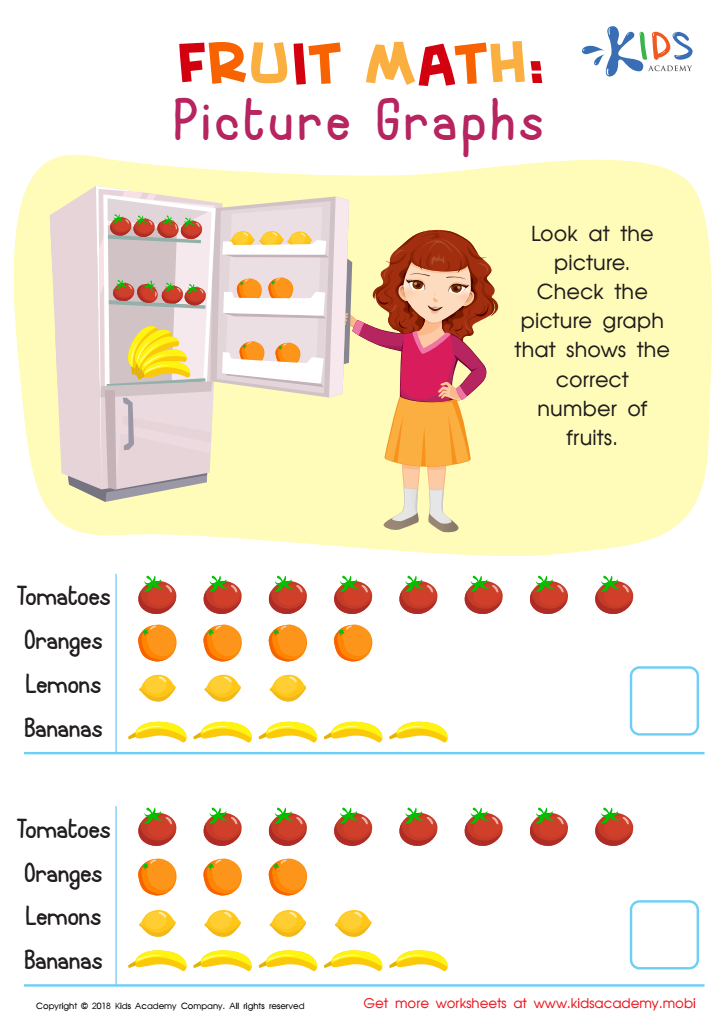
Fruit Math: Picture Graphs Worksheet
 Assign to My Students
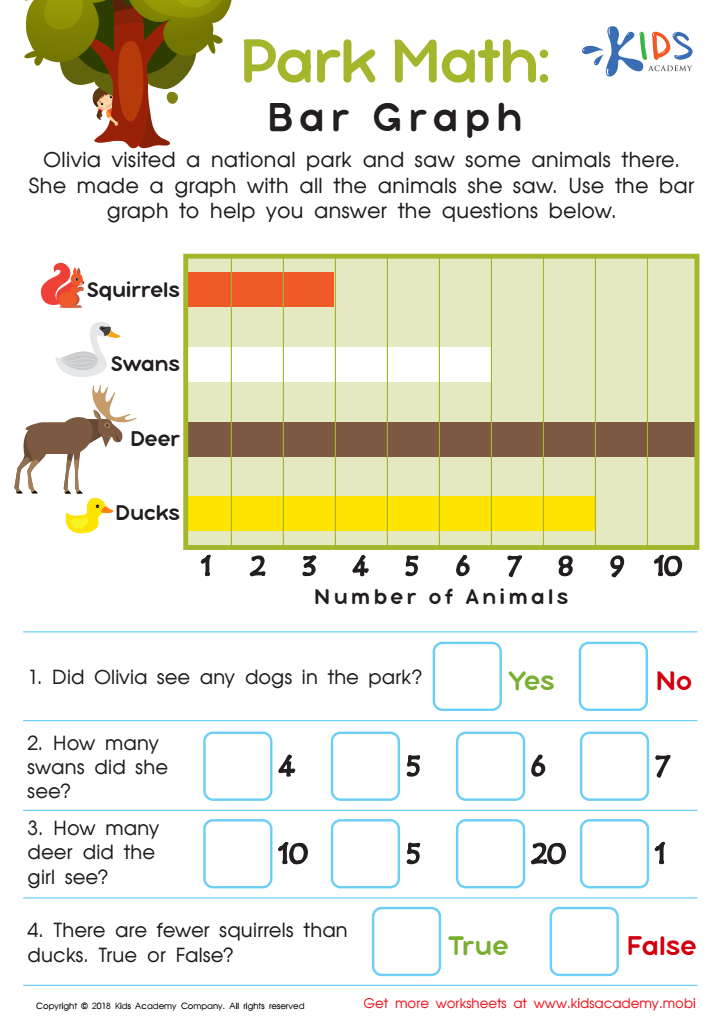
Park Math: Bar Graph Worksheet
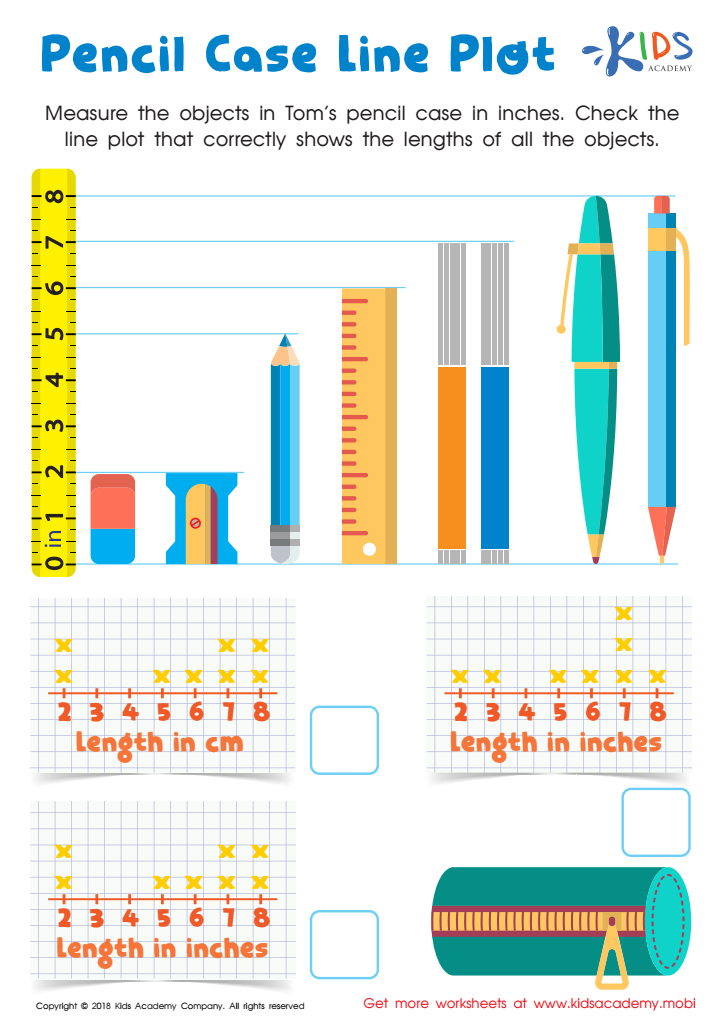
Pencil Case Line Plot Worksheet
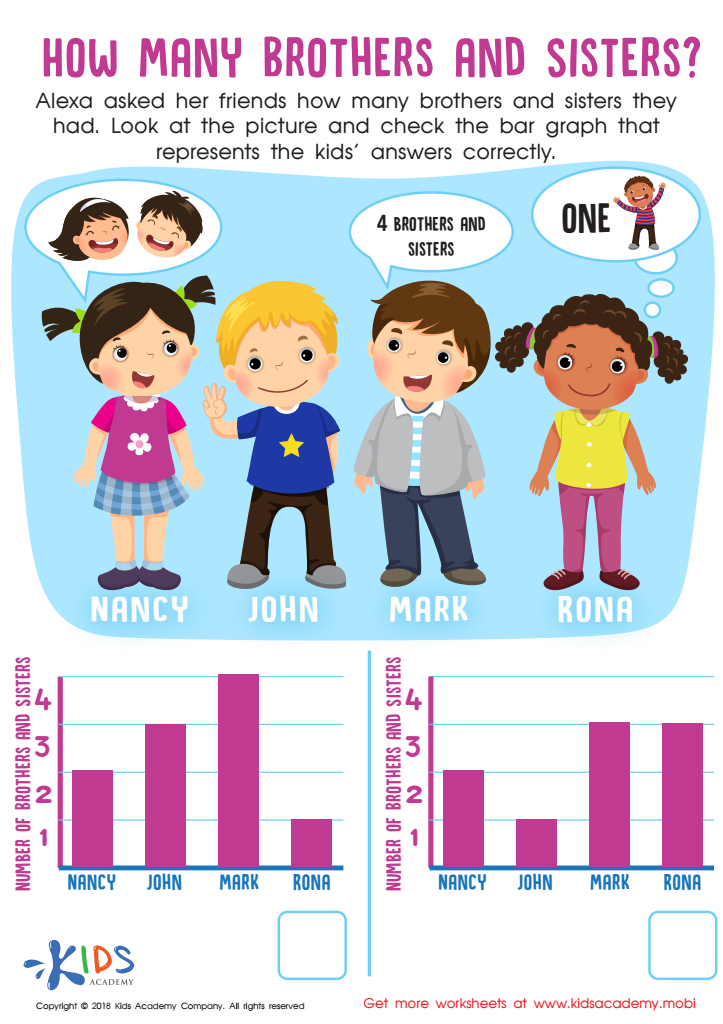
How Many Brothers and Sisters? Worksheet
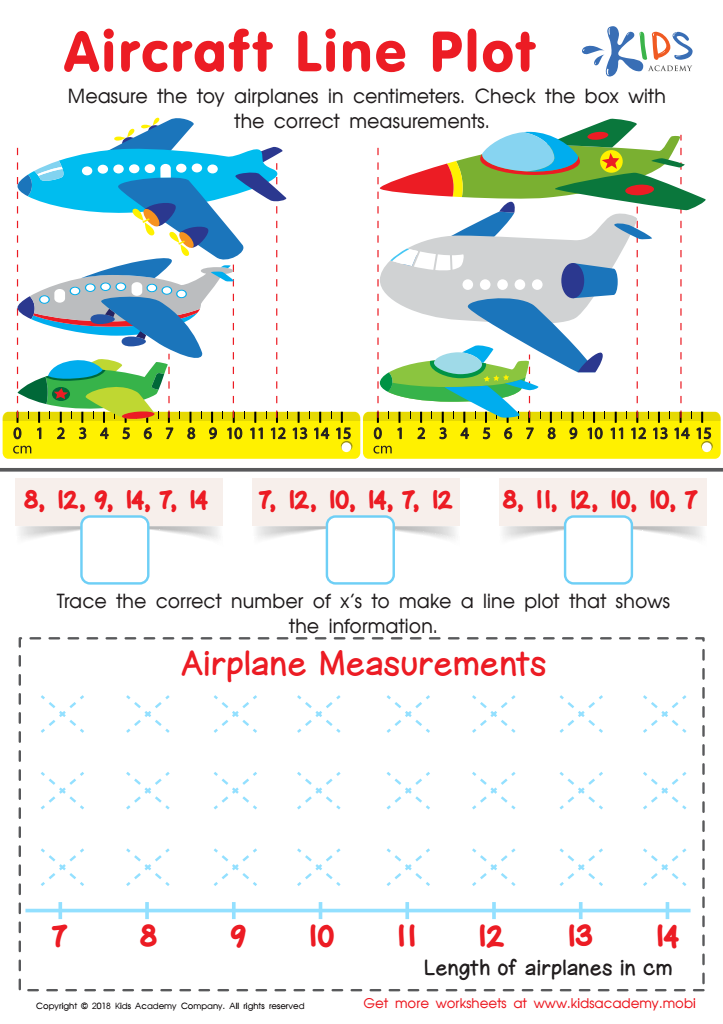
Aircraft Line Plot Worksheet








Counting skills are foundational in early childhood education, particularly for children aged 5-8, as they form the bedrock for more advanced mathematical concepts. For parents and teachers, fostering counting skills is crucial for several reasons. First, children who develop strong counting abilities demonstrate improved problem-solving skills, enabling them to tackle complex mathematical tasks later on.
Moreover, counting serves as a gateway to understanding measurement concepts. Engaging students in easy measurement activities—such as comparing lengths, weights, or quantities—allows them to apply their counting skills in real-world contexts. This practical application enhances comprehension, making learning relevant and enjoyable.
Additionally, establishing confidence in counting and measurement encourages a positive attitude toward mathematics overall. When children feel comfortable with numbers, they are more likely to participate in classroom discussions and explore mathematical concepts independently.
Lastly, involving parents in this process cultivates a supportive learning environment. Simple activities at home, such as measuring ingredients while cooking or counting toys during play, reinforce classroom learning. By prioritizing counting skills and measurement, parents and teachers work together to lay a solid foundation for future academic success, helping children thrive in both math and everyday situations.








