Easy Multiplication Worksheets for Ages 5-8 - Page 2
29 filtered results
-
From - To
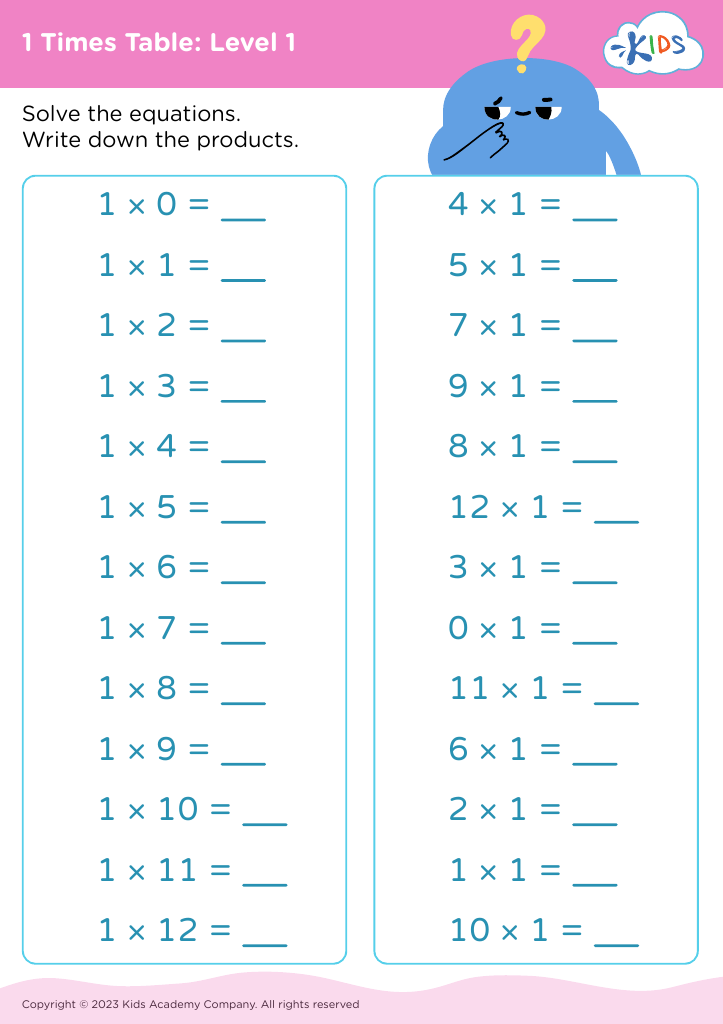
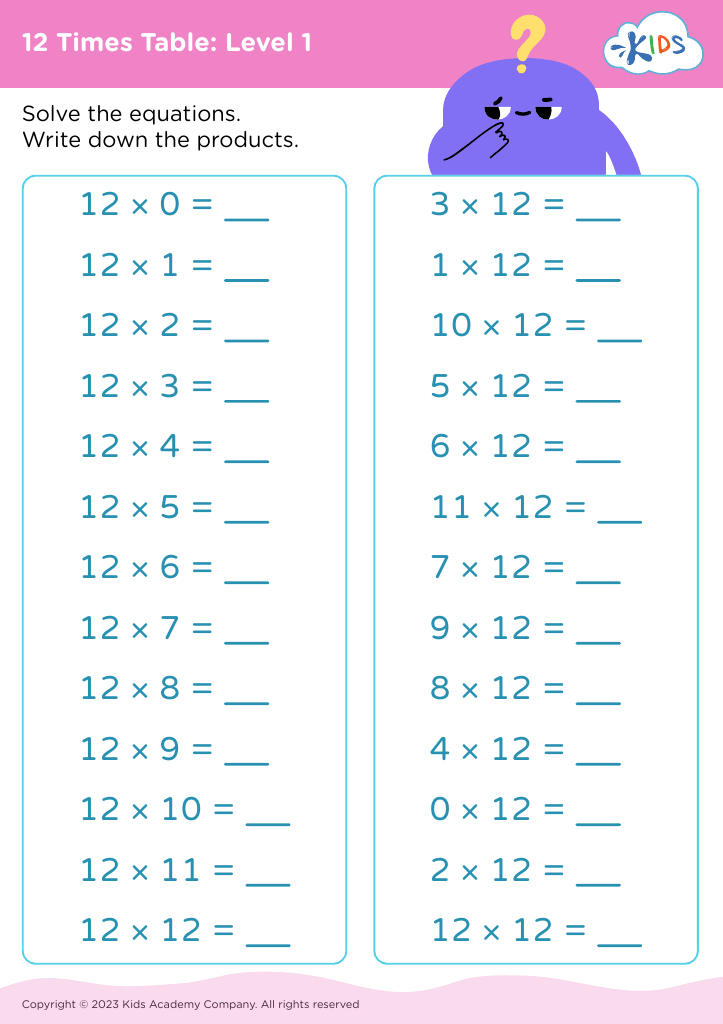
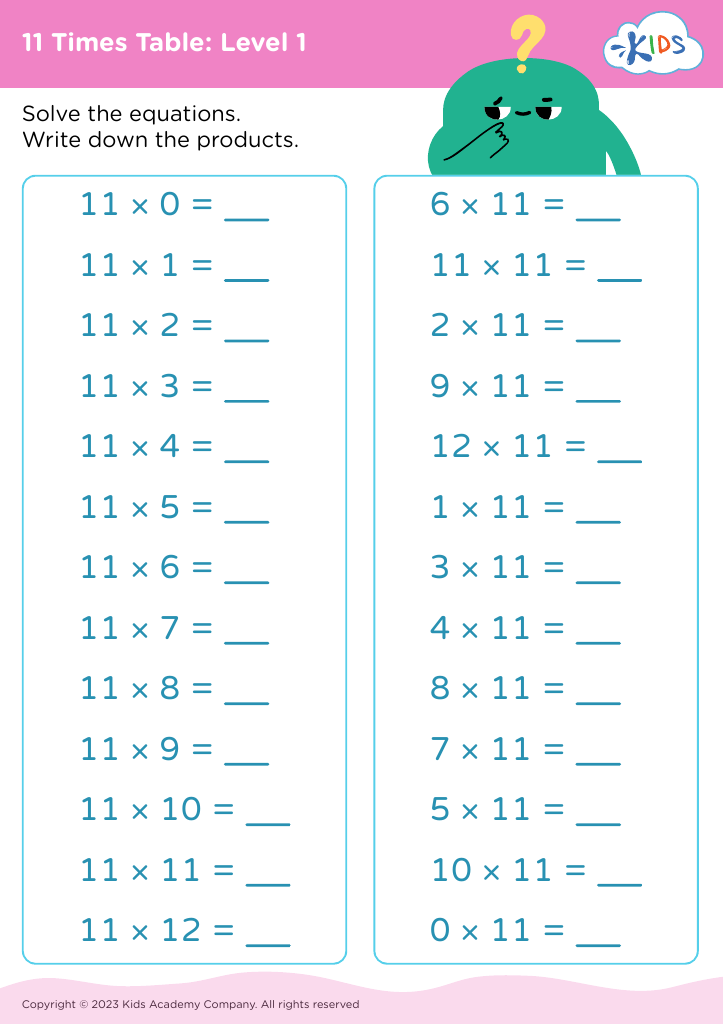
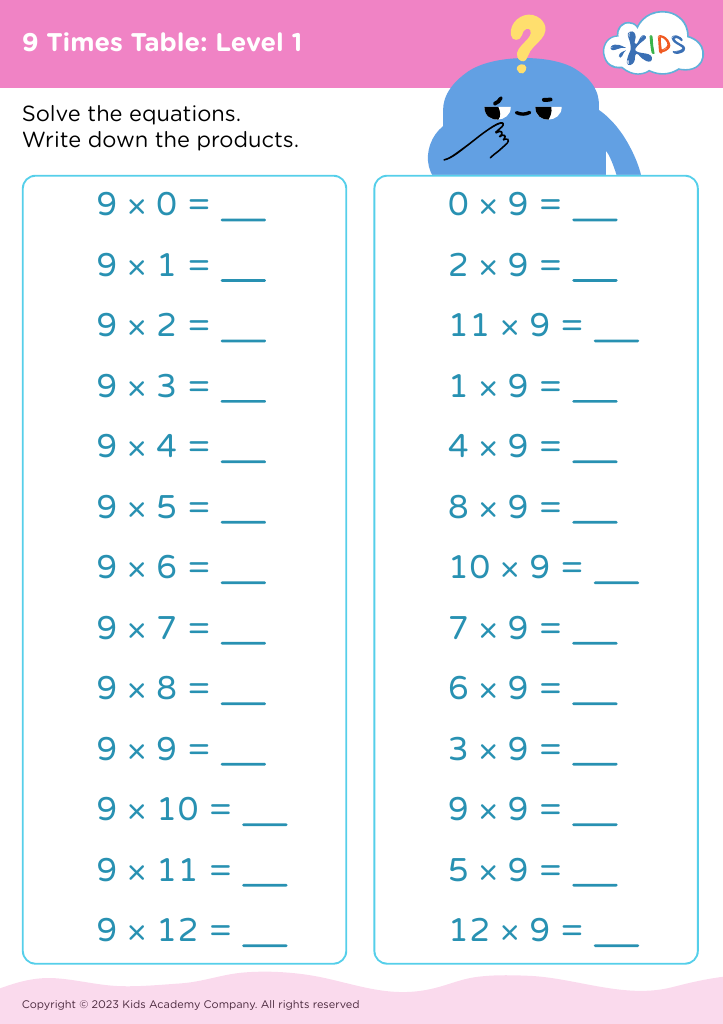
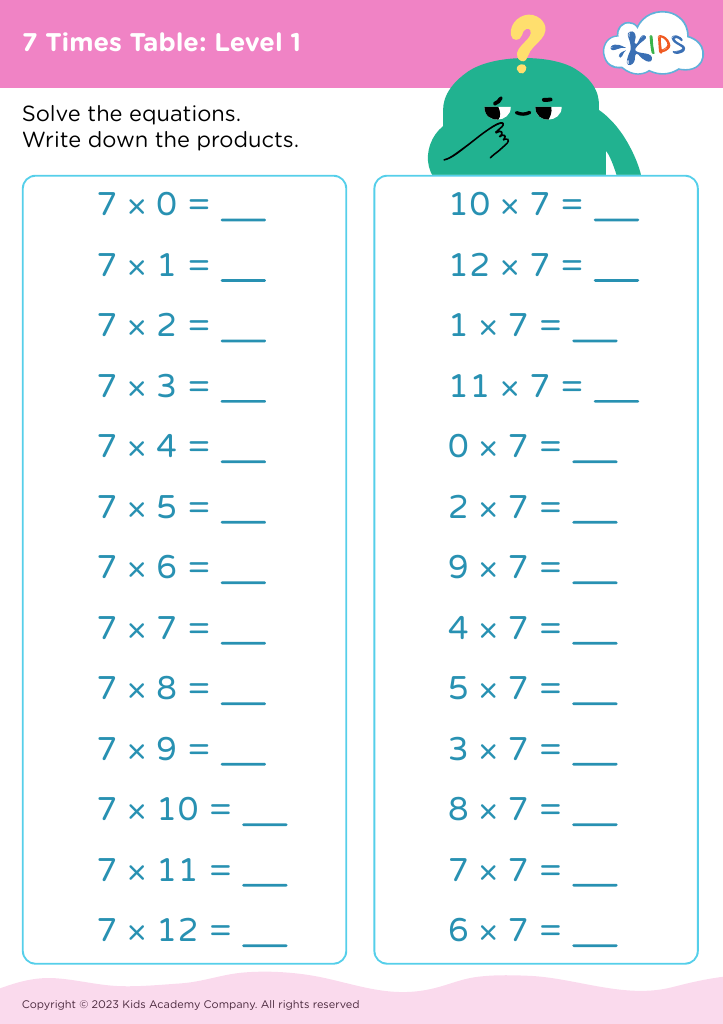








Easy Multiplication for ages 5-8 is crucial for several reasons. First, it lays the foundation for a child's mathematical understanding. Early exposure to multiplication helps children grasp basic concepts of repeated addition and grouping, which are essential for more advanced math topics in later years.
Second, mastering multiplication at a young age builds confidence. Children who feel successful in math are more likely to engage with the subject through primary school and beyond.
Third, developing multiplication skills early can improve other areas of academic performance. Math skills are interconnected; a strong grasp of multiplication enhances problem-solving abilities, critical thinking, and even reading comprehension by helping children to understand word problems more effectively.
Moreover, it promotes cognitive development by encouraging children to see patterns and relationships in numbers. Engaging in multiplication games and activities can make learning fun and interactive, further motivating children.
Finally, parents and teachers play a pivotal role in supporting and reinforcing these skills. Being proactive about teaching multiplication not only aids individual academic success but also helps create a positive, collaborative learning environment in which children find joy in learning. Ultimately, easy multiplication education sets the groundwork for a lifetime of mathematical understanding and success.








