
Comparing Fractions Easy Worksheets for Ages 5-9
4 filtered results
Difficulty Level
Grade
Age
-
From - To
Subject
Activity
Standards
Introducing our "Comparing Fractions Easy Worksheets for Ages 5-9"! These engaging and educational worksheets are designed to help young learners grasp the fundamental concepts of comparing fractions. Through fun and interactive activities, children will learn to identify and compare fractions in a simple and straightforward manner. Our printable worksheets are perfect for classroom use, homeschooling, or extra practice at home. Developed by experts, these resources provide step-by-step instructions to ensure a solid understanding of fractions. Set your child on the path to math success today with our easy and effective worksheets available at Kids Academy!
Favorites
With answer key
Interactive
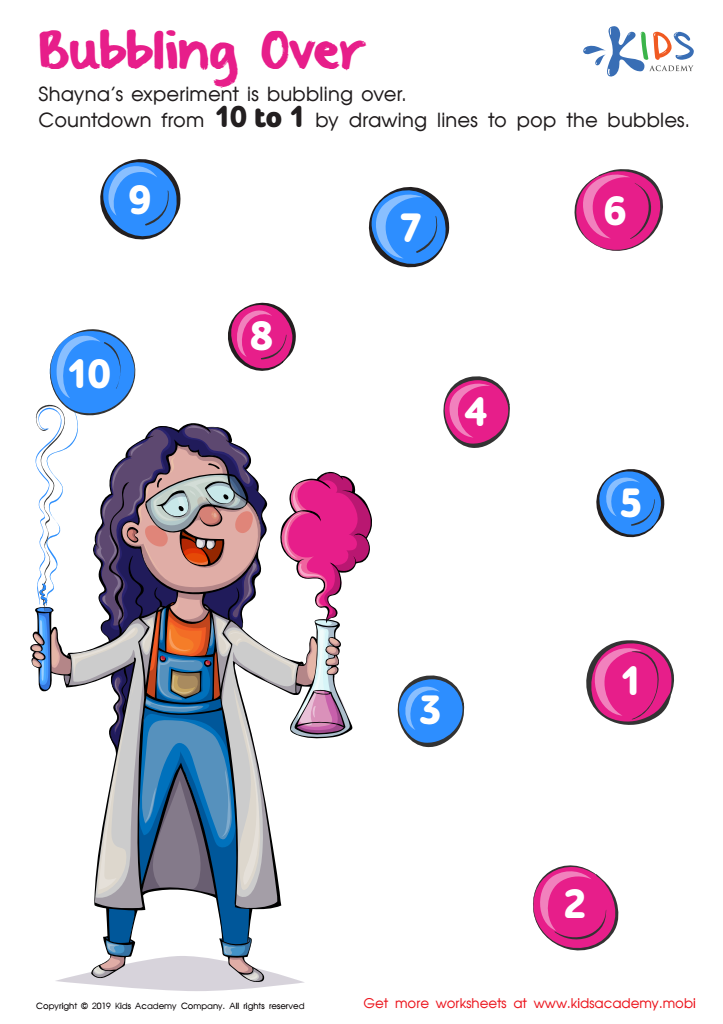
Bubbling Over Worksheet
Students love science experiments at the lab! They get to practice their counting skills while creating a masterpiece or an unexpected catastrophe! Ask them to count down from 10 to 1 by drawing lines to 'pop' the bubbles coming out of Shayna's experiment in the worksheet.
 Assign to My Students
Bubbling Over Worksheet
Worksheet
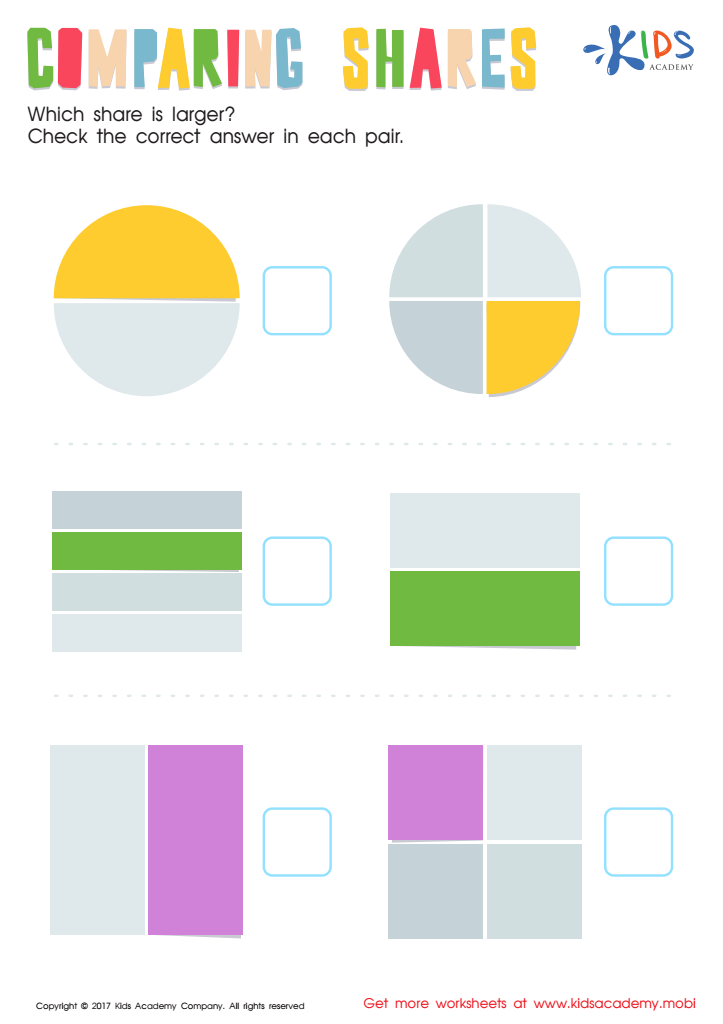
Comparing Shares Worksheet
Can your students identify and draw shapes correctly? If so, this exercise may be too easy. For those who are still learning, extra help may be needed. The worksheet requires students to select which shape is larger in each pair; circles and squares are included.
Comparing Shares Worksheet
Worksheet
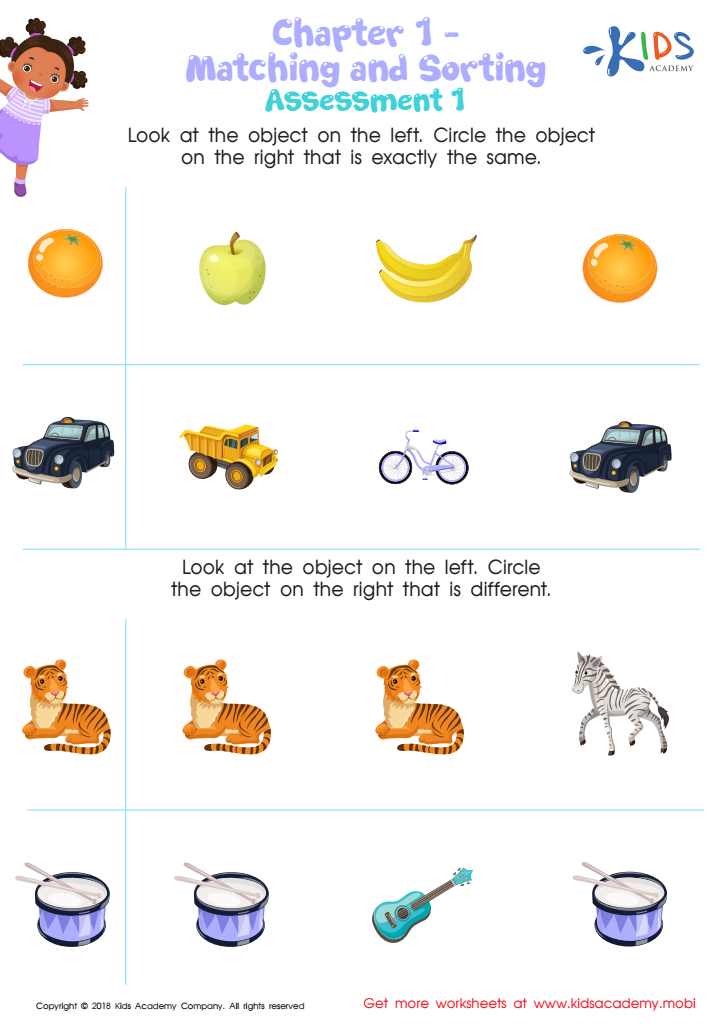
Matching and Sorting for Preschool: Assessment 1 Worksheet
Test your child's matching skills with this worksheet! Ask them to name each of the objects pictured, then circle the ones that are the same. Repeat for the second task. It's a great way to assess their skills and have fun at the same time!
Matching and Sorting for Preschool: Assessment 1 Worksheet
Worksheet
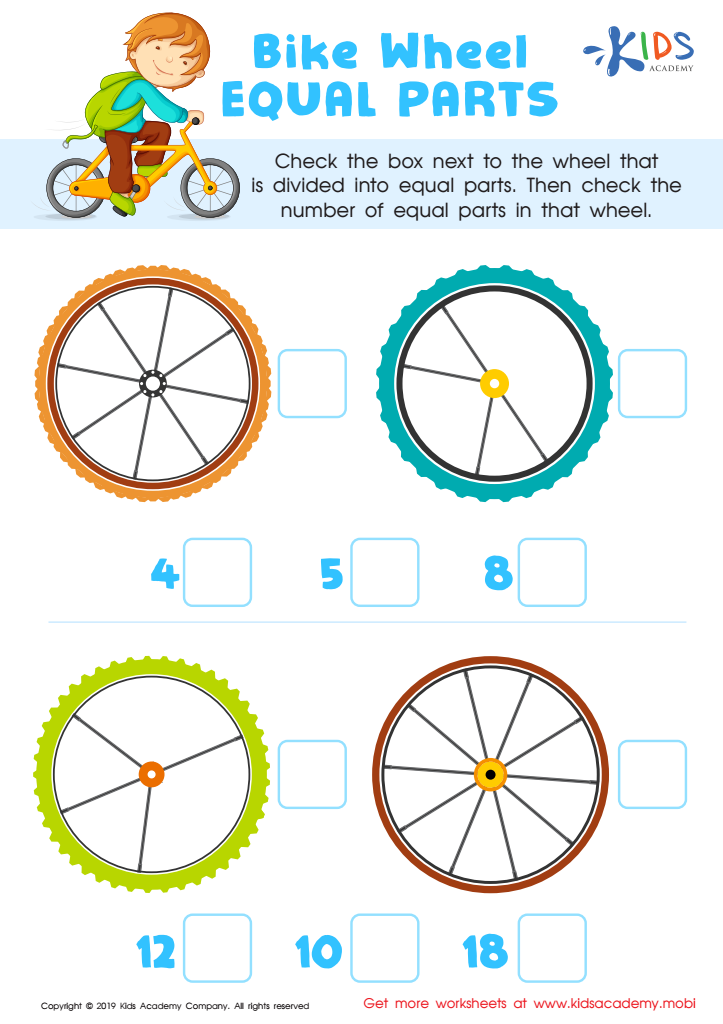
Bike Wheel Equal Parts Worksheet
Help your kids have fun while they learn! Ask them to identify the object in the picture with four wheels. Guide them to count the spokes, then check the box on the wheel with equal parts. Lastly, check how many equal parts the wheel is divided into.
Bike Wheel Equal Parts Worksheet
Worksheet
Join Kids Academy for Free
Who is primarily going to use this learning content?






Ensuring that children aged 5-9 can easily compare fractions is crucial for their early mathematical development. At this age, kids are like sponges, quickly absorbing new concepts and forming foundational skills. Understanding fractions is more than just a math exercise; it’s a vital component of critical thinking and problem-solving abilities.
Fractions are everywhere in the real world, from slicing a pizza to measuring ingredients for a recipe. When children learn to compare fractions effectively, they gain confidence in dealing with everyday mathematical challenges. This early exposure sets a strong groundwork for more complex mathematical concepts they'll encounter later.
Moreover, comparing fractions encourages logical reasoning. Kids learn to identify patterns, such as recognizing when one fraction is greater or smaller than another. This trains their brain to think strategically and solve problems methodically.
For teachers, having students master fractions early on can make later math instruction smoother and more efficient. For parents, supporting this learning at home means you’re fostering a mindset that values and understands math. In both cases, it equips children with the skills they need to succeed academically and feel more competent tackling diverse challenges in the future. Teaching fractions early builds lifetime numeracy skills, making it a critical element of primary education.








