Easy Area and Perimeter Worksheets for Ages 5-9
4 filtered results
-
From - To
Explore our Easy Area and Perimeter Worksheets designed specifically for children aged 5-9! Engaging and interactive, these worksheets provide a fun way for young learners to grasp essential math concepts. With vibrant illustrations and child-friendly language, students can easily understand how to calculate the area and perimeter of various shapes. Perfect for classroom use or home study, our worksheets encourage problem-solving and critical thinking skills. Download and print them out to enhance your child’s learning experience today! Help your little ones build a solid foundation in math with these simple yet effective worksheets that make area and perimeter concepts come alive!
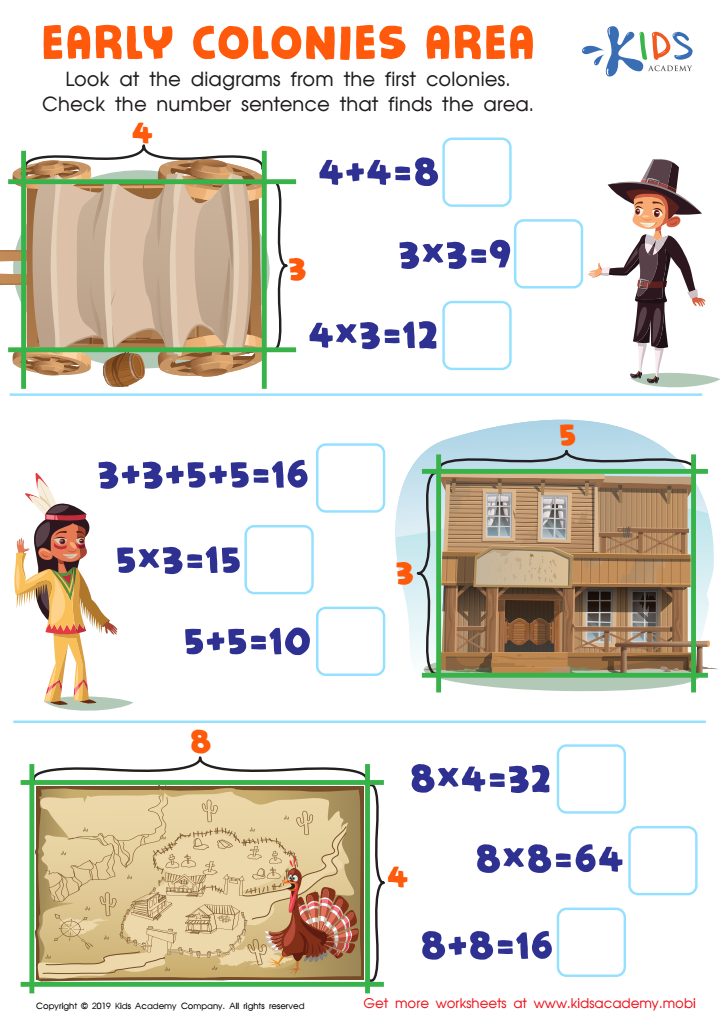
Early Colonies Area Worksheet
 Assign to My Students
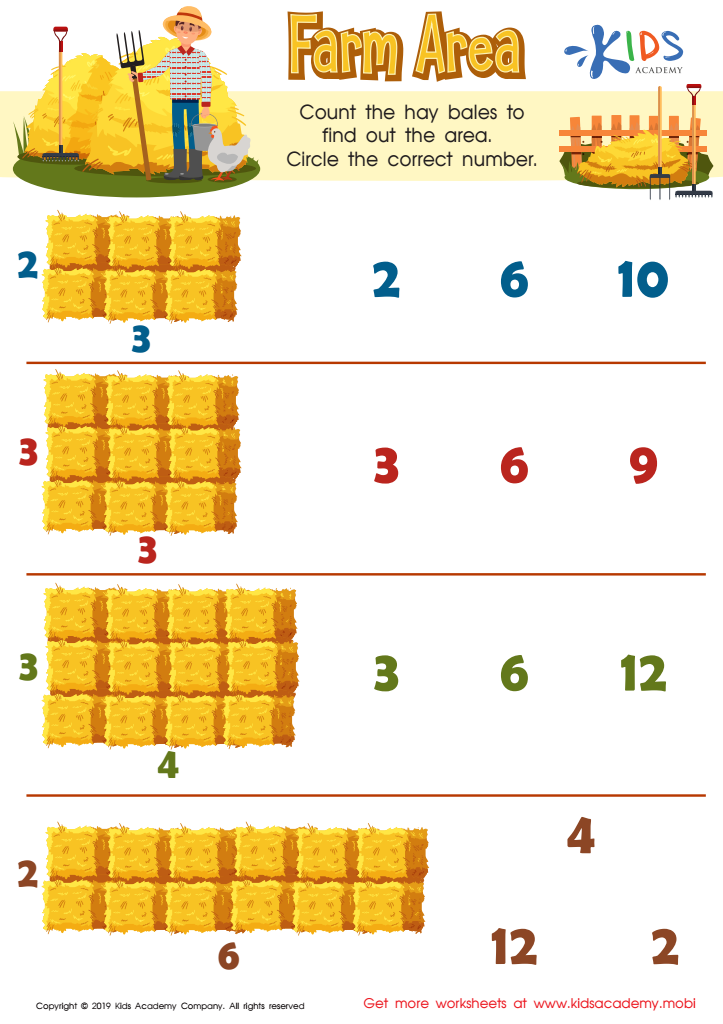
Farm Area Worksheet
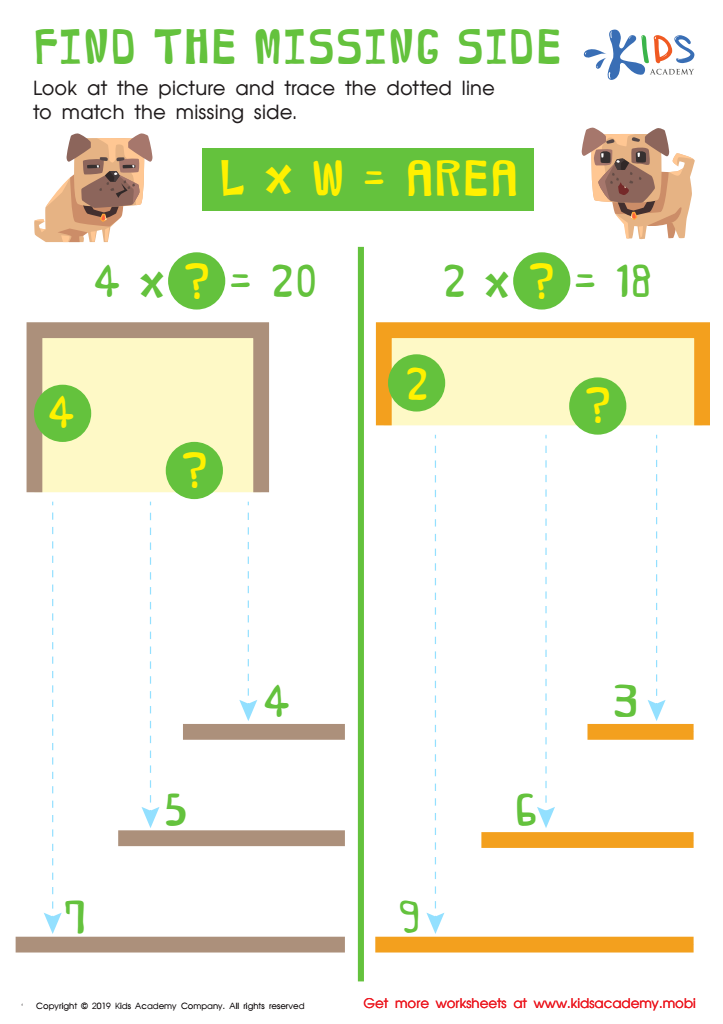
Find the Missing Side Worksheet
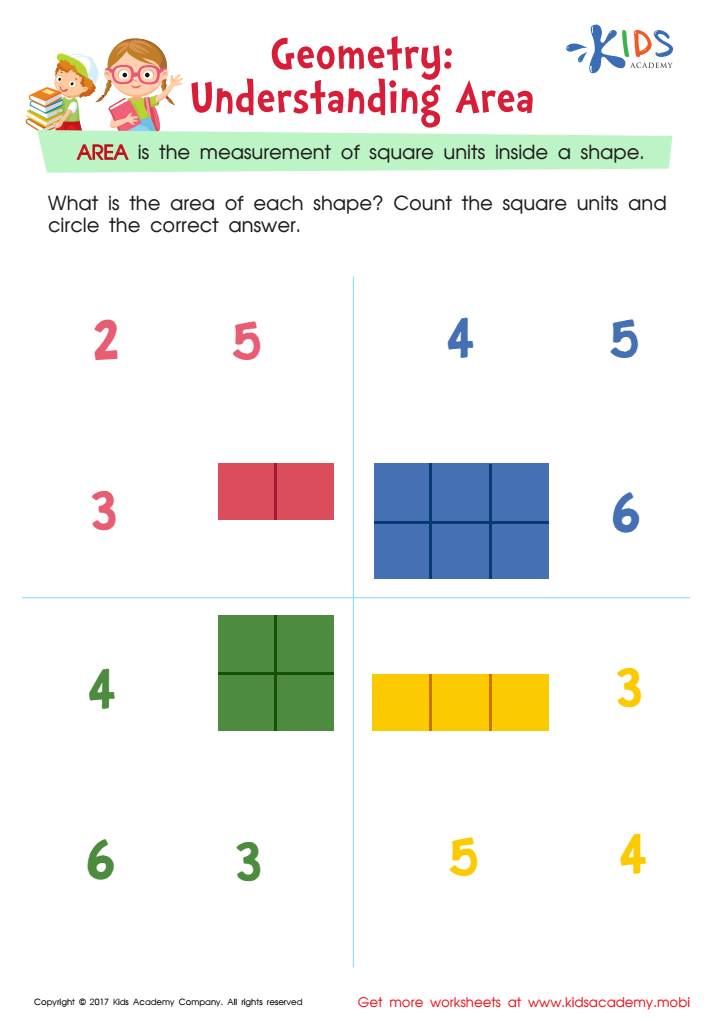
Understanding Area Worksheet








Parents and teachers should prioritize teaching young children about area and perimeter because these concepts form the foundation of spatial awareness and problem-solving skills. For children aged 5-9, understanding area and perimeter not only enhances their mathematical abilities but also fosters critical thinking through hands-on learning activities.
Everyday experiences, from determining how much space a rug will cover to creating a garden layout, relate directly to these concepts. By engaging with area and perimeter, children develop a practical understanding of measurement and geometry, crucial for future math success. Utilizing interactive games and real-world examples makes learning fun and applicable, ensuring concepts resonate.
Additionally, mastery of area and perimeter supports challenges in higher mathematics, laying the groundwork for topics like algebra and geometry. It encourages teamwork and communication when students collaborate on projects, boosting their social skills.
Moreover, teaching area and perimeter connects children to real-life scenarios and empowers them with decision-making capabilities. Ensuring children grasp these fundamental concepts equips them with essential life skills that extend beyond mathematics, nurturing confidence, curiosity, and a love for learning. Ultimately, a solid understanding of area and perimeter can inspire creativity and practicality in young minds, guiding them toward future successes.