Easy Capitalization Worksheets for Ages 5-9
6 filtered results
-
From - To
Our "Easy Capitalization Worksheets for Ages 5-9" provide young learners with engaging activities to master the basics of capitalization. Designed to align with educational standards, these worksheets are perfect for kids just starting to write or looking to refine their skills. Each worksheet features vibrant illustrations and fun exercises that teach essential rules, like capitalizing the first word in a sentence, proper nouns, and the personal pronoun 'I.' Ideal for classroom use or at-home practice, these worksheets make learning capitalization an enjoyable experience, helping children build a strong foundation for successful writing. Explore and download for free today!
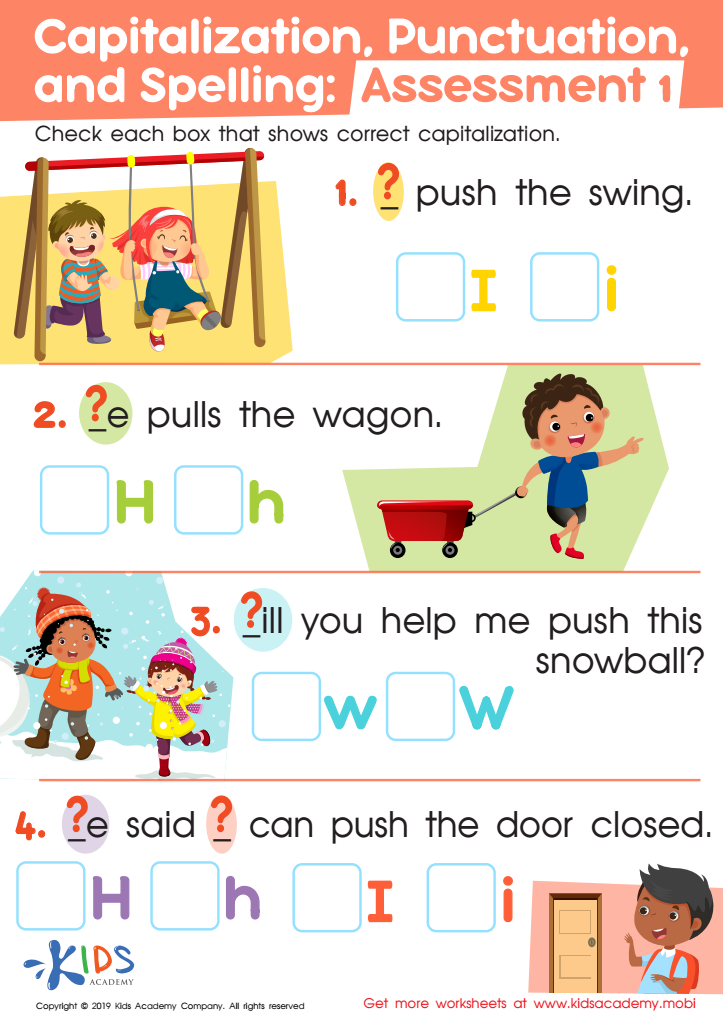
Capitalization. Punctuation. Spelling: Assessment 1 Worksheet
 Assign to My Students
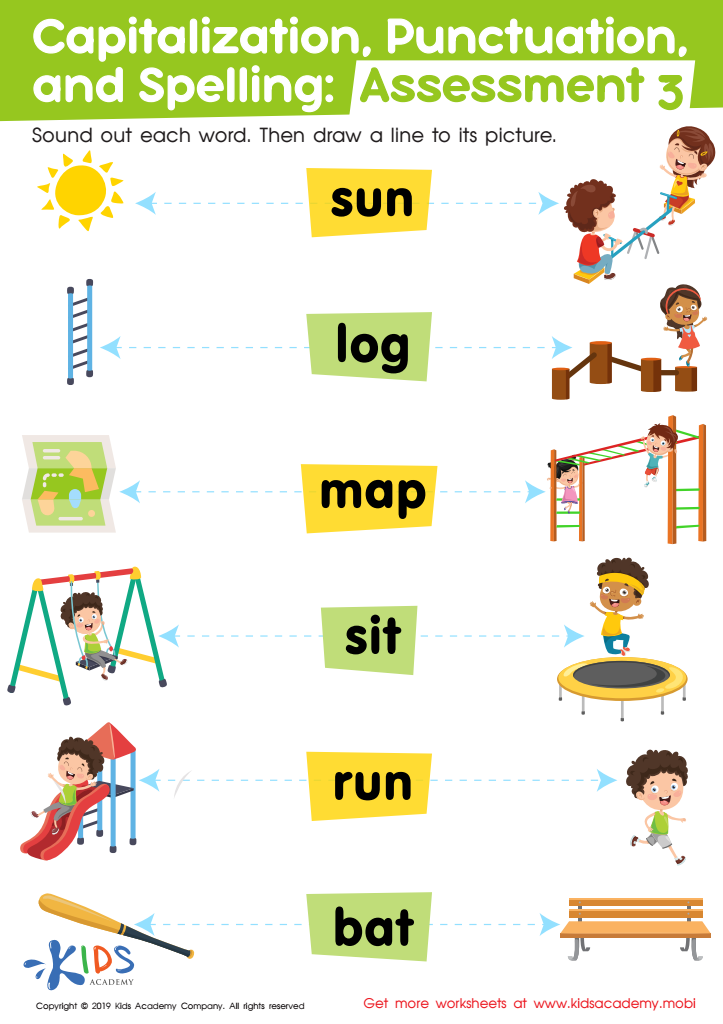
Capitalization. Punctuation. Spelling. Assessment 3 Worksheet
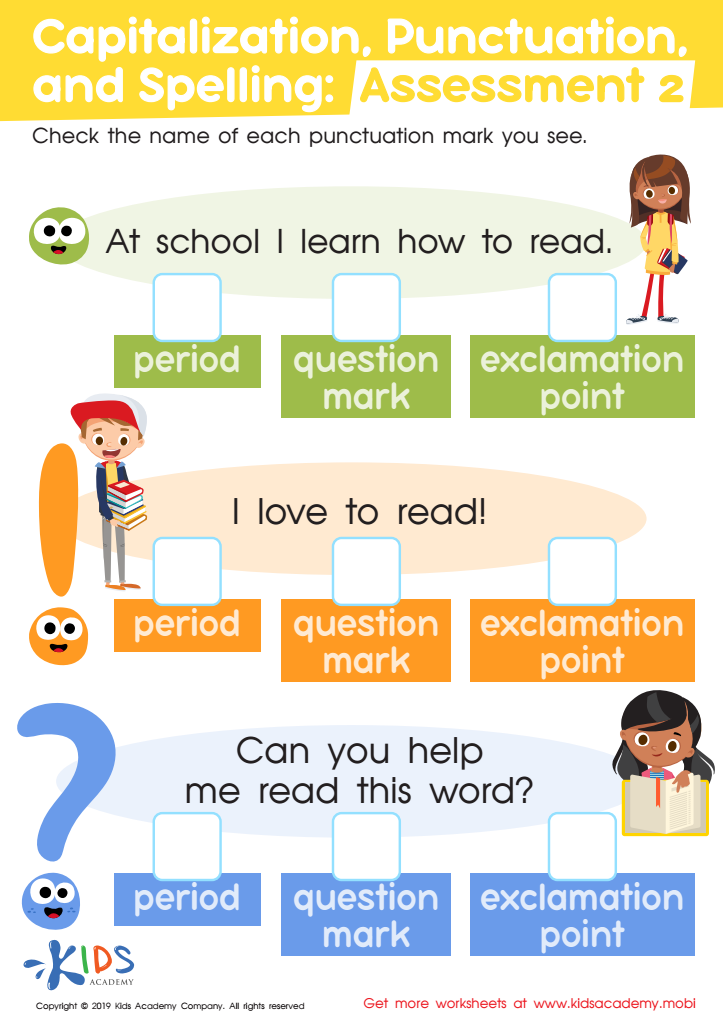
Capitalization. Punctuation. Spelling: Assessment 2 Worksheet
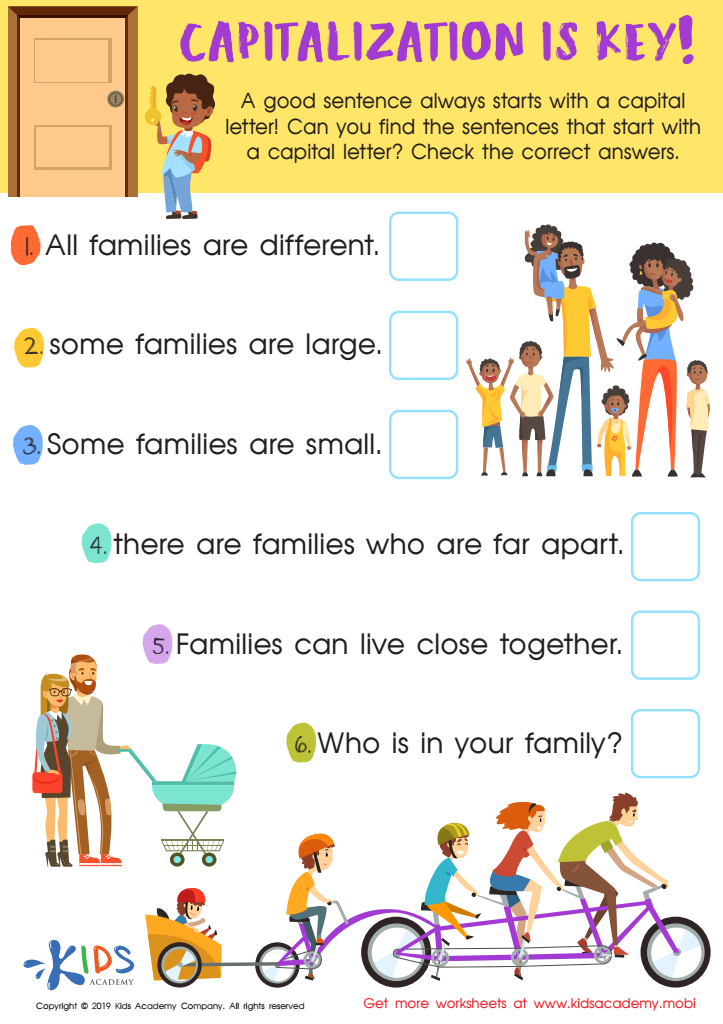
Capitalization Key Worksheet
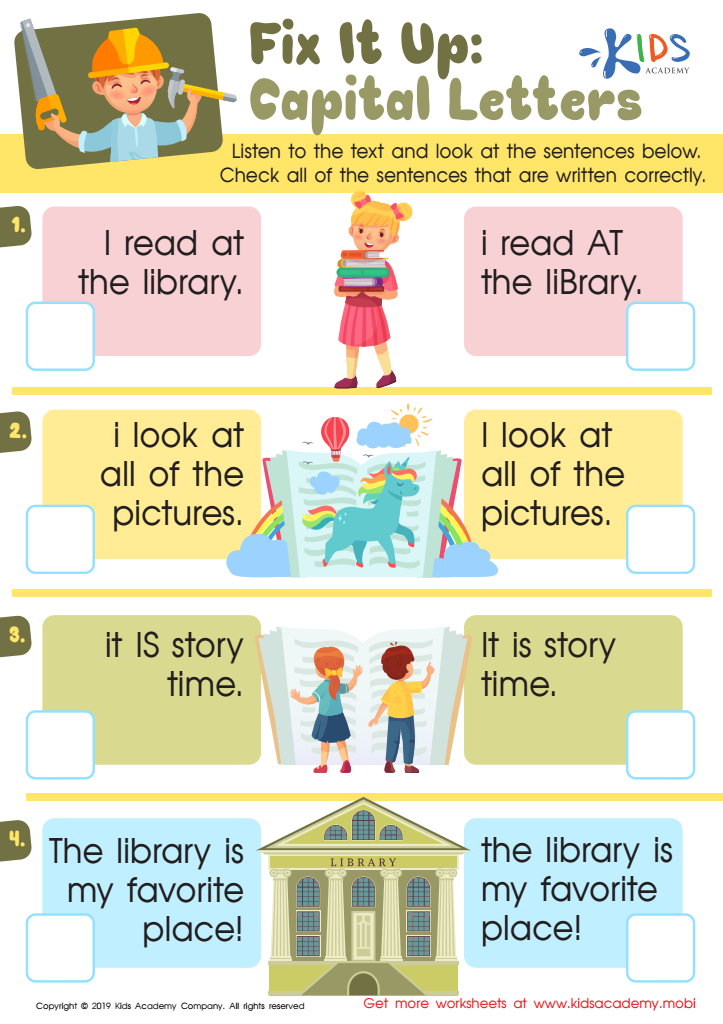
Fix Capital Letters Worksheet
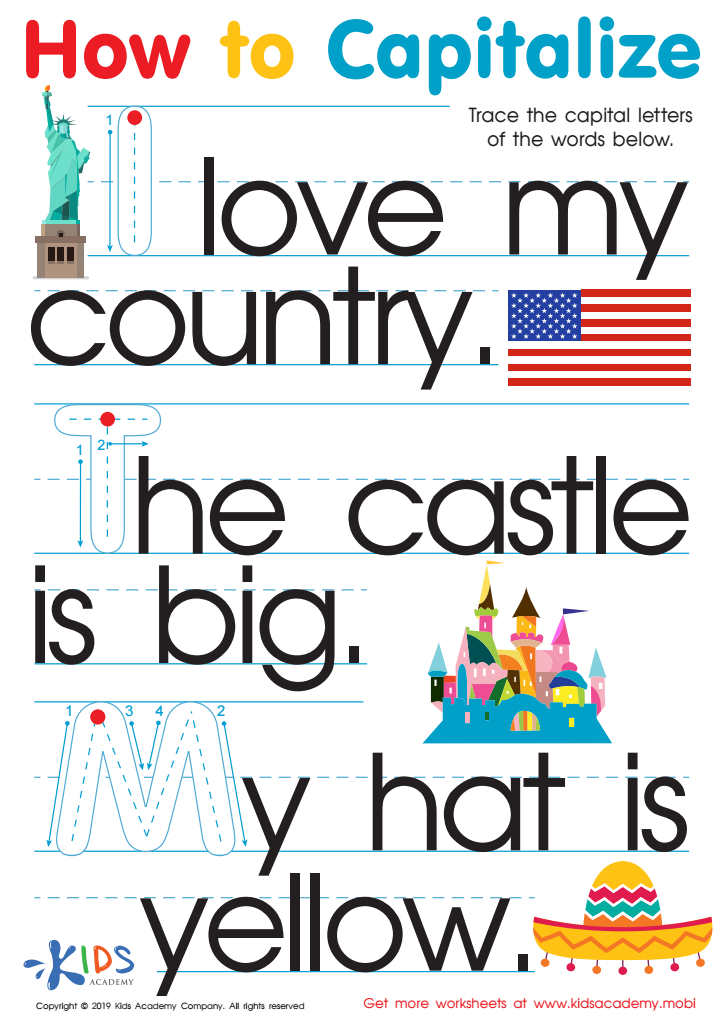
How to Capitalize Worksheet



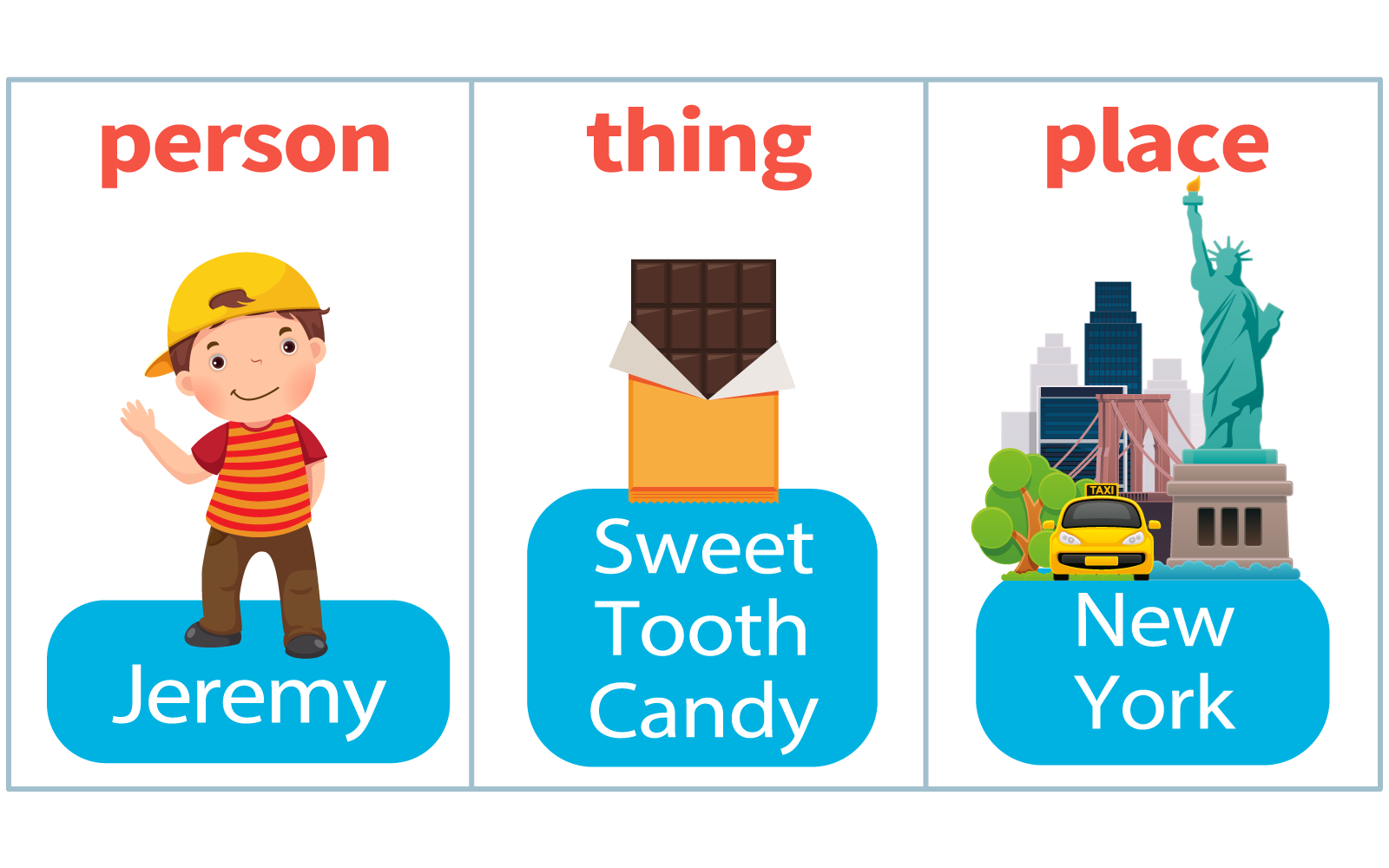



Parents and teachers should care about easy capitalization for children aged 5-9 because it lays the foundation for effective written communication and academic success. During these formative years, children cultivate their literacy skills, learning the basics of reading and writing, which include proper capitalization. Capitalization rules, such as starting sentences with capital letters and capitalizing proper nouns, help kids understand and create clear and comprehensible text.
Mastering capitalization also promotes disciplined and attentive learning habits. When young learners recognize and apply capitalization rules, they improve their ability to follow other grammar conventions, thereby enhancing overall writing mechanics. In turn, this leads to better comprehension, critical for success across all subjects.
Beyond academics, knowing capitalization rules boosts children's confidence and self-expression. They become more adept at writing stories, essays, and even simple notes, communicating their thoughts more effectively. Positive reinforcement from teachers and parents for correctly using capitalization encourages children to take pride in their work.
Lastly, good writing skills, including proper capitalization, are essential life skills. They form the basis for future academic achievements and professional competencies, underscoring why both parents and teachers should prioritize teaching these skills at an early age.