Number comprehension Easy Worksheets for 5-Year-Olds
6 filtered results
-
From - To
Introduce your child to the exciting world of numbers with our "Number Comprehension Easy Worksheets for 5-Year-Olds." Designed to develop early math skills, our engaging worksheets make learning to count, identify numbers, and recognize patterns fun and interactive. Each activity is tailored to keep young learners captivated while enhancing their numerical understanding and problem-solving abilities. Perfect for preschoolers and kindergarteners, these printable worksheets provide a solid foundation for future math success. At Kids Academy, we believe in making education enjoyable, and our number comprehension worksheets are a testament to this commitment. Explore and watch your child’s confidence in math grow exponentially!
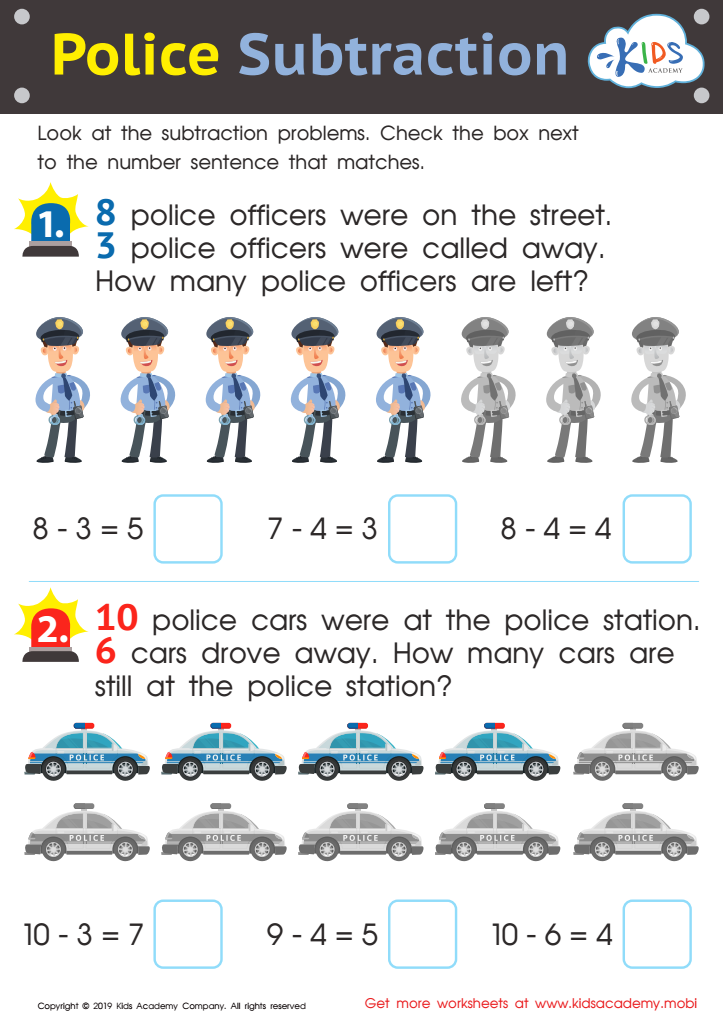
Police Subtraction Worksheet
 Assign to My Students
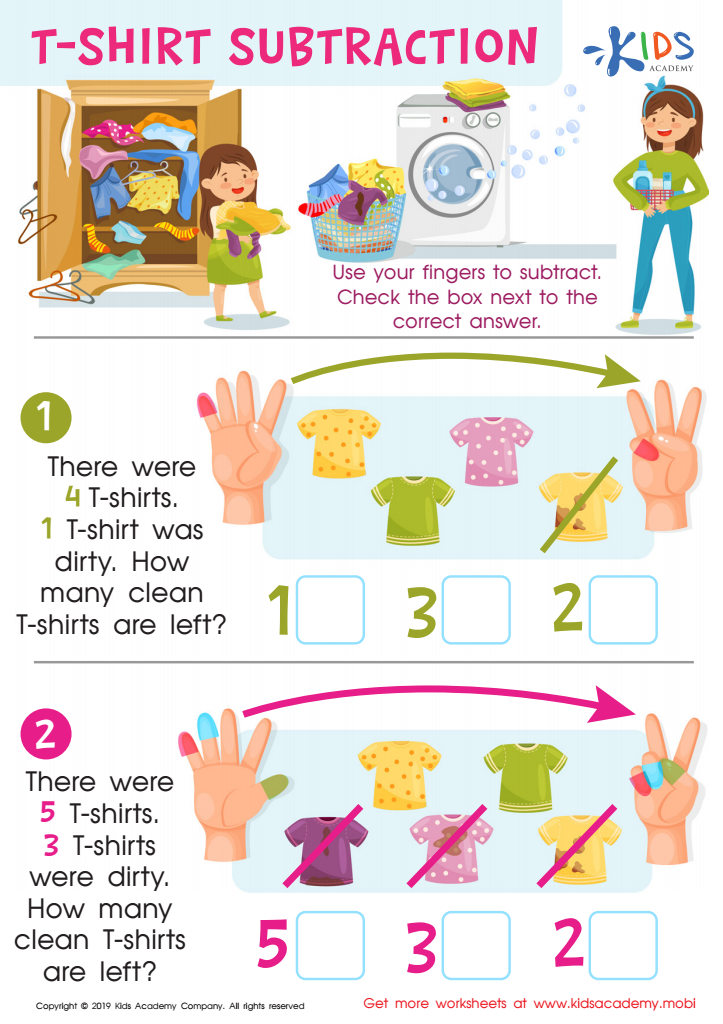
T-shirt Subtraction Worksheet
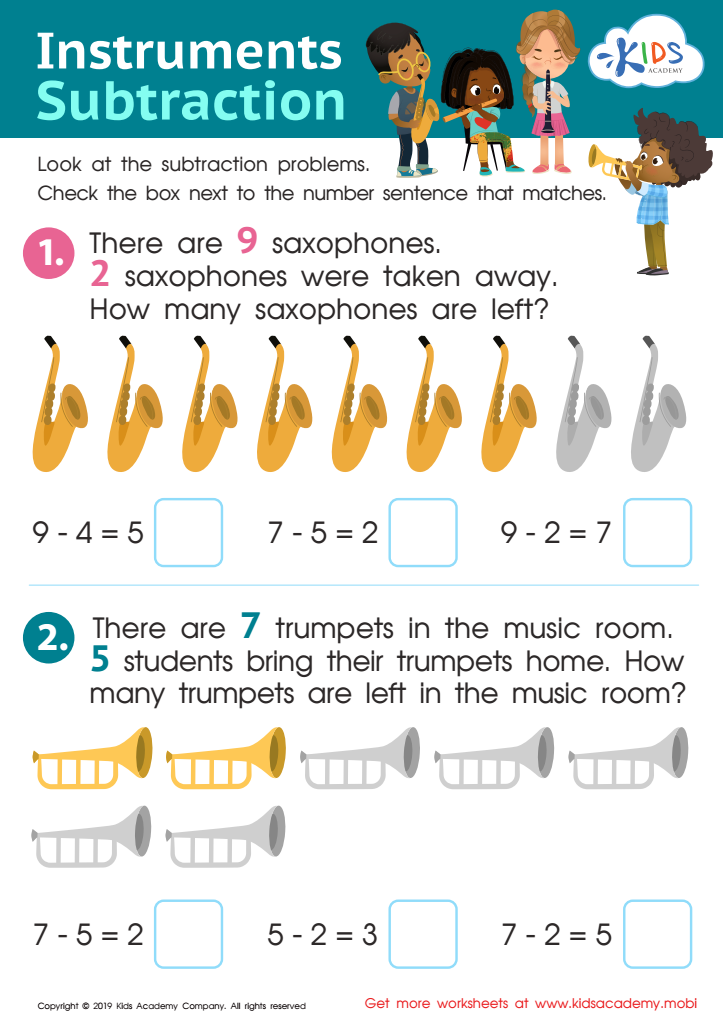
Instrument Subtraction Worksheet
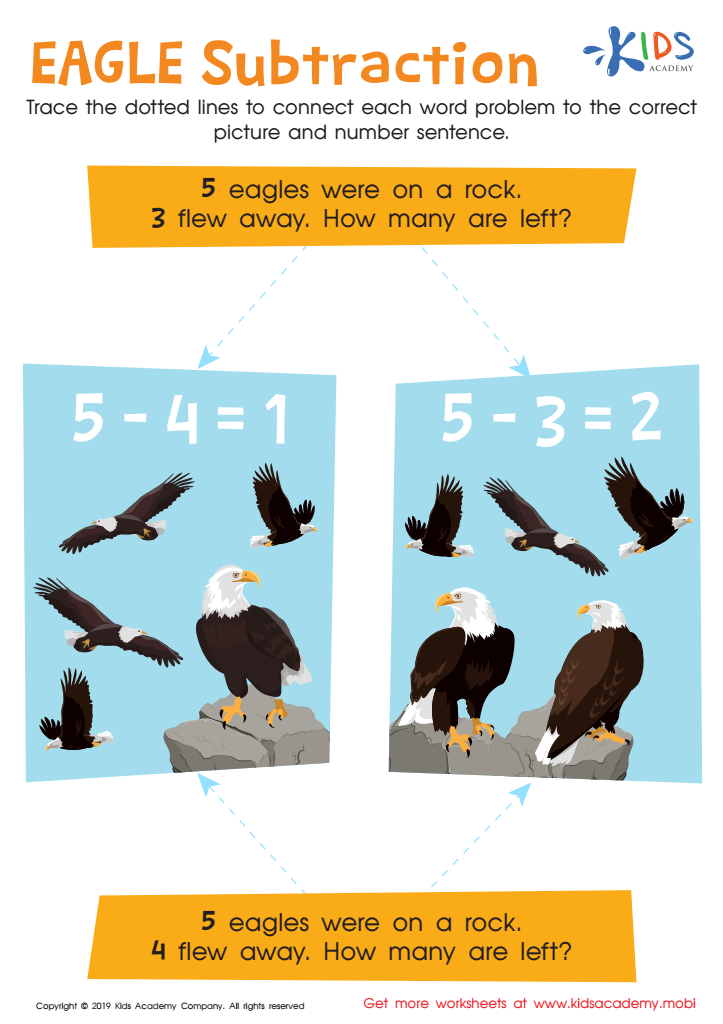
Eagle Subtraction Worksheet
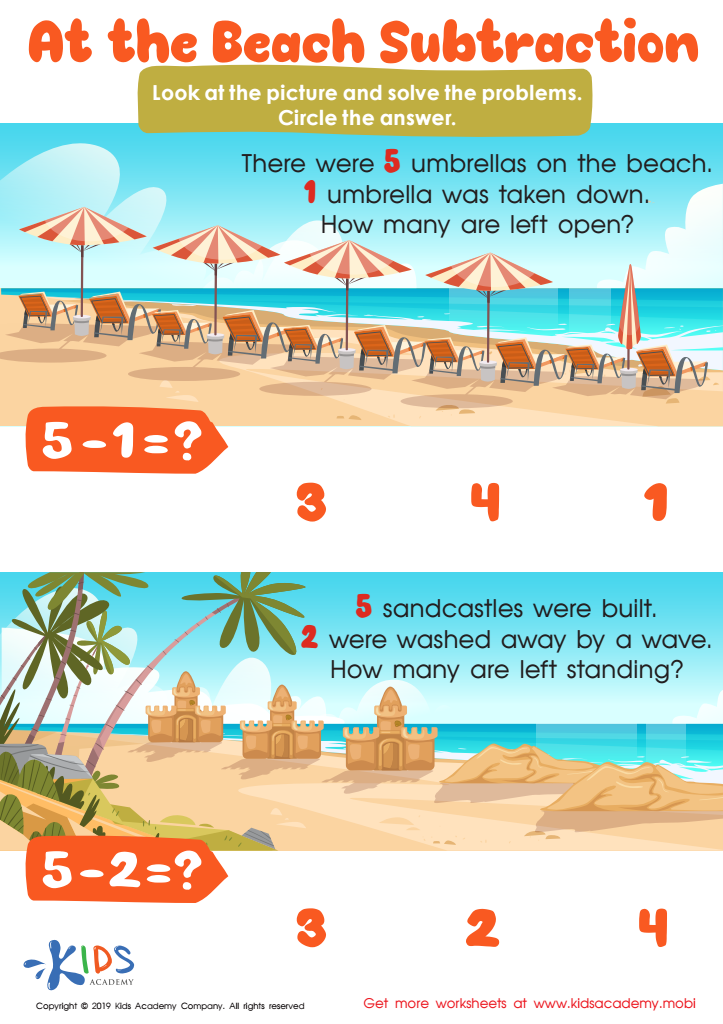
At the Beach Subtraction Worksheet
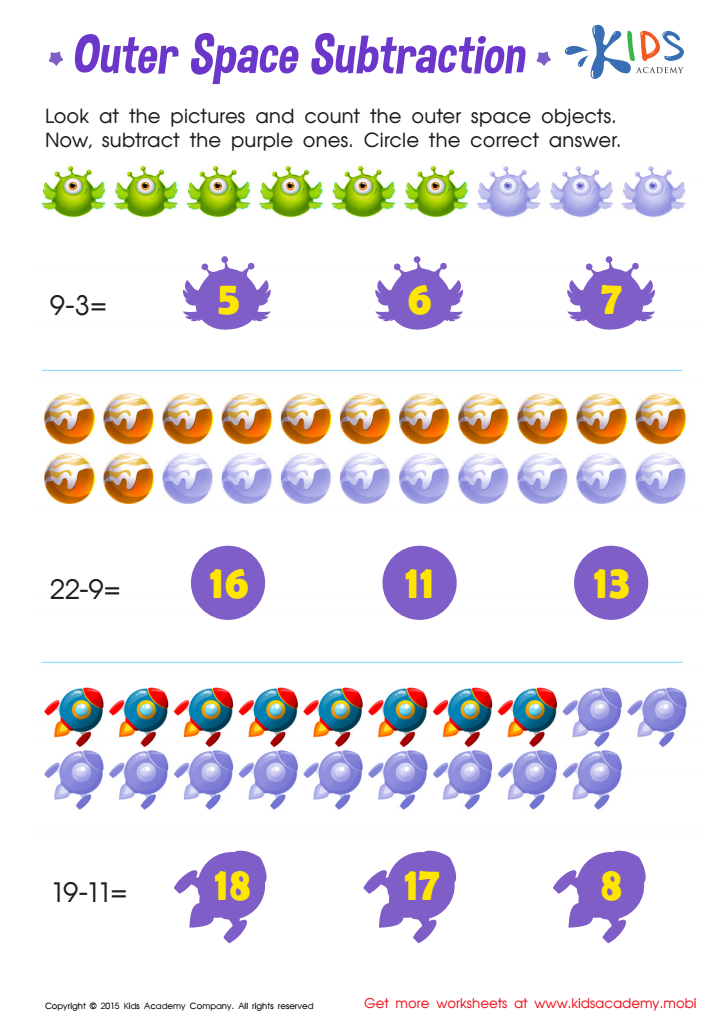
Outer Space Substraction Worksheet





.jpg)

Number comprehension is foundational for a child's future academic success and everyday functioning, making it essential for both parents and teachers to prioritize it in early education. At age five, children are beginning to develop critical thinking and problem-solving skills, and understanding numbers plays a key role in this intellectual growth. Proficiency in basic math concepts fosters a child’s ability to engage with their environment, from counting objects to understanding time and money.
Early number comprehension starts with simple skills like recognizing numerals, counting in order, and basic addition and subtraction. These skills form the building blocks for more complex math operations they will encounter later. Without a solid grasp of number concepts, children may struggle with mathematical learning in subsequent grades, potentially leading to academic difficulties and lowered self-esteem.
Moreover, early math skills pave the way for logical reasoning and analytical thinking. Games, toys, and everyday activities that involve counting, sorting, or measuring can turn learning into a fun and interactive experience, supplying children with practical and meaningful contexts for grasping numerical ideas.
In summary, nurturing early number comprehension helps set the stage for lifelong learning and intellectual growth, thus greatly benefiting children’s overall academic journey and enhancing their everyday lives.








