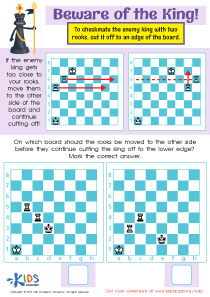
Chess strategy understanding Easy Chess Worksheets for Ages 6-7
3 filtered results
-
From - To
Unlock the world of chess strategy with our engaging Easy Chess Worksheets designed for ages 6-7! These interactive resources help young learners grasp essential chess concepts in a fun and approachable way. Each worksheet is thoughtfully crafted to introduce basic strategies, piece movements, and game tactics, ensuring kids build a strong foundation in chess. With vibrant illustrations and simple instructions, children can enhance their critical thinking, problem-solving skills, and patience while enjoying the game. Perfect for home or classroom use, our worksheets make learning chess exciting and accessible for young beginners. Start your child's chess journey today with our playful materials!
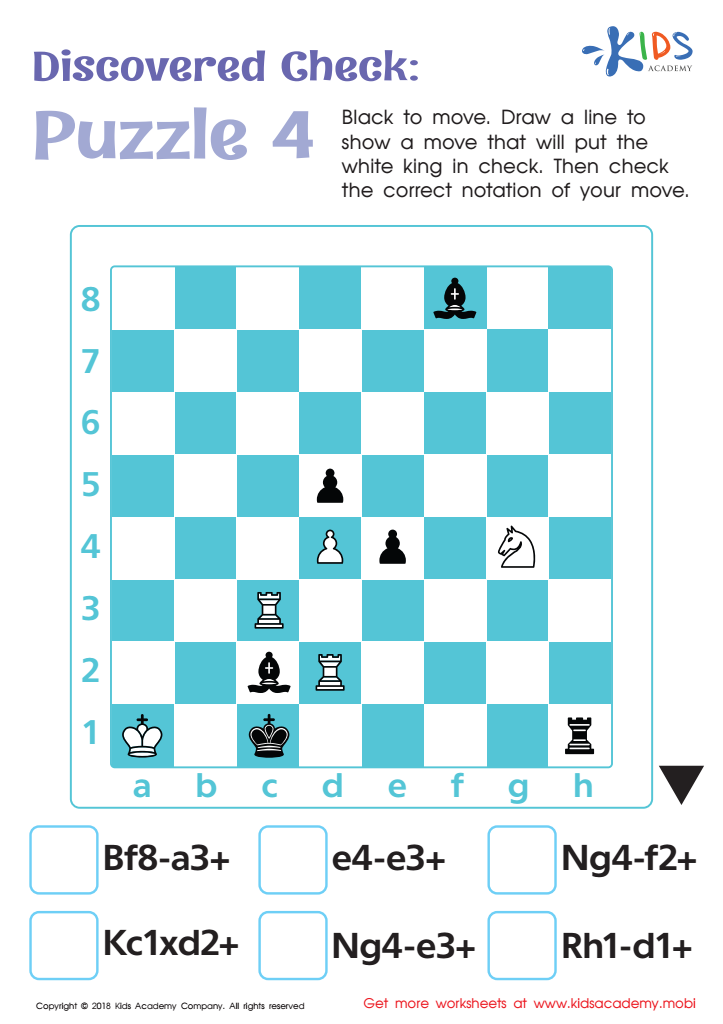
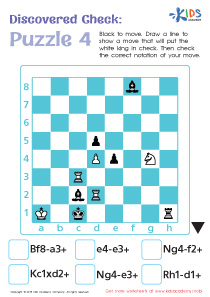
Discovered Check: Puzzle 4 Worksheet

Discovered Check: Puzzle 2 Worksheet
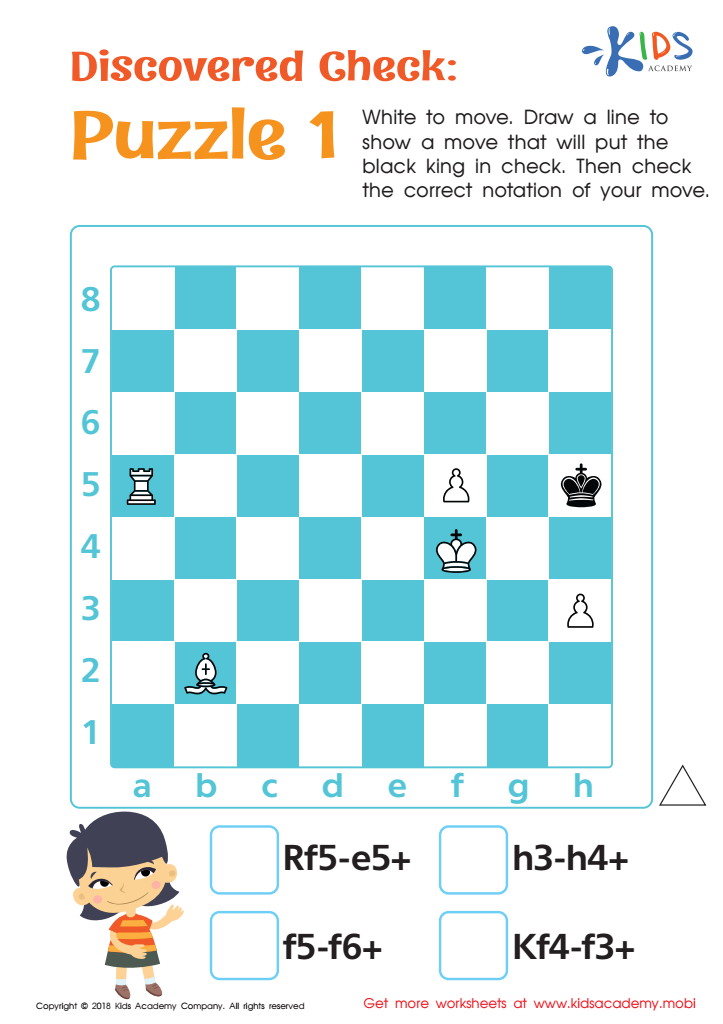
Discovered Check: Puzzle 1 Worksheet






Chess is more than just a game — it’s a powerful educational tool, especially for young learners aged 6-7. Understanding chess strategy at this age fosters critical thinking, enhances problem-solving skills, and promotes strategic planning. This cognitive development is crucial as it helps children learn how to think ahead, consider consequences, and make informed decisions.
Additionally, chess encourages patience and discipline. As children learn to navigate the complexities of the game, they also develop focus and resilience. These qualities are valuable not just in chess, but in classroom settings and everyday life. By engaging with chess, children are also exposed to lessons in sportsmanship and cooperative play, learning how to handle wins and losses gracefully.
Moreover, chess is an excellent way for parents and teachers to bond with children. Playing together can significantly boost a child's confidence and interest in strategic games, fostering a lifelong appreciation for learning. Teaching easy chess strategies to children also introduces them to mathematical concepts, enhancing their academic skills in a fun, engaging way. Overall, promoting chess among young learners lays the groundwork for cognitive skills that extend beyond the chessboard, contributing to their overall intellectual growth and personal development.