
Attention to Detail Easy Worksheets for Ages 6-7
5 filtered results
Difficulty Level
Grade
Age
-
From - To
Subject
Activity
Standards
Unlock your child's full potential with our "Attention to Detail Easy Worksheets for Ages 6-7." Specially crafted by educational experts, these engaging worksheets sharpen focus, enhance observational skills, and promote critical thinking. Designed to captivate young minds, each activity presents fun puzzles, matching games, and eye-catching images that encourage meticulousness. Perfect for use in classrooms or at home, our worksheets offer varied exercises that adjust to individual learning paces, ensuring children build a strong foundation in attention to detail while enjoying the process. Give your child a head start with our outstanding educational resources!
Favorites
With answer key
Interactive
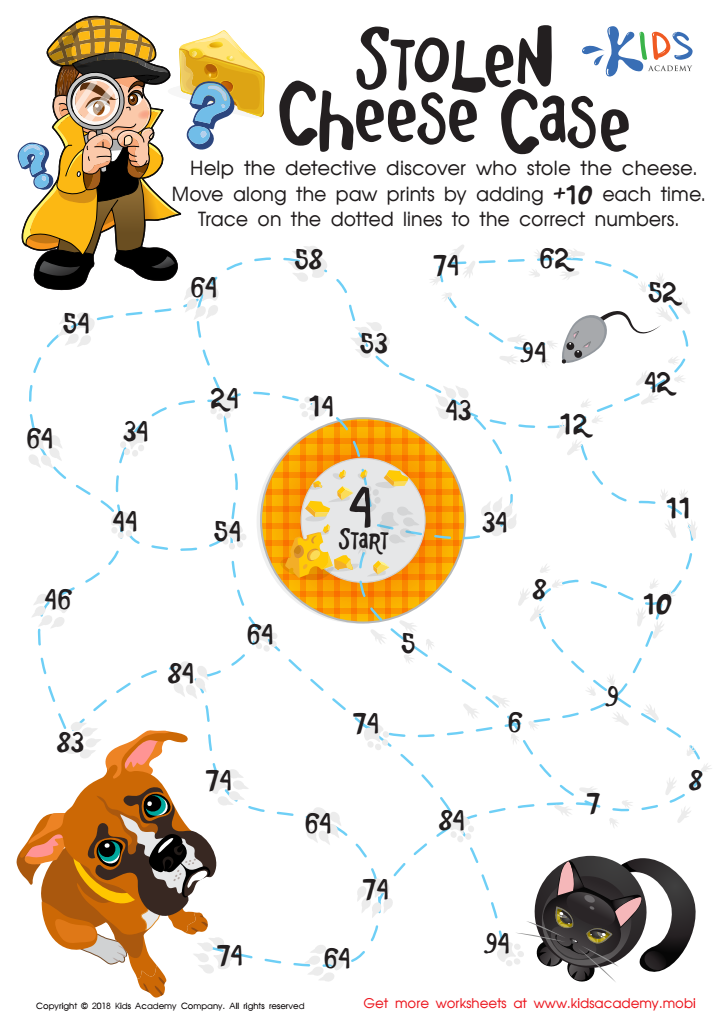
Stolen Cheese Case Maze Worksheet
Someone has stolen the cheese! Can your mathematician detective figure out who it is? Was it the dog, cat or mouse? Have them use traceable lines to skip count by 10 on this free PDF worksheet to solve the case. They'll be having fun and developing their skip-counting strategy at the same time!
 Assign to My Students
Stolen Cheese Case Maze Worksheet
Worksheet
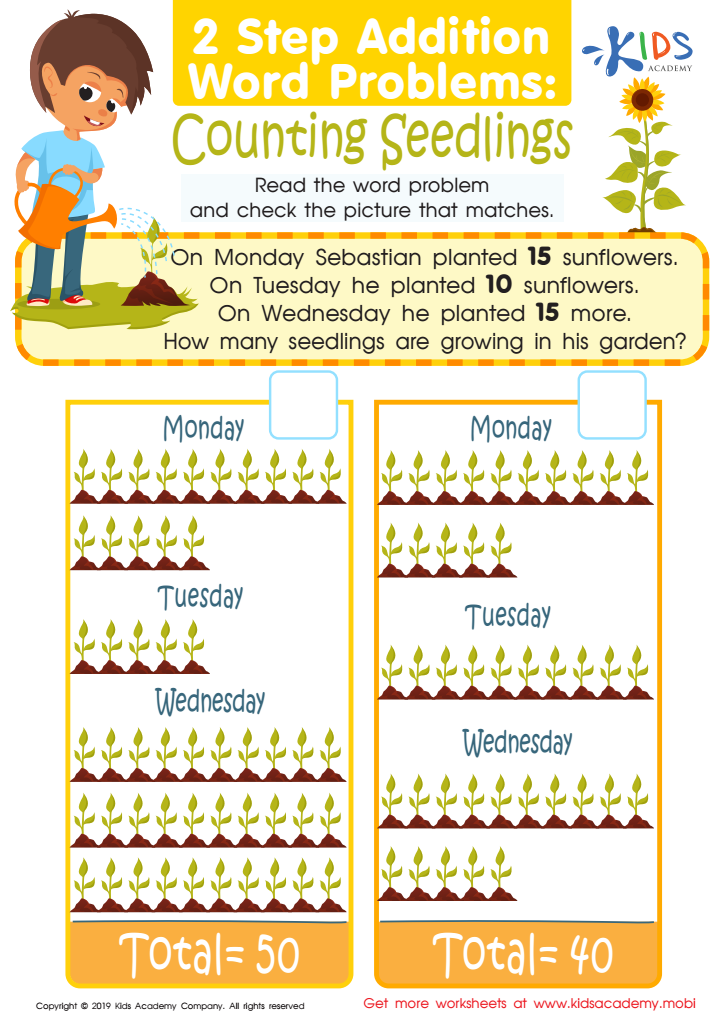
Counting Seedlings Worksheet
Understanding math word problems is key. Multiple steps can prove challenging - this free worksheet provides one-to-one picture representation to help kids solve multi-step addition word problems. Strengthen addition skills by choosing the matching picture to the answer.
Counting Seedlings Worksheet
Worksheet
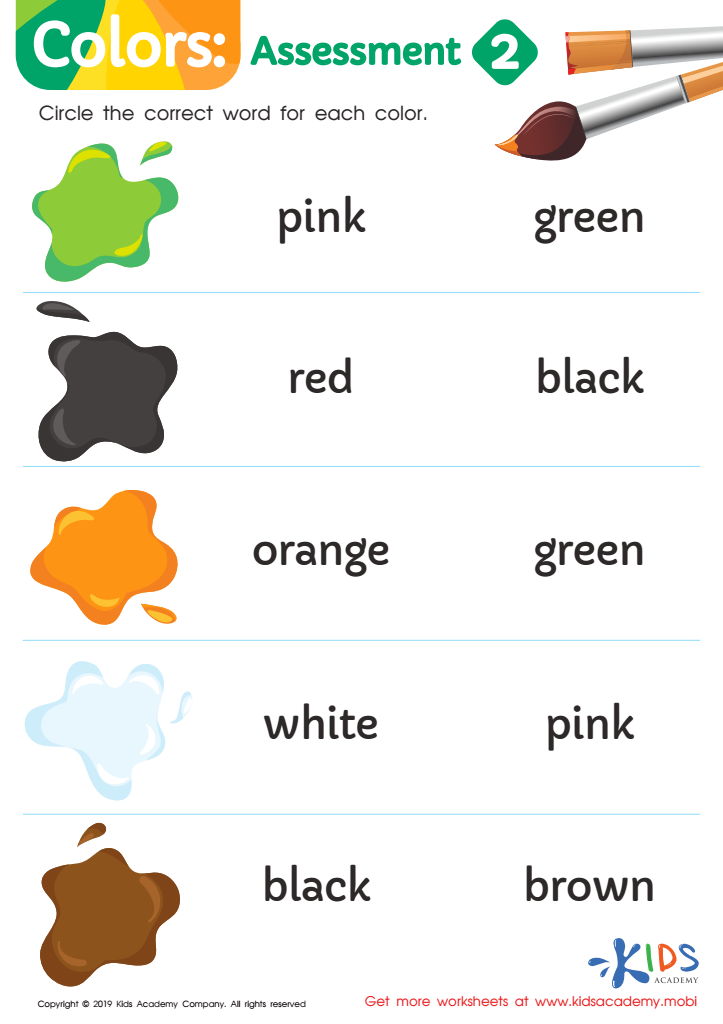
Colors: Assessment 2 Worksheet
Teach color words to young students to build fluency and confidence. Check knowledge with an assessment worksheet. Have students look at paint samples and circle the correct color word. This assessment helps parents and teachers measure a child’s accuracy when reading color words.
Colors: Assessment 2 Worksheet
Worksheet
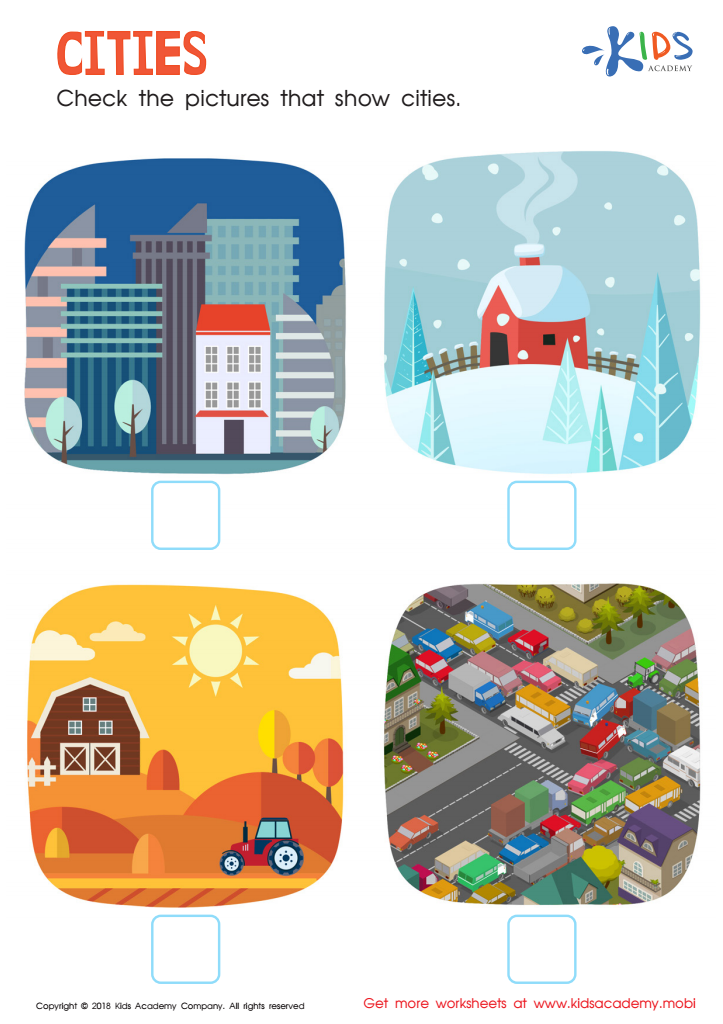
Cities Worksheet
This worksheet helps kids identify similarities and differences between communities. It offers four pictures of different places to live; country, city, etc. Kids use picture clues to determine which one is a city and can practice their geography and map skills. It's a great way for them to learn, allowing them easy success and reinforcement.
Cities Worksheet
Worksheet
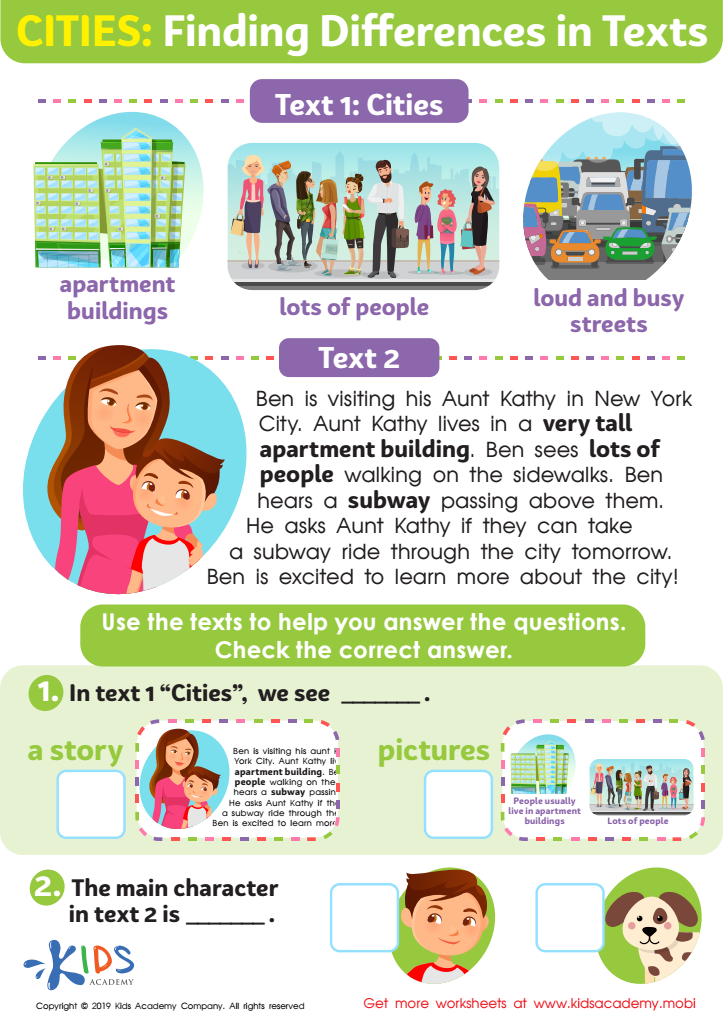
Cities: Finding Differences Worksheet
Critical thinking is essential for reading comprehension. New readers must be able to identify the key information in different text formats. This worksheet helps children learn what they might find in cities and how to differentiate between stories and pictures.
Cities: Finding Differences Worksheet
Worksheet
Join Kids Academy for Free
Who is primarily going to use this learning content?







Attention to detail is a crucial skill for children aged 6-7, as it lays the foundation for academic success and overall development. At this age, youngsters are forming habits that will stick with them throughout their education and into adulthood, making it vital for parents and teachers to nurture this trait early on.
Focusing on the finer points helps children learn more effectively. When they pay attention to details in their schoolwork, they are more likely to understand instructions, solve problems accurately, and complete tasks successfully. This attention can lead to better grades and increased confidence, motivating them to tackle more complex challenges.
Moreover, cultivating attention to detail enhances their ability to concentrate. In today’s gadget-filled world, maintaining focus can be challenging. Helping children develop this skill will enable them to ignore distractions and dedicate themselves fully to the task at hand, resulting in higher quality work.
Attention to detail also plays a crucial role in social interactions and safety. Noticing subtle cues, such as a friend's facial expressions or signs of danger in their environment, enables children to respond appropriately, demonstrating empathy and staying safe.
By fostering attention to detail early on, parents and teachers support children’s cognitive, social, and emotional growth, setting them up for a bright future.








