Spatial awareness Easy Worksheets for Ages 6-7
4 filtered results
-
From - To
Cultivate essential spatial awareness in children aged 6-7 with our engaging and easy-to-understand worksheets. These expertly designed activities make learning enjoyable while boosting spatial skills crucial for math, reading, and everyday tasks. Kids Academy offers a variety of interactive printables that help young learners grasp concepts like shapes, patterns, and positions. Perfect for both classroom and home, our worksheets encourage problem-solving and critical thinking in a fun, practical way. Empower your child’s learning journey today with Kids Academy’s spatial awareness worksheets, specifically crafted to build a strong foundation for future academic success.
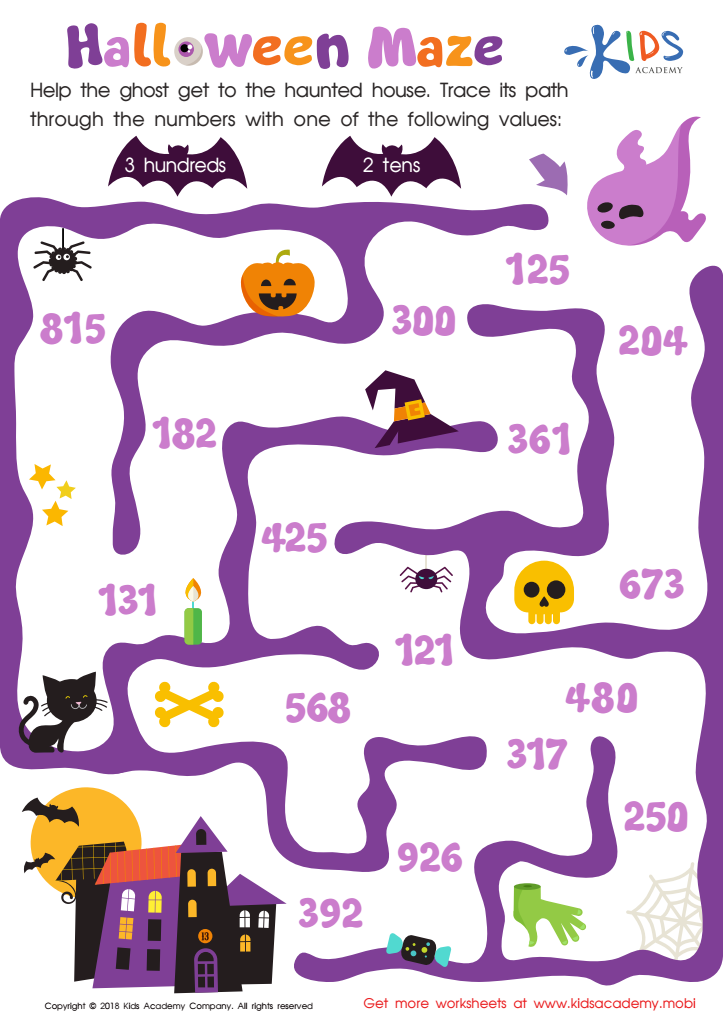
Place Value: Halloween Maze Worksheet
 Assign to My Students
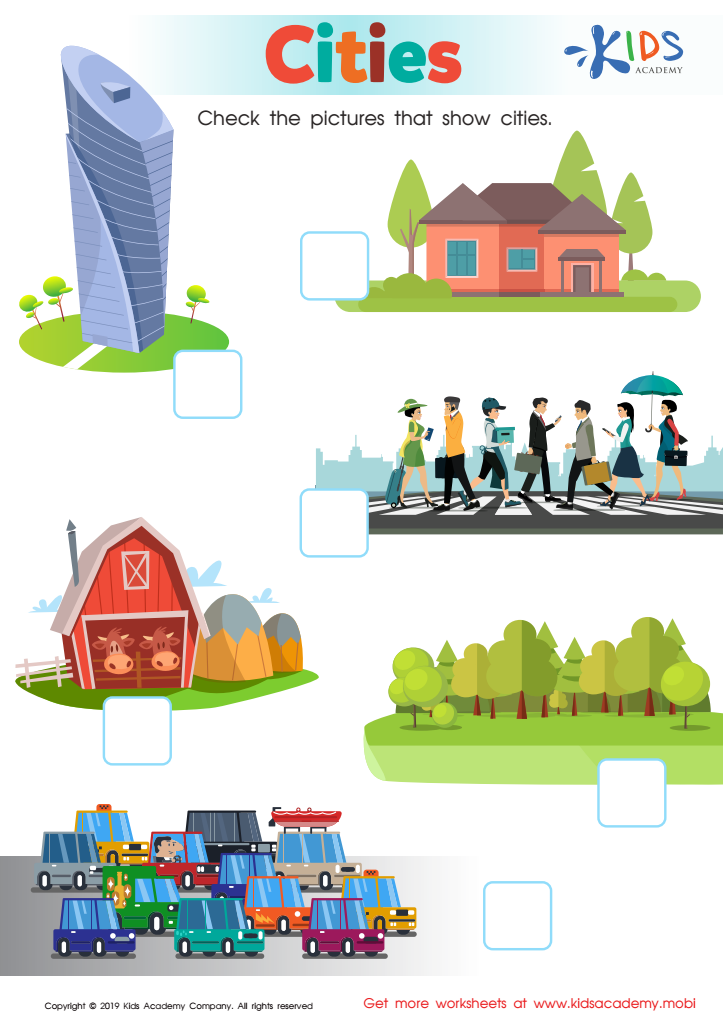
Cities Worksheet
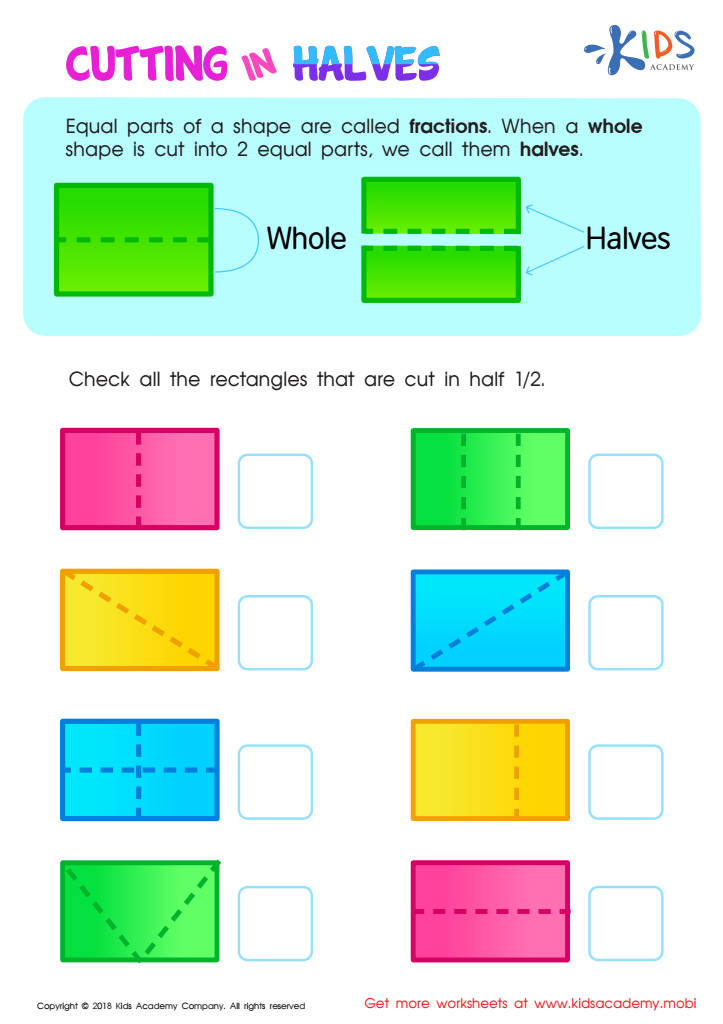
Cutting in Halves Worksheet
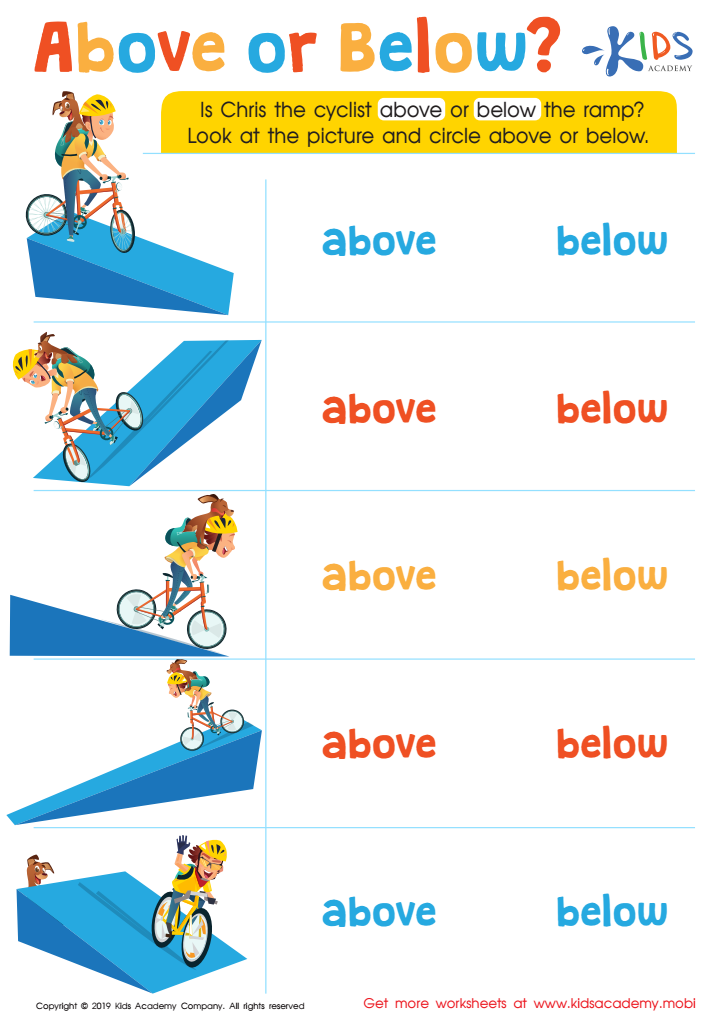
Above or Below? Worksheet








Spatial awareness is a critical developmental milestone for children aged 6-7, significantly influencing both academic and everyday activities. For parents and teachers, fostering this skill is essential for several reasons.
Firstly, strong spatial awareness helps kids understand and navigate the world around them. It improves their ability to judge distances, understand relationships between objects, and efficiently move through spaces. This foundational skill supports safer physical coordination in daily tasks like riding a bike, playing sports, or simply maneuvering through a crowded room.
Secondly, spatial awareness is a cornerstone of early mathematical concepts. Children use spatial reasoning skills to learn geometry, measure objects, and solve puzzles. For instance, recognizing patterns, shapes, and sizes directly ties into mathematical understanding, enhancing foundational learning in STEM (Science, Technology, Engineering, and Math).
Moreover, literacy and handwriting benefit from spatial skills. Knowing how to properly align letters and comprehend the spatial orientation of text aids reading and writing. Children who develop good spatial awareness often find it easier to organize their work and succeed in school.
Lastly, spatial awareness fosters creativity and critical thinking. Engaging in activities such as drawing, building with blocks, or navigating mazes increases problem-solving abilities and imaginative play, essential for overall cognitive development.
Thus, encouraging spatial awareness in young children not only aids in their current learning but sets a foundation for future academic and personal achievements.








