Shape Recognition Easy 2D Shapes Worksheets for Ages 6-7
6 filtered results
-
From - To
Discover our engaging "Shape Recognition Easy 2D Shapes Worksheets designed for Ages 6-7." These worksheets provide a fun and interactive way for young learners to identify and understand basic 2D shapes such as circles, squares, triangles, and rectangles. By utilizing colorful graphics and straightforward activities, children will enhance their shape recognition skills while boosting their confidence in math. Perfect for classroom use or at-home practice, these worksheets align with early educational standards and cater to varied learning styles. Give your child the tools they need to succeed in math with our easy-to-use and playful shape recognition worksheets!
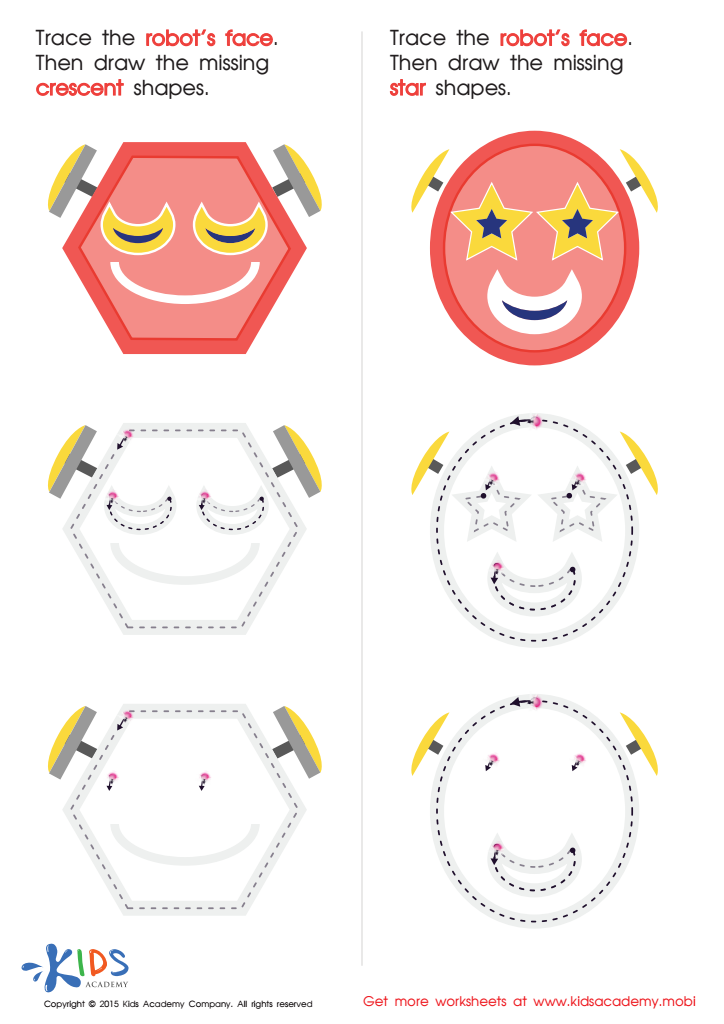
Composing a Robot's Face of Crescents And Stars Worksheet
 Assign to My Students







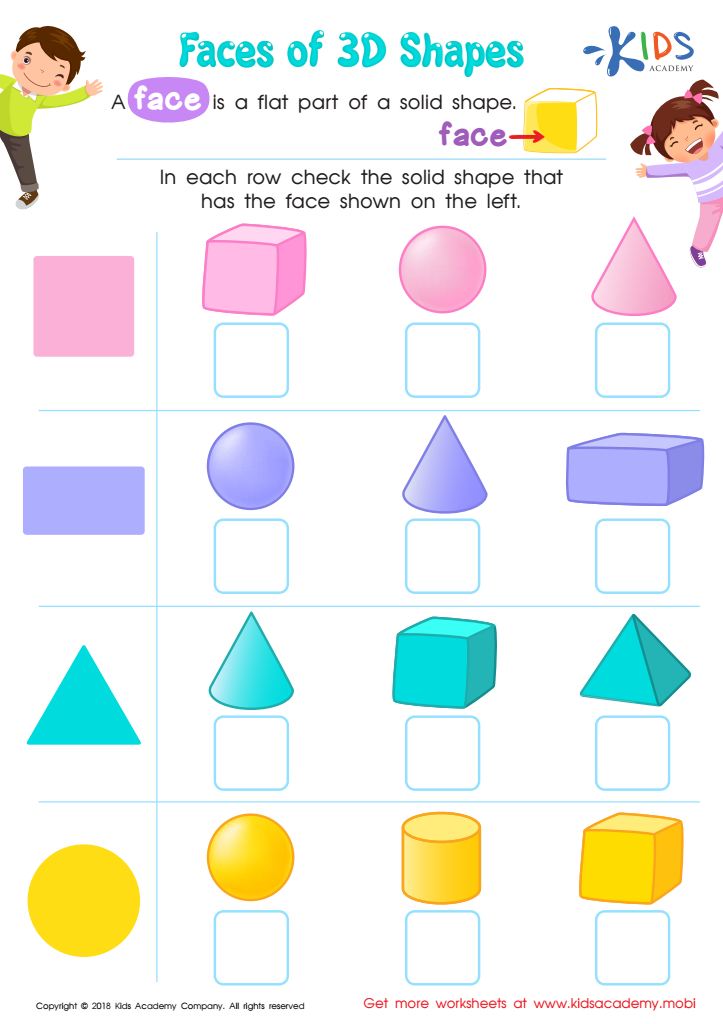
Faces of 3D Shapes Worksheet
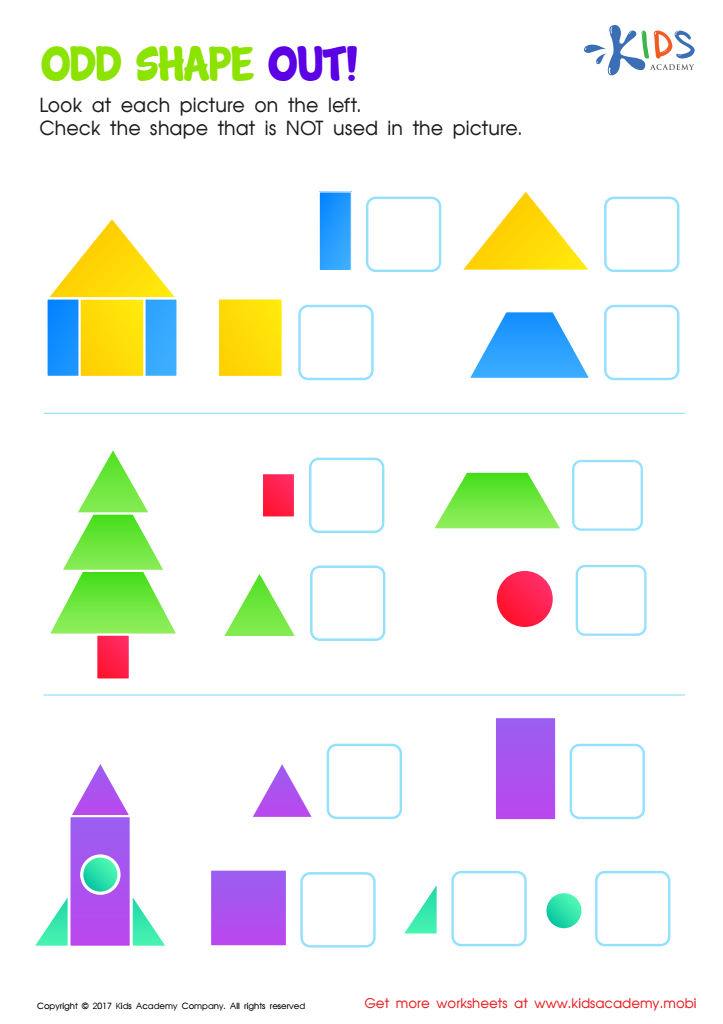
Odd Shape Out Worksheet for Grade 1
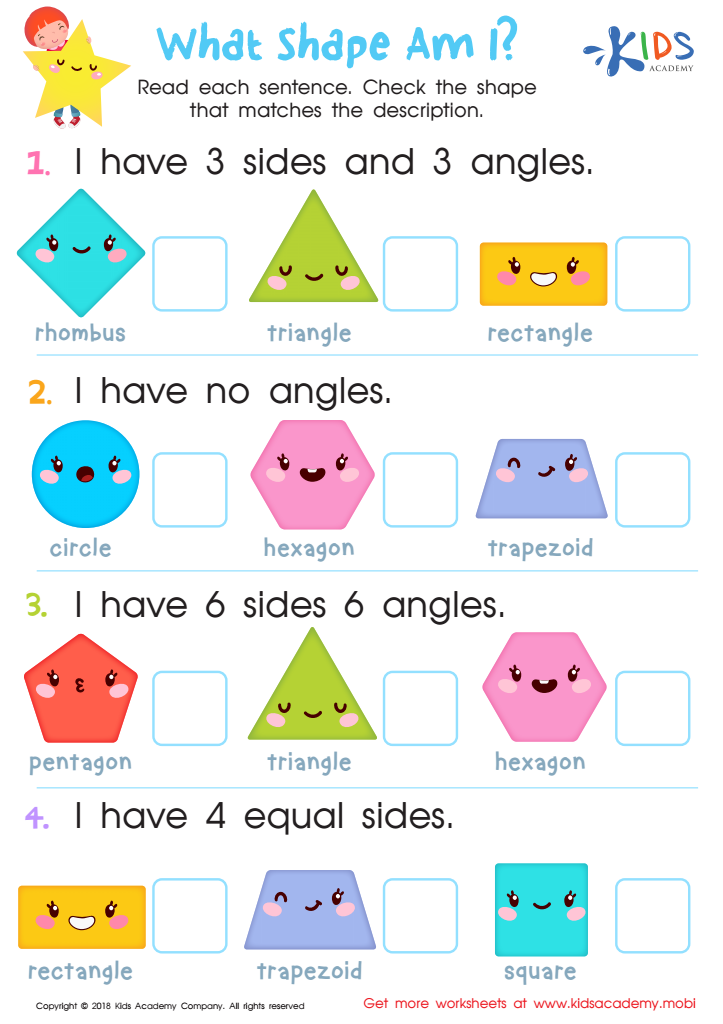
What Shape Am I? Worksheet
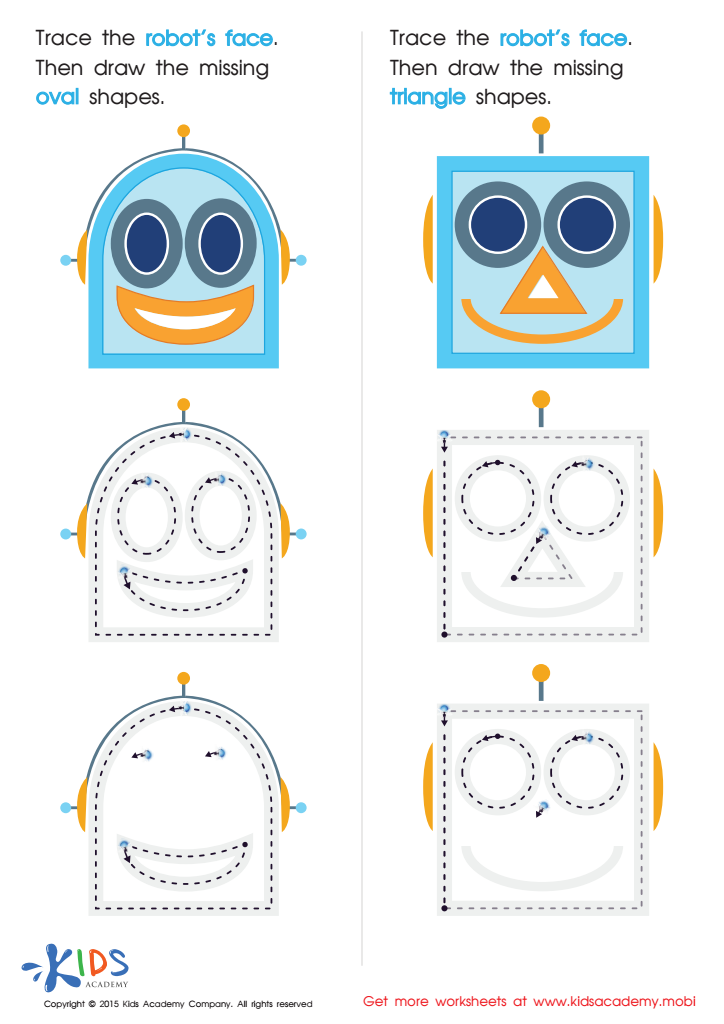
Drawing Ovals And Triangles with Fun Printable
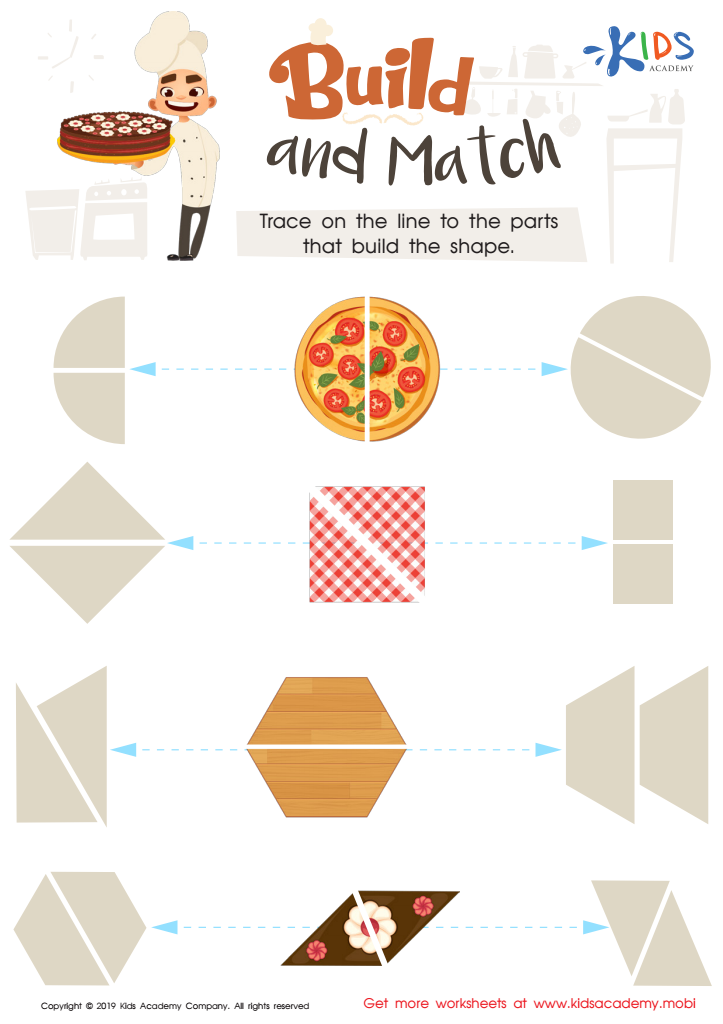
Build and Match Worksheet








Shape recognition is a fundamental skill for children aged 6-7, laying the groundwork for various cognitive and problem-solving abilities. At this developmental stage, recognizing easy 2D shapes—such as circles, squares, triangles, and rectangles—enhances spatial awareness, which is crucial for future math and geometry tasks. Understanding shapes helps young learners make sense of their environment and promotes critical thinking skills.
Moreover, shape recognition is integral to numerous subjects. In mathematics, it connects directly with patterns, symmetries, and measurement concepts. In art, children learn to recognize and create designs, fostering creativity. It also enhances language skills, as children learn to describe characteristics and properties of shapes.
Parents and teachers should care because effective shape recognition boosts a child's confidence and fosters a love for learning. Engaging activities—like drawing, puzzles, and games—can make learning shapes enjoyable and impactful. Furthermore, it sets a strong foundation for STEM (science, technology, engineering, and mathematics) learning, which is increasingly vital in today’s world. By nurturing this skill, we empower children to develop essential cognitive abilities needed for academic and personal success. Thus, emphasizing shape recognition is vital for holistic early childhood development.