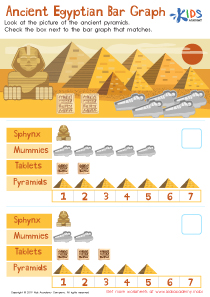
Animal recognition Easy Math Worksheets for Ages 6-7
6 filtered results
-
From - To
Introducing our "Animal Recognition Easy Math Worksheets for Ages 6-7," designed to make learning fun and engaging! These delightful worksheets combine basic math skills with animal recognition, perfect for young learners. Children will practice counting, addition, and subtraction while identifying and naming a variety of animals. Our vibrant, kid-friendly designs keep students excited and motivated. Ideal for both classroom and home use, these worksheets provide a seamless integration of math and science, fostering a well-rounded educational experience. Boost your child's confidence and skills with these enjoyable and educational worksheets! Explore our collection today!
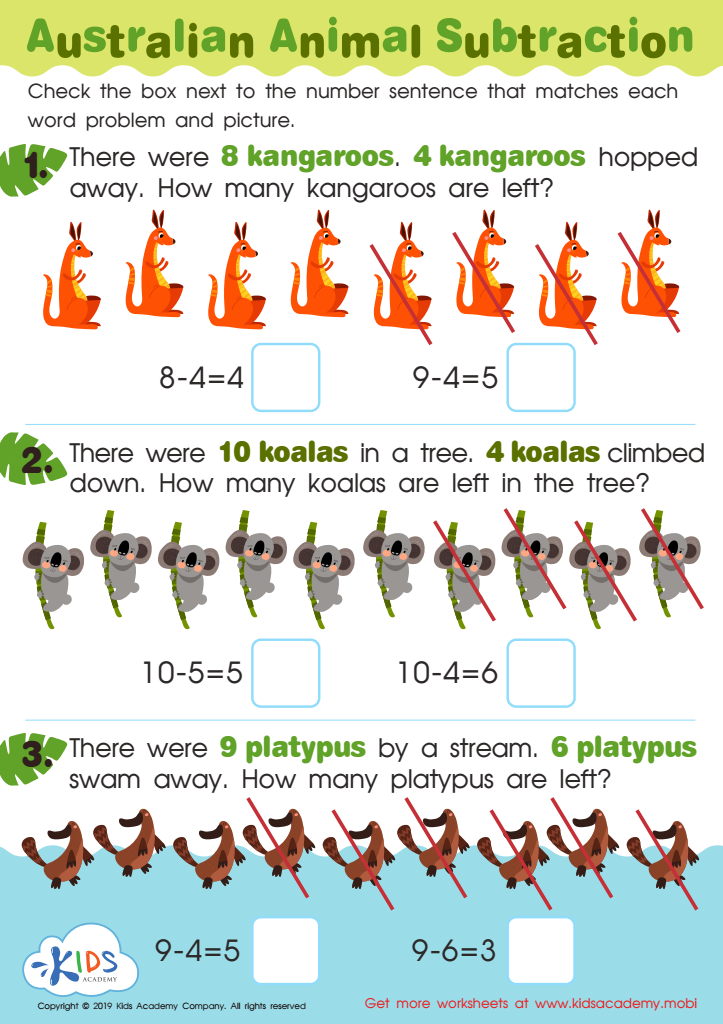
Australian Animal Subtraction Worksheet
 Assign to My Students
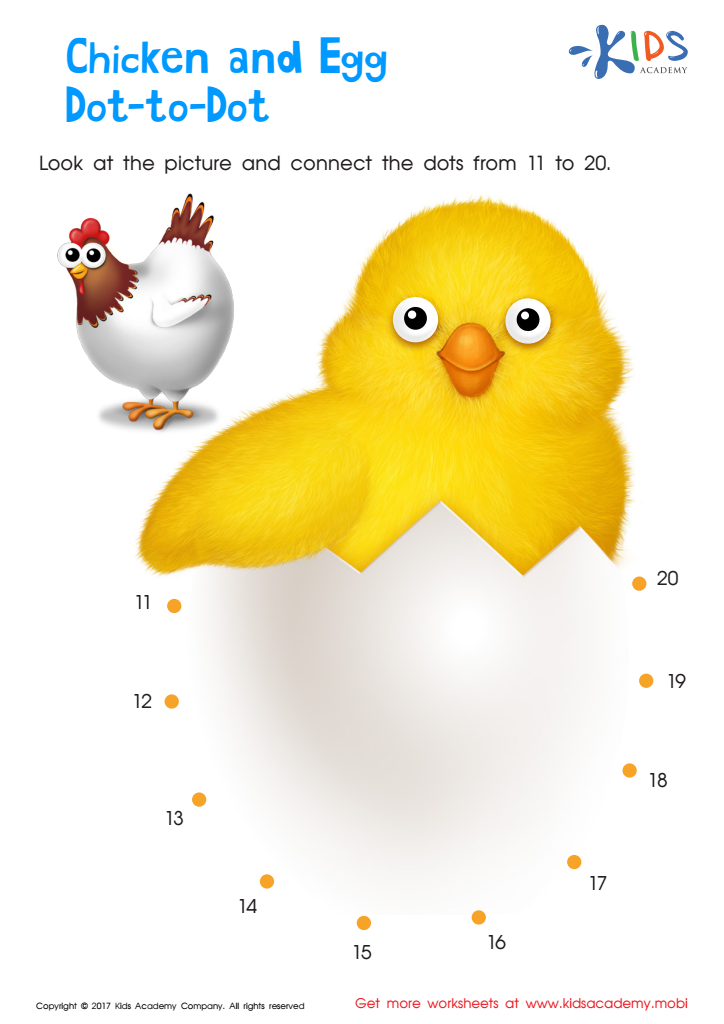
Ordering 11–20: Chicken & Egg Dot–to–dot Worksheet
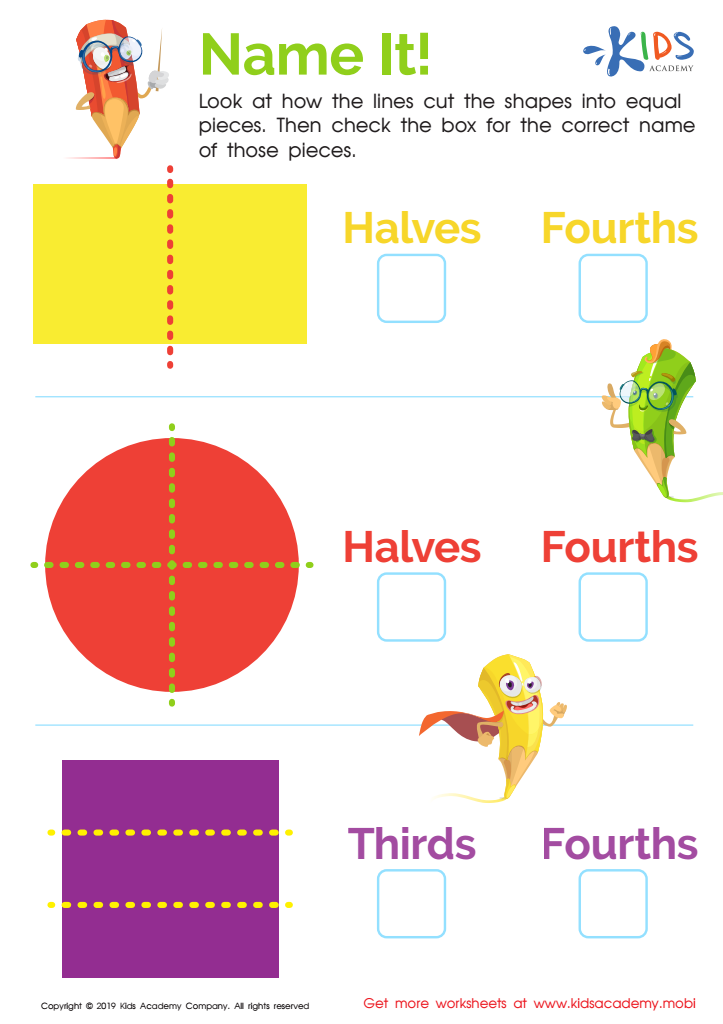
Name It! Worksheet
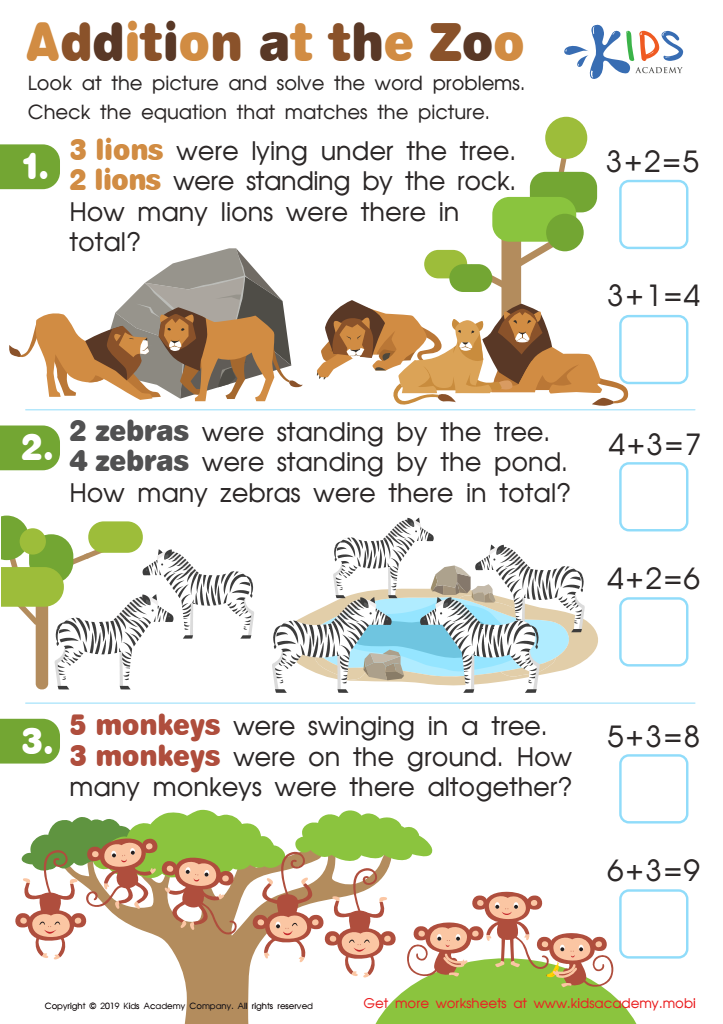
Addition at the Zoo Worksheet
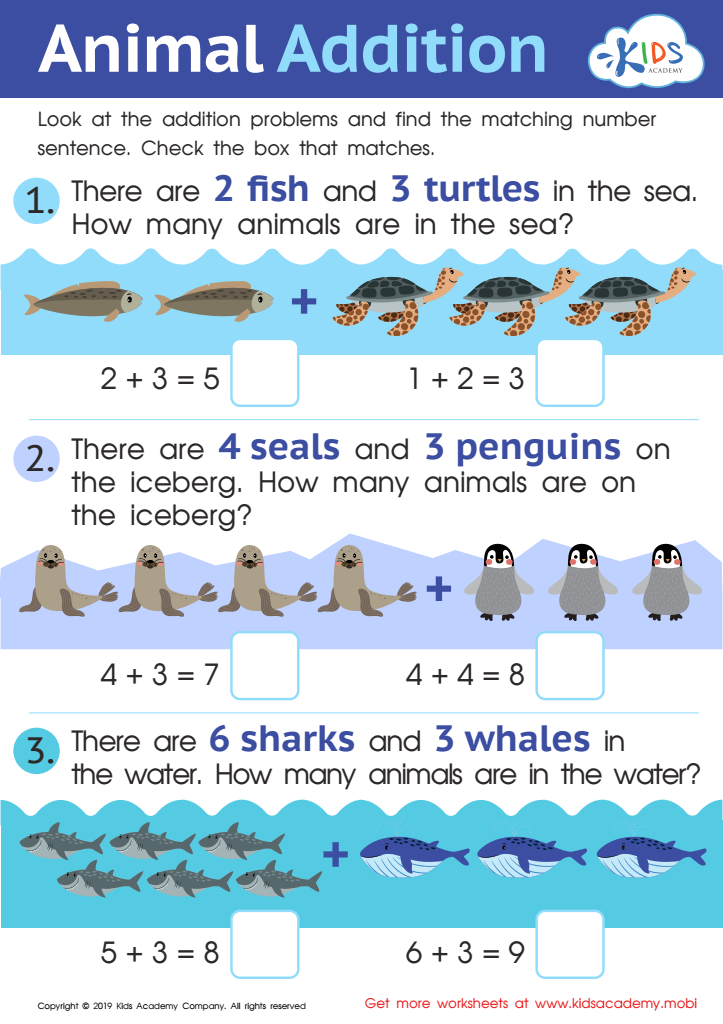
Animal Addition Worksheet
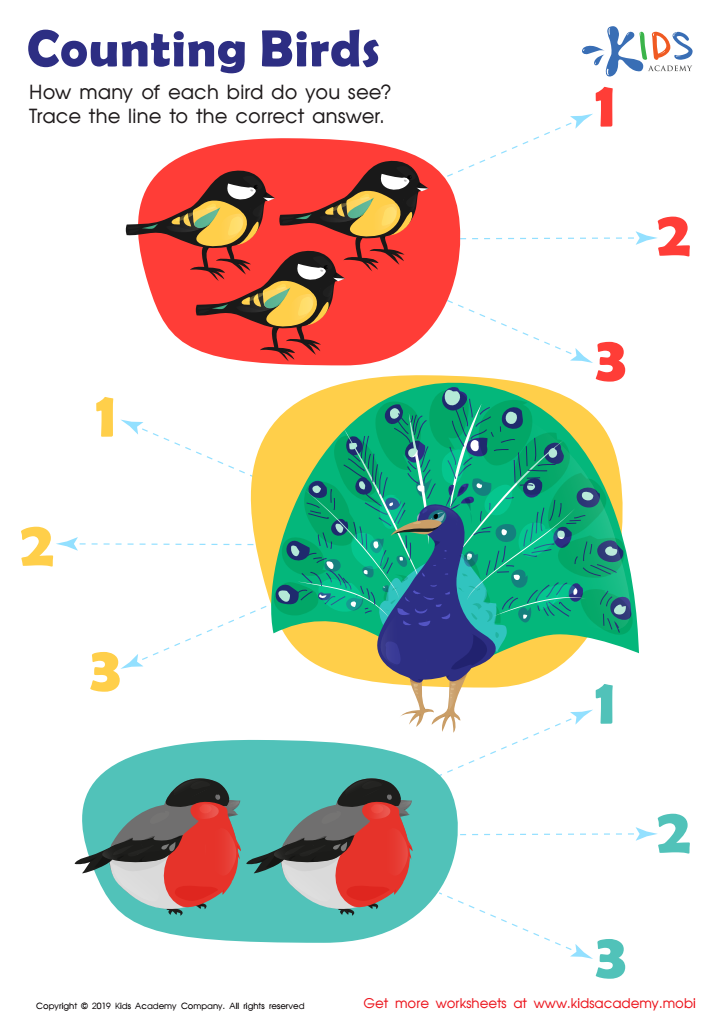
Counting Birds Worksheet




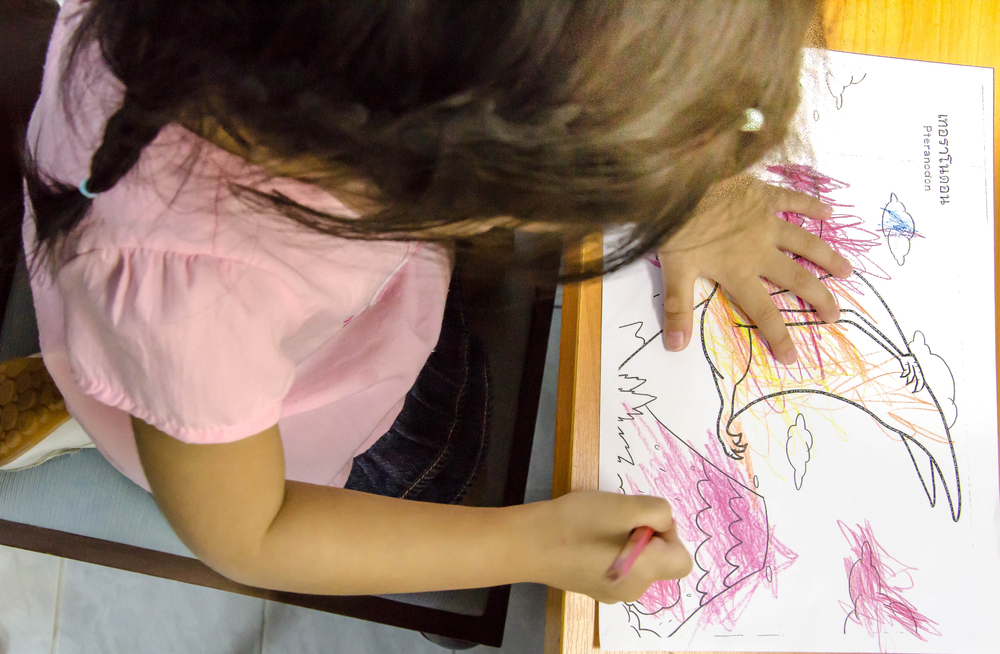


Parents and teachers should care about animal recognition and easy math for ages 6-7 because these activities lay essential foundations for a child's cognitive and educational development. At this age, children are highly receptive and curious about the world around them. Introducing them to animal recognition helps sharpen their observational skills, improves their memory, and enhances their understanding of living beings and their habitats.
Animal-themed easy math activities blend learning with fun, capturing children's interest and making abstract concepts more concrete. For example, counting animals, adding or subtracting them, and categorizing them into groups foster basic arithmetic skills in an engaging context. These skills are crucial as they serve as the groundwork for more advanced mathematical tasks they will encounter later.
Furthermore, integrating animals into math lessons encourages interdisciplinary learning, connecting science and math, which can lead to a more comprehensive educational experience. This holistic approach ensures that children see learning as interconnected rather than isolated subjects, promoting critical thinking and problem-solving skills.
Lastly, early success in these areas can boost a child's confidence, motivating them to approach future learning activities with enthusiasm and a positive attitude. As such, focusing on animal recognition and easy math sets the stage for a lifetime of educational achievement and curiosity.