Counting skills Easy Tracing Numbers Worksheets for Ages 6-7
4 filtered results
-
From - To
Enhance your child's counting skills with our Easy Tracing Numbers Worksheets, designed specifically for ages 6-7! These engaging printables provide fun and interactive ways for young learners to practice number formation while strengthening their understanding of numerals. Each worksheet encourages repetition and creative expression, making learning enjoyable. Kids will trace, color, and complete various exercises that reinforce their counting abilities and improve their fine motor skills. Perfect for home or classroom use, our worksheets fit seamlessly into your child's educational journey. Discover the joy of learning numbers through playful activities and watch your child's confidence soar as they master counting!
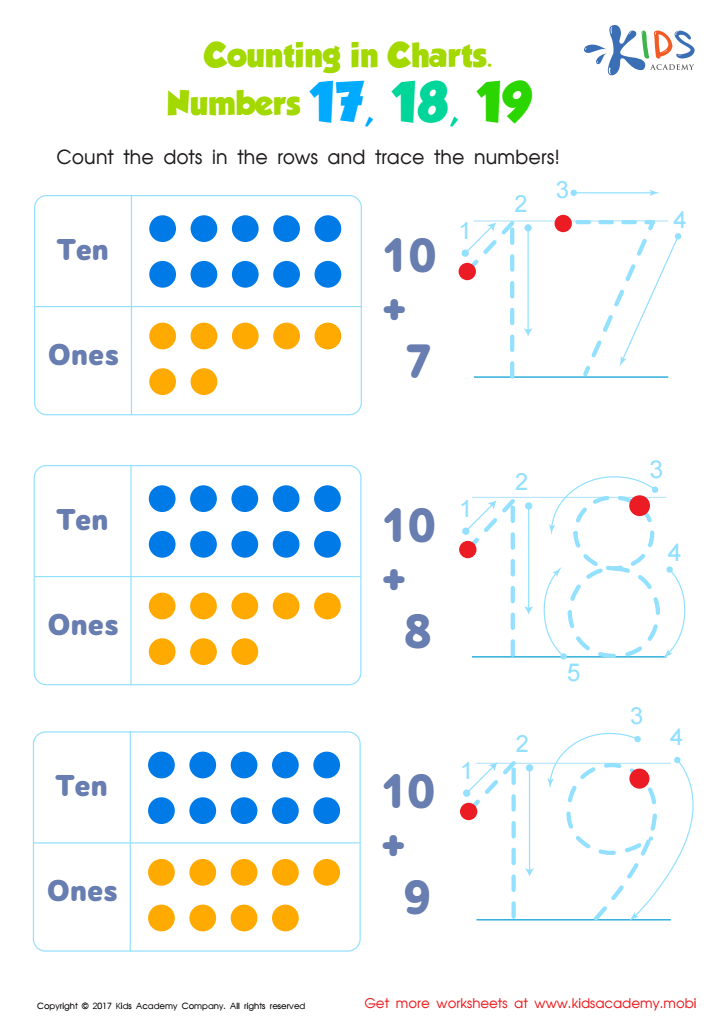
Kindergarten Number Tracing: Counting in Charts Worksheet
 Assign to My Students
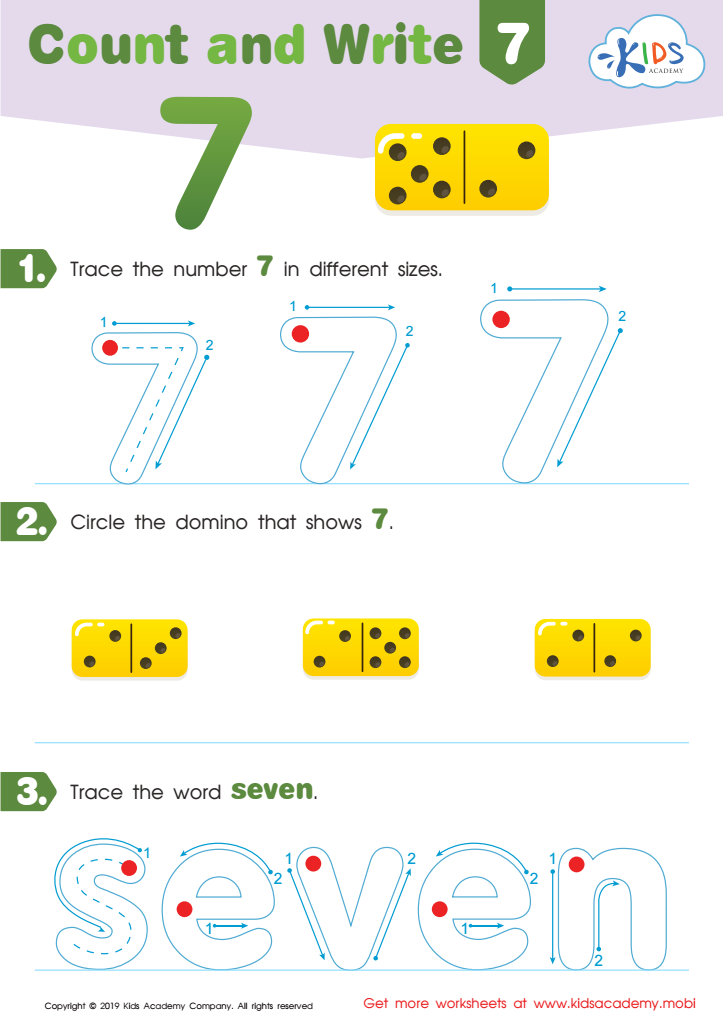
Count and Write 7 Worksheet
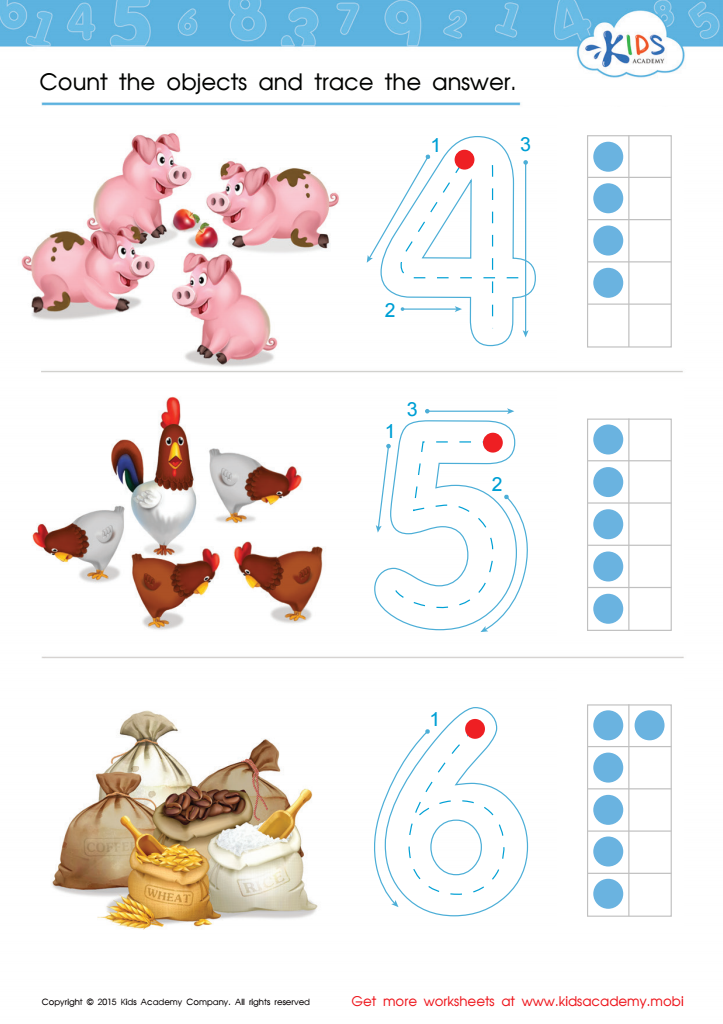
Count and Trace 4 – 6 Worksheet
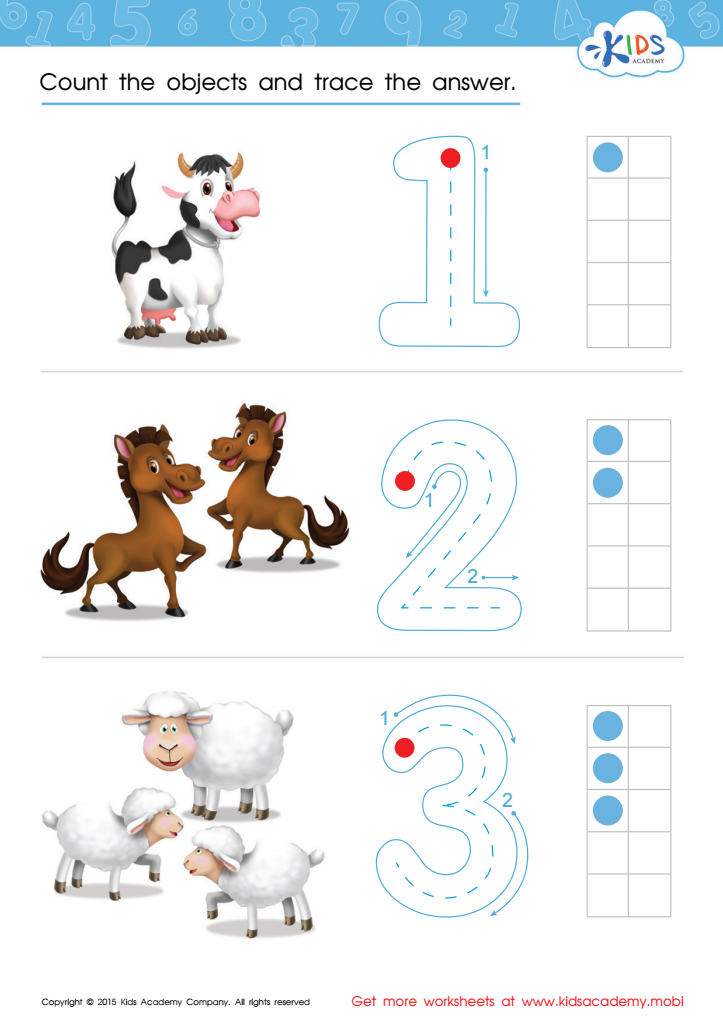
Count and Trace 1 – 3 Worksheet





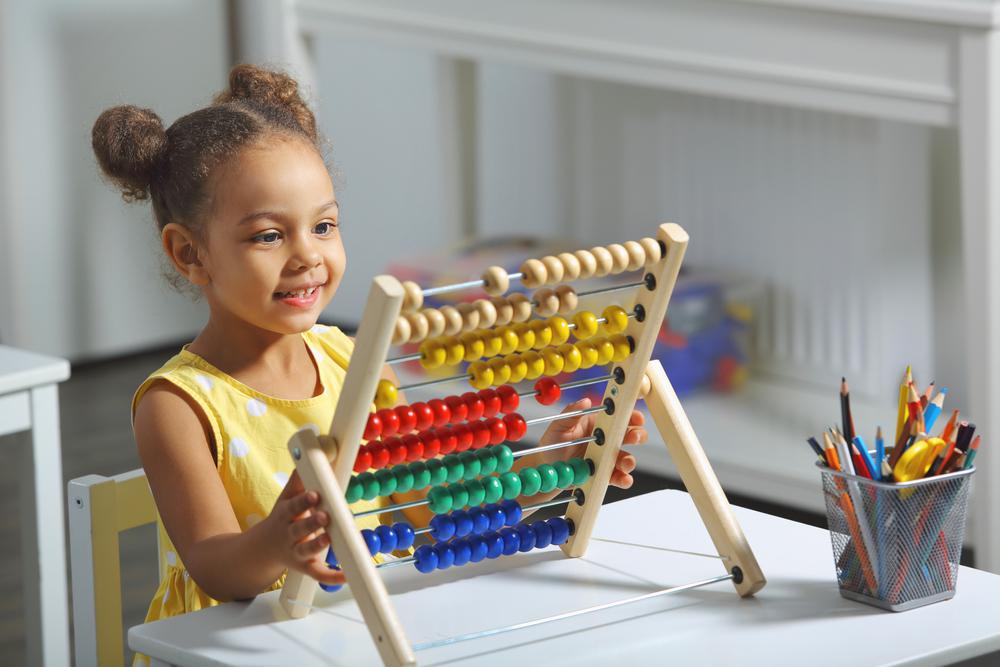


Counting skills and easy tracing numbers are essential components of early childhood education for children aged 6-7. Research emphasizes that foundational numeracy skills are crucial for children's overall academic development. By focusing on counting and number tracing, parents and teachers provide children with the tools to understand basic mathematical concepts, which serve as a springboard for more advanced topics.
Mastering these skills enhances children's confidence and independence in their learning journey. When children engage in tracing numbers, they develop fine motor skills, hand-eye coordination, and cognitive abilities, fostering a stronger relationship between physical skill and numerical understanding.
Furthermore, counting lays the groundwork for critical thinking and problem-solving. As children learn to relate numbers to quantities, they begin to understand concepts that underpin real-world scenarios, such as budgeting, time, and measurement.
Involving parents in this process can also create a positive and engaged learning environment, reinforcing what children practice in school. Overall, focusing on counting skills and tracing numbers can significantly impact a child's educational progression and instill a love for math that continues into later years. By prioritizing these early math skills, we invest in a child's future success and competence in various disciplines.