Vocabulary expansion Easy Reading Fiction Worksheets for Ages 6-7
5 filtered results
-
From - To
Discover our engaging "Vocabulary Expansion Easy Reading Fiction Worksheets" designed specifically for children ages 6-7. These worksheets promote language development by combining fun and imagination through captivating stories. Each activity focuses on enhancing vocabulary skills, helping young readers understand and articulate their thoughts effectively. With colorful illustrations and age-appropriate content, students will find learning enjoyable and interactive. These worksheets not only support comprehension but also encourage critical thinking as children explore new words in context. Ideal for classrooms or home learning, our resources foster a love for reading while building a strong foundation in language arts. Start expanding your child's vocabulary today!
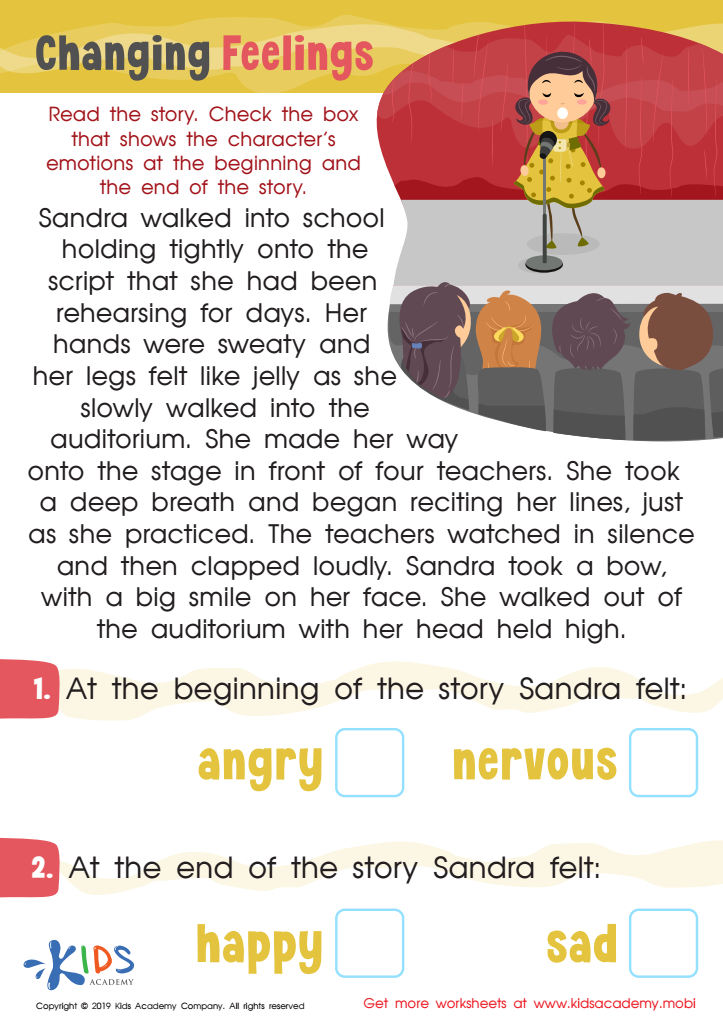
Changing Feelings Worksheet
 Assign to My Students
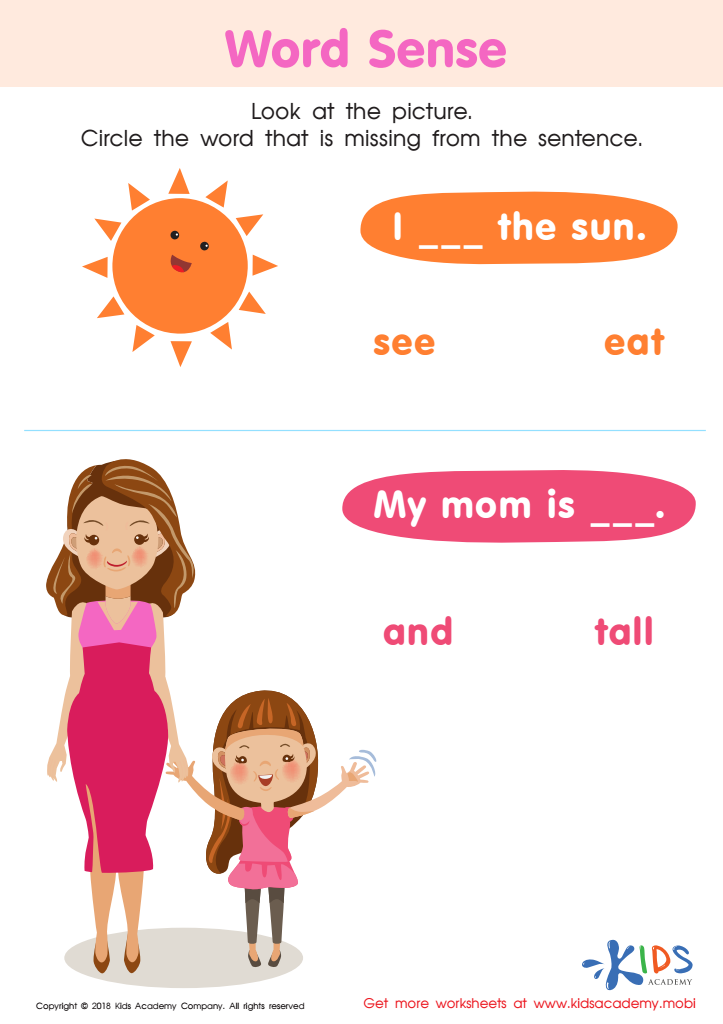
Word Sense Worksheet
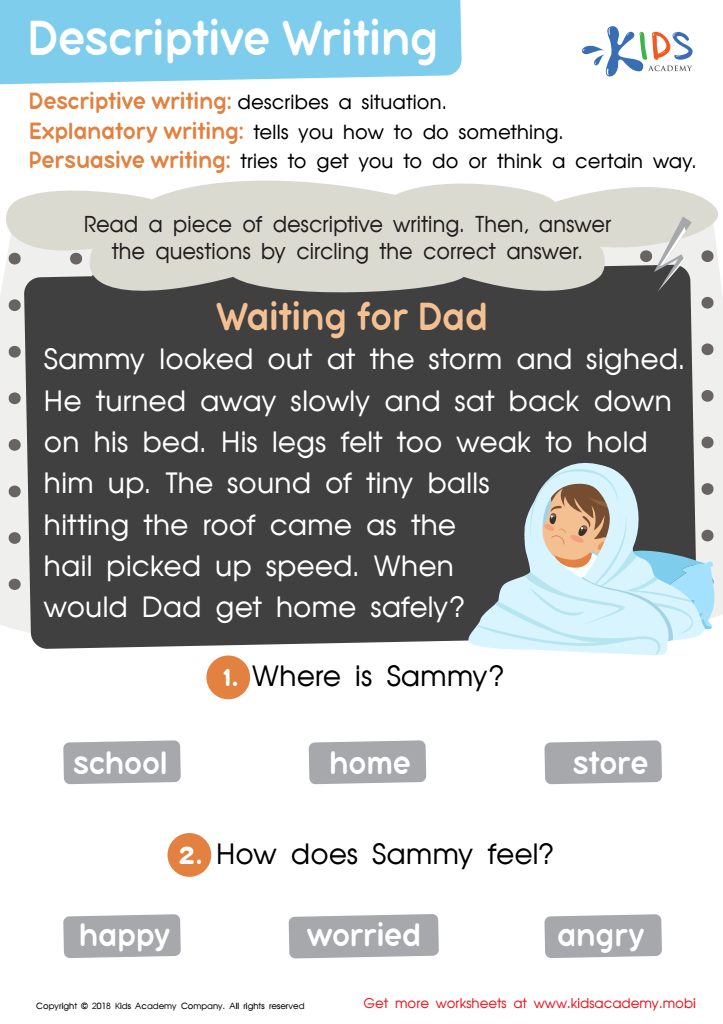
Descriptive Writing Worksheet: Part 2
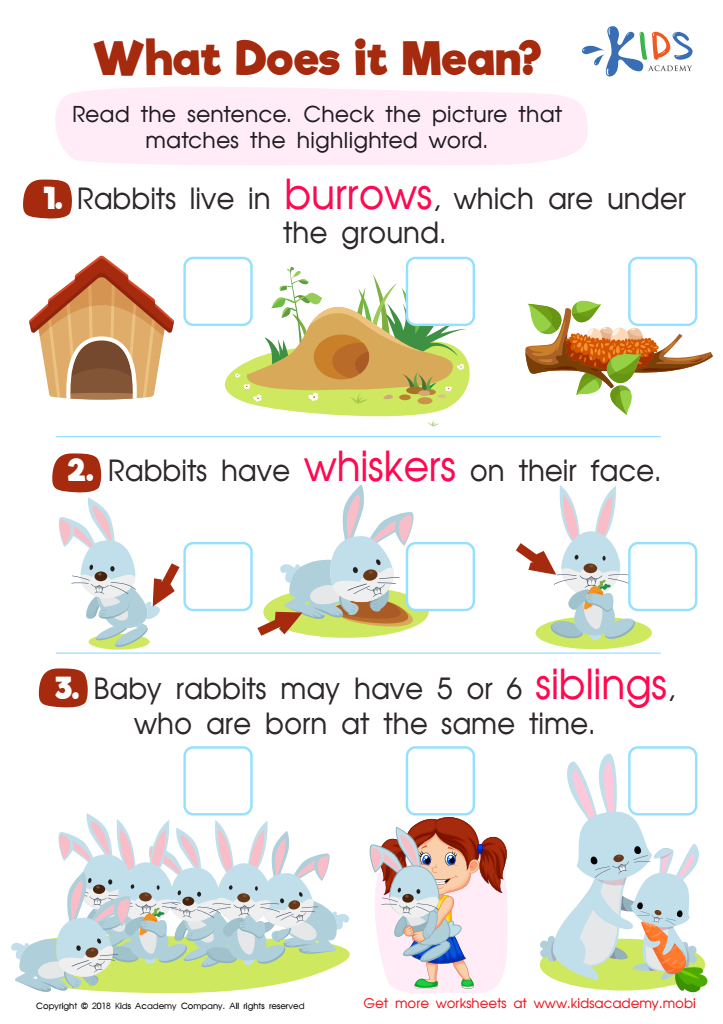
What Does It Mean? Worksheet
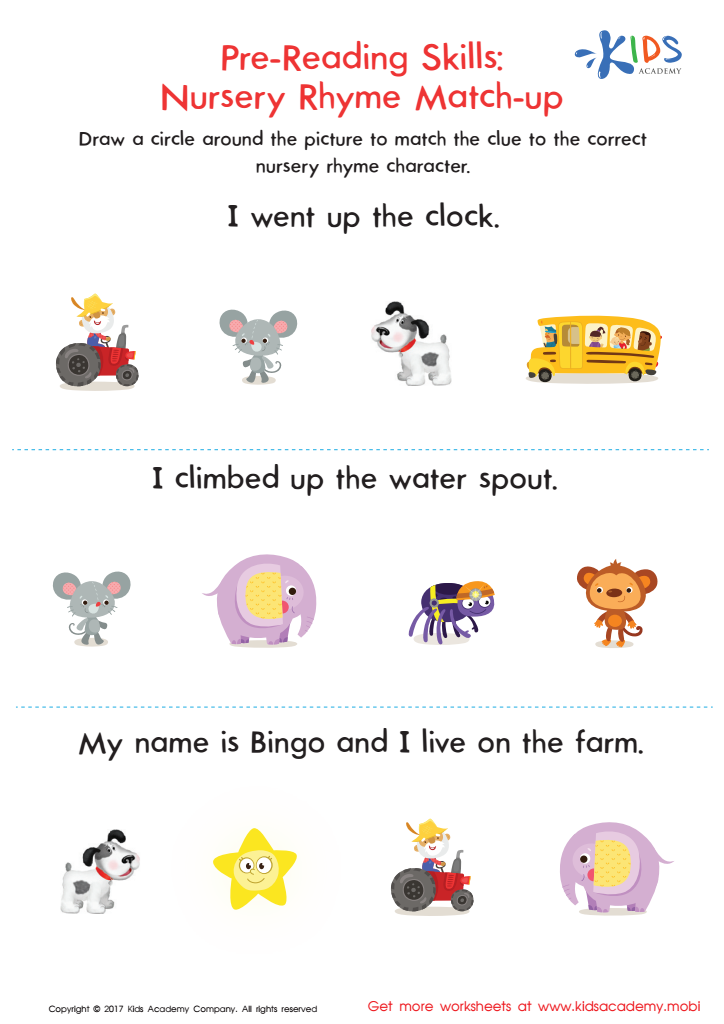
Nursery Rhyme Match–Up Worksheet






.jpg)

Vocabulary expansion is crucial for children aged 6-7, as it directly impacts their reading, writing, and overall communication skills. Easy reading fiction tailored for this age group plays a vital role in making vocabulary learning engaging and enjoyable. When children are exposed to a rich variety of words in context, they are more likely to understand their meanings and applications.
Parents and teachers should prioritize easy fiction because it provides relatable stories and characters that resonate with young readers, sparking interest and motivation. As children navigate through the text, they naturally encounter new vocabulary, which can be reinforced through discussion and targeted activities.
Moreover, early vocabulary development sets the foundation for future literacy skills and academic success. Children with a broad vocabulary are more capable of expressing their thoughts and understanding complex concepts later in life. Engaging with easy reading fiction can also enhance listening and speaking skills, fostering a love for reading that can last a lifetime.
In summary, by prioritizing vocabulary expansion through easy reading fiction, parents and teachers not only support immediate literacy development for 6-7-year-olds but also help cultivate confident, articulate individuals prepared for future academic challenges.