Chess strategy understanding Easy Worksheets for Ages 6-8
3 filtered results
-
From - To
Unlock the world of chess strategy with our engaging easy worksheets designed specifically for children ages 6-8! These resources introduce young learners to essential chess concepts through fun exercises that promote critical thinking and problem-solving skills. Our worksheets cover basic strategies, piece movement, and tactics, all presented in an age-appropriate manner to keep kids excited about learning. Perfect for classroom enrichment or at-home practice, these worksheets help build a solid foundation in chess while enhancing cognitive skills. Get started today and watch your child's confidence and strategic thinking flourish on and off the chessboard!
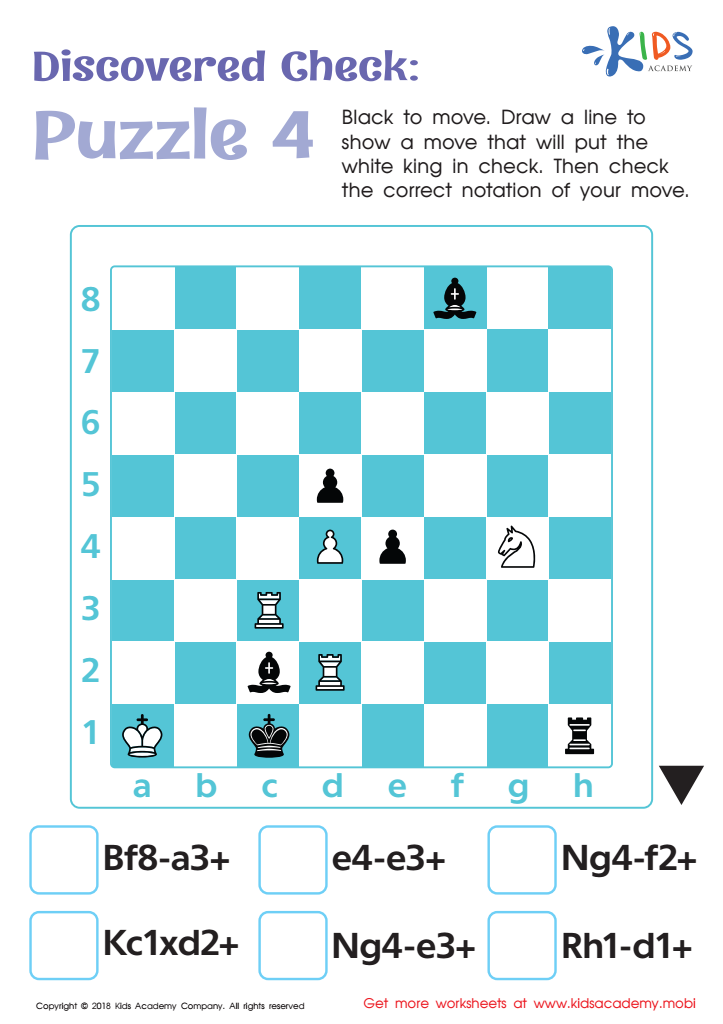
Discovered Check: Puzzle 4 Worksheet

Discovered Check: Puzzle 2 Worksheet
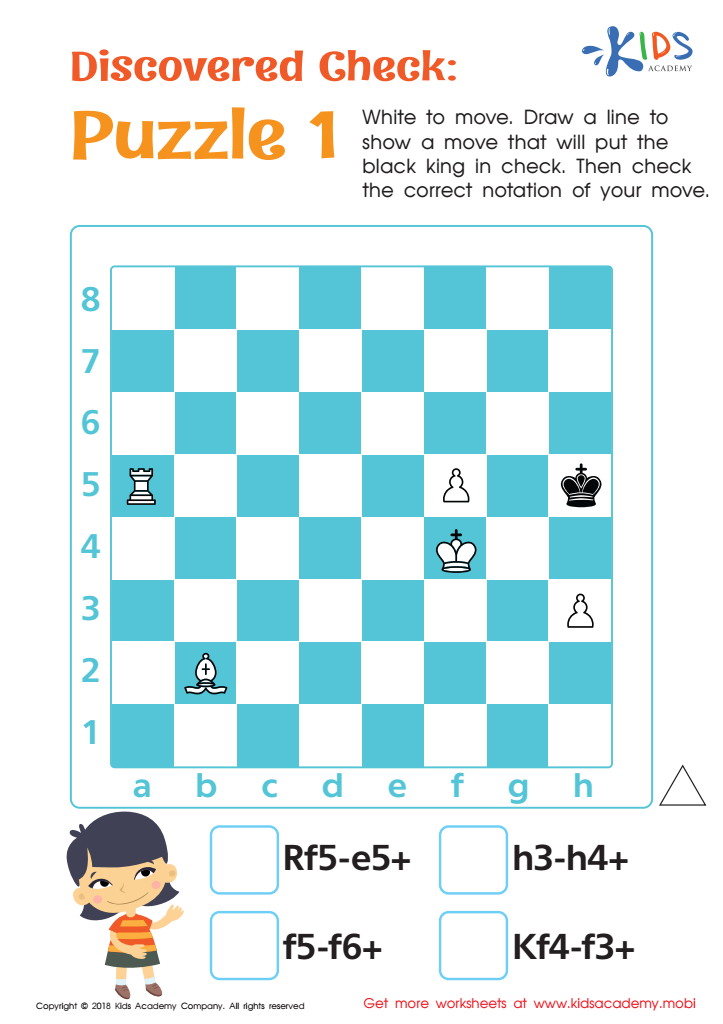
Discovered Check: Puzzle 1 Worksheet




.jpg)



Chess strategy is important for children aged 6-8 because it teaches valuable life skills that go beyond the game. First, it enhances critical thinking and problem-solving abilities. When children learn to think several moves ahead and anticipate their opponent's actions, they begin to analyze situations more thoroughly, both on the chessboard and in real life.
Moreover, understanding chess strategy promotes patience and concentration. Kids learn that making the best move requires time and focus, which can translate to better attention in school and other activities. Chess also fosters resilience; losing a game helps children understand the importance of learning from mistakes and trying again, a crucial lesson for their personal growth.
Additionally, chess encourages creativity. As players devise unique strategies and explore different ways to play, they expand their imaginative thinking. Finally, playing chess often involves social interaction, helping kids develop communication skills as they engage with peers.
For parents and teachers, supporting children in learning chess strategy not only reinforces these skills but also cultivates a love for learning. By integrating fun and strategic thinking, chess can be an excellent tool for helping kids grow both academically and socially.








