
Comparison Skills Easy Worksheets for Ages 6-8
3 filtered results
Difficulty Level
Grade
Age
-
From - To
Subject
Activity
Standards
Unlock your child's learning potential with our "Comparison Skills Easy Worksheets" designed specifically for ages 6-8. These engaging, printable resources help young learners develop critical thinking and comparative analysis through fun activities. Our worksheets challenge kids to identify similarities and differences, categorize objects, and make connections, fostering essential cognitive skills. Ideal for classrooms or home learning environments, each worksheet promotes interactive learning while reinforcing foundational concepts. Parents and educators will appreciate our user-friendly format that keeps children motivated and excited about learning. Browse our collection to enhance your child's comparison skills today! Ideal for boosting confidence and preparing them for future academic success.
Favorites
With answer key
Interactive
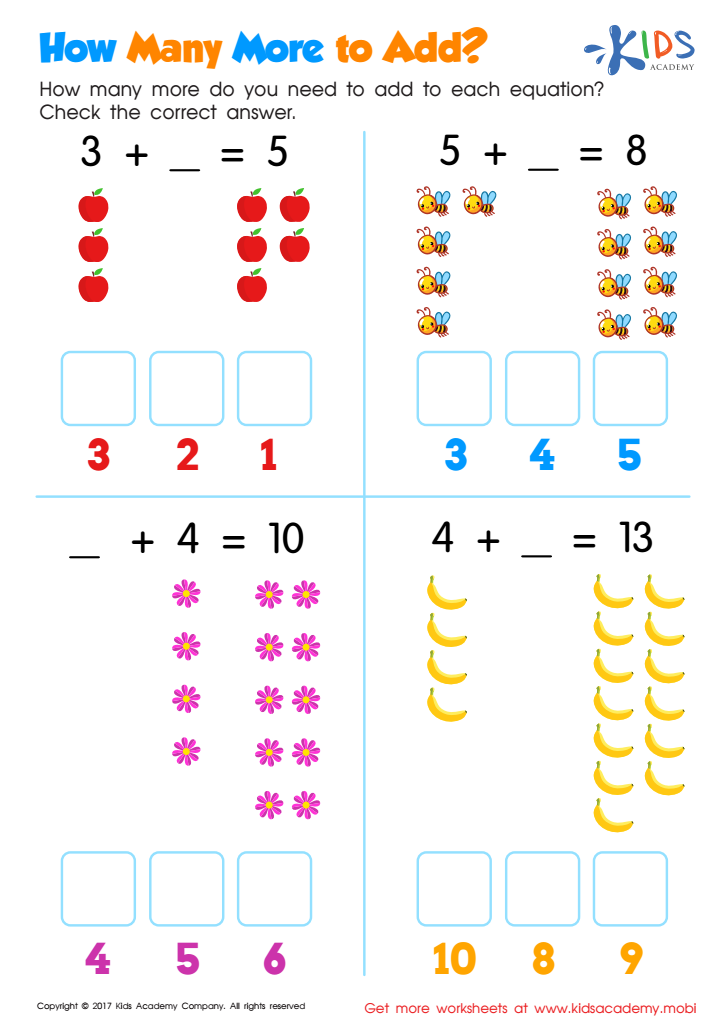
How Many More to Add Worksheet
Sharpen your child's math skills with this pdf worksheet. Help them figure out how many apples, bees, flowers and bananas are needed to reach the answer given. The possible answers are provided at the bottom of the boxes. Have some fun doing some addition and subtraction magic together and get those math skills sharpened!
 Assign to My Students
How Many More to Add Worksheet
Worksheet
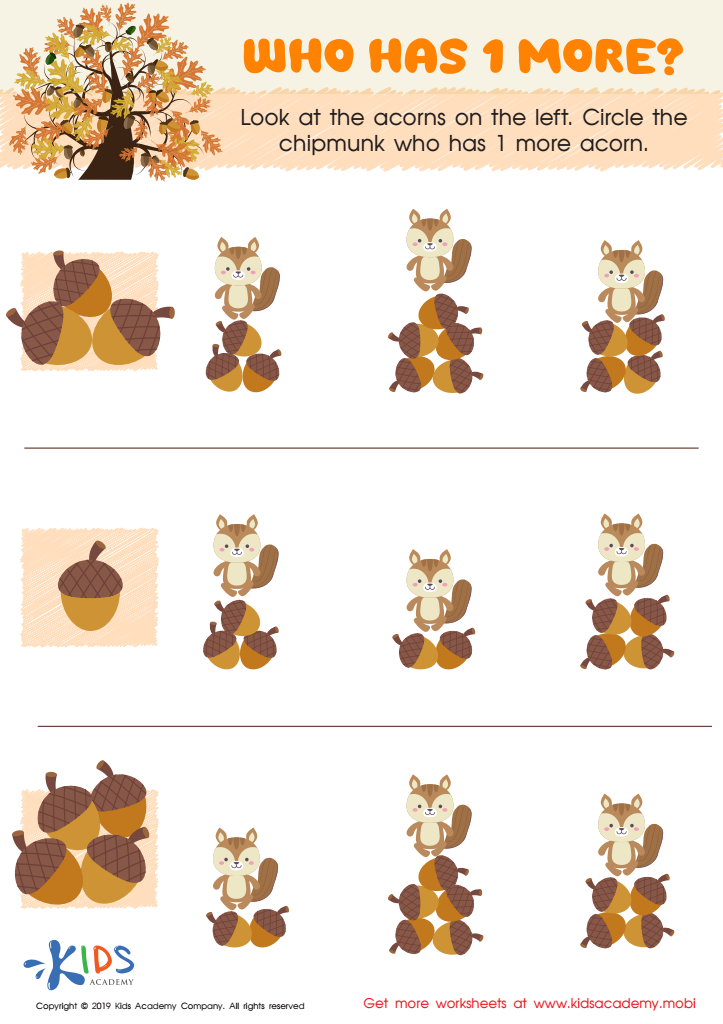
Who Has 1 More? Worksheet
Do your kids know what chipmunks are? They eat acorns, store them for bad weather, and live in trees or on the ground. Count and circle the chipmunk with one more acorn than the others on the printout.
Who Has 1 More? Worksheet
Worksheet
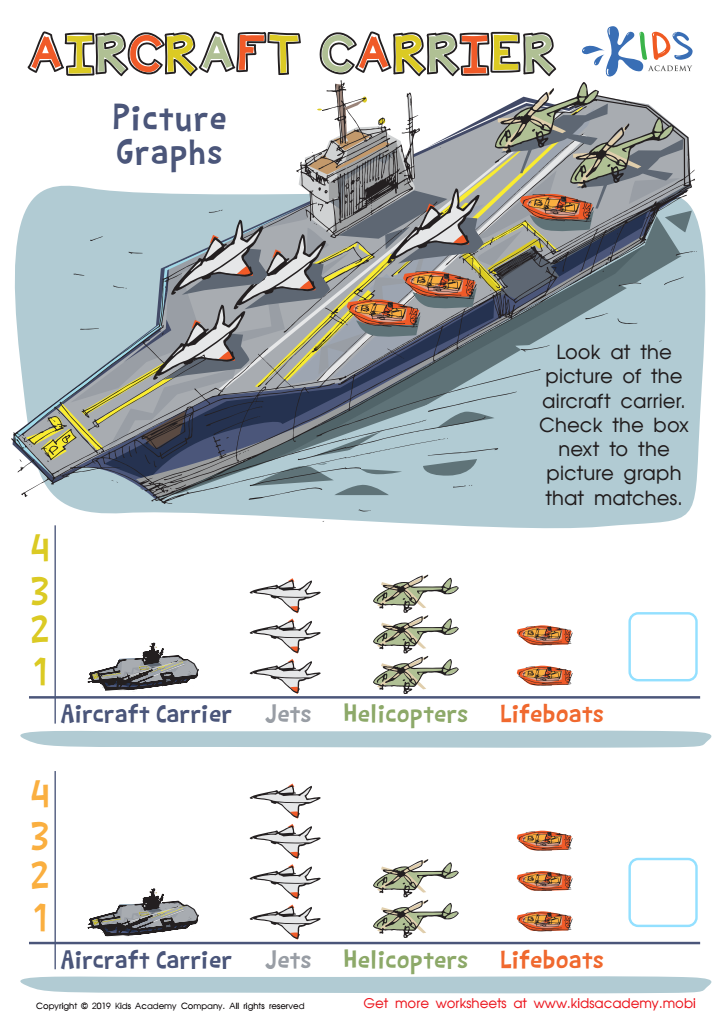
Aircraft Carrier Picture Graphs Worksheet
Kids love learning about jets and boats with this awesome worksheet! It's a great way to engage them as they work on picture graphs. Representing numerical values with pictures, this free PDF requires them to choose which picture graph and representation best match the carrier in the picture. It's also great practice for visual discrimination!
Aircraft Carrier Picture Graphs Worksheet
Worksheet
Join Kids Academy for Free
Who is primarily going to use this learning content?







Comparison skills are essential for children aged 6-8, as they serve as a fundamental building block for critical thinking and problem-solving. During this developmental stage, children begin to understand the nuances of difference and similarity, which is crucial not only in academics but also in everyday life.
Teaching children how to compare objects, ideas, or situations helps them make informed decisions. For instance, when they learn to contrast sizes, colors, or quantities, they develop their analytical abilities, which enhances their understanding of math and science concepts. Furthermore, comparison skills boost language development; as children articulate their observations, they expand their vocabulary and improve their communication skills.
Additionally, fostering these skills empowers children to engage with their environment more meaningfully. By comparing different perspectives or solutions, young learners grasp the importance of considering multiple viewpoints, laying the groundwork for social and emotional intelligence.
For parents and teachers, emphasizing comparison skills offers a pathway to support children's holistic growth. By nurturing these abilities, they prepare children not only for academic success but also for the ability to navigate complex social situations, ultimately promoting lifelong learning and adaptability. Therefore, prioritizing comparison skills during ages 6-8 is a worthwhile investment in a child's future.








