Counting practice Easy Worksheets for Ages 6-8 - Page 2
27 filtered results
-
From - To
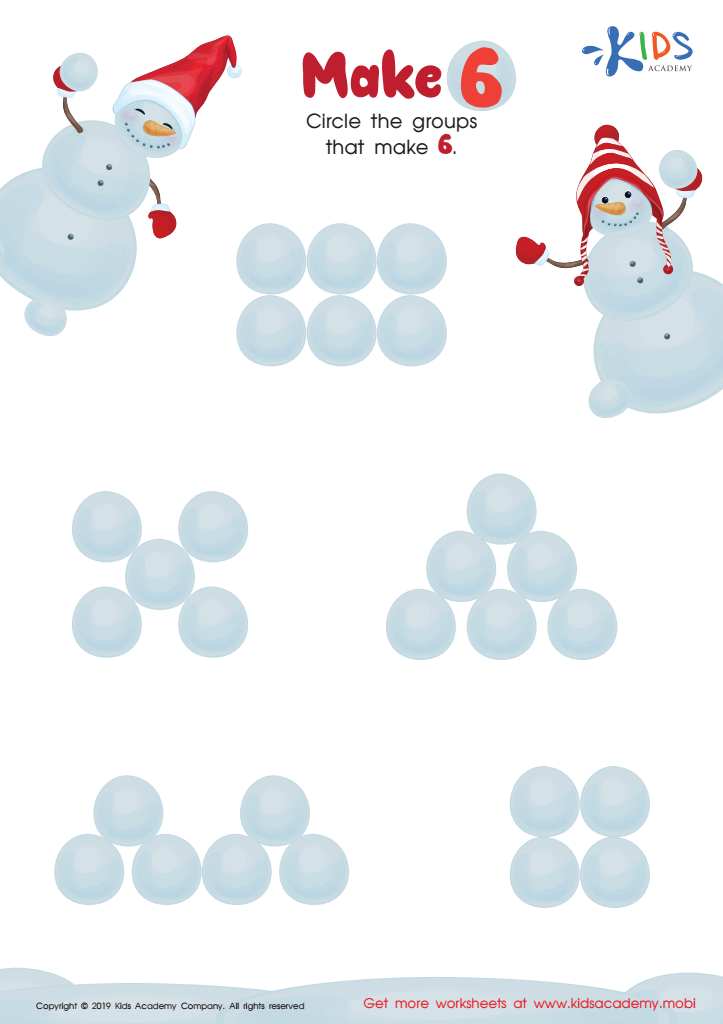
Make 6 Worksheet
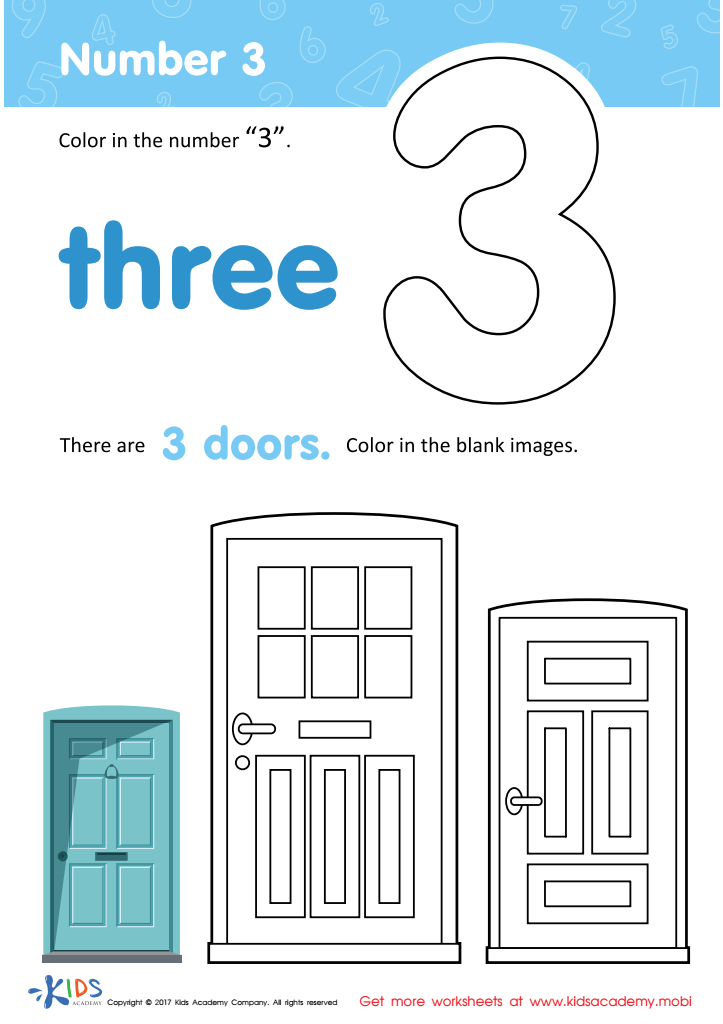
Number 3 Worksheet
 Assign to My Students

Counting on the City Skyline: Dot-to-Dot Worksheet





Counting is a foundational skill that forms the base for a child’s mathematical understanding, making it essential for both parents and teachers to prioritize counting practice for ages 6-8. At this age, children typically transition from basic counting to more complex mathematical concepts, such as addition, subtraction, and even multiplication. Regular counting practice helps reinforce number recognition, sequencing, and the relationship between quantities.
Engaging in counting activities also promotes cognitive development, enhances problem-solving skills, and encourages critical thinking. When children practice counting, they learn to manipulate numbers and understand their application in real-life situations, from telling time to measuring ingredients in cooking.
Moreover, counting practice fosters confidence in academic abilities. Children who excel in early math are more likely to pursue advanced topics later on. Collaborative counting activities at home and in the classroom strengthen the relationship between parents and children or teachers and students, transforming math into an enjoyable shared experience.
Given the escalating reliance on mathematical skills in daily life and future education, establishing a strong counting foundation in early years is paramount. Therefore, both parents and teachers have a crucial role in nurturing enthusiasm for math through consistent, engaging counting practice.








