Grammar improvement Easy Worksheets for Ages 6-8
3 filtered results
-
From - To
Discover our "Grammar Improvement Easy Worksheets for Ages 6-8," designed to make learning fun and engaging for young learners! These worksheets feature a variety of interactive activities that help children develop essential grammar skills, including correct punctuation, sentence structure, and parts of speech. Tailored for kids aged 6 to 8, each worksheet offers clear instructions and colorful graphics to enhance understanding and retention. Perfect for teachers and parents looking to reinforce grammar concepts at home or in the classroom, our resources provide a supportive and enjoyable way to boost your child's language skills. Get started today and watch your child's confidence soar!
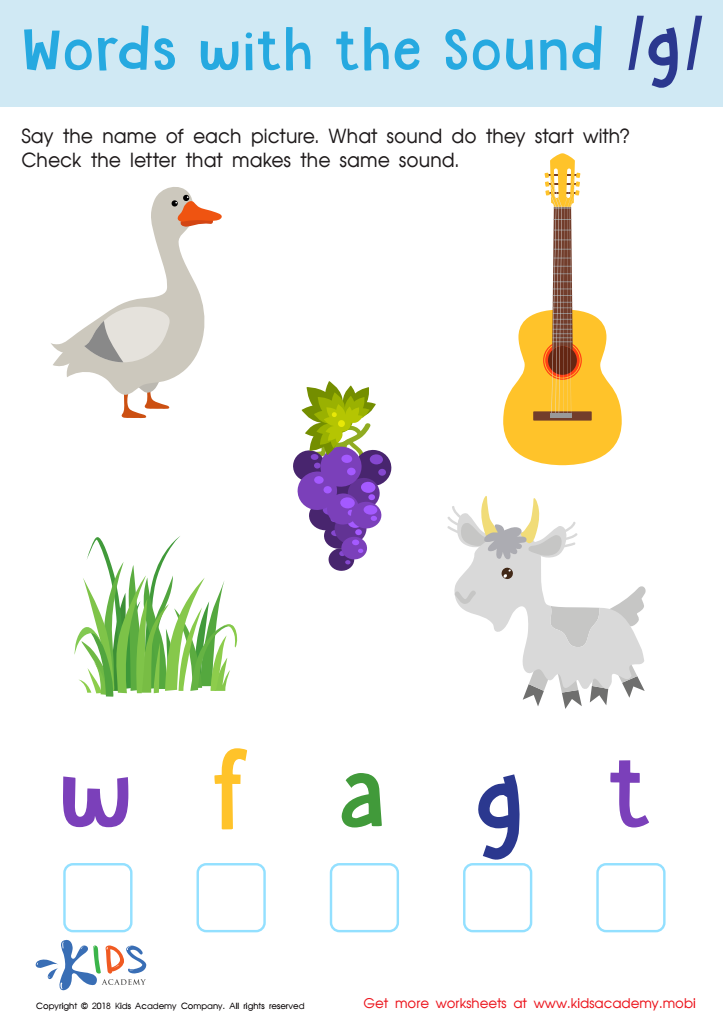
Words with sound g Reading Worksheet
 Assign to My Students
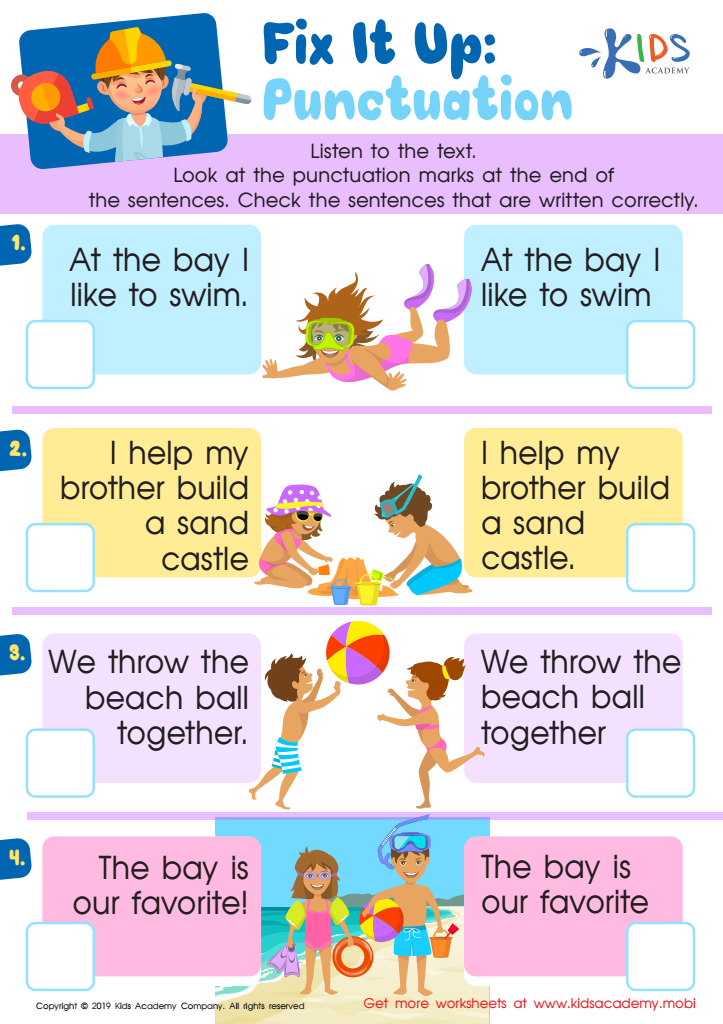
Fix Punctuation Worksheet
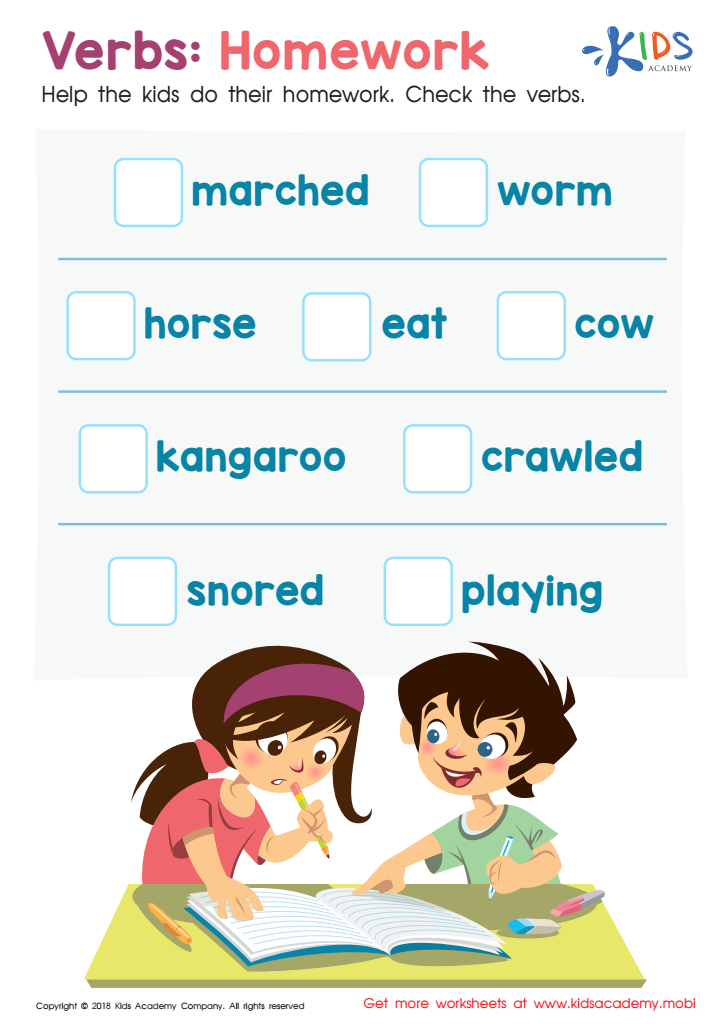
Verbs Homework Worksheet




.jpg)

Grammar is an essential part of communication that helps children express their thoughts clearly and effectively. For parents and teachers working with children aged 6 to 8, caring about grammar improvement is crucial for several reasons.
Firstly, strong grammar skills contribute to better reading and writing abilities. When children understand grammar rules, they can combine words into sentences and make sense of what they read. This understanding boosts their confidence in both speaking and writing.
Secondly, grammar plays a key role in building social skills. A child who can construct clear sentences can communicate ideas, ask questions, and share feelings with peers and adults. This promotes positive interactions and friendships.
Thirdly, mastering grammar helps children succeed in school. Teachers increasingly emphasize communication skills, and good grammar can enhance a child's academic performance in various subjects, not just language arts.
Lastly, instilling a habit of practicing grammar at a young age prepares children for future learning. By making learning fun and engaging, parents and teachers can help children develop a love for language, paving the way for lifelong communication skills. In short, grammar improvement is vital for effective communication, social interactions, academic success, and lifelong learning.








