Time reading skills Easy Worksheets for Ages 6-8
4 filtered results
-
From - To
Enhance your child's ability to tell time with our "Time Reading Skills Easy Worksheets for Ages 6-8" from Kids Academy. These thoughtfully designed worksheets help young learners grasp the fundamentals of reading clocks and understanding time in a fun, engaging way. Children will practice reading both analog and digital clocks, while learning to differentiate between hours and minutes. With colorful activities and interactive exercises, these worksheets make time-telling a breeze, ensuring your child builds confidence and accuracy. Perfect for early grade students, our worksheets are a great addition to your child's learning toolkit.
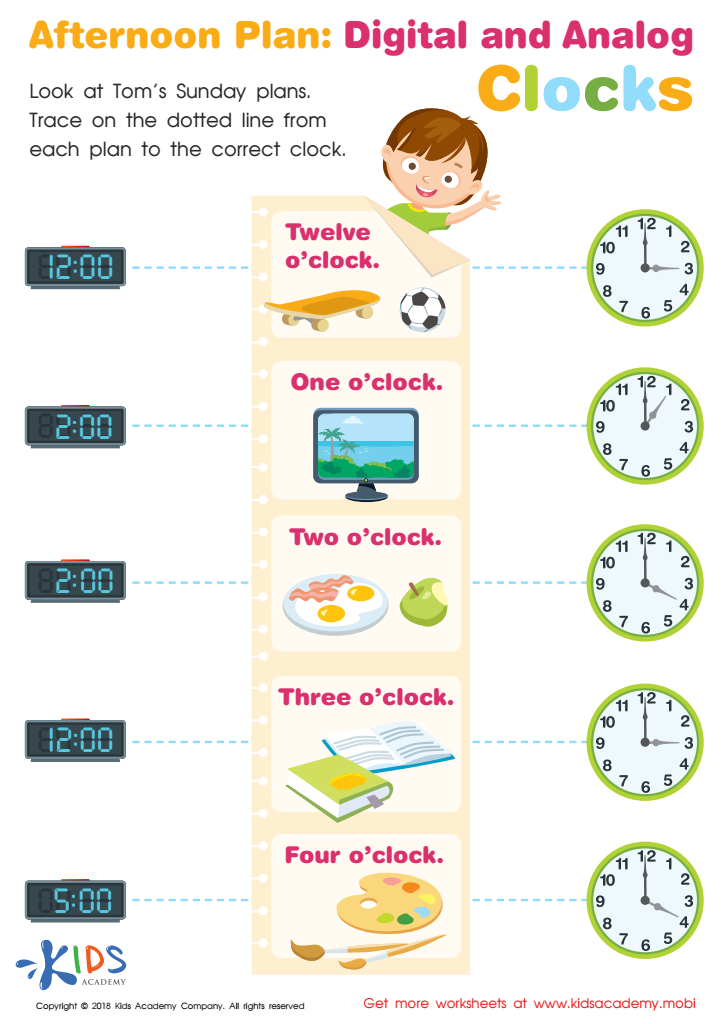
Afternoon Plan: Digital and Analog Clocks Worksheet
 Assign to My Students
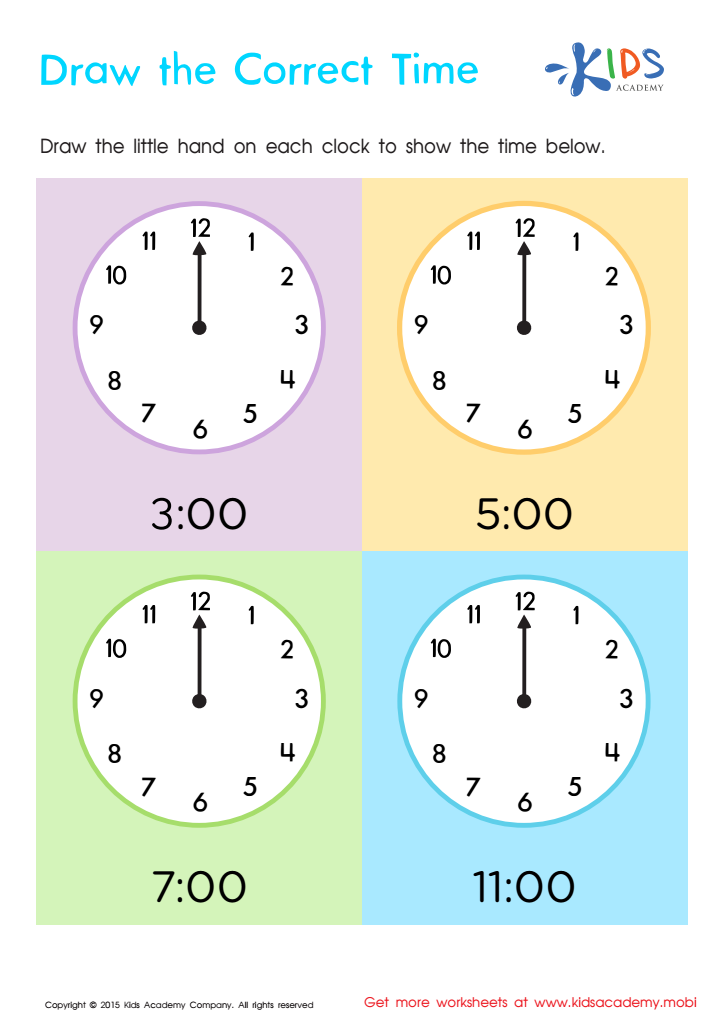
Telling The Time Worksheet: Part 1
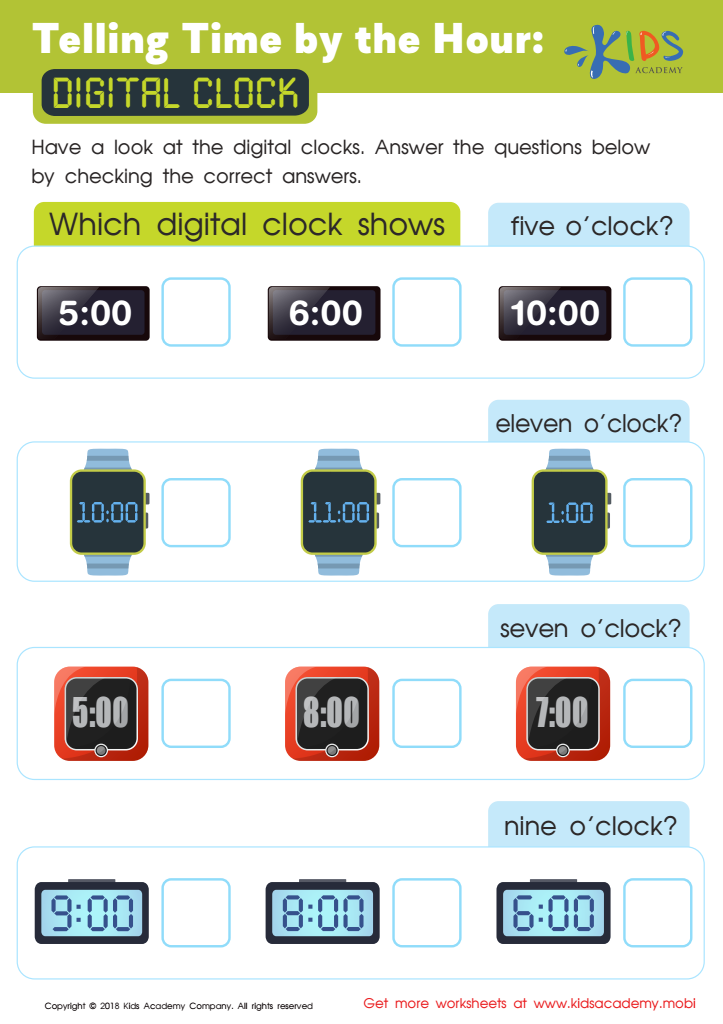
Telling Time by the Hour: Digital Clock Worksheet
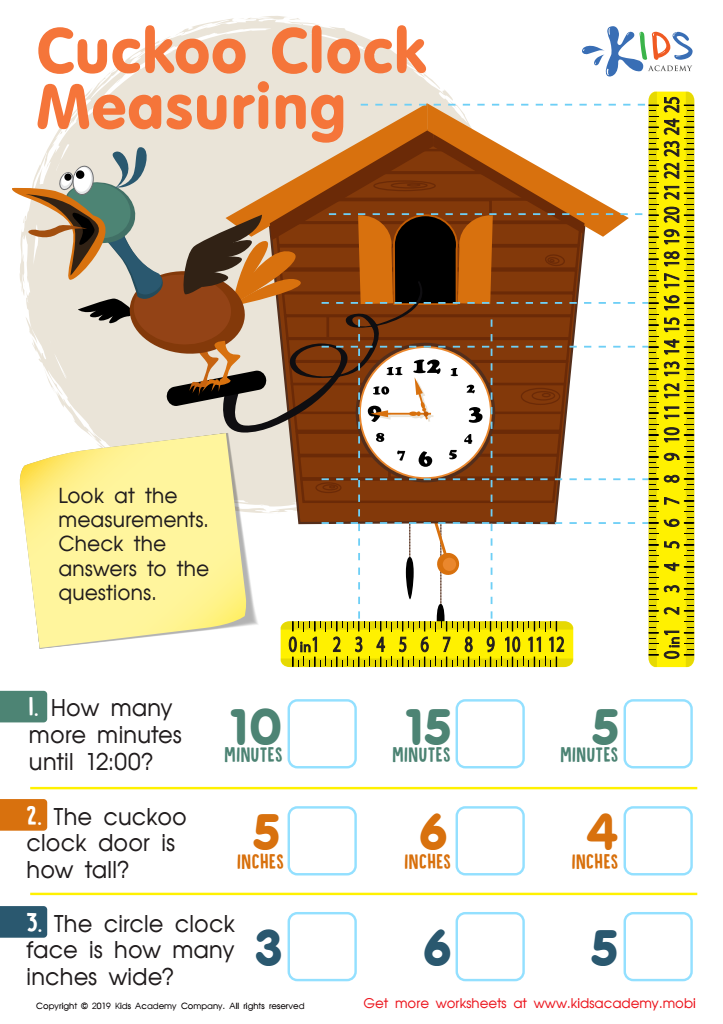
Cuckoo Clock Measuring Worksheet








Parents and teachers should prioritize developing time reading skills in children aged 6-8 because it's a foundational life skill essential for academic success and daily functioning. At this critical age, children are developing cognitive abilities rapidly, and mastering time concepts enhances their mathematical and organizational skills. Understanding how to read both digital and analog clocks helps children manage their time effectively, fostering independence by allowing them to plan, follow schedules, and transition smoothly between activities.
Proper time management is a necessary skill in a school environment, where adhering to structured timetables is essential. It encourages punctuality, which is linked to discipline and good work habits. Moreover, time-related competencies are often integrated into early math curricula, contributing to a stronger grasp of numerical relationships and sequencing.
From a social perspective, awareness of time helps children better understand the concept of waiting and turn-taking, improving their interactions with peers. At home, it empowers them to establish routines, contributing to a stable and predictable daily environment.
Overall, equipping children with time reading skills by age 8 lays the groundwork for future responsibility, enhances their academic performance, and provides confidence and competence in navigating various aspects of their daily lives.








