
Understanding measurements Easy Worksheets for Ages 6-8
10 filtered results
Difficulty Level
Grade
Age
-
From - To
Subject
Activity
Standards
Help young learners master the basics of measurements with our easy worksheets designed specifically for ages 6-8. Our collection at Kids Academy introduces kids to essential measurement concepts using fun and engaging activities. These worksheets help children understand various units of measurement, including length, weight, and capacity. Each carefully crafted worksheet fosters critical thinking and enhances their learning skills, making them perfect for both classroom use and at-home practice. With colorful, kid-friendly designs, these worksheets ensure that measuring becomes a delightful adventure, laying a strong foundation for future math success. Encourage your child’s curiosity and confidence in measurements today!
Favorites
With answer key
Interactive
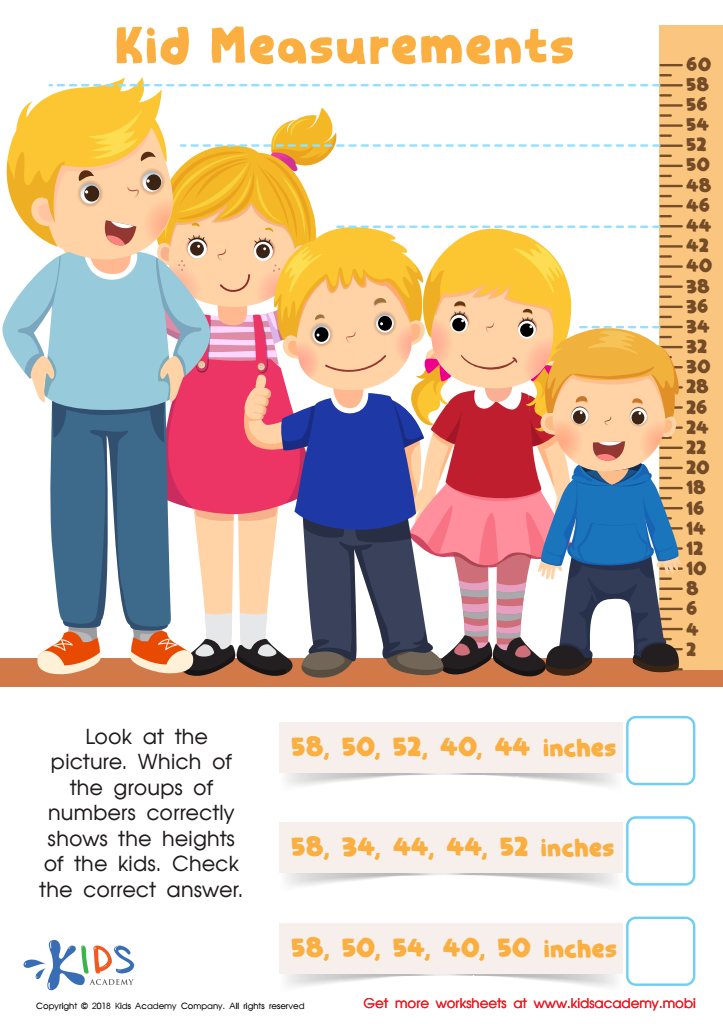
Kids Measurements Worksheet
Help your kids look at the groupings on the bottom right of the worksheet. Compare the heights of the kids shown in the picture to the numbers in each group. Have them check which of the groups of numbers correctly shows the heights.
 Assign to My Students
Kids Measurements Worksheet
Worksheet
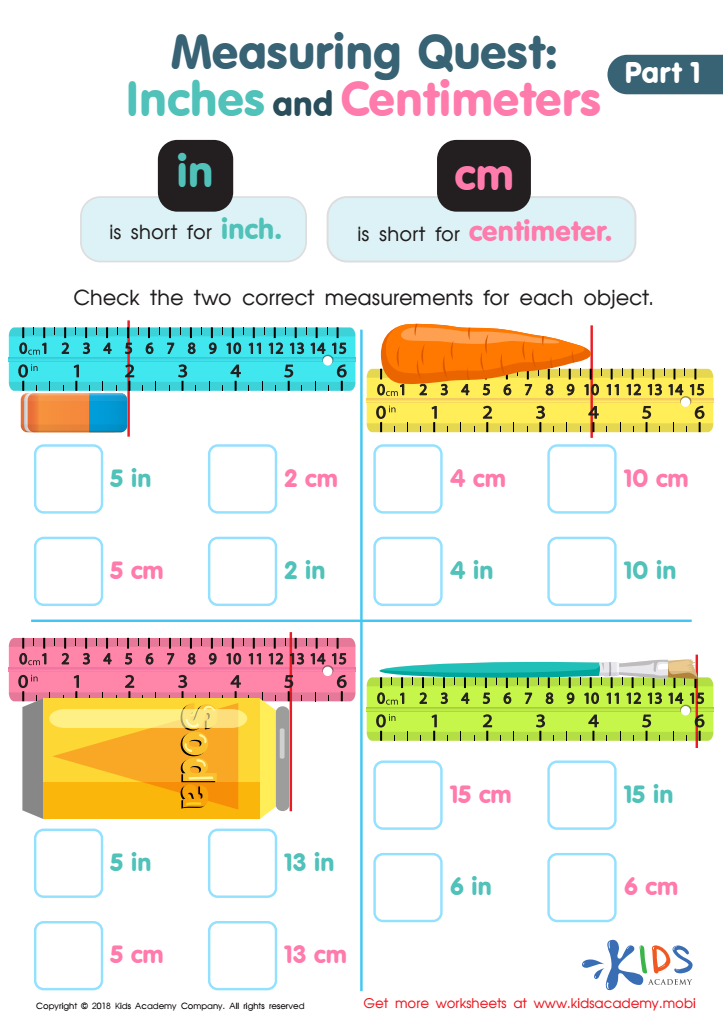
Measuring Quest: Inches and Centimeters Worksheet
Your child will measure items in both inches and centimeters and check the correct measurements from the options given. The metric ruler states 2.5 cm equals 1 inch, and 15 cm equals 6 inches. This worksheet helps ensure accurate measurements, despite the different figures.
Measuring Quest: Inches and Centimeters Worksheet
Worksheet
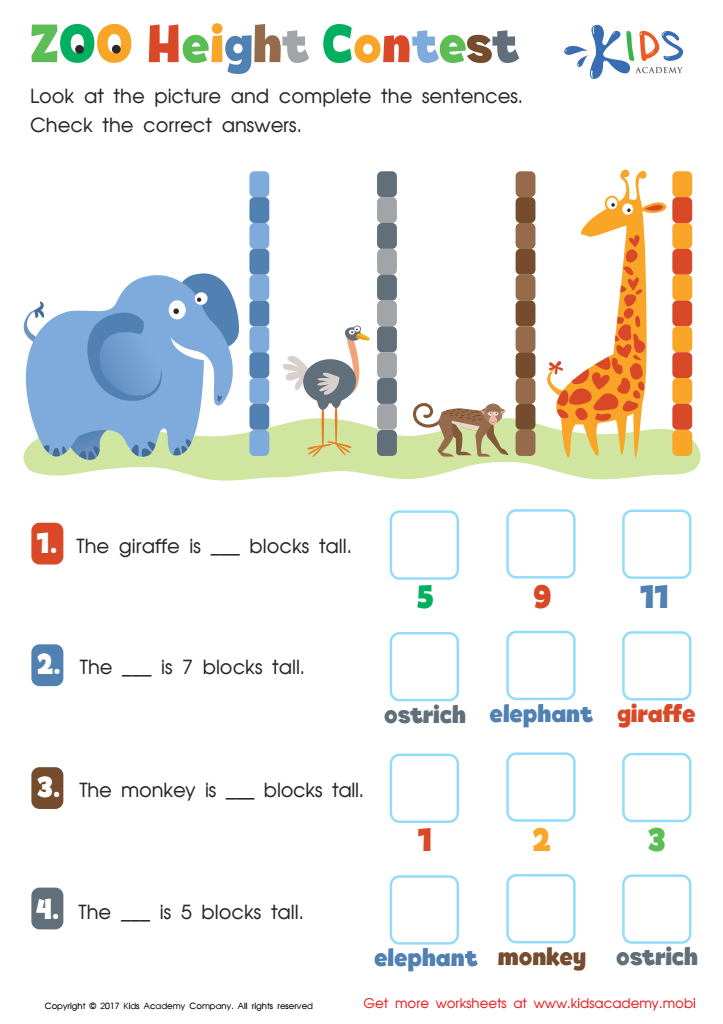
Zoo Height Contest Worksheet
Let's head to the zoo and use colorful blocks to measure your child's favorite animals! With this Kids Academy worksheet, help them practice and prepare for learning measurement. Guide them in looking at the zoo animals and counting blocks to find the height. Then, read the questions and check the box next to the correct answer.
Zoo Height Contest Worksheet
Worksheet
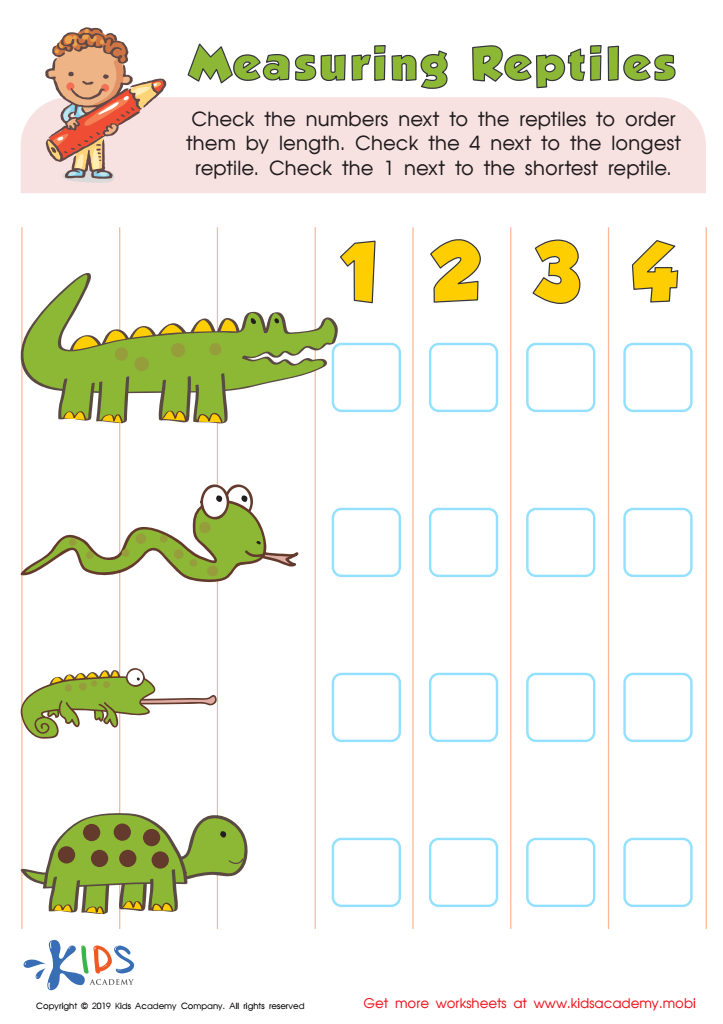
Measuring Reptiles Worksheet
Do your kids know what reptiles are? Ask them to name some and name features. In this activity, your kindergartners will measure with reptiles. Show them the picture and get them to order by length, starting with the one with 4 by the longest reptile, then the one with 1 by the shortest.
Measuring Reptiles Worksheet
Worksheet
Matching Measurements Worksheet
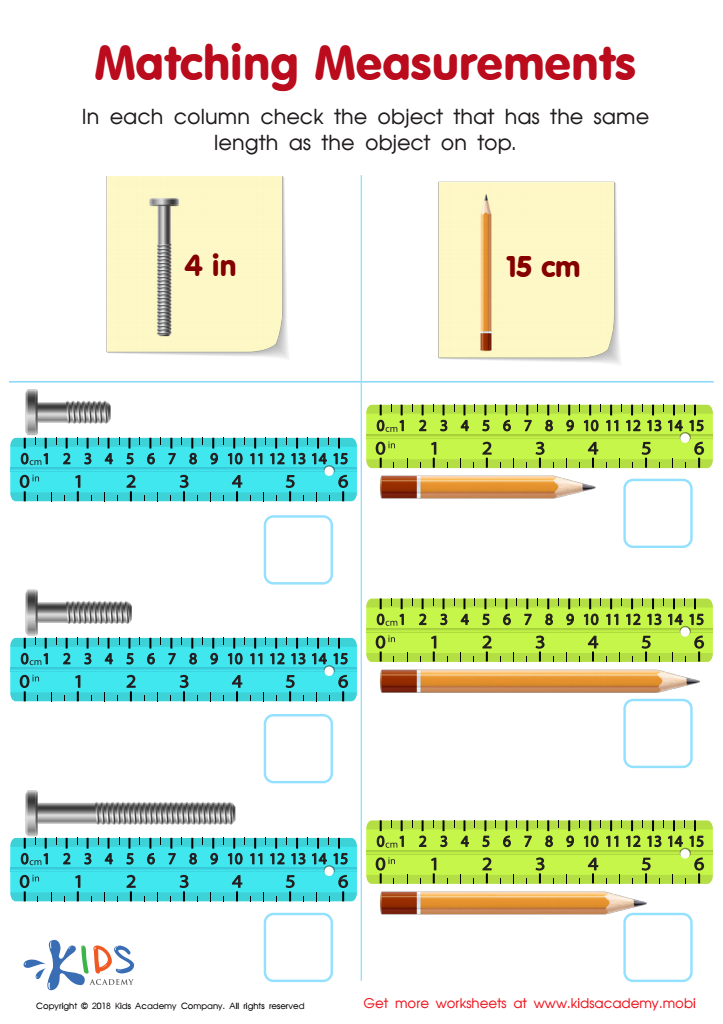
Get your students to measure different objects with this colorful worksheet. At the top of each column is a prefilled object. Ask them to look at the pictures below each column and identify the objects that are of the same length as the one at the top.
Matching Measurements Worksheet
Worksheet
Measuring the Length of Plants Worksheet
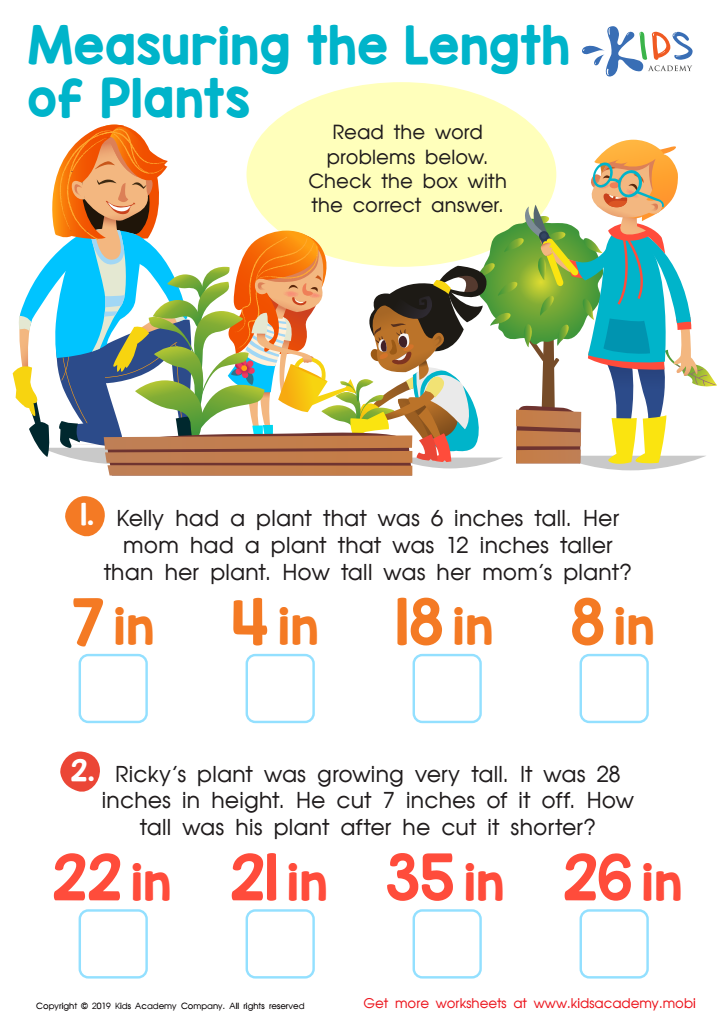
Help your kids practice their math skills with this worksheet. Read the word problems in the picture and help them check the correct box. Word problems are equations written in sentence form, so they must be interpreted and understood to be solved correctly.
Measuring the Length of Plants Worksheet
Worksheet
Centimeters and Meters Worksheet
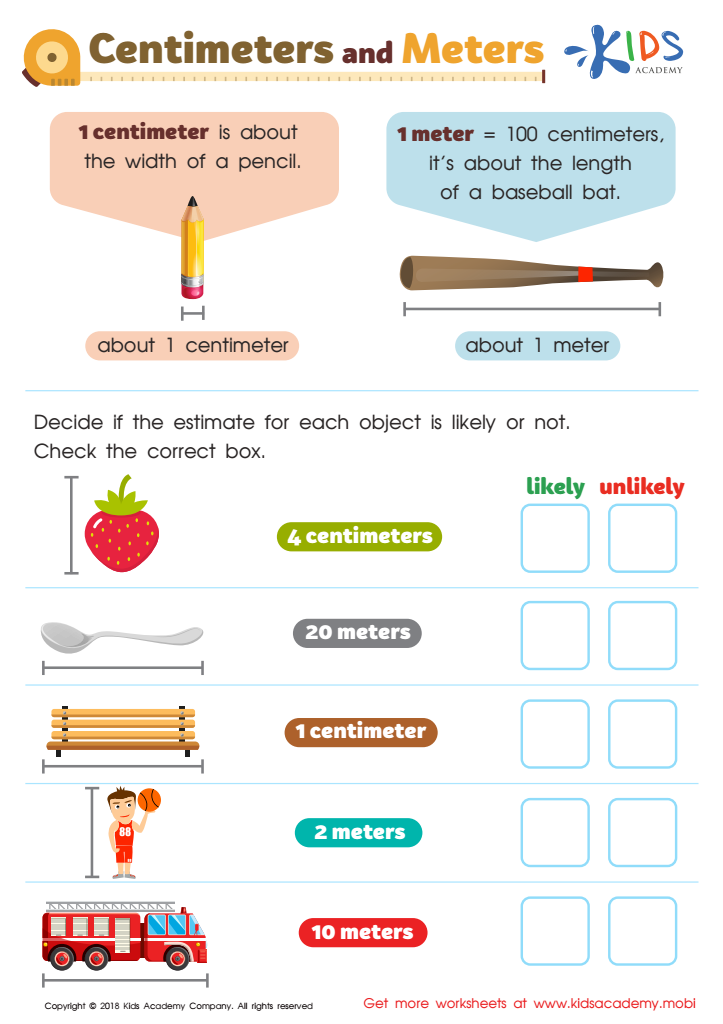
Get a pencil and show your child how wide 1 cm is (about the same width). Then, take a baseball bat and explain that 1 meter is around its entire length. Now your child has an idea of what to picture when hearing cm and m. Look through the worksheet together and show them each object. Ask if the object is likely or unlikely to be the length described.
Centimeters and Meters Worksheet
Worksheet
Measuring with Blocks Worksheet
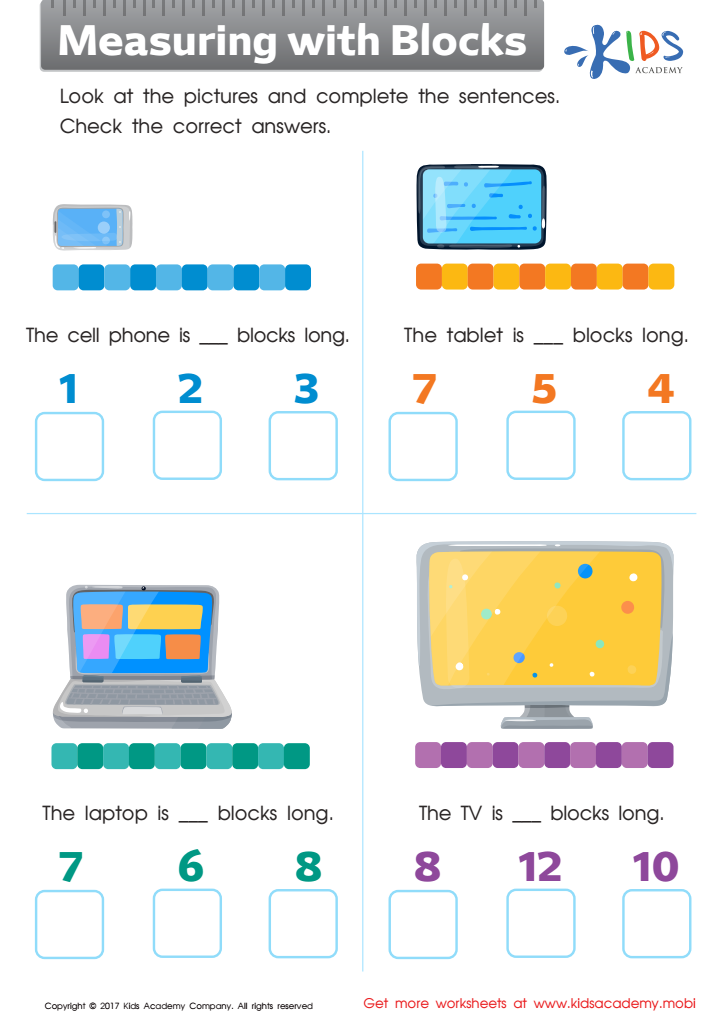
Help your child get ready for math success with this Kids Academy worksheet. It provides colorful blocks to practice measuring objects. Coach them to count the boxes under each picture, then check the box with the right answer. It's a fun way to get acquainted with rulers!
Measuring with Blocks Worksheet
Worksheet
Let's Measure Animals! Worksheet
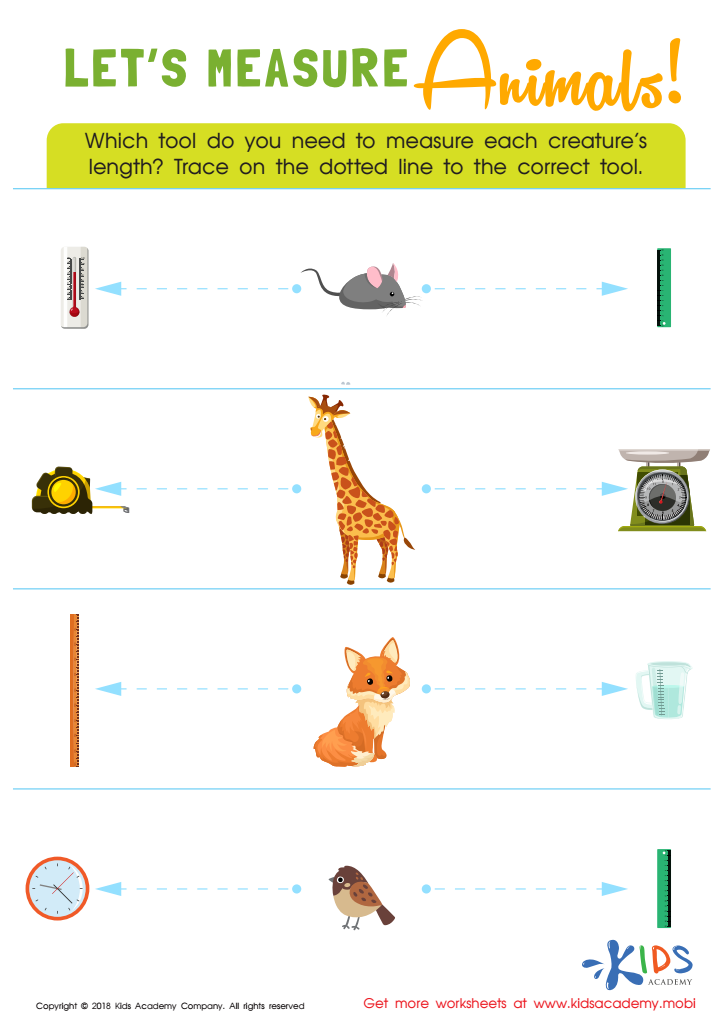
Have your students measure the length of animals like a mouse, giraffe, fox, and bird using this fun tracing sheet. They must carefully follow the dotted lines to the correct measuring tool, and by the end of the colorful worksheet, they'll know more about measuring and the different tools used.
Let's Measure Animals! Worksheet
Worksheet
Measure it in Feet Worksheet
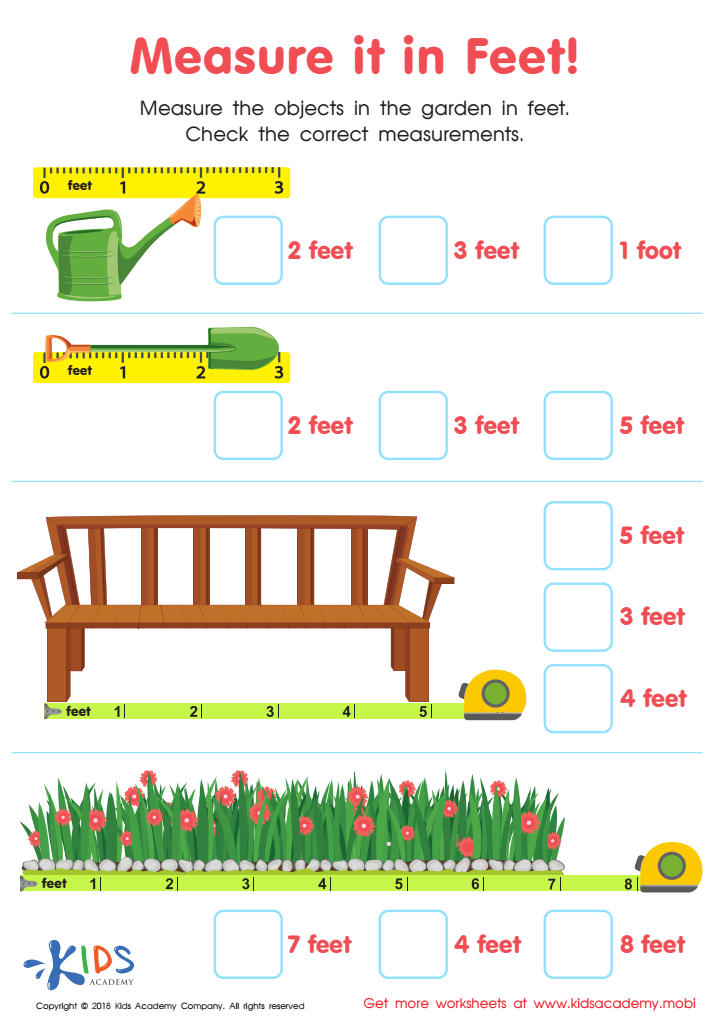
Put your kids' measuring skills to the test with this worksheet! Kids will measure garden objects in feet and check the correct measurements from the choices given. Assess how accurately they can measure objects around the house and help them hone those skills.
Measure it in Feet Worksheet
Worksheet
Join Kids Academy for Free
Who is primarily going to use this learning content?







Understanding measurements is a fundamental skill for children ages 6-8, as it lays the foundation for higher-level math concepts and everyday problem-solving abilities. For both parents and teachers, fostering this understanding early is crucial. When kids grasp measurements, they gain practical skills that help them navigate the world more confidently, whether they're figuring out how much space their backpack takes, how tall they are, or dividing food during snack time.
From an educational perspective, early measurement skills support children's growth in subjects beyond math, including science and geography. For instance, understanding weight, length, and volume is essential when conducting basic science experiments, engaging in cooking activities, or comparing distances on a map. These are experiences young children encounter that make learning practical and engaging.
Moreover, mastering measurements encourages cognitive development by enhancing critical thinking, problem-solving, and spatial awareness. When children compare, categorize, and use rulers or measuring cups, they not only learn about numbers but also about order, proportion, and reasoning.
Parents and teachers caring about measurement skills can ensure that children build a strong mathematical foundation, foster an appreciation for everyday applications of math, and set the stage for more complex concepts in their educational journey. This proactive approach can instill confidence and curiosity in young learners, equipping them for future academic success.








