Understanding times tables Easy Worksheets for Ages 6-8
3 filtered results
-
From - To
Discover our engaging "Understanding Times Tables Easy Worksheets" designed specifically for children ages 6-8! These worksheets provide a fun and interactive way for young learners to master the essential skill of multiplication. With vibrant illustrations and age-appropriate exercises, children will develop confidence in recalling times tables through puzzles, visual aids, and practice problems. Our carefully curated resources make learning enjoyable and effective, ensuring a solid math foundation. Perfect for home or classroom use, these worksheets help your child build crucial problem-solving skills while fostering a love for math. Start your journey to multiplication mastery today!
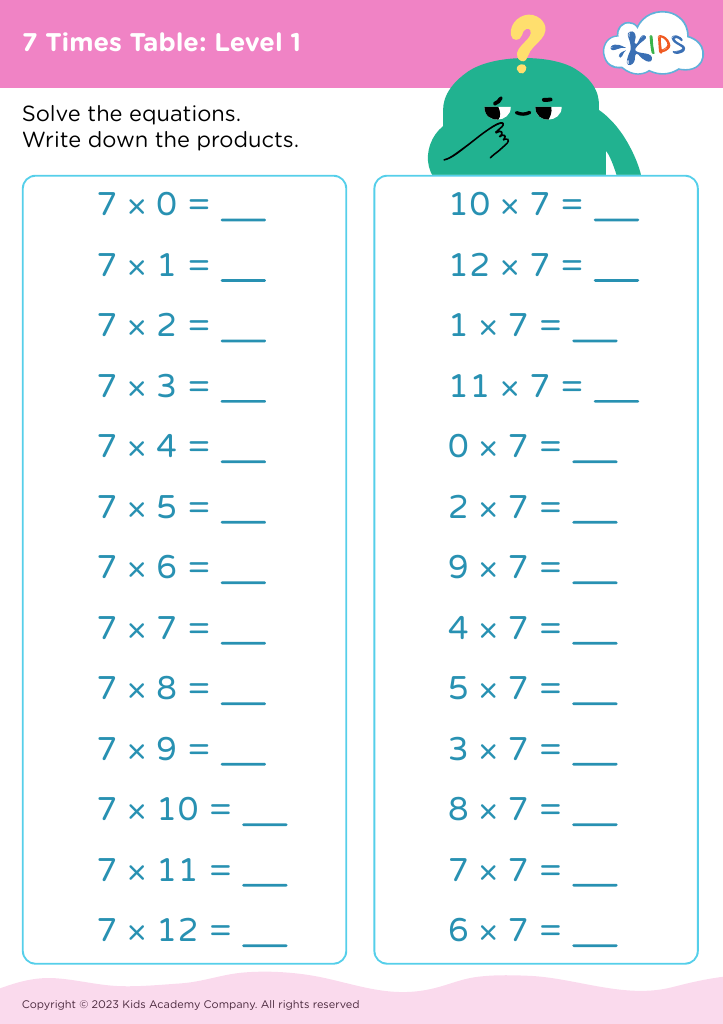
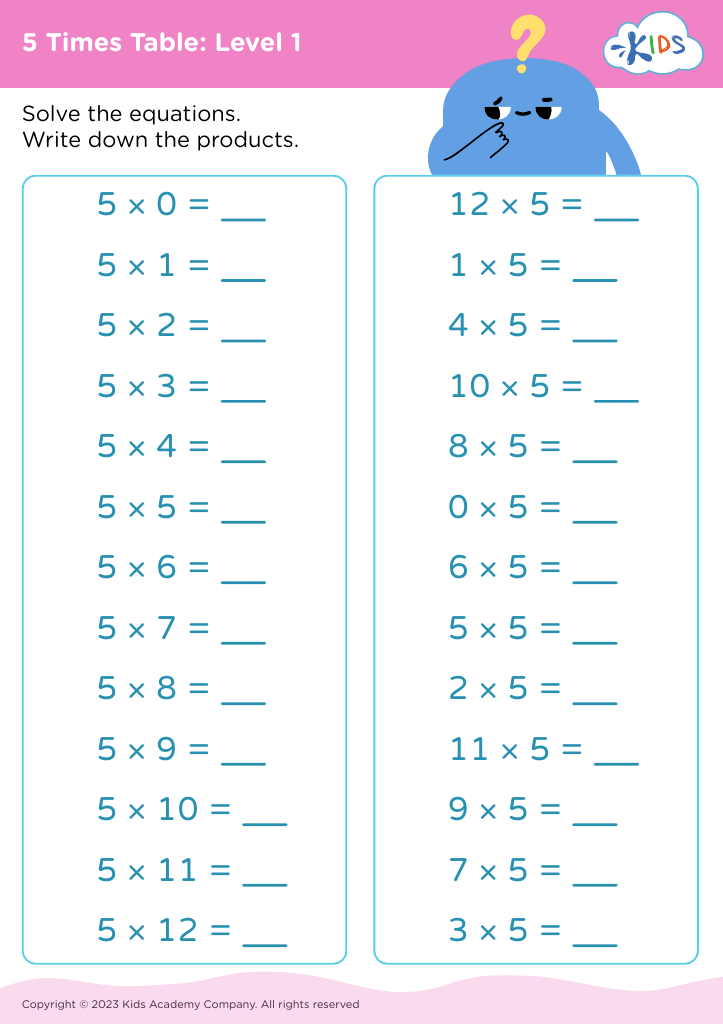
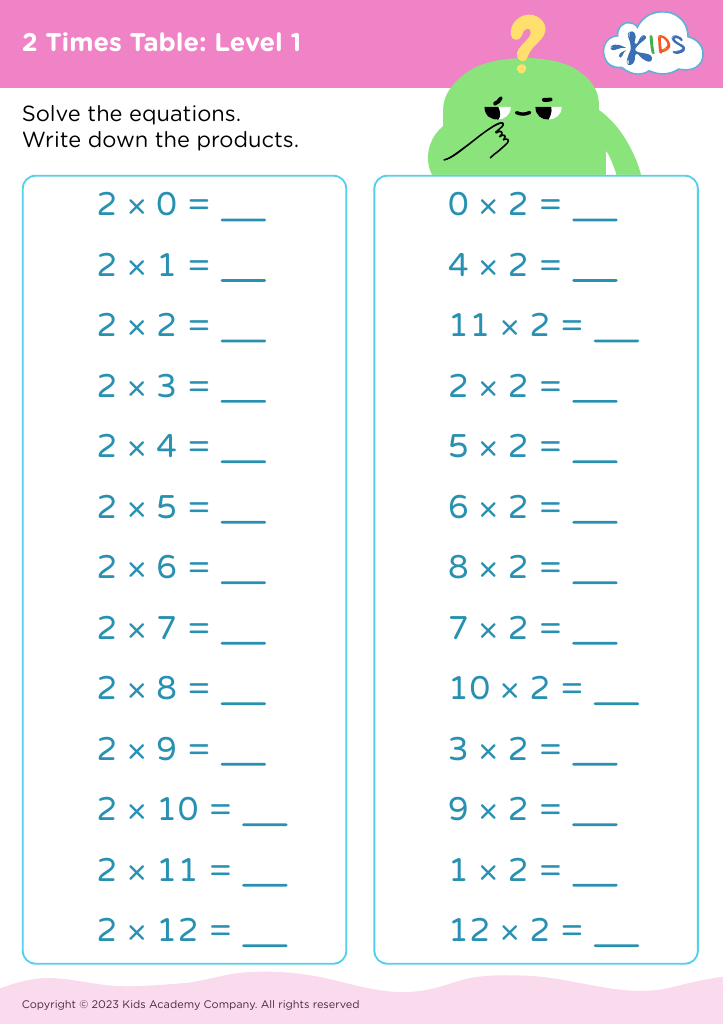





Understanding times tables is a foundational skill for children aged 6-8 that enhances their overall mathematical competence and confidence. At this developmental stage, children are beginning to grasp basic multiplication concepts, which serve as the building blocks for more complex math concepts in higher grades. When parents and teachers prioritize mastery of times tables, they provide children with a structured method for quick arithmetic calculations, promoting mental math skills and problem-solving abilities.
Additionally, a solid grasp of times tables can alleviate math anxiety, as students gain a sense of accomplishment and ease with numbers. It fosters logical thinking and reinforces patterns, helping children recognize connections between different mathematical operations. As students successfully recall multiplication facts, they assist in daily tasks such as shopping, cooking, and budgeting, further showcasing the practical applications of math in real life.
Moreover, supporting children in understanding times tables encourages a supportive learning environment, reinforcing positive attitudes toward math. Collaborative learning experiences between parents and teachers can create a cohesive approach to helping kids succeed, boosting their confidence while nurturing a love for learning. Ultimately, times tables serve as an essential skill that sets children on a path to mathematical proficiency and lifelong skills.








