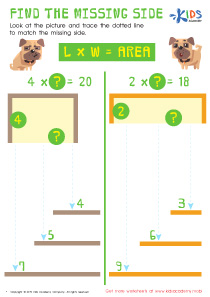
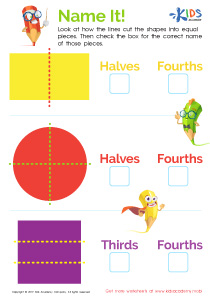
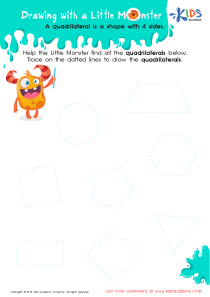
Shape Recognition Easy 2D Shapes Worksheets for Ages 6-8
9 filtered results
-
From - To
Welcome to our Shape Recognition Easy 2D Shapes Worksheets, designed specifically for children aged 6-8! These engaging worksheets will help young learners identify, classify, and understand basic 2D shapes, including circles, squares, triangles, and more. Through a variety of fun-filled activities such as coloring, matching, and tracing, children will reinforce their shape awareness while developing important visual and cognitive skills. Perfect for home or classroom use, our worksheets promote independent learning and make math enjoyable. Get ready to inspire creativity and boost confidence in your child's understanding of shapes with our thoughtfully crafted resources!
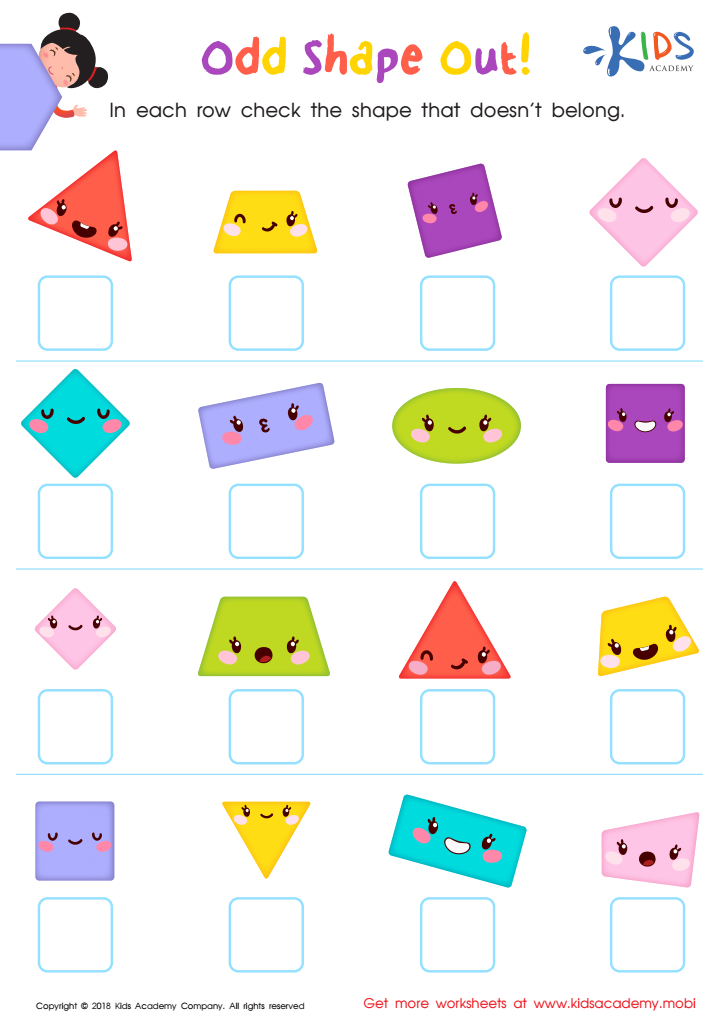
Odd Shape Out Worksheet for Grade 3
 Assign to My Students











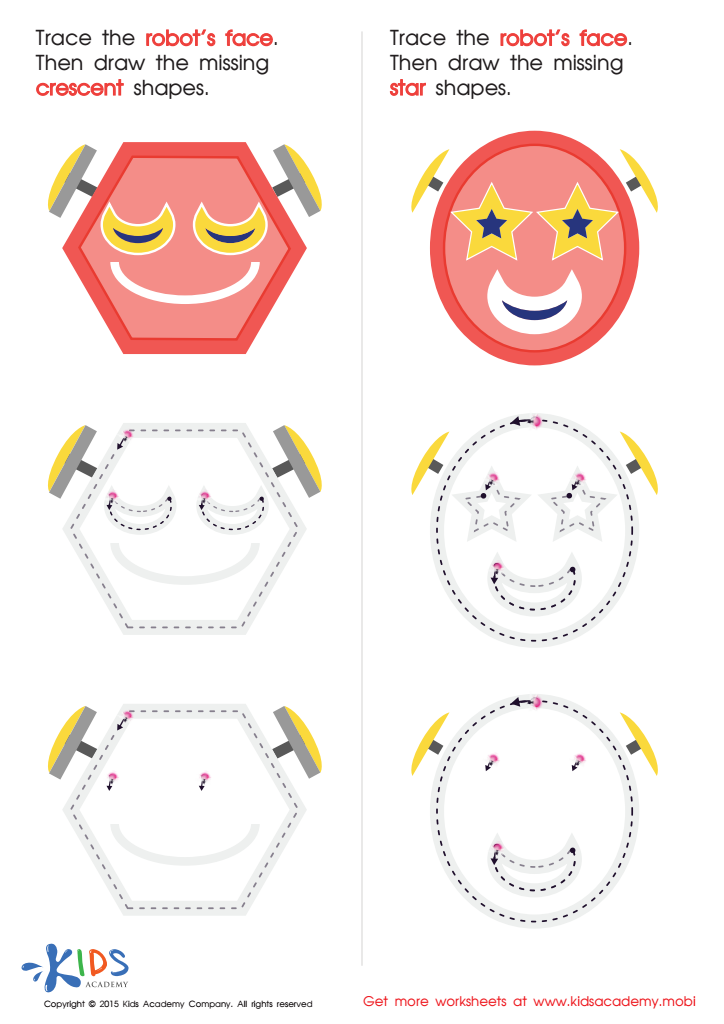
Composing a Robot's Face of Crescents And Stars Worksheet
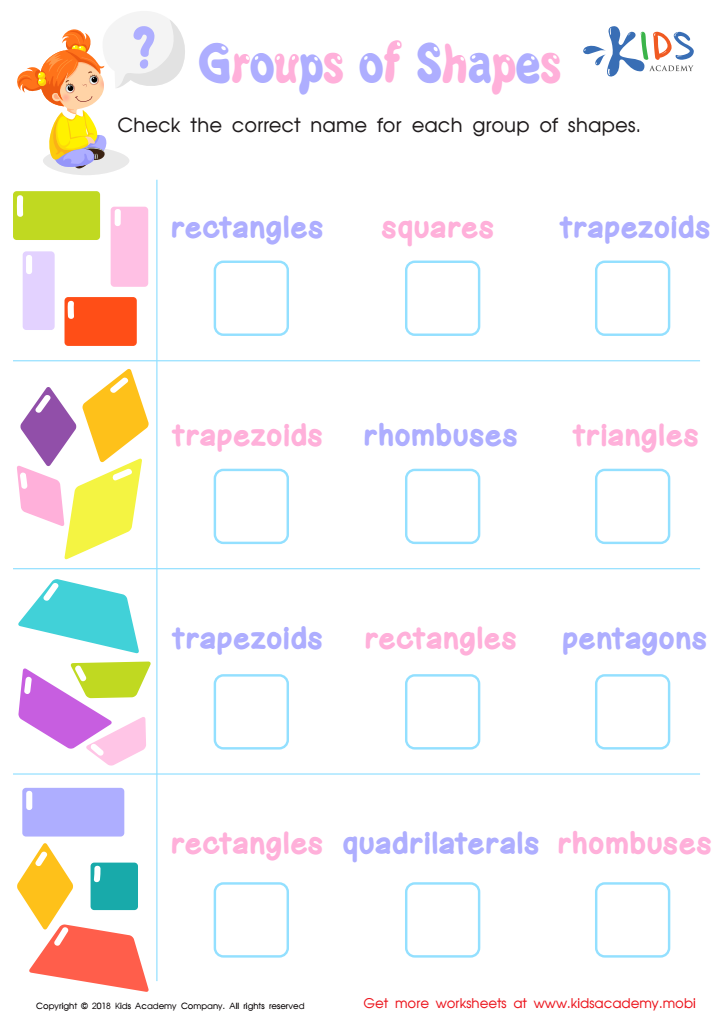
Groups of Shapes Worksheet
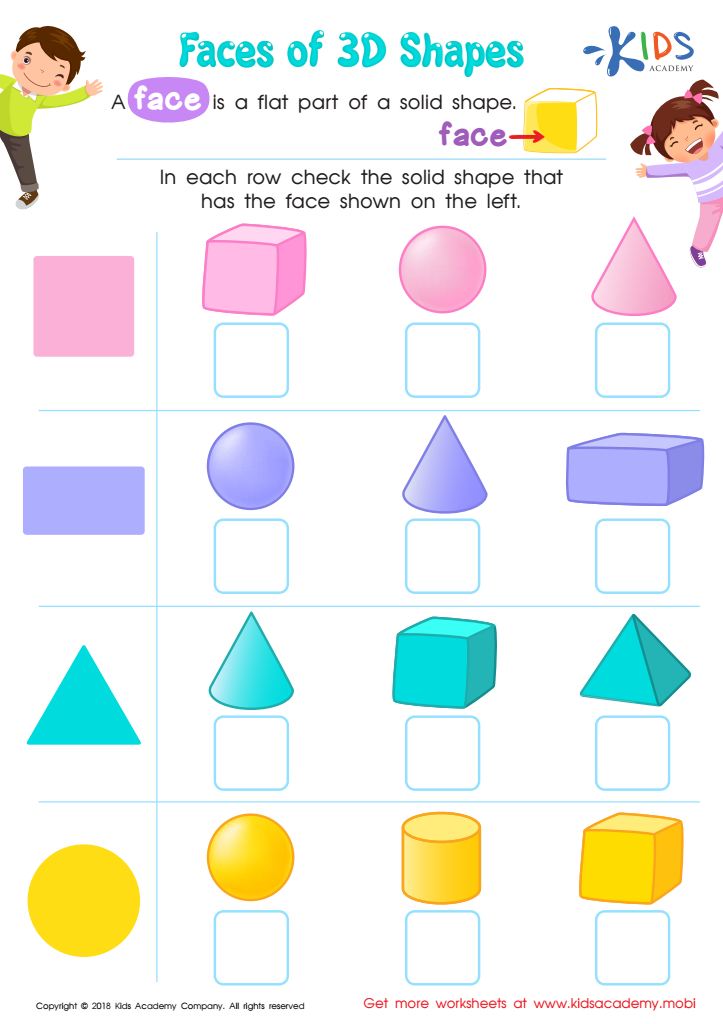
Faces of 3D Shapes Worksheet
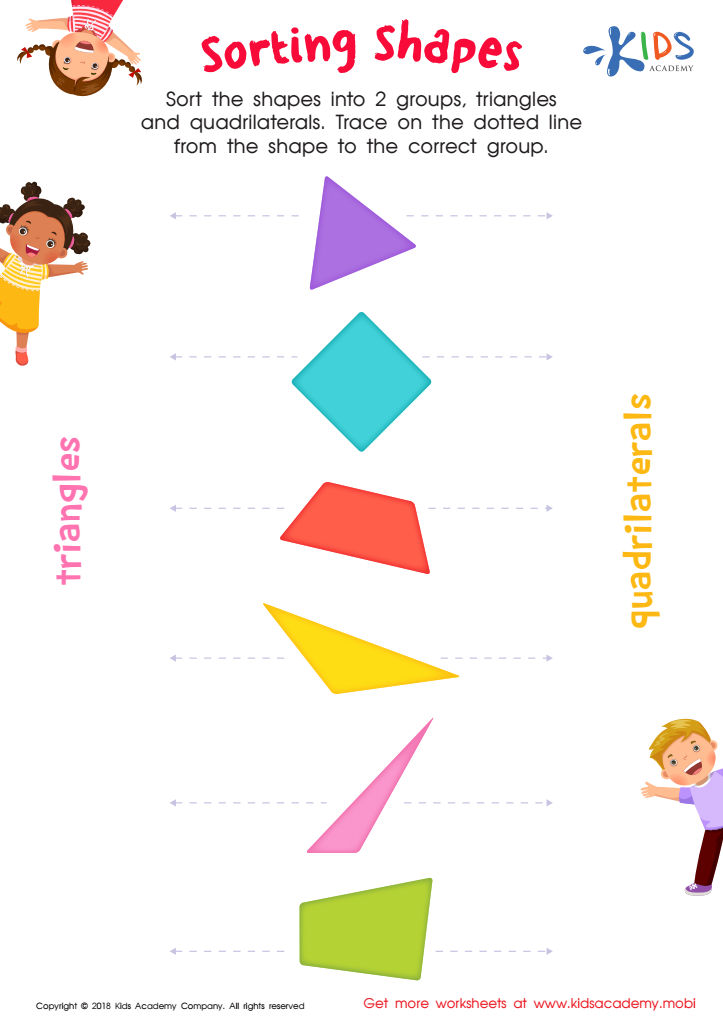
Sorting Shapes Worksheet
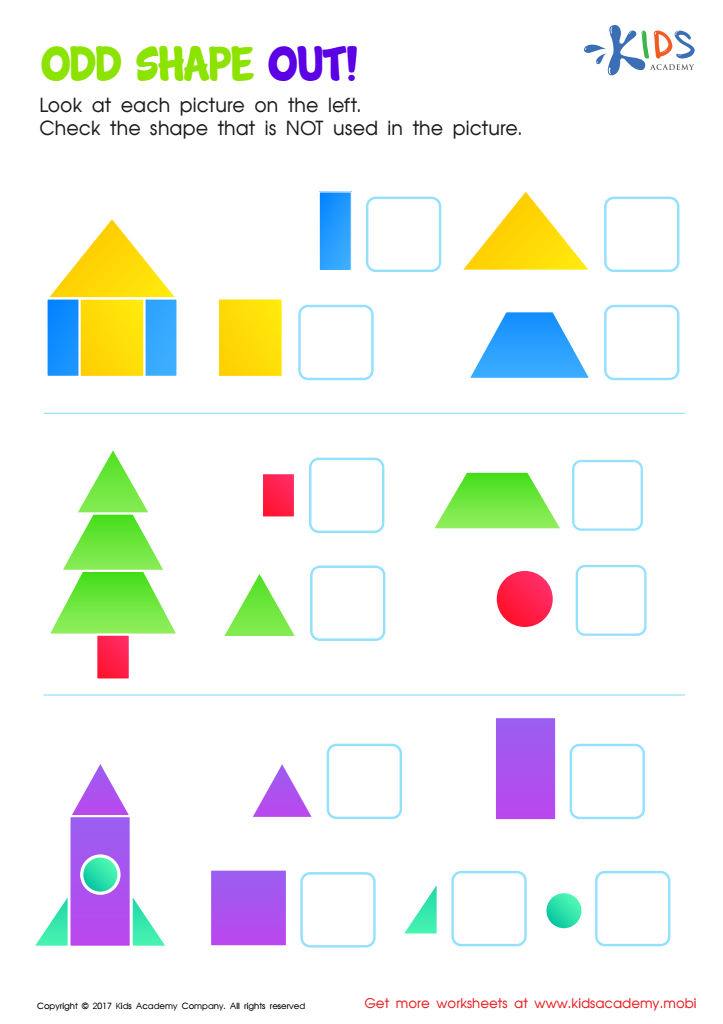
Odd Shape Out Worksheet for Grade 1
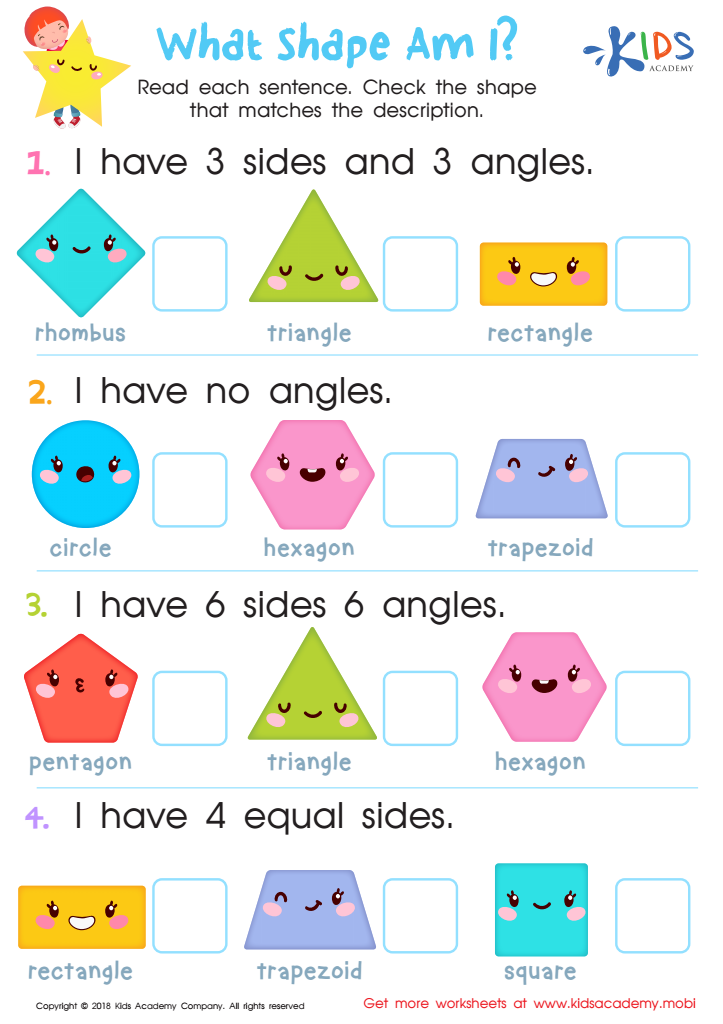
What Shape Am I? Worksheet
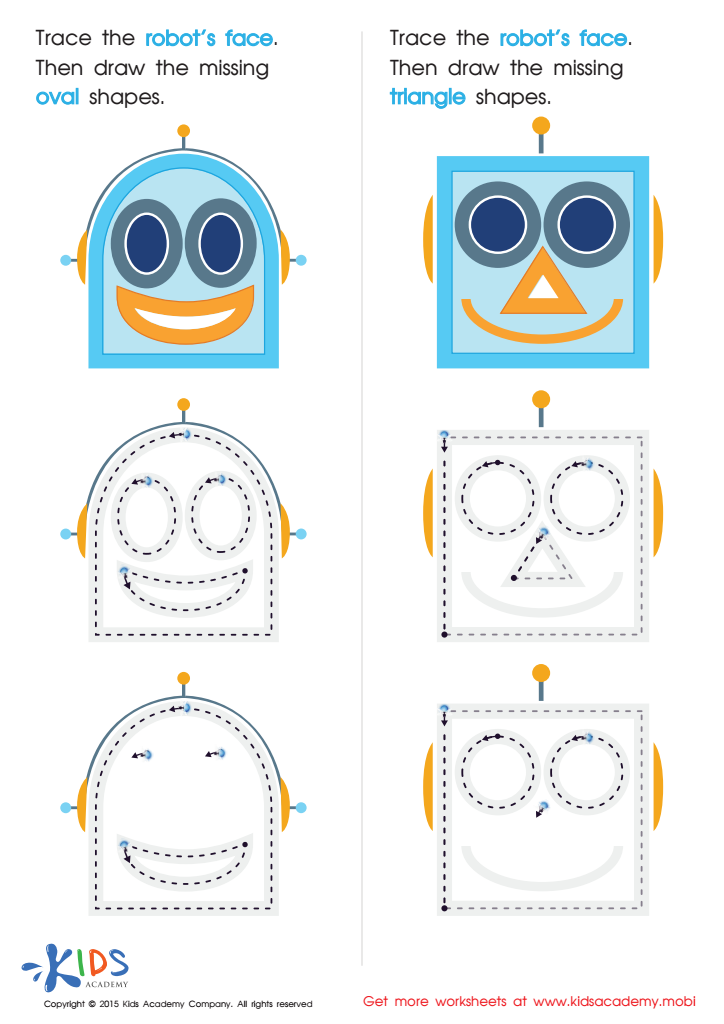
Drawing Ovals And Triangles with Fun Printable
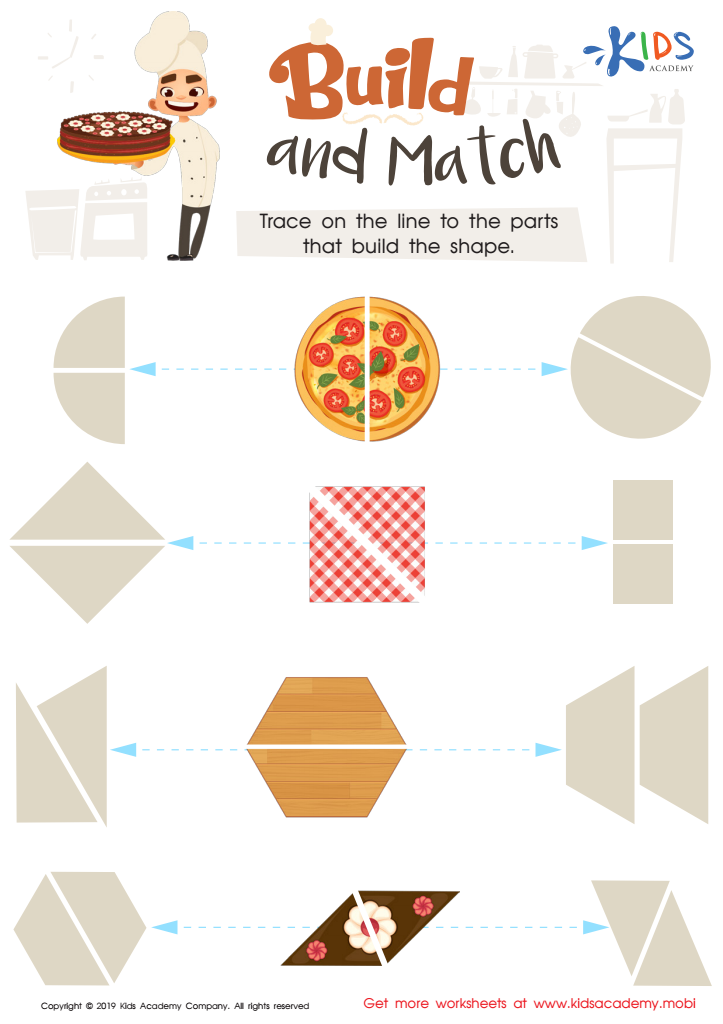
Build and Match Worksheet








Shape recognition is a fundamental skill that plays a crucial role in a child's cognitive development, particularly for those ages 6-8. At this age, children are not only learning to identify shapes but also beginning to understand their properties, relationships, and how they fit into the world around them. Recognizing easy 2D shapes like circles, squares, and triangles aids in building a strong foundation for geometry, which is essential for later math skills.
Furthermore, shape recognition fosters critical thinking and problem-solving abilities. By engaging with shapes, children can develop spatial awareness and learn to categorize and organize information—skills that are vital across all areas of learning and everyday life.
For parents and teachers, facilitating shape recognition enhances children's learning experiences. Encouraging them to see shapes in their environment promotes observation and exploration, igniting their creativity and curiosity. Additionally, engaging children in shape-related activities helps improve fine motor skills, as they cut, draw, or even build with geometric shapes.
Ultimately, investing time in shape recognition offers children experiences that build a solid mathematical foundation, preparing them for future academic success and everyday decision-making skills. This early focus empowers children to approach math and logic with confidence as they grow.