Reading comprehension Easy Addition Worksheets for Ages 6-8
3 filtered results
-
From - To
Boost your child's learning with our Reading Comprehension Easy Addition Worksheets, designed specifically for ages 6-8! These engaging and interactive worksheets combine essential addition skills with reading practice, making math fun and accessible. Each activity encourages kids to read and understand word problems while applying their addition knowledge. Our worksheets promote critical thinking, enhance vocabulary, and improve comprehension abilities, ensuring a well-rounded educational experience. Perfect for both classroom use and at-home practice, these printable resources help young learners build confidence in their math and reading skills. Stay ahead in their education—download our Easy Addition Worksheets today!
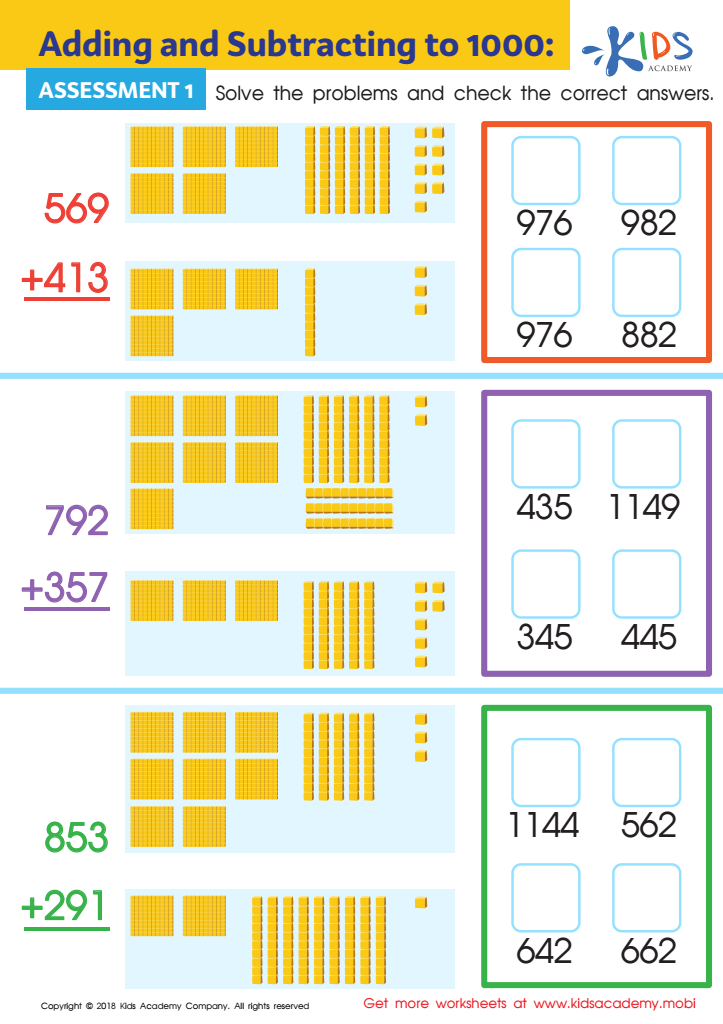
Adding and Subtracting to 1 Worksheet: Assessment 1
 Assign to My Students
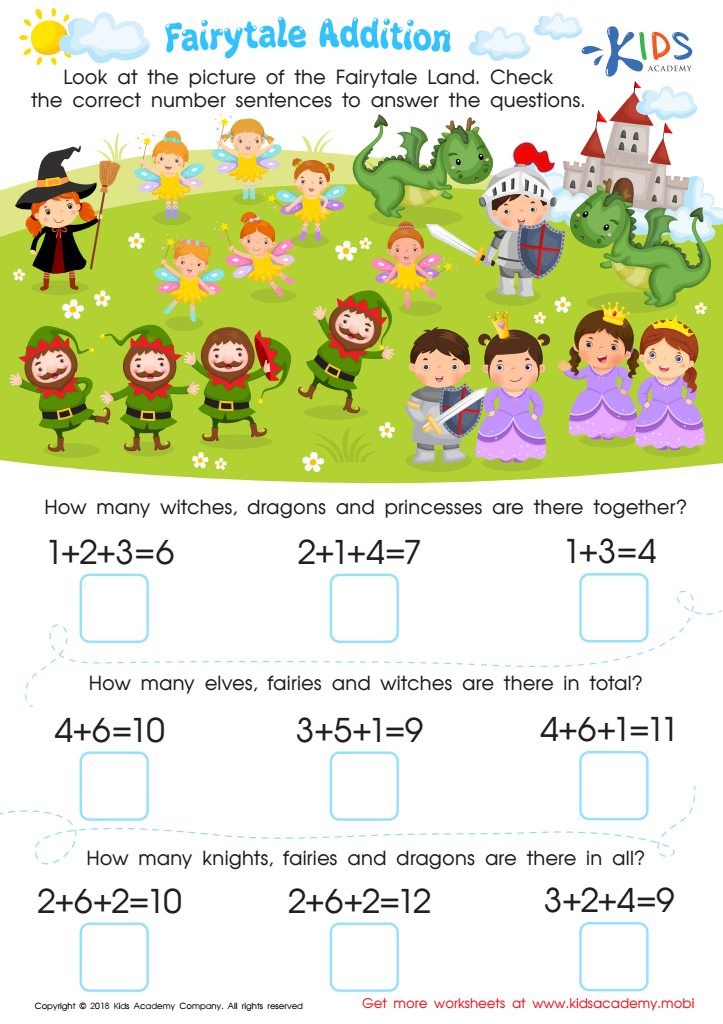
Fairytale Addition Worksheet
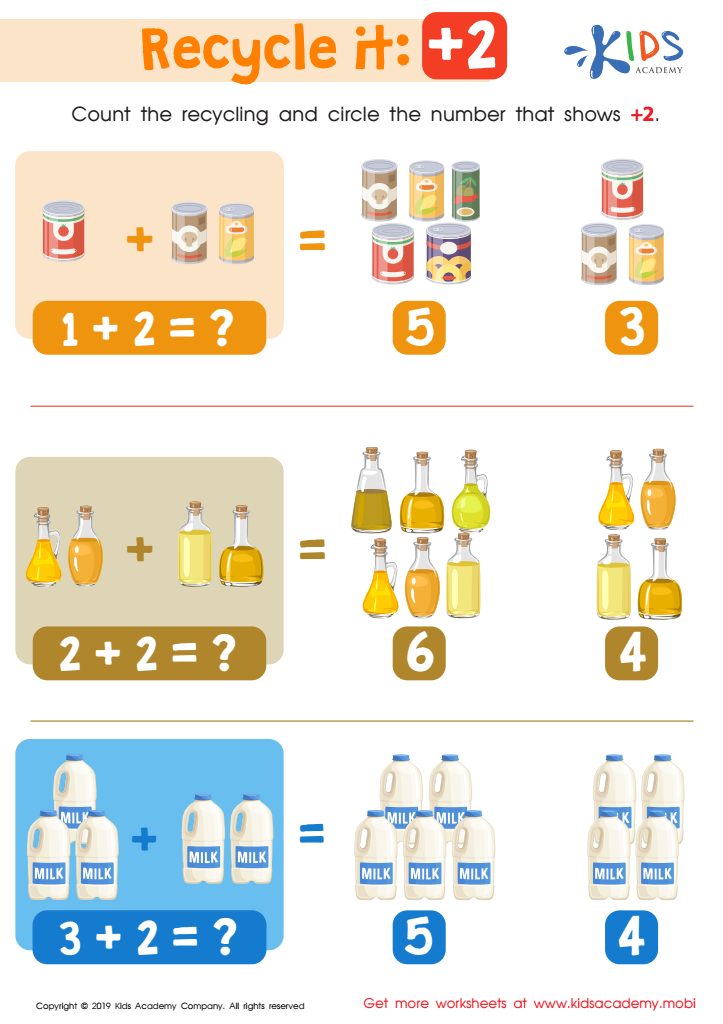
Recycle It: +2 Worksheet








Parents and teachers should prioritize reading comprehension and simple addition skills for children aged 6-8 because these foundational abilities are crucial for lifelong learning. Reading comprehension enhances critical thinking skills and builds a child’s ability to understand and analyze information. By grasping the meaning of texts, children develop the capacity to explore new ideas, emotional narratives, and coexist with diverse perspectives, fostering empathy and creativity.
On the other hand, easy addition forms the bedrock of mathematical understanding. Mastering basic math concepts helps children gain confidence in their problem-solving abilities and equips them with skills necessary for daily life. Simple addition exercises promote logical reasoning and allow students to connect mathematical principles to real-world situations.
Moreover, both skills are linked—strong reading skills enable children to interpret word problems effectively, while math skills enhance their understanding of quantitative information presented in texts. Together, these proficiencies encourage a well-rounded education, preparing children for more advanced concepts in the future.
In short, an emphasis on reading comprehension and easy addition lays the groundwork for academic success, self-confidence, and practical life skills, making it essential for teachers and parents to invest in these areas during this critical developmental stage.








